
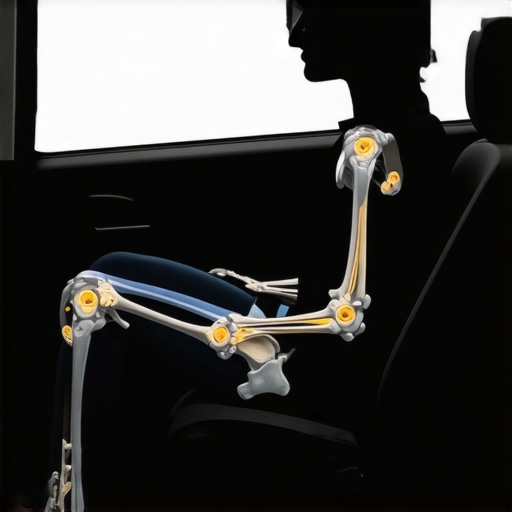
I remember the first time I felt that strange twinge in my lower back after a long drive. It wasn’t so much pain as an unsettling awareness that my driving habits might be doing more harm than good. At first, I shrugged it off—thinking it was just fatigue. But over time, that subtle shift in my pelvis became more persistent, affecting my posture and overall comfort. It was a lightbulb moment for me, realizing that my driving position was quietly rewriting how my body aligned itself each day.
Why Your Sitting and Driving Habits Could Be Changing Your Pelvic Alignment
Our daily routines, especially habits like driving, play a crucial role in how our pelvis and spine interact. When I started paying attention, I noticed that slight tweaks in my seat height or lumbar support led to noticeable changes in my posture. These small adjustments, seemingly insignificant at first, can actually cause your pelvis to tilt forward or backward over time, leading to misalignment and discomfort. It’s surprisingly common—many people don’t realize how their habitual sitting and driving positions are subtly influencing their back health.
Will Changing My Driving Position Really Make a Difference?
Early in my journey, I made the mistake of ignoring these signs, assuming that once discomfort set in, it was just part of aging. The truth is, simple positional adjustments can have a profound impact. By paying closer attention and tweaking my setup—like adjusting my seat angle or considering ergonomic accessories—I experienced noticeable relief and improved posture. For a deeper dive into these small but powerful changes, check out [this article](https://chiromasteryz.com/unlock-better-back-health-effective-posture-tips-for-2025) to learn more about effective posture tips.
Do you often feel back tension after hours behind the wheel? If so, you’re not alone. Many of us unknowingly compromise our pelvis and spinal health during daily commutes, leading to chronic issues that could be prevented. The good news is, with some mindful adjustments and awareness, you can regain control and protect your back for years to come.
There’s much more to uncover about how everyday habits influence spinal health. Up next, I’ll guide you through practical steps to identify and correct your driving posture for lasting relief—no complicated tools required. Ready to start?
Position Your Seat Correctly to Protect Your Pelvis
Start by adjusting your seat height so your hips are level with or slightly higher than your knees, mimicking a natural, ergonomic posture. Think of your pelvis as a foundation—if it’s tilted or uneven, everything above it becomes misaligned. For my first attempt, I sat down, adjusted the height, and immediately noticed less tension in my lower back, especially after a long drive.
Fine-Tune Seat Depth and Distance
Next, slide your seat forward or backward so that your thighs rest comfortably on the seat without pressure on your knees. Your feet should reach the pedals effortlessly, with your knees slightly bent—around 110 degrees. Imagine your thighs as the base of a tripod; stability here ensures better pelvic alignment. I once spent extra time dialing this in, which made a visible difference in my comfort during drives.
Adjust the Backrest for Lumbar Support
Set the backrest angle so that your lower back maintains its natural curve. A slight recline (about 100-110 degrees) often works best. Use the lumbar support feature if available; if not, place a small cushion behind your lower back. Think of your lumbar support as a cradle holding the natural inward curve of your spine—preventing your pelvis from tilting forward. After a few days of consistent check-ins, I felt a notable reduction in pelvic tilt-related discomfort.
Align Your Pedals and Steering Wheel
The pedals should be within easy reach without pressing your hips into the seat’s edge. Adjust steering tilt so that your hands rest comfortably at 9 and 3 o’clock positions, with elbows slightly bent. This setup minimizes unnecessary hip torque and pelvic strain. I remember fighting with my wheel for a while; once properly aligned, it was like a breath of fresh air for my back.
Incorporate Short Breaks and Movements
Even with a perfect setup, taking breaks every 30-60 minutes is crucial. Stand up, stretch your hips, and walk around to reset your pelvic position. Use exercises like hip circles or gentle lunges to mobilize your pelvis. I incorporated these stretches, which not only eased my pelvis but also elevated my alertness during long drives. For mobility techniques tailored for this, visit mobility exercises.
Monitor Your Posture During the Drive
Pay attention to your sitting habits: avoid slouching or twisting. Keep your shoulders relaxed, and engage your core slightly to support your pelvis. Imagine your pelvis as a street corner; keeping it level prevents the whole city (your spine) from tilting. I found that checking in with myself periodically prevented postural fatigue, leading to fewer aches.
Use Visual Cues and Reminders
Place a small mirror or a reflective surface in your vehicle to check your posture occasionally. This acts as a quick feedback loop, helping you correct misalignments on the fly. I set a reminder on my phone to glance at my posture during long trips—simple, effective, and surprisingly motivating. For detailed guidance on posture corrections, explore posture correction tips.
Many people believe that the perfect posture is a static position to hold all day, but in my experience, this is a misconception. Our bodies are dynamic, and focusing solely on maintaining an ‘ideal’ posture can lead to overlooking the importance of movement variability. Constantly trying to ‘fix’ your position without understanding the underlying mechanics often results in muscular tension and compensatory patterns that exacerbate back issues. One common myth is that rigidity equals stability; however, rigidity can cause muscles to weaken over time, increasing vulnerability to injury. Instead, embracing fluid adjustments and mobility exercises can promote a resilient spine.
A subtle trap many fall into is over-relying on external supports like lumbar pillows or ergonomic chairs without addressing the functional movement patterns that contribute to misalignment. These tools can provide temporary relief but might hinder your body’s natural ability to stabilize itself if used excessively or improperly. For example, rigidly adhering to a specific seat height without considering your pelvic’s natural tilt can perpetuate maladaptive postures.
How can advanced movement strategies challenge conventional wisdom about back health?
The answer lies in integrating mobility and variability into your daily routine. Recent studies suggest that controlled, purposeful variability—such as gentle spinal rotations or hip hinge movements—enhances neuromuscular control and resilience. Expert approaches emphasize that optimizing spinal health isn’t about perfecting a single posture but rather training the body’s ability to adapt and move through different ranges safely. This dynamic approach mitigates the risk of fixation and sets the stage for long-lasting relief. For a comprehensive guide, explore mobility strategies for active living.
Beware of the common mistake of neglecting the role of the ankle and foot mechanics in back health. Poor ankle mobility can lead to compensatory patterns up the kinetic chain, affecting pelvic position and contributing to discomfort. Addressing these nuances by incorporating ankle mobilization exercises can significantly improve overall posture and reduce strain, as highlighted in this article.
Remember, the journey to lasting back health involves understanding these subtleties and moving beyond simplistic fixes. Do you often fall into these misconceptions? Let me know in the comments and share your experiences to help others navigate this complex terrain.Maintaining a healthy back requires more than just awareness; it’s about integrating effective tools and consistent routines into your lifestyle. One of my go-to devices is a soft massage ball, which I use daily to release tension in my glutes and lower back. It’s compact, affordable, and helps me address trigger points before they escalate into pain, aligning with recent mobility research emphasizing self-myofascial release techniques. Additionally, I rely on ergonomic adjustments, such as a lumbar support cushion in my office chair, to sustain proper spinal curvature during long work hours. These small interventions, combined with regular mobility exercises from [this resource](https://chiromasteryz.com/mobility-mastery-simple-exercises-to-relieve-chronic-back-pain), help me prevent stiffness and muscular imbalances over time. Looking ahead, I predict that wearable posture correction devices will become more sophisticated, offering real-time feedback and personalized adjustments, making long-term maintenance even more accessible. To truly keep your back functioning well, I recommend incorporating daily movements like gentle hip hinges and spinal twists. How do I maintain my back health over time? I focus on consistent, small adjustments—using tools like the Deep Glute Release—paired with periodic check-ins via mirror cues. This approach ensures that I catch misalignments early, preventing chronic issues from setting in. Want to try a game-changing tip? Use a soft massage ball to target tight spots in your pelvis—spend just five minutes daily, and you’ll notice increased mobility and less discomfort. For detailed guidance, visit this resource. Maintaining back health is an ongoing process, but with the right tools and intentional habits, you can keep your spine resilient for years to come.
Over the years, I discovered that the most profound improvements in back health often come from small, overlooked adjustments in our daily routines. One of my biggest breakthroughs was realizing that every subtle change in my driving posture could either undermine or bolster my pelvic alignment. That lightbulb moment propelled me to experiment with different seat angles, lumbar supports, and pedal distances — and the results were astonishing.
The Hardest Lesson I Learned About adjustments,posture,back pain,mobility
- Patience over perfection: I had to accept that perfect alignment isn’t a static state but an ongoing process. Tiny, consistent tweaks deliver lasting results, not all-or-nothing fixes.
- Listening to your body: Paying close attention to discomfort cues helped me identify what needed adjustment. Ignoring these signals only prolonged issues.
- Movement matters: Maintaining mobility through daily stretches and mobility drills complements good posture — static correction without movement is incomplete.
- Tools are helpful, but awareness is king: Ergonomic supports aid but shouldn’t replace mindful sitting. Awareness of your pelvic position guides better adjustments.
- Recognize patterns: Reflecting on how habits reinforce bad alignment revealed opportunities for meaningful change, such as taking regular breaks and incorporating mobility exercises during drives.
My Favorite Aids for Back-Friendly Driving
- Deep Glute Release Tool: I rely on a soft massage ball daily to address tightness in my glutes and pelvis — a key step in maintaining pelvic neutrality. This simple tool has become my secret weapon, especially after long drives.
- Ergonomic Seat Cushions: An adjustable lumbar support cushion ensures my pelvis stays aligned, preventing tilt that leads to discomfort. I trust this because it provides real-time feedback during my drives.
- Mobility Guides and Videos: Resources like mobility exercises keep me proactive, reinforcing that movement is a vital part of posture maintenance.
- Adjustable Office and Car Setups: Smaller tweaks, such as footrest height adjustments or steering wheel tilt, make a significant difference in pelvic and lumbar support—these tweaks are worth exploring for anyone committed to back health.
Start Moving With Confidence and Clarity
Taking control of your driving posture is empowering, but it’s also a journey of continuous learning and adjustment. With mindful awareness, simple tools, and consistent mobility habits, you can protect your pelvis and spine for years to come. Remember, the key isn’t perfection but persistence. Each small change contributes to stronger, healthier back function.
What’s the one adjustment in your driving position you’re most eager to try? Share your plan below, and let’s support each other on this path to better back health!
,