
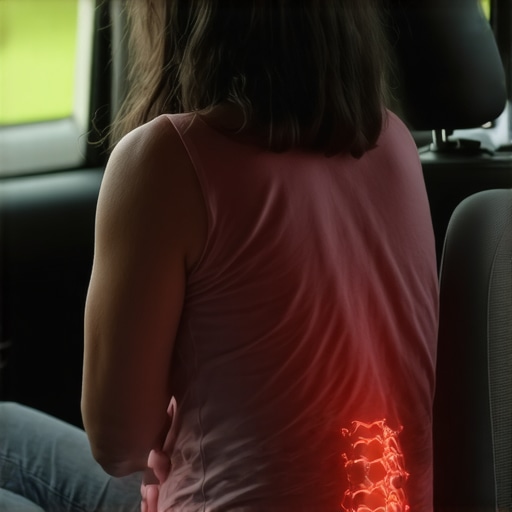
I remember pulling into my driveway after a six-hour trek, my mind dreaming of a hot shower, but my body had other plans. When I tried to uncurl from the driver’s seat, a sharp, white-hot pinch shot straight up from the base of my spine. I stood there, clutching the car door like a lifeline, waiting for my tailbone to stop throbbing. It was embarrassing. It was frustrating. And worst of all, it was entirely preventable. If you’ve ever felt that dull, deep ache that makes you dread your morning commute, you aren’t alone. We’re going to fix that today. I’m going to share the exact adjustments I made to my driving routine—the same ones that saved me from constant discomfort and helped me master my mobility even on the longest road trips. Have you ever had to physically ‘roll’ out of your car because your back was too stiff to move?
Stop Blaming Your Age for That Sharp Lower Back Pinch
For years, I told myself that my tailbone pain was just a ‘getting older’ tax. I bought every gel cushion on the market and adjusted my seat a thousand times, yet the ache remained. My biggest mistake was focusing on the cushion rather than the mechanics of my pelvis. I realized the real reason your sciatica flares while driving often has more to do with how your weight is distributed than how soft the seat is. When we sit for hours, we often tuck our pelvis under, putting immense pressure on the coccyx—a tiny bone that isn’t designed to bear our full body weight for half a day. According to the Cleveland Clinic, this repetitive stress leads to Coccydynia, an inflammation that makes every bump in the road feel like a personal attack. I spent months trying to stretch my way out of it, but why stretching your hamstrings might be making your back pain worse is a lesson I learned the hard way. It wasn’t about flexibility; it was about alignment. I also discovered the hidden reason your middle back burns after driving was tied directly to how I was bracing my steering wheel. It’s a chain reaction.
Do Those Expensive Orthopedic Seats Actually Work?
You’ve seen the ads for the $100 ‘space-age’ cushions that promise to float your tailbone in mid-air. I bought into the hype, too. But here’s the reality: if your seat is angled wrong, even the most expensive foam won’t save you. Sometimes, why your lumbar support might be making your pain worse is simply because it’s pushing your spine into a shape it can’t sustain. We need to look at the specific way to sit that stops tailbone pressure before we start throwing money at gadgets. It’s about creating a neutral foundation that lets your spine breathe. Let’s dig into how a few two-inch shifts can change your entire driving experience.I used to sit with my seat as flat as a pancake, thinking that was the most ‘natural’ way to drive. It wasn’t. Think of your pelvis like a porcelain bowl filled with water. Most drivers let that bowl tip backward, spilling the ‘water’ onto the seat back. This slumping creates a ‘C’ shape in your spine and puts the heavy weight of your torso directly on the tip of your tailbone. To fix this, you need to master the simple pelvic tilt that makes sitting for hours painless. You want to tip that bowl slightly forward so the imaginary water would spill toward your feet. This shifts the pressure onto your ‘sit bones’—the ischial tuberosities—which are actually built to handle your weight. 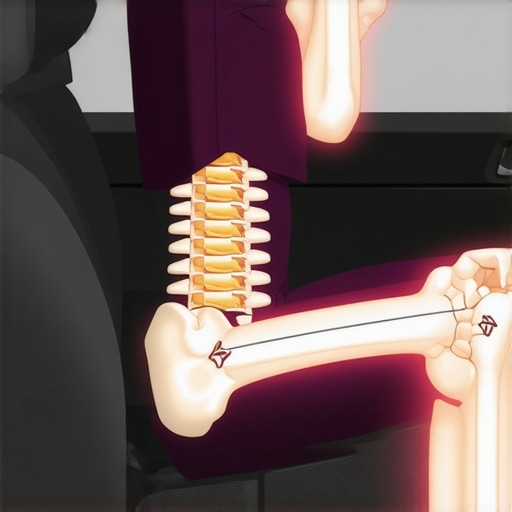
Stop Sinking and Start Supporting Your Spine
Most modern car seats are designed with a ‘bucket’ shape that causes your hips to drop lower than your knees. This is a recipe for disaster because it pulls on your hamstrings and flattens your lower back. I once spent a four-hour drive to a friend’s wedding desperately trying to shove a folded-up sweatshirt under my glutes just to stop the burning sensation in my hips. It was messy and the sweatshirt kept sliding, but the relief was instant because I finally raised my hips high enough to stop the pull on my nerves. You can achieve this more reliably by using the chair hack to keep your pelvis neutral—adjusting your seat height or using a firm wedge so your hips are slightly above your knees.
Find the Sweet Spot Between Your Pedals and Your Pelvis
If you’re reaching too far for the pedals, you’re likely pulling your pelvis out of alignment every time you use the brake. Your legs should have a comfortable bend, and your heels should rest naturally on the floor. If you feel like you’re ‘reaching,’ move the seat forward. While you’re at it, check your headrest. Most people have it too low, which pushes the head forward and creates a chain reaction of tension down to the tailbone. Knowing how to adjust your car headrest to stop tension headaches is just as important for your lower back as it is for your neck.
The Two Minute Reset Before You Turn Off the Ignition
When you finally reach your destination, don’t just lunge out of the car. Your muscles have been in a ‘shortened’ state for hours. I used to make the mistake of immediately trying to touch my toes to stretch out, but why your sitting habits are causing your hamstrings to tighten is a complex issue, and aggressive stretching can actually cause more micro-tears in a cold muscle. Instead, try the quick hip flexor release while standing next to the car door. It resets the tension in the front of your body, which naturally allows your tailbone to settle back into its proper home. This simple habit transformed my post-drive experience from a limping mess to feeling like I just walked around the block.
But here is where most people get it wrong. They think that because they feel ‘tight,’ they need to stretch as hard as possible the second they get out of the car. In fact, one of the biggest myths in the wellness world is that hamstrings are always the culprit. I spent years aggressively reaching for my toes, only to find the pain intensified. The reality is that neural tension often masquerades as muscle tightness. When you pull on a nerve that is already irritated from a long drive, you aren’t helping; you’re essentially playing tug-of-war with your nervous system. This is why you should stop stretching your hamstrings for back relief if the sensation feels more like a zing than a dull pull.
Could Your Breathing Pattern Be the Real Reason Your Back Won’t Relax?
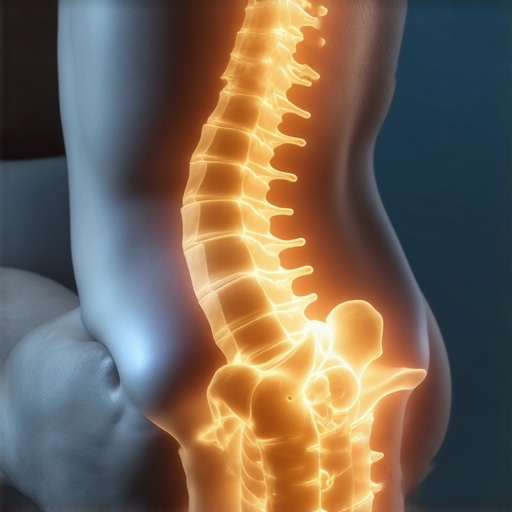
Let’s talk about a nuance that even experienced gym-goers miss: the diaphragm. Most drivers are ‘chest breathers,’ especially when navigating heavy traffic. This shallow breathing keeps your ribcage high and prevents your spine from decompressing naturally. A study published in the Journal of Biomechanics found that improper spinal loading—often exacerbated by poor breathing mechanics—can increase intradiscal pressure significantly. When you don’t use your full lung capacity, your lower back muscles stay in a ‘guarded’ state to protect the spine. Learning how your breathing pattern keeps your back muscles guarded is the advanced level of recovery that most people never reach.
The Common Mistake of ‘Sucking It In’ for Better Posture
We’ve all been told to ‘engage our core’ to protect our backs. However, there is a dangerous trap here. Many drivers translate this as ‘sucking in the stomach’ to look thinner or feel more supported. This actually creates an internal pressure that pushes against your discs rather than supporting them. I call this the ‘Oops Factor’ of posture correction. When you brace too hard, you lose the natural fluid movement of the vertebrae. You should stop sucking in your stomach to look thinner and instead focus on a gentle, 360-degree expansion of your midsection. This creates a natural ‘air cushion’ for your spine that no expensive seat can replicate.
Why Your Lumbar Support Is a Double-Edged Sword
Another common mistake is over-cranking the lumbar support dial. We assume more is better, but excessive curvature can actually pinch the facet joints in your lower spine. If you feel a sharp pinch when you stand up, why your lumbar support might be making your pain worse usually comes down to over-extension. It’s about finding the balance between a flat back and a forced arch. Similarly, many people try advanced floor stretches as soon as they get home, making the 90-90 hip stretch mistake that is hurting your lumbar spine by forcing their back to compensate for tight hips. True relief comes from these subtle posture correction secrets that transform back pain outcomes, not from the loudest or most intense stretches. Have you ever fallen into this trap? Let me know in the comments.
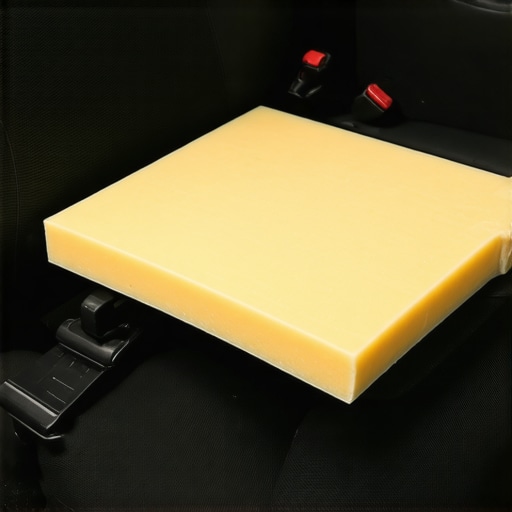
It took me years to realize that I didn’t need a new car to save my back; I just needed a better interface with the one I already had. I eventually threw out the bulky, sinking memory foam cushions and replaced them with a firm, high-density EVA foam wedge. This is my secret weapon because it doesn’t compress under my weight, ensuring my hips stay consistently elevated above my knees. If you’re serious about long-term relief, you need to use the chair hack to keep your pelvis neutral while working even when you aren’t in the car. I now take that same firm wedge into the office and even use it during dinner. It’s about mobility mastery: simple exercises to relieve chronic back pain becoming a consistent lifestyle rather than a weekly chore.
Dr. Stuart McGill, a world-renowned expert in spine biomechanics and author of ‘Back Mechanic,’ emphasizes that ‘spine hygiene’ is a 24-hour commitment. This means your driving posture shouldn’t be an island of good habits in a sea of bad ones. For instance, if you spend four hours behind the wheel and then immediately transition into poor habits, such as not knowing how to sit on a plane without waking up with sciatica for a business trip, your body never gets a chance to recover from the initial stress. True success comes from scaling these adjustments across every chair you occupy.
How do I maintain my spinal alignment during 10-hour drives?
The answer isn’t just sitting still for hours; it’s about active engagement. I use what I call ‘The 20-Minute Reset.’ Every twenty minutes, I perform the morning glute squeeze that protects your spine all day while sitting in the driver’s seat. It’s subtle enough that your passengers won’t even notice, but it provides a momentary burst of stability that prevents the ligaments from ‘creeping’ into a slumped, vulnerable position. I also make it a point to adjust your routine: daily spinal alignments for lasting relief by doing a quick thirty-second wall reset as soon as I hit a rest stop. This keeps the neural pathways open and prevents the ‘stiff-man’ walk when you finally check into your hotel.
I suspect we are moving toward a future of ‘active seating’ technology where car seats will use pneumatic bladders to shift your weight every few minutes automatically. Until that becomes the industry standard, the responsibility for your comfort is on you. I want you to try one specific advanced tip today: the next time you are stopped at a red light, perform three deep ‘rib breaths’ without letting your shoulders rise toward your ears. You will feel how much the tension in your lower back dissipates instantly. It is one of the fastest ways to enhance your mobility: expert tips for easier movement in 2025.
My Expensive Car Seat Failed My Spine
I spent years blaming car manufacturers for my discomfort, assuming the seat was simply poorly designed. I eventually realized that even a luxury sedan won’t fix a pelvis that is tilted in the wrong direction. The biggest lightbulb moment was understanding that I was “locking” my spine into a defensive position before I even started the engine. I discovered that why self-cracking your neck makes the stiffness come back faster applies to the lower back too; I was constantly chasing a “pop” or a temporary release instead of building a foundation of actual stability. Real relief isn’t about being perfectly still; it’s about micro-adjustments. I now use a simple countdown timer on my watch to remind me to shift my weight every fifteen minutes, preventing my ligaments from becoming “stuck.”
The Best Gear for Ending Driving Fatigue Forever
If you want to move beyond the theory and start feeling results, I recommend a few specific tools that have stayed in my car for years. First, ditch the soft cushions for a high-density EVA foam wedge. Unlike memory foam, it doesn’t bottom out under your weight, ensuring your hips stay elevated above your knees. Secondly, consider a firm, portable lumbar roll. This allows for much finer unlocking better posture: simple adjustments to relieve back pain because you can move the roll up or down to hit your specific “hinge” point, rather than relying on the car’s generic built-in support. Finally, keep a guide for unlocking better back health: effective posture tips for 2025 bookmarked on your phone for those moments at the rest stop where you need a quick movement reset.
#IMAGE_PLACEHOLDER_E#
Take the First Step Toward Pain-Free Driving Today
You do not have to accept a throbbing tailbone as the inevitable price of travel. By mastering these small daily adjustments to alleviate back pain and improve posture, you are giving your body the gift of long-term longevity. The open road should feel like an opportunity for adventure, not a physical endurance test that leaves you limping through your destination. Start by making just one change to your seat angle today and notice how your body responds. Have you ever tried a seat cushion that actually made your back pain worse? Let me know your experience in the comments below!