
I’ll never forget the sound my spine made about three years ago. I had been hunched over my laptop for ten hours straight, and my upper back felt like it was being squeezed in a rusty vice. Desperate for relief, I grabbed my foam roller, threw it on the living room floor, and just… flopped. I rolled back and forth with all my weight like I was trying to flatten pizza dough, waiting for that magic ‘pop’ that would fix everything. Instead of relief, I woke up the next morning feeling like I’d been in a minor car accident. My ribs were tender, my neck was stiff, and that dull ache between my shoulder blades was actually worse than before. I was doing it all wrong, and if you’re just rolling aimlessly, you probably are too. Today, I’m going to show you the exact sequence that took me from accidental self-torture to actually being able to breathe deeply again. We aren’t just going to roll around; we are going to target the thoracic spine with precision.
Stop Treating Your Spine Like a Rolling Pin
The biggest mistake I made—and I see folks at the gym do this constantly—is rolling the lower back or the neck directly. Your lumbar spine is designed for stability, not for grinding against a hard plastic cylinder. When you roll too low, your muscles naturally tense up to protect your internal organs, which is the exact opposite of the relaxation we want. I learned the hard way that mid-back stiffness usually comes from a lack of mobility in the rib cage area, not a lack of pressure on the spine itself. The upper back, or the thoracic spine, is a different beast. It is meant to move, but our modern desk-bound lives keep it locked in a forward slump. According to research published in the Journal of Bodywork and Movement Therapies, restricted thoracic mobility can lead to compensatory strain in the neck and shoulders, making your posture issues even more stubborn. If you have ever felt like your shoulder pain is actually a neck issue, your tight upper back is likely the primary culprit.
Is This Really Worth the Effort Compared to a Massage?
You might be skeptical. I certainly was. I used to think, ‘How can a $20 piece of foam compete with a therapist’s hands?’ Well, it can’t replace a pro, but it is the single best tool for daily maintenance. A massage is a treat, but improving your thoracic mobility is a daily necessity if you want to avoid that permanent hunch. The secret isn’t more pressure; it’s better placement and breathing. Have you ever spent twenty minutes rolling only to feel tighter than when you started? If so, you’re likely missing the ‘pivot’ technique we’re about to discuss. Before we dive into the step-by-step, I have to ask: what’s the one spot in your back that feels like a permanent, unfixable knot? Keep that spot in mind, because we’re going to address it head-on. First, let’s see if your back is even ready for this by learning how to test your thoracic mobility in under 60 seconds.
Ditch the Lumbar and Find Your Rib Cage
To start, you need to understand that your lower back is a stability zone, while your mid-back is the mobility zone. Lay the foam roller horizontally on the floor and sit in front of it. Slowly lean back until the roller is positioned right at the bottom of your shoulder blades. I used to make the mistake of letting the roller slide down into the small of my back, which just arched my spine painfully. If you find your lower back is arching excessively or pinching, you might actually need the psoas release that finally stops your deep lower back ache before your thoracic spine can even relax. Keep your feet flat on the floor and your butt down. This isn’t a bridge; it’s a pivot. If you feel like you’re straining to stay up, your core isn’t engaged enough to support the movement.
Hug Yourself to Move the Scapula
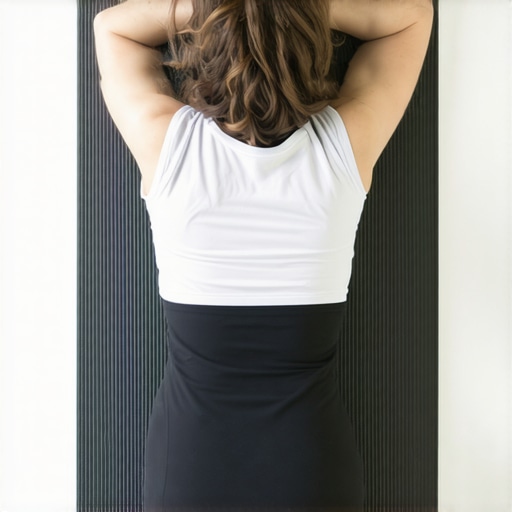
This is the part everyone misses. If you just lay on the roller with your arms at your sides, the roller is mostly hitting your shoulder blades (the scapulae), not the muscles underneath. I remember a specific session where I was rolling for twenty minutes and felt nothing but bone-on-plastic grinding. I looked like a beached whale. The fix? Cross your arms over your chest as if you’re giving yourself a massive hug. This pulls your shoulder blades apart, exposing the paraspinal muscles and the ribs. By doing this, you are effectively performing a shoulder blade squeeze that fixes mid-back knots instantly by clearing the structural blockage. 
The Micro-Pivot That Actually Changes Your Posture
Instead of rolling up and down like a steamroller, we are going to use the ‘segmental extension’ method. Support your head with your hands—think of your hands as a hammock for your skull so your neck doesn’t strain. Slowly lean back over the roller, imagining you are folding your spine around the cylinder. Only go as far as you can without your lower ribs flaring up toward the ceiling. Hold for two seconds, then sit back up slightly. Move the roller up just one inch and repeat. When I first tried this, I realized I had zero movement in the middle of my back; I was just bending from my neck. True mobility mastery comes from these tiny, controlled hinges, not big, sweeping slides. This is the exact thoracic move that makes deep breathing feel natural because it opens up the rib joints that have been stuck for years.
Exhale Until You Feel Your Spine Decompress
The secret sauce to this entire process is your breath. When you lean back over the roller, you must exhale completely. If you hold your breath, your nervous system stays in ‘protection mode’ and your muscles won’t let go. I once spent an entire week rolling while tensing up, and I actually developed a tension headache because I was fighting the roller. Learning how to breathe through your ribs to ease lower back tension is the difference between a productive session and a painful one. As you exhale, imagine your spine melting into the foam. If you feel a small, gentle pop, that’s fine, but don’t chase it. Chase the feeling of space being created between your vertebrae. This decompression is vital if you want to reverse the effects of a hunchback posture and stop those burning knots from returning every afternoon.Most people think mobility is about getting ‘looser,’ but if you’re already flexible and still in pain, more stretching is the last thing you need. In my experience, why stretching your hamstrings might be making your back pain worse is a classic example of this. Your brain creates tension to protect joints it perceives as unstable. If you force those muscles to relax without addressing the underlying stability, your nervous system will just clamp back down twice as hard ten minutes later. This is the ‘rebound effect’ that keeps people addicted to their foam rollers without ever actually getting better.
Stop Chasing the Stretch to Find Real Stability
The secret that elite athletes know—and most gym-goers miss—is that mobility is useless without control. When you roll out your thoracic spine, you are temporarily desensitizing the nervous system. If you don’t immediately follow up with a movement that ‘locks in’ that range, you’re wasting your time. This is where expert tips for easier movement in 2025 focus on active integration rather than passive rolling. If you’ve ever wondered why your knots come back every single afternoon, you’ve likely fallen into the trap of over-relying on the roller while ignoring the deep core connection that stops your spine from shear stress. Have you ever fallen into this trap of rolling the same spot for months with no progress? Let me know in the comments.
Why Does My Back Feel Tight Again Five Minutes After Rolling?
It’s because you’re treating the symptom, not the signal. A study published in the Journal of Strength and Conditioning Research suggests that self-myofascial release (like foam rolling) provides only a transient increase in range of motion. Without neurological re-education—meaning you actually move and load that joint in its new range—the brain remains unconvinced that the area is safe. This is also why self-cracking your neck makes the stiffness come back faster; you are providing a temporary chemical rush (endorphins) without changing the mechanical habit. 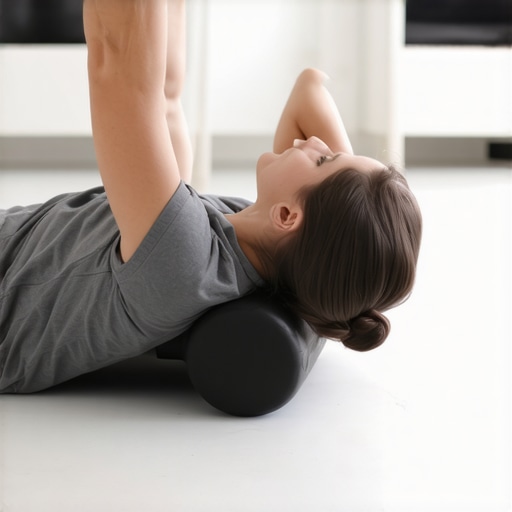
Avoid the Rebound Trap of Excessive Pressure
One of the biggest mistakes I see is the ‘more is better’ mentality with pressure. If you are grimacing or holding your breath while rolling, you are actually triggering a sympathetic nervous system response (fight or flight). This causes your muscles to guard even more. You must understand how your breathing pattern keeps your back muscles guarded during these sessions. If you can’t breathe through the move, the pressure is too high. Real posture correction secrets involve coaxing the body into relaxation, not bludgeoning it into submission. If you want lasting relief, you have to stop treating your body like a piece of meat and start treating it like a complex electrical system that needs the right signals to power down.I eventually realized that a smooth, 36-inch foam roller is essentially a blunt instrument for a delicate job. While it is great for the quads, it lacks the specificity needed to target the costovertebral joints—the exact spots where your ribs meet your spine. This is why I eventually trashed my standard roller in favor of a ‘peanut’ (two lacrosse balls taped together). The gap in the middle cradles your spinous processes, allowing the rubber balls to apply direct pressure to the transverse processes. This targeted approach is the only way to achieve real mastery over your mobility without feeling like you are bruising your bones against a plastic tube. 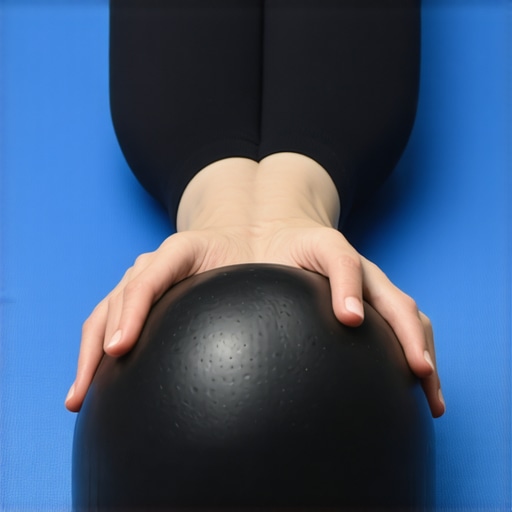 As Dr. Stuart McGill, a legendary expert in spine biomechanics, explains in his research on spinal stability, the goal of any mobilization should be to create a window of opportunity for better movement. If you do not use that window to perform daily spinal alignments, the stiffness will return within hours as a protective neurological reflex. I personally keep my peanut tool right under my desk and use a simple timer to trigger a 30-second desk fix every afternoon. It is not about the intensity of the pressure; it is about the frequency of the signal you send to your brain.
How do I keep my spine flexible for the long haul?
The answer lies in shifting your mindset from ‘fixing’ an injury to ‘maintaining’ a system. Think of your spine like a high-performance engine that requires constant lubrication. I predict that by 2030, we will see a massive shift toward bio-integrated wearables—clothing with embedded sensors that provide haptic feedback the moment your thoracic extension drops. Until that tech is mainstream, you have to be your own sensor. By using expert tips for easier movement in 2025, I have found that ‘habit stacking’ is the only way to make results stick. For example, I do my thoracic pivots while my morning coffee brews. This small shift ensures that effective back health becomes an automated part of your day rather than another chore on your to-do list. If you really want to scale your results and stop the cycle of recurring knots, I challenge you to try the deadbug variation for people with weak lower backs immediately after your next rolling session. It forces your core to stabilize the new range of motion you just unlocked, essentially ‘saving’ your progress in your nervous system’s hard drive.
The Hard Truth About My Foam Rolling Failure
For years, I treated my back like a piece of stubborn leather that just needed more force. But the biggest lesson I learned is that your nervous system is the ultimate gatekeeper. If you roll too hard, your brain triggers a guarding response, effectively locking your muscles down to protect your spine. I also realized that posture correction secrets aren’t about brute force; they’re about consistency and gentle coaxing. Another lightbulb moment was discovering that the relief from rolling is only a temporary window—if you don’t follow up with stability work, the stiffness returns before you’ve even finished your morning coffee.
My Must-Have Tools for a Supple Spine
You don’t need a gym full of equipment to see results, but you do need the right signal. I personally swear by the ‘peanut’ tool—two lacrosse balls taped together—for thoracic specificity because it targets the joints without bruising the bone. To supplement this, I’ve integrated the 2-inch rule for your laptop stand to save your neck from strain, which stops the tension from building up in the first place. I also recommend checking out expert tips for easier movement in 2025 to stay ahead of modern workplace strain. Finally, for a deep dive into biomechanics, I always point people toward the work of Dr. Stuart McGill; his focus on spinal stability over raw flexibility changed my entire approach to health.
Your Spine Deserves a Fresh Start
I know how frustrating it feels to wake up stiff every single morning. But you aren’t broken—you’re likely just stuck in a pattern that needs a neurological reset. By combining the foam roller techniques we discussed with mobility mastery, you can finally reclaim that feeling of lightness in your upper back. Don’t wait for the pain to become unbearable before you act. Start with just five minutes of mindful rolling and breathing today, and your future self will thank you for the extra inch of height and the ability to breathe without that familiar pinch. Have you noticed that your knots tend to return at the same time every afternoon? Let me know in the comments below.