

I woke up last Tuesday feeling like my head was a bowling ball attached to my shoulders by a couple of frayed rubber bands. You know that feeling? It’s that dull, nagging ache at the base of your skull that makes you want to cancel your morning and crawl back under the covers—even though the covers are exactly where the trouble started. For years, I was convinced that my chronic neck tension was just a side effect of getting older or spending too much time at my desk. I never suspected the very thing I was resting my head on for eight hours a night was the primary culprit. If you’ve ever looked at yourself in a mirror and wondered why your head seems to lead the way three inches in front of your chest, we need to talk.
Your Pillow is Sabotaging Your Spine Every Night
The truth is, most of us treat our pillows like clouds rather than orthopedic tools. I used to be a double-stacker. I thought that by propping my head up with two—sometimes three—pillows, I was giving my neck the support it craved. In reality, I was forcing my cervical spine into a permanent state of flexion. This is exactly why your pillow choice is ruining your morning mobility before you even get out of bed. By shoving your head forward, your pillow mimics the exact tech neck posture we try so hard to avoid during the day. Imagine carrying a 12-pound bowling ball in front of your body instead of close to your chest; your arms would tire out in minutes. Your neck muscles are doing that exact job all night long while you sleep. A study published in the Journal of Physical Therapy Science highlights that for every inch your head tilts forward from its neutral position, the weight your neck must support increases by about 10 pounds. If your pillow is pushing you forward by two or three inches, you’re essentially sleeping with a 40-pound weight hanging off your spine. Have you ever woken up feeling like you’ve been in a car crash without leaving your bed? I’d love to hear if you’ve struggled with that morning stiffness too.
Can a Tiny Change Really Fix My Morning Stiffness?
It sounds too simple, doesn’t it? We’re often told that complex problems require complex solutions, but unlocking better posture often starts with these microscopic tweaks to your environment. I was skeptical too, especially after spending hundreds of dollars on ergonomic gadgets that did nothing. But once I realized how the side sleeper pillowing trick could reset my alignment, the morning headaches vanished almost instantly. We tend to fear that our bodies are breaking down, but usually, they are just reacting to the positions we put them in.
Stop Stacking Your Pillows Like a Jenga Tower
One of the biggest mistakes I made early on was assuming that if my neck hurt, I needed more cushion. I’d grab an extra pillow from the guest room and shove it under my head, thinking I was helping. All I was doing was creating a kink in my spinal hose. Think about it: if you want water to flow through a garden hose, you don’t fold it in half. Your nerves and blood vessels need that same clear path. When you stack pillows, you’re not just affecting your neck; this misalignment ripples down. This is why the hidden link between your jaw pain and your neck slump is so often overlooked. You might find yourself grinding your teeth or waking up with a sore jaw because your head is being shoved into an unnatural angle. We are going to look at the physics of your bed setup so you can finally stop fighting your own bedding and start waking up refreshed.To break the cycle of morning headaches, you have to stop guesstimating your pillow height. Start by standing against a wall in your natural posture and measure the distance from your ear to the wall. That is the exact loft your pillow needs to provide. Most people use pillows that are far too thick, which mimics the forward-head posture we fight all day. I remember when I first swapped my fluffy king-sized pillow for a firm, low-profile one. For the first twenty minutes, I felt like I was lying on a pancake. But when I woke up the next morning, the usual ‘rust’ in my neck was gone. This is the logic behind the 2-inch rule for your laptop stand to save your neck from strain—small adjustments prevent massive structural stress. If your head is too high, your spinal cord is essentially being pulled taut like a guitar string.
How to Find Your Spine’s Neutral Zone
Most people think ‘neutral’ means ‘flat,’ but your neck has a natural forward curve called a lordosis. To preserve this, your pillow shouldn’t just be a headrest; it should be a neck-rest. If you are a side sleeper, your goal is a straight line from the center of your forehead through your nose to your sternum. If your pillow is too high, your neck bends upward like a banana. Too low, and your shoulder collapses forward to compensate, which is often the hidden cause of that dull ache between your shoulder blades. I used to wake up and have to ‘crack’ my mid-back just to take a full breath; once I fixed the shoulder collapse with a proper side-sleeper setup, that burning sensation vanished within three days. 
The Bathroom Towel Hack for Better Sleep
Before you buy another expensive orthopedic pillow, try the towel roll. Fold a hand towel in half and roll it into a cylinder about three inches thick. Slide this inside your pillowcase, right at the bottom edge where your neck sits. This roll fills the cervical curve while the back of your head rests on the flatter part of the pillow. When I started doing this, I felt a bit like I was wearing a neck brace, but the result was undeniable. My mid-back knots, which I thought were permanent, began to loosen because my spine wasn’t ‘searching’ for support all night. This simple setup is one of the most effective daily adjustments to alleviate back pain and improve posture you can make.
Check Your Chin Angle Before You Drift Off
As you lie there, pay attention to where your chin is pointing. If it’s tucked toward your chest, you’re stretching the posterior ligaments of your neck to their limit. This constant tension is why you feel like you need a massage the moment you sit up. By tilting your head slightly back into a neutral position—where your chin is roughly parallel to the mattress—you unlock better back health and allow the discs to rehydrate. When you use the side sleeper pillowing trick for optimal spine alignment, you aren’t just getting comfortable—you’re performing a passive eight-hour adjustment that resets the damage done by staring at a screen all day.The most common mistake I see people make—and I was guilty of this for years—is assuming that ‘tightness’ always requires stretching. When your lower back feels like a coiled spring, your first instinct is to reach for your toes. But here is the contrarian truth: for many of us, why stretching your hamstrings might be making your back pain worse is rooted in the body’s protective mechanisms. If your pelvis is unstable, your brain tells your hamstrings to tighten up to act as ‘parking brakes’ for your spine. When you stretch them, you’re literally pulling the brakes off a car parked on a hill. Your back then has to work twice as hard to keep you upright, leading to those deep, agonizing spasms that seem to come out of nowhere. This ‘stretching trap’ is exactly how a simple routine can spiral into a chronic issue. Have you ever fallen into this trap? Let me know in the comments.
Why Does My Back Still Hurt Even When I Sit Up Straight?
We have been sold the lie that ‘sitting up straight’ like a Victorian schoolchild is the gold standard for spine health. In reality, forcing a rigid, military-style posture often leads to muscle fatigue and ‘shear stress’ on your vertebrae. A major ‘oops’ factor I encountered was my obsession with pulling my shoulders back and sucking in my gut to appear more professional. I didn’t realize the truth about posture braces and muscle atrophy or how my own habits were mimicking that same dysfunction. By constantly engaging my ‘vanity muscles’ to look thinner, I was actually disabling my natural support system. This is why you should stop sucking in your stomach to look thinner immediately. According to research by spinal biomechanics expert Dr. Stuart McGill, optimal spinal stability comes from ‘bracing’—not sucking in—which creates intra-abdominal pressure that protects your discs like an internal airbag.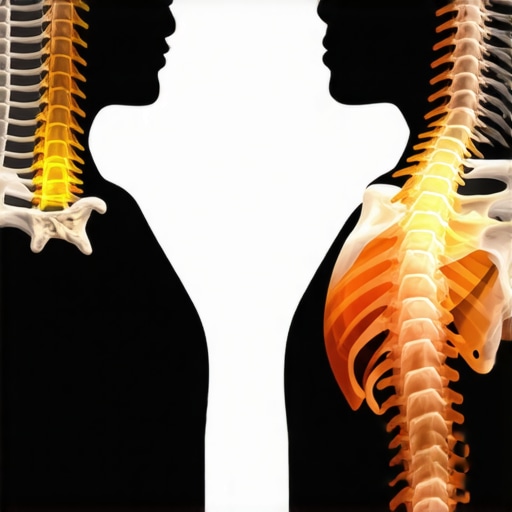 Another advanced nuance often missed is the relationship between your breath and your back. You can have the best ergonomic chair in the world, but if you are a chest-breather, you are essentially doing thousands of mini-shrugs every day. This is how your breathing pattern keeps your back muscles guarded and prevents your ribcage from moving as it should. If your ribs are locked, your lower back has to move more to compensate, leading to accelerated wear and tear on the L5-S1 disc. Instead of forcing a static ‘perfect’ pose, focus on how to breathe through your ribs to ease lower back tension. True mobility isn’t about being flexible enough to do a split; it’s about having a body that can move through its natural range without the brain sensing a threat and ‘locking’ the joints. By shifting from a ‘fix it with stretching’ mindset to a ‘stabilize and breathe’ approach, you unlock better back health that actually lasts through the work week. Don’t let the pursuit of ‘perfect’ alignment become the very thing that keeps you in pain.For years I thought I needed a $2,000 designer chair to save my back. The truth? A $2 tennis ball did more for my L5-S1 than any mesh lumbar support ever could. I’m a huge advocate for ‘minimalist’ maintenance—using small, portable tools that you can actually stick with long-term. One of my favorites is simply rolling out the arches of my feet while I’m on a Zoom call. It sounds disconnected, but how to use a tennis ball to release tension in your feet and back is a game-changer because your plantar fascia is essentially the bottom of your entire posterior chain. If your feet are tight, your hamstrings and lower back are the next dominoes to fall. This is where posture correction secrets that transform back pain outcomes really start—not at the neck, but at the foundation. Dr. Kelly Starrett, physical therapist and author of Becoming a Supple Leopard, often notes that ‘your position dictates your power,’ and if you’re standing on ‘stiff’ feet, your spine is already losing the battle.
Your Desk is a Tool Not a Prison
I eventually stopped looking at my workspace as a place I had to survive and started treating it as a active environment. I swapped the fancy gadgets for a simple foam roller that stays under my desk. However, most people roll their lower back, which is a massive mistake. Learning the proper way to use a foam roller on your upper back is vital because the thoracic spine is meant to move, while the lumbar is meant to be stable. If you roll the lower back, you’re just smashing already sensitive vertebrae. Instead, focus on opening the mid-back to keep your shoulders from rounding forward while you type. This prevents the ‘locked’ feeling that usually sets in by 3:00 PM.
How do I keep my spine healthy for the next decade?
Long-term success isn’t about one ‘big’ workout; it’s about the morning routine to decompress your spine before coffee. For me, that means a five-minute sequence of ‘Deadbugs.’ It’s the single most effective core exercise for protecting your spine from shear stress. If you’ve never tried it, the deadbug variation for people with weak lower backs allows you to build deep abdominal pressure without arching your spine. I predict that by 2030, we won’t just be sitting in chairs; we’ll be wearing smart-fabric shirts with integrated biofeedback that vibrates the moment your L5-S1 starts to shear. Until then, you have to be your own biofeedback loop. Use enhance your mobility expert tips for easier movement in 2025 to stay ahead of the curve. Adjust your routine daily spinal alignments for lasting relief by committing to just one of these tools today—grab that tennis ball from the garage and put it under your foot right now. You’ll be shocked at how much lighter your lower back feels in just sixty seconds.
The Hard Truths I Learned About Why My Back Actually Hurt
Looking back, the biggest hurdle wasn’t the pain itself; it was my misunderstanding of how the body works. I spent years thinking I was fragile, when I was actually just misaligned. One of the most eye-opening posture correction secrets that transform back pain outcomes is that your body doesn’t always need more rest; it needs better movement patterns. I also realized that ‘working through the pain’ during a stretch was often doing more harm than good, especially if my body was using tightness as a protective shield. Finally, I had to accept that there is no ‘perfect’ chair—only the next position you move into. These shifts in perspective were what finally stopped the cycle of chronic stiffness.
My Personal Toolkit for Daily Resilience
You don’t need a gym full of equipment to keep your spine healthy. My daily routine relies on three non-negotiables that I trust because they treat the cause, not just the symptom. First, the tennis ball—not for tennis, but for the bottom of my feet. Learning how to use a tennis ball to release tension in your feet and back changed my morning stiffness forever by loosening the entire posterior chain. Second, I keep a high-density foam roller nearby, but I only use it once I’ve mastered the proper way to use a foam roller on your upper back to avoid straining my lumbar. Lastly, I swear by the hand-towel roll; it is the most effective orthopedic tool I own, and it helps maintain my cervical curve while I sleep. #IMAGE_PLACEHOLDER_E#
Small Wins Lead to a Different Life
I know how exhausting it is to feel like you are fighting your own skeleton every day. But remember, your spine is incredibly resilient—it just needs you to stop sabotaging it for eight hours while you sleep. By making these daily adjustments to alleviate back pain and improve posture, you are giving your nervous system the space it needs to heal. Don’t feel like you have to change everything overnight. Start with one small tweak, like checking your chin angle before you drift off tonight or rolling your feet for sixty seconds. You deserve to wake up feeling light, flexible, and capable of taking on the day without a ‘bowling ball’ for a head. Have you tried the towel roll or the tennis ball trick yet? Let me know which one made the biggest difference for your morning stiffness in the comments below!