
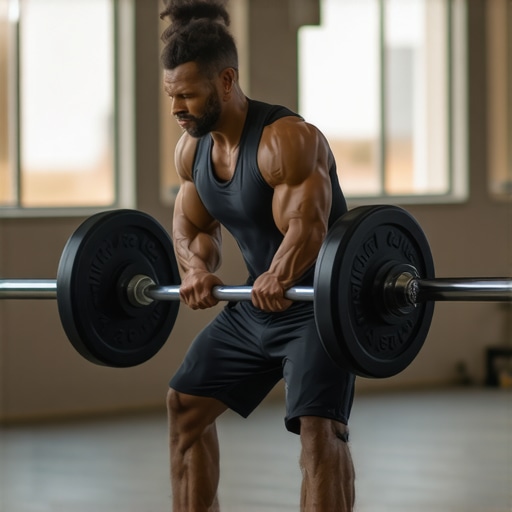
I remember the sharp, stinging twinge in my lower back every time I racked the barbell after a set of half-squats. At the time, I thought I was being smart. I believed the old myth that going past parallel would blow out my knees and ruin my discs, so I stuck to those cautious, shallow reps. My ego was happy with the heavy weight, but my spine was screaming. It took a session with a mobility specialist and a lot of humble pie to realize that my fear of depth was the very thing causing my chronic stiffness. By stopping short, I was actually concentrating all the force right on my lumbar spine instead of letting my hips and glutes do their job. Today, I want to show you why dropping lower is actually the key to a pain-free back and how you can fix your form to make it happen.
Stop Cutting Your Squats Short if You Value Your Spine
For years, I made the classic mistake of thinking that limited range of motion equals safety. I was terrified of that deep, bottom-of-the-squat position. But here is the reality: when you perform a partial squat, you have to decelerate the weight much more abruptly, which creates massive shear force on your lower vertebrae. I used to wonder why my feet turn out when you squat, and it turned out my body was trying to find a path of least resistance because my hips were completely locked up. Going deep allows the load to be distributed across the largest muscles in your body—the glutes and hamstrings—rather than leaving your lower back to pick up the slack. I had to learn the hard way that a deep core connection is what actually protects the spine, not a shallow range of motion. Have you ever noticed that your back feels tighter after a leg day where you stayed ‘safe’ and shallow? You are not alone; most people are fighting against their own anatomy without even knowing it.
Is going all the way down actually worth the hype?
A lot of folks worry that their knees or back just aren’t built for depth. I was one of them. However, research published in the journal Sports Medicine indicates that deep squats can actually enhance the stability of the knee joint and reduce the peak forces on the lumbar spine compared to partial squats. The secret isn’t just ‘going low,’ it is about building the foundation to get there safely. If you are struggling, you might be making a common 90/90 hip stretch mistake that keeps your pelvis from tilting correctly during movement. Once I started incorporating simple exercises to relieve chronic back pain into my daily routine, that ‘forbidden’ deep squat suddenly became the most comfortable part of my workout. We are going to break down how to transition from those painful half-reps to a deep, restorative squat that actually leaves your back feeling better than when you started.
Build a Strong Base From the Ground Up
To stop the cycle of back spasms, you have to treat your feet like the foundation of a skyscraper. If the base wobbles, the top floors—your lumbar spine and neck—are going to feel the vibrations. Many lifters let their arches collapse, which triggers a chain reaction that rotates the knees inward and pulls the pelvis out of alignment. I learned this the hard way when I realized the foot arch connection to your chronic lower back spasms was the reason my SI joint felt like it was on fire after every gym session.
Find Your Tripod Foot
Think of your foot as a camera tripod. You need three points of contact locked into the floor: the base of your big toe, the base of your pinky toe, and your heel. When you ‘screw’ your feet into the ground, you create external rotation torque in your hips, which makes room for your femur to sit deeply in the socket without pinching. 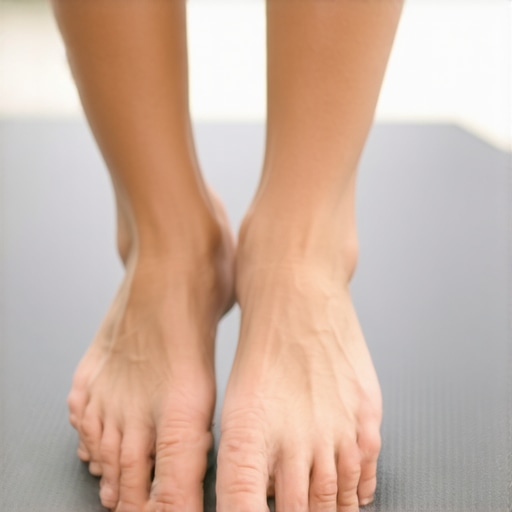
Breathe Into Your Ribs
Most people squat while holding a shallow breath in their chest. This leaves your spine unsupported, like a soda can with a hole in the side. To create true stability, you need to learn how to breathe through your ribs to ease lower back tension. By expanding your ribcage 360 degrees, you create internal pressure that acts as a natural weightlifting belt, protecting your discs from the shear force of the descent. It is that deep core connection that allows you to sit into the ‘hole’ of the squat without feeling like your back is about to snap.
Control Your Pelvis at the Bottom
The most dangerous part of a squat isn’t the weight; it is the moment your pelvis loses its neutral position. Last winter, I ignored my own advice. I had spent six hours driving to a hiking trailhead and went straight into a heavy set of squats that evening. Because my hips were locked in a seated shape—a common result of the couch position that is quietly ruining your lumbar curve—my pelvis tucked under at the bottom of the rep. I felt a sharp ‘zip’ in my sacrum that sidelined me for two weeks. That tuck, or ‘butt wink,’ happens when your hip mobility hits a wall and your lower back compensates by rounding.
Stop the Infamous Butt Wink
To fix this, you don’t necessarily need to stop going deep; you need to increase your active range. Start by using mobility mastery simple exercises to relieve chronic back pain to loosen the adductors and hip capsules. If you find your tailbone still tucking, check your hip stretches. I used to spend twenty minutes a day on the floor, but I was making a massive 90/90 hip stretch mistake that was actually jamming my hip joint further into the socket. Once I adjusted my angle to keep my spine long, my squat depth improved instantly, and that nagging pull in my lower back vanished. Practice descending slowly—four seconds down—and stop exactly one inch before your pelvis begins to tilt. That is your current safe ‘edge,’ and we will expand it by refining your hinge mechanics.It is a common sight in any gym: someone with a stiff lower back aggressively pulling their toes toward their shins, hoping a deep hamstring stretch will finally provide relief. However, this is where I see the most advanced ‘mobility enthusiasts’ fall into a dangerous trap. There is a massive difference between a muscle that is short and a muscle that is locked long because it is trying to stabilize a weak spine. If your hamstrings feel tight because they are pulling double duty as a brace for your lumbar vertebrae, stretching them is like trying to loosen a knot by pulling on both ends of the rope. In fact, you should stop stretching your hamstrings for back relief if you haven’t first checked if they are actually the ones protecting you from a herniated disc.
Why does my back still hurt if I am stretching every day?
The answer usually lies in something called protective guarding. According to research published in the Journal of Orthopaedic & Sports Physical Therapy, the brain will often increase the resting tone of muscles surrounding the spine—like the psoas and hamstrings—to prevent excessive movement in an unstable joint. When you aggressively stretch these ‘tight’ areas, you are essentially telling your body to let go of its primary defense mechanism. This explains why stretching your psoas might actually be making your back hurt more; if the psoas is tight to prevent your spine from shearing forward, forcing it to lengthen without building core stability first is a recipe for disaster. 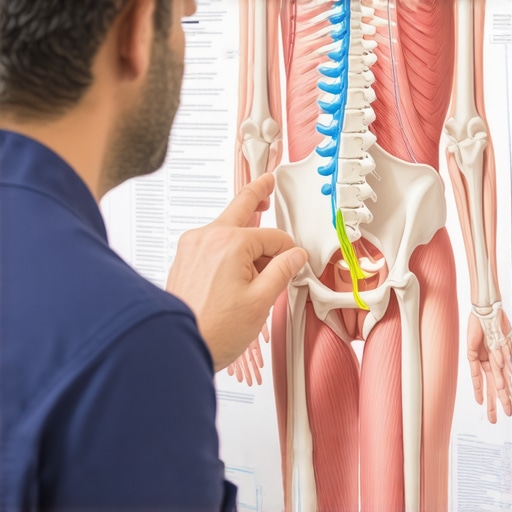
Stop treating symptoms and start looking for the source
To get past the plateau of chronic stiffness, you have to move beyond the ‘stretch what feels tight’ mentality. This is a nuance often missed by beginners: the site of the pain is rarely the site of the problem. For example, if you are constantly trying to find the psoas release that finally stops your deep lower back ache, you might actually be overlooking how your ribcage is positioned. If your ribs are flared, your psoas is perpetually overextended, leading to that ‘knot’ feeling that no amount of lunging will fix. You need to understand how your breathing pattern keeps your back muscles guarded. Without a 360-degree breath to create internal pressure, your muscles will never feel safe enough to truly relax. These posture correction secrets that transform back pain outcomes aren’t about sitting up straight; they are about teaching your nervous system that it no longer needs to use muscle tension as a crutch. Have you ever fallen into the trap of stretching a muscle for weeks only to have it feel tighter than when you started? Let me know in the comments. By implementing enhance flexibility top mobility strategies for active living, we can start retraining those deep stabilizers to do their job, allowing the global movers to finally let go.I used to think that a foam roller was the only tool I needed to keep my back from seizing up, but I was looking at the problem too simply. To maintain the progress I made with deep squats and core stability, I had to look at my daily environment—the place where I spend eight hours a day: my desk. For instance, I realized that my workstation was a silent killer of my lumbar curve. I started using the 2-inch rule for your laptop stand to save your neck from strain and it immediately stopped the burning sensation in my upper traps. But maintenance isn’t just about the gym; it is about the daily adjustments to alleviate back pain and improve posture that you do when nobody is watching.
The Gear That Saved My Spine From Desk Work
One tool I swear by is a simple, firm lacrosse ball. Unlike a foam roller, which is often too broad to target the tiny muscles between your shoulder blades, a lacrosse ball allows for precise trigger point therapy. If you combine this with the chair hack to keep your pelvis neutral while working, you create an environment where your body doesn’t have to fight a losing battle against gravity. Dr. Stuart McGill, a world-renowned spine biomechanics expert, emphasizes in his book Back Mechanic that ‘proximal stiffness creates distal mobility.’ This means if your core is stiff and stable, your hips and shoulders can move freely. This is why I focus so much on the morning glute squeeze that protects your spine all day before I even leave the house. I also incorporated the morning routine to decompress your spine before coffee. It takes three minutes, but it resets the disc hydration levels after eight hours of lying flat. Most people jump straight into a high-impact day with ‘stiff’ discs, which is like trying to drive a car with frozen oil. By taking those few minutes to breathe and move, you are literally lubricating your joints for the day ahead.
How can I keep my back feeling this good over time?
The secret to long-term success isn’t a grueling 90-minute yoga session once a week; it is the top strategies for moving without pain that you weave into your actual life. I predict that in the next few years, we will see a massive shift toward biofeedback wearables—think ‘smart’ shirts that vibrate the moment your posture correction secrets that transform back pain outcomes start to fail you. Until that tech is mainstream, you have to be your own internal sensor. I believe the future of back health lies in ‘active furniture.’ We are already seeing the transition from a sitting to a standing desk become the norm, but the next step is surfaces that move with you, encouraging micro-movements of the pelvis. This dynamic sitting prevents the stagnation that causes your sitting habits are causing your hamstrings to tighten. Until those futuristic chairs are affordable, stay proactive with enhance flexibility top mobility strategies for active living. I want you to try the 10-second posture check to do every time you check your phone today. It sounds small, but these micro-habits prevent the ’tissue creep’ that leads to those sudden back spasms. If you are serious about enhance your mobility expert tips for easier movement in 2025, start by auditing your sitting habits right now.
The Hard Truth About My Five-Year Plateau
For a long time, I thought that if I just found the right stretch, my back would magically stop hurting. I spent years chasing the ‘tightness’ without realizing that my body was creating that tension to keep me safe. I eventually learned that stiffness is a signal, not a defect. When I stopped fighting my body and started building stability, the pain finally left. I also realized that consistency beats intensity every single time. A five-minute 2-minute habit to fix your forward head posture is worth more than a monthly massage that only masks the problem. Finally, I had to accept that recovery isn’t passive; you have to actively teach your nervous system that it is safe to move again. This is often how chiropractic adjustments can clear brain-fog by resetting those overloaded signal pathways. I used to wonder why self-cracking your neck makes the stiffness come back faster, and it’s because I was addressing the symptom, not the underlying instability.
A Minimalist Gear List for Spinal Resilience
You don’t need a gym full of equipment to fix your posture. I rely on a few high-value items that actually move the needle in my daily life. First, a firm lacrosse ball is my go-to for breaking up deep tissue adhesions that a standard foam roller simply misses. Second, Dr. Stuart McGill’s ‘Back Mechanic’ remains the gold standard for anyone serious about understanding proper spine hygiene. I also prioritize a simple laptop stand because following the 2-inch rule for your laptop stand changed my neck health overnight. These aren’t just gadgets; they are the tools I use to adjust your routine daily spinal alignments for lasting relief so that I can focus on my work, not my discomfort. #IMAGE_PLACE_HOLDER_E#
Take the First Step Toward Your Pain-Free Future
Moving without fear is a skill that anyone can relearn with patience. It starts with one deep breath, one corrected squat, and the willingness to listen to what your body is actually telling you. You do not have to live in a perpetual state of ‘protective guarding.’ By applying these top mobility strategies for active living, you are reclaiming your ability to play, train, and live fully. Don’t wait for another flare-up to take your back pain and long-term health seriously. Start today, move slowly, and trust that your body is designed for strength, not just survival. Have you ever felt like your ‘tight’ muscles were actually protecting you from more pain? Let me know in the comments below!