
I was three hours into a cross-country flight, squeezed between a crying toddler and a guy who seemed to be using my shoulder as a headrest, when I realized I couldn’t actually turn my head to the left anymore. It wasn’t just a little stiffness; it was a full-blown physical lockdown. By the time we hit the tarmac, my lower back felt like it had been fused together by a malicious welder. I limped through the terminal, clutching my carry-on, wondering how a supposedly ‘relaxing’ trip had turned me into a human statue.
My Brutal Wake-Up Call in Row 24
For years, I told myself I would just ‘stretch when I get to the hotel.’ It was a lie. By the time I reached the hotel, the damage was done. My hip flexors were tighter than a guitar string, and my neck felt like it was carrying the weight of the entire plane. This is the reality for frequent travelers: we spend hours in pressurized cabins, vibrating seats, and cramped positions that force our bodies into unnatural shapes. In fact, research from Harvard Health indicates that prolonged sitting can lead to a significant increase in muscular imbalances and even deep vein thrombosis if we aren’t careful. I finally had to admit that my [master-your-mobility-top-strategies-for-moving-without-pain](https://chiromasteryz.com/master-your-mobility-top-strategies-for-moving-without-pain) were non-existent. Today, I want to show you how to break that cycle of travel-induced agony. We are going to fix the way you move before, during, and after your transit so you can actually enjoy your destination. Have you ever stepped off a plane and felt like your spine had shrunk three inches?
Is airport stretching actually worth the public embarrassment?
I get it. You don’t want to be that person doing a full downward dog at Gate B12 while everyone else is trying to charge their phones. I used to be terrified of looking ‘weird,’ so I would just sit there and suffer in silence. That was my biggest mistake early on. I ignored the [why your tailbone aches after long car rides and how to fix it](https://chiromasteryz.com/why-your-tailbone-aches-after-long-car-rides-and-how-to-fix-it) because I was too self-conscious to stand up and move. But here is the secret: nobody is actually watching you. Most people are too buried in their screens to notice you doing a few subtle [30-second desk fixes for your tight pectoral muscles](https://chiromasteryz.com/the-30-second-desk-fix-for-your-tight-pectoral-muscles) or a standing hip stretch. I’ve learned the hard way that a little bit of ‘terminal yoga’ is much better than spending three days of your vacation in a state of [chronic back pain](https://chiromasteryz.com/mobility-mastery-simple-exercises-to-relieve-chronic-back-pain). We’re going to dive into the specific moves that save your joints without making you look like a circus performer.
Reset Your Spine Before the Jet Engine Starts
You wouldn’t start a race with cold tires, and you shouldn’t start a six-hour journey with a compressed spine. Your first priority is creating space between those vertebrae. Before you even head to the airport, implement [the morning routine to decompress your spine before coffee](https://chiromasteryz.com/the-morning-routine-to-decompress-your-spine-before-coffee). Think of your spine as a coiled spring; the physical pressure of travel squashes it, so you need to start your journey at maximum length. I also swear by [the morning movement routine that lubricates your joints](https://chiromasteryz.com/the-morning-movement-routine-that-lubricates-your-joints) to ensure the synovial fluid is actually flowing before you hit that stagnant cabin air. If you skip this, you’re basically letting your discs ‘set’ in a compressed state.
Turn Your Economy Seat Into a Support System
Once you’re buckled in, your seat becomes your environment. Most airplane seats are designed for safety and durability, not for your L5-S1 disc. If your head is being pushed forward by those aggressive headrests, you need to fix it immediately. I learned the hard way that ignoring this leads to a week of tech-neck symptoms that ruin the start of any vacation. Make sure you know [the right way to adjust your headrest to prevent whiplash symptoms](https://chiromasteryz.com/the-right-way-to-adjust-your-headrest-to-prevent-whiplash-symptoms) so your ear stays aligned with your shoulder. If you feel that familiar burn in your lower back, it’s likely your psoas screaming for help. You can perform [the seated hip stretch that saves you from afternoon slump pain](https://chiromasteryz.com/the-seated-hip-stretch-that-saves-you-from-afternoon-slump-pain) right in your seat without bothering your neighbor. I once did this every 45 minutes on a flight to London, and for the first time in my life, I didn’t need to ‘crack’ my back the moment I stood up. 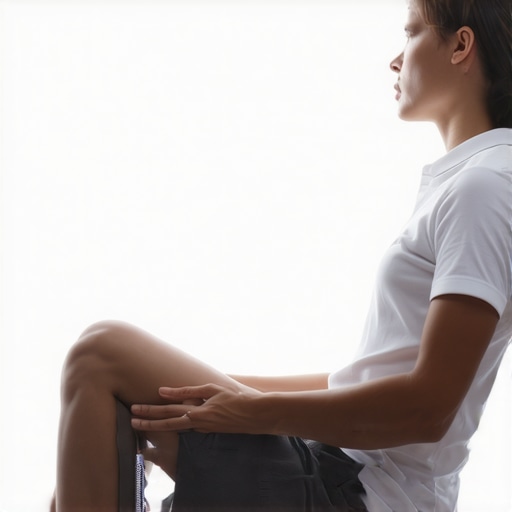
Fight the Shrinking Feeling with Better Pelvic Tilts
The stuck feeling usually starts in the pelvis. When you sit, your glutes effectively turn off and your hip flexors shorten like a dried-out bungee cord. This pull on your pelvis is [why your tailbone aches after long car rides and how to fix it](https://chiromasteryz.com/why-your-tailbone-aches-after-long-car-rides-and-how-to-fix-it). To counteract this, use [the simple pelvic tilt that makes sitting for hours painless](https://chiromasteryz.com/the-simple-pelvic-tilt-that-makes-sitting-for-hours-painless) every time the fasten seatbelt light goes off. It’s a micro-adjustment—just a subtle roll of the hips—but it prevents the shear stress that causes that deep, gnawing ache. I remember a 14-hour flight to Tokyo where I used a rolled-up sweatshirt as a makeshift lumbar support. I felt like a genius until I realized I was actually shoving my pelvis into a painful anterior tilt. I spent the first two days in Shinjuku walking like I had a rod in my back because I didn’t understand the mechanics of [the specific way to sit that stops tailbone pressure](https://chiromasteryz.com/the-specific-way-to-sit-that-stops-tailbone-pressure).
Keep Your Shoulders From Taking the Hit
While your lower back is the usual suspect, your upper body is also under siege. Lugging a heavy carry-on through the terminal and then hunching over a tiny tray table to watch a movie creates a ‘hunchback’ tension that radiates into your neck. If you feel that mid-back burn, try [the simple scapular reset for instant shoulder tension relief](https://chiromasteryz.com/the-simple-scapular-reset-for-instant-shoulder-tension-relief). It takes five seconds and keeps your chest open. Once you finally land and get to your hotel, don’t just collapse onto the bed. Use [the 30-second wall reset for hunchback posture](https://chiromasteryz.com/the-30-second-wall-reset-for-hunchback-posture) to tell your nervous system that the ‘survival mode’ of the middle seat is officially over and your vacation has begun.It’s a common sight at terminal gates: travelers desperately pulling their knees to their chest or touching their toes to loosen up after a flight. Here is the contrarian truth: you are probably making it worse. In my years of rehabilitating spines, I’ve seen that why stretching your hamstrings might be making your back pain worse is the number one mistake people make post-travel. When you sit for hours, your brain often creates a protective tension in the hamstrings to stabilize a vulnerable lower back. By aggressively stretching them, you’re stripping away that last line of defense. Dr. Stuart McGill, a leading expert in spine biomechanics, emphasizes that spinal stability often requires stiffness in the right places, not just endless flexibility. If you force a stretch when the muscles are trying to protect the joints, you’re essentially inviting a disc bulge to the party.
Why does my back feel worse after a deep yoga session?
Many travelers head straight to a yoga class to reset, but the 90-90-hip-stretch mistake that is hurting your lumbar spine is another classic trap. If your hips are locked from a long-haul flight, your body will steal that missing motion from your lower back. This is where the nuance of master your mobility top strategies for moving without pain comes into play. You need to differentiate between a muscle that is physically short and one that is neurologically tight. Stretching a neurologically tight muscle is like pulling on a knotted rope; it just makes the knot tighter. Instead, focusing on how an adjustment restores more than just range of motion can reset the neural feedback loop, allowing the muscle to relax without the trauma of over-stretching. 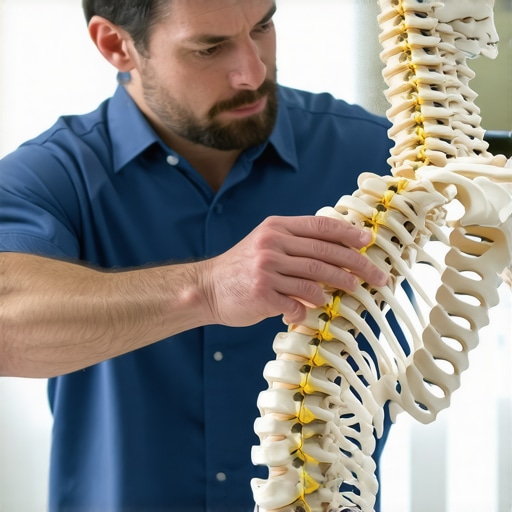
Ditch the Vacuum for Better Spinal Support
One of the most pervasive myths in the fitness world is that we should always keep our stomach sucked in for a flat look and core support. However, why you should stop sucking in your stomach to look thinner is critical for anyone dealing with travel-induced back pain. Sucking in your stomach creates a hollowed-out cylinder that cannot support the weight of your torso, leading to massive shear stress on your vertebrae. According to research in the Journal of Bodywork and Movement Therapies, improper diaphragmatic breathing—often a result of this stomach gripping—directly increases tension in the accessory muscles of the neck. You need to learn the deep core connection that stops your spine from shear stress by breathing into your sides and back, not just pulling your belly button toward your spine.
The Warning Sign Most Travelers Ignore
If you find yourself constantly trying to crack your own back after a flight, you are falling into a dangerous loop. I’ve seen patients who think they are helping themselves, but why self-cracking your neck makes the stiffness come back faster is a reality you must face. You are likely mobilizing the joints that are already hypermobile, while the truly stuck segments remain jammed. This creates a cycle of temporary relief followed by even more instability. Have you ever fallen into this trap of stretching a tight muscle or cracking your own back only to have it feel like a brick an hour later? Let me know in the comments. To truly recover, you need to focus on daily adjustments to alleviate back pain and improve posture that target stability rather than just chasing the next pop.I’ve spent thousands of dollars on gadgets that promised to ‘fix’ my posture during long hauls, but most of them ended up in the back of my closet or discarded in airport trash cans. The real winners in my travel kit are surprisingly simple and based on mechanical necessity rather than marketing hype. I never board a plane without a high-quality inflatable lumbar roll. Why inflatable? Because air allows you to micro-adjust the firmness to match the specific seat depth of a Boeing 737 versus an Airbus A320. If you use a rigid foam support, you might find why your lumbar support might be making your pain worse when the seat pan is too short for your frame. I also swear by a lightweight, collapsible laptop stand to follow the 2-inch rule for your laptop stand to save your neck from strain while working at the gate or in a hotel room. NASA’s research on Neutral Body Posture (NBP), originally developed to reduce musculoskeletal stress for astronauts in microgravity, shows that our bodies naturally seek a 128-degree angle between the torso and thighs. Our goal in a cramped economy seat is to use tools to mimic this ‘zero-strain’ position as closely as possible. 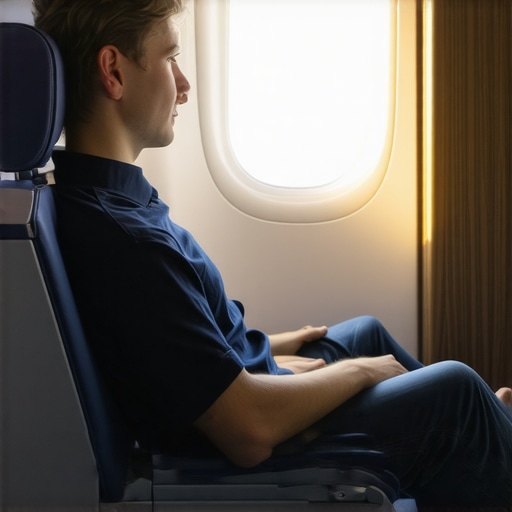
How can I keep my spine happy between trips?
Long-term results don’t come from a single flight; they come from the maintenance you perform during the weeks you are grounded. You need to unlock better back health with effective posture tips for 2025 that focus on the ‘middle’ days. I personally recommend a regimen of daily spinal alignments for lasting relief to ensure your body isn’t carrying residual tension from your last business trip into your next one. Looking ahead, I predict we will soon see ‘smart’ travel clothing with embedded haptic sensors that gently vibrate when your shoulders begin to roll forward—essentially a digital coach for your nervous system. Until then, your best defense is a proactive routine. I want you to try one specific advanced tip: the next time you arrive at your hotel, immediately perform the wall-based move that opens your chest instantly. It takes exactly 60 seconds and reverses hours of ‘seat-crunched’ posture by resetting your scapular position. If you can master these small windows of maintenance, you’ll find that you stop ‘recovering’ from vacations and actually start enjoying them from the moment you land.
The Hardest Truths I Learned About Staying Mobile in the Sky
After years of trial and error, I realized that the secret to travel comfort isn’t one big stretch, but a thousand tiny adjustments. First, stop waiting for the ‘perfect’ moment to move. If you feel a twinge, shift your weight immediately. Second, I learned that the truth about posture correctors and braces is that they often act as a crutch rather than a cure during long flights; your muscles need to engage, not fall asleep inside a harness. Third, remember that hydration is purely mechanical for your spine—your discs need water to stay resilient against cabin pressure changes. Finally, trust the process of expert tips for easier movement in 2025, which emphasize that small, consistent movements are far superior to one aggressive, desperate session at the hotel gym.
#IMAGE_PLACEHOLDER_E#
My Personal Survival Kit for Pain-Free Transit
You don’t need a suitcase full of expensive gadgets, just a few high-utility items that respect your anatomy. I never travel without a simple tennis ball; you can learn how to use a tennis ball to release tension in your feet and back while waiting at the gate or even sitting in your seat. It’s the ultimate low-tech massager for tight glutes. I also trust simple adjustments to relieve back pain like using a thin, rolled-up scarf as a neck support rather than those bulky U-shaped pillows that push your chin toward your chest. My final essential is a pair of compression socks—they keep your circulation moving, which indirectly prevents the ‘heavy leg’ feeling that ruins your first day of walking tours.
Why Your Next Destination Deserves a Healthy Spine
Travel is supposed to broaden your horizons, not narrow your range of motion. By taking ownership of your physical state during the journey, you ensure that you arrive ready to explore, not just ready to nap. Implementing these master your mobility top strategies for moving without pain transforms the transit from a necessary evil into a manageable part of the adventure. Your body is the only vehicle that actually goes the whole distance with you—treat it with the same care you would give to your passport. Have you ever had a trip ruined by a sudden back spasm or a stiff neck? Let me know in the comments below.