
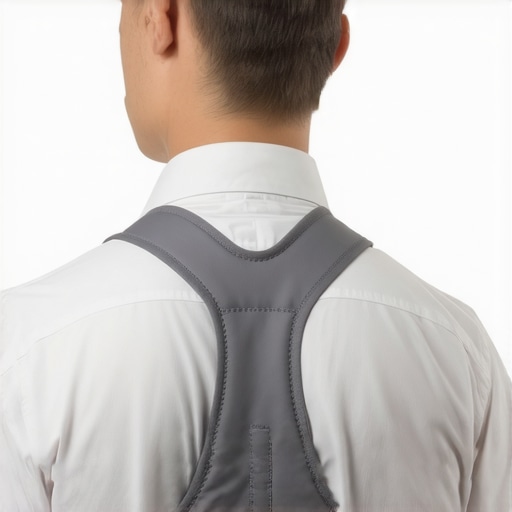
I remember the day I finally gave in and bought that “miracle” posture brace from a late-night social media ad. My upper back felt like it was being slowly roasted over an open flame, and I was desperate for anything that didn’t involve another bottle of ibuprofen. I strapped it on, pulled the velcro tight, and for about ten minutes, I felt like I finally had it all figured out. But by lunch, I was stiff, irritable, and my muscles felt like they’d forgotten how to hold me up. It was a massive wake-up call that forced me to look at the real science behind these gadgets. Today, we’re going to cut through the marketing noise and look at what actually happens when you try to outsource your spine’s job to a piece of elastic. My goal is to show you how to find real relief without turning your back into a “wet noodle.”
Stop treating your spine like a broken tent pole
When I first started my journey toward better alignment, I made the rookie mistake of thinking more was better. I figured if ten minutes of wearing a brace felt okay, six hours would be life-changing. I was wrong. I ended up falling into the trap of the truth about posture braces and muscle atrophy. See, our bodies are incredibly efficient—if a strap is doing the work to keep your shoulders back, your brain tells your muscles they can clock out for the day. It’s a vicious cycle. I spent weeks wondering why my phone was making my shoulders permanently rounded even when I was using the brace. The truth is, these tools are often marketed as a permanent fix, but they’re really just a temporary band-aid. According to experts at Harvard Health Publishing, the danger lies in dependency; when your core and back muscles stop engaging, you actually lose the very stability you’re trying to gain. I had to learn that the path to comfort involves unlocking better posture through movement, not just restriction. Have you ever felt like you were making progress with a gadget, only to have your pain return the second you took it off?
Are these braces just an expensive waste of money?
It’s a question that plagued me as I looked at my growing pile of unused health gadgets. The short answer is: not always, but they are almost always used incorrectly. We treat them like structural repairs when they should be used as gentle reminders. If you’re pulling those straps so tight that your circulation is cutting off, you’re not helping your posture; you’re just punishing your skin. We need to talk about how to use these tools as a coach, not a crutch, so you don’t end up weaker than when you started.I finally realized that my spine isn’t a skyscraper that needs external scaffolding; it’s more like a suspension bridge that requires internal tension and balance. If the cables (your muscles) are slack, the bridge collapses. Instead of tightening a velcro strap, you need to tighten your neurological connection to your muscles.
Build a body that holds itself up
The shift starts when you move from passive support to active engagement. Think of your posture like a pilot flying a plane; the autopilot (the brace) is fine for a bit, but you need to know how to grab the controls when things get bumpy. One Tuesday afternoon, I was huddled over my laptop at a low-top table in a crowded cafe. My mid-back started that familiar, searing burn. Instead of reaching for my brace in my bag, I stood up and found a flat pillar near the bathroom. I performed the 30-second wall reset for hunchback posture. Within seconds, the burn dissipated. Not because I was “supported,” but because I had woken up the dormant muscles in my upper back.
Treat your brace like a training alarm
If you must use a brace, use it as a feedback loop. Put it on loosely. The moment you slouch, the fabric should tug against your skin. That tug is your cue to sit up using your own strength, not the brace’s. Once you feel that cue, take the brace off. You want to avoid the trap where the truth about posture braces and muscle atrophy becomes your reality. Your goal is to train your brain to recognize the “slump” before the pain starts. 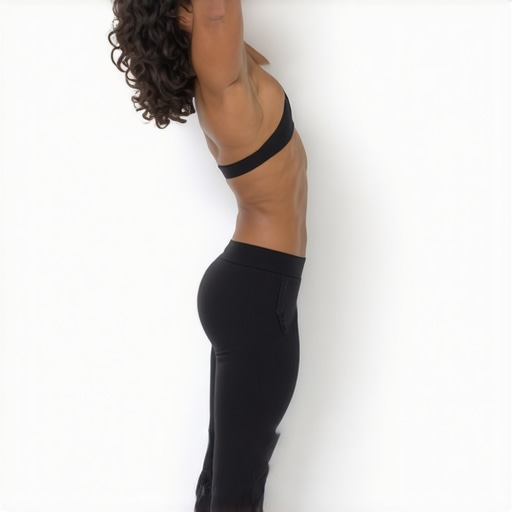
Ditch the slouch with a scapular reset
Most people think good posture is about “shoulders back and down,” but that often just creates more tension in the wrong places. Often, why your chest muscles are pulling your shoulders forward is because your front is too tight, not just because your back is too weak. Try the simple scapular reset for instant shoulder tension relief by gently rolling your shoulders up to your ears and then letting them fall back into your “back pockets.” It’s a subtle movement that engages the lower trapezius without straining the neck.
Stop the ‘C-shape’ at your desk
Your environment is usually the biggest saboteur. I spent years fighting my own furniture until I implemented the 2-inch rule for your laptop stand to save your neck from strain. By raising the screen so the top third is at eye level, you stop the cascading “C-shape” collapse of the spine. Think of your spine as a stack of oranges. If you tip the top one too far forward to look at a screen, the whole stack has to lean or it falls. By raising your monitor, you’re just putting that top orange back in the center. I also found that learning how to fix your grip to save your neck and shoulders played a huge role when I was using a mouse all day; a tight grip on your tech often radiates tension right up into your traps. You also need to find the deep core connection that stops your spine from shear stress by imagining a string pulling the top of your head toward the ceiling while your sit-bones remain heavy in the chair. This creates space between your discs rather than compressing them.But here is where the ‘expert’ advice you see on social media usually fails you. Most influencers tell you that if something feels tight, you must stretch it until it gives up. This is a dangerous oversimplification. For instance, why stretching your hamstrings might be making your back pain worse is a concept rooted in neural tension. If your sciatic nerve is irritated, stretching the muscle actually pulls on the nerve like a frayed cable, causing more inflammation. I’ve seen people spend years ‘lengthening’ their psoas, only to find that why stretching your psoas might actually be making your back hurt more is because their spine actually needs the psoas to stay engaged for stability.
Could your ‘strong core’ be the reason your spine feels brittle?
Many of us were taught to ‘suck it in’ or maintain a rigid ‘braced’ core at all times. Dr. Stuart McGill, a leading expert in spine biomechanics, points out that while stability is key, perpetual bracing creates ‘stiff’ movement patterns that rob you of natural shock absorption. You need to find the deep core connection that stops your spine from shear stress without turning your torso into a block of cement. The ‘Oops’ factor here is confusing rigidity with stability. True mobility mastery involves being able to move through a range of motion while maintaining control, not just being ‘stiff’ or ‘loose.’
Stop the self-cracking cycle before you wreck your neck
We’ve all done it—that quick twist of the neck to hear a ‘pop’ and feel a momentary rush of endorphins. But there is a reason why self-cracking your neck makes the stiffness come back faster. When you crack your own neck, you aren’t hitting the joint that is actually stuck; you’re hitting the segments above or below it that are already moving too much. Over time, this leads to ligament laxity, making your neck feel even more unstable and ‘heavy.’ It’s a cheap high that costs you long-term structural integrity. Instead, focusing on posture correction secrets that transform back pain outcomes involves specific, targeted adjustments rather than blunt-force twisting. Another common mistake is the 90-90 hip stretch mistake that is hurting your lumbar spine, where people collapse their lower back while trying to open their hips. You have to keep a neutral spine to isolate the joint you’re actually targeting. Have you ever fallen into the trap of over-stretching or self-cracking just to get through the day? Let me know in the comments.I eventually realized that no single ‘fix’ lasts forever if you return to the same habits that broke you in the first place. My progress skyrocketed when I stopped looking for a cure and started looking for a maintenance schedule. One tool that changed everything for me wasn’t some high-tech gadget, but a simple high-density foam roller. Most people use these incorrectly by rolling too fast, which just triggers a protective muscle spasm. When I learned the proper way to use a foam roller on your upper back, I focused on breathing into the tight spots rather than just rolling over them. I also keep a tennis ball under my desk at all times. It sounds strange, but using it to roll out the fascia on the bottom of my feet has a direct impact on my lumbar spine. I’ve seen firsthand the foot arch connection to your chronic lower back spasms; when your feet are tight, your entire posterior chain pays the price.
How do I keep my spine in check long-term?
The secret to longevity isn’t a 90-minute gym session once a week; it is the 60-second micro-adjustments you make every hour. I swear by adjust your routine daily spinal alignments for lasting relief because it turns spinal health into a background process rather than a chore. Every morning, before I even reach for my phone, I perform a specific sequence to wake up my joints. This morning routine to decompress your spine before coffee helps counteract the gravity-induced compression that happens while we sleep. Research published in the *Journal of Physical Therapy Science* indicates that even small, frequent postural changes are more effective at reducing musculoskeletal pain than infrequent, long-duration ergonomic interventions. This validates why I prioritize daily adjustments to alleviate back pain and improve posture over waiting for a major flare-up to take action.  Looking toward the future, I predict we will see a massive shift toward AI-integrated wearables that don’t just ‘pull’ you into place like a brace, but use biofeedback to train your nervous system in real-time. For now, we have to be our own sensors. You can unlock better back health effective posture tips for 2025 by starting to treat your environment as a training ground. This means practicing mobility mastery while you wait for the microwave or using posture correction secrets that transform back pain outcomes while standing in line at the grocery store. I want you to try this right now: find a doorway, place your forearms on the frame, and lean through gently to find the wall-based move that opens your chest instantly. Feel that stretch? That is the feeling of your body reclaiming its natural space. By incorporating these expert tips for easier movement in 2025, you aren’t just managing pain; you’re building a foundation that allows you to move through life with much less effort.
Why My ‘Perfect’ Posture Brace Was My Biggest Setback
Looking back, the moment I tossed that restrictive elastic brace in the trash was the moment my real healing began. I had to learn the hard way that external support is often internal sabotage. First, I realized that my brain was literally forgetting how to fire my mid-back muscles because the brace was doing the work for them. It wasn’t just physical weakness; it was a neurological disconnect. Second, I discovered that my ‘slouch’ was actually my body trying to find a path of least resistance because my chest was so tight. No amount of pulling my shoulders back was going to fix a muscle that was physically too short to let me stand up straight. Finally, I learned that mastering your own mobility is a slow game. There are no shortcuts, but the results from simple adjustments are far more permanent than anything you can buy in a box. I stopped looking for a ‘fix’ and started looking for a partnership with my own anatomy.
The Daily Tools That Stopped My Back From Burning
I’ve narrowed my ‘survival kit’ down to three things that actually move the needle. First is a high-density foam roller; I use it not to ‘roll’ my lower back, but to open up my thoracic spine so I don’t feel like a closed book. Second is a simple tennis ball, which is the best tool I’ve found for releasing tension in the feet and back. The connection between your arches and your lumbar spine is absolute magic once you feel it. Lastly, I always recommend the book Becoming a Supple Leopard by Dr. Kelly Starrett. It’s essentially the owner’s manual for the human body that we should have all been given at birth. These aren’t just gadgets; they are tools that facilitate secret posture strategies that actually change how you move through space. I trust these because they require you to be the active participant in your health.
Your Spine Is Ready for a Fresh Start
The path to a pain-free life isn’t paved with velcro straps; it’s built through the small, intentional choices you make every single day. I spent years waiting for a ‘cure’ when the answer was already inside my own nervous system. By adjusting your routine for lasting relief, you stop being a victim of your desk chair and start being the architect of your own comfort. Remember that your body is incredibly adaptable—it just needs the right signals to thrive. Focus on expert tips for 2025 movement and trust that your back is stronger than you think. You’ve got this, and your future self is already thanking you for starting today. Have you ever noticed your back pain flares up specifically during high-stress weeks? Let me know in the comments below!