
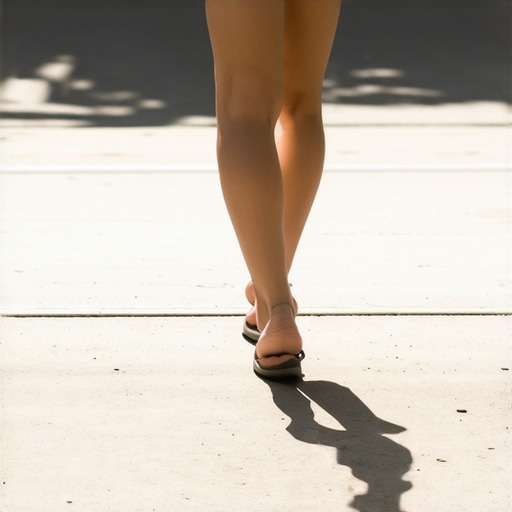
I will never forget that three-mile boardwalk stroll back in 2022 that ended in three days of heating pads and heavy sighs. I was wearing my favorite pair of thin, foam flip-flops—the kind that weigh practically nothing and cost about the same as a latte. By the time I reached the car, my lower back felt like it had been twisted into a pretzel. I had not lifted anything heavy or slept funny. I just walked. That was the ‘lightbulb’ moment when I realized my choice of footwear was actively sabotaging my spine. Today, I want to show you exactly how those flimsy sandals are tricking your brain, changing your stride, and why your back is screaming for mercy.
Stop Blaming Your Desk for Your Lower Back Pain
We usually point fingers at our office chairs or our mattresses when our spine starts to throb, but the culprit is often right under our feet. When you slide into a pair of flip-flops, you are not just making a fashion choice; you are forcing your body to compensate for a massive lack of stability. Because there is no back strap, your toes have to constantly ‘scrunch’ or grip the sole of the shoe to keep it from flying off. This tiny, repetitive action creates a chain reaction of tension. If you have ever wondered about the real reason your lower back hurts only after you go for a walk, look no further than that gripping reflex. It shortens your natural stride and prevents your foot from rolling through its natural range of motion.
Are these five-dollar sandals actually worth the agony?
I used to be the biggest skeptic. I thought ‘supportive footwear’ was just a marketing ploy to get me to buy expensive sneakers. But after my boardwalk disaster, I started paying attention to my gait. I noticed that my knees were slightly buckling inward and my pelvis was tilting forward just to keep my balance in those rubber slabs. Even if you are doing simple adjustments to relieve back pain during the day, wearing unsupportive sandals for just an hour can undo all that hard work. According to the American Podiatric Medical Association, the lack of arch support in standard flip-flops is a leading cause of plantar fasciitis, which almost always translates into lumbar strain because the body is one interconnected machine.
The Hidden Way Your Toes Are Stealing Your Mobility
One of the biggest mistakes I made early on was assuming that my feet were independent of my back. I spent months stretching my hamstrings when the real issue was the tension in my arches. When your foot cannot absorb the shock of the pavement, that energy has to go somewhere—and it usually travels straight up to your L5-S1 vertebrae. I eventually had to learn how to use a tennis ball to release tension in your feet and back just to get my mobility back to baseline. Have you noticed your lower back feels unusually tight after a day at the beach or a quick trip to the grocery store in your ‘easy’ shoes? It is time to stop the cycle before the damage becomes permanent.
It took me six months of physical therapy to realize that my feet were essentially ‘clutching’ for dear life every time I took a step. If you want to stop the cycle, you need to audit your footwear immediately. First, look for a ‘deep heel cup’ in any sandal or shoe you buy. This is a game-changer. When your heel is cradled, your foot doesn’t slide around, which means your toes don’t have to scrunch to keep the shoe on. I remember buying a pair of structured slides with a contoured footbed last year. At first, they felt ‘stiff’ and almost strange compared to my old foam ones. But after a week, my lower back felt quiet for the first time in months. This was the moment I understood that what your foot arch says about your chronic hip pain is more about structural support than just soft cushion. To test your current shoes, try to bend them in half. If they fold easily at the arch, they are doing nothing to protect your spine.
Ditch the Clawing Reflex and Reset Your Gait
Next, you have to address the ‘toe-scrunching’ habit. Even when you aren’t in flip-flops, your brain might still be telling your toes to grip. This is why I started doing a daily 60-second reset. I would stand barefoot and focus on spreading my toes as wide as possible, like a fan. If you find your toes naturally curling or if the skin on the bottom of your feet feels tight, you are likely dealing with a shortened plantar fascia. This tension pulls on the calves, which pulls on the hamstrings, and eventually contributes to the real reason your lower back hurts only after you go for a walk. I used to think my hamstrings were just naturally tight, but it was actually my feet refusing to let go. 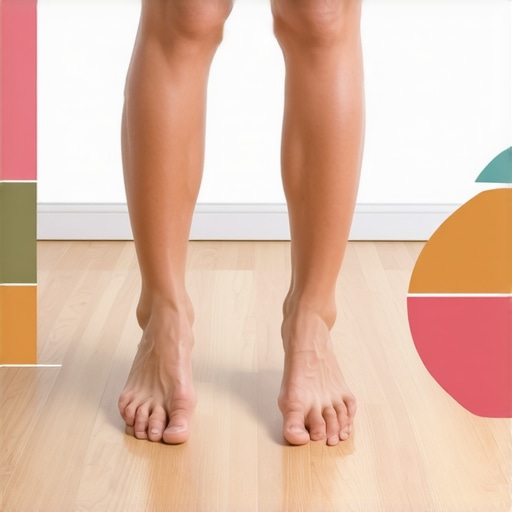
Why Your Hips Are Already Tilted Forward
I also learned to monitor my pelvis throughout the day. When we wear unsupportive shoes, we often shift our weight into a ‘swayback’ position to maintain balance. You can actually feel this happening in real-time. Try standing in your flimsy flip-flops and then switch to being barefoot on a flat, hard surface. Do you feel your weight shift toward your toes? That subtle forward lean is the standing error that puts 50 pounds of pressure on your l5-s1. To fix this, I began practicing the simple pelvic tilt that makes sitting for hours painless even while I was standing in line at the grocery store. It is about tucking your tailbone slightly under and engaging your lower abdominals so your spine stays stacked rather than arched like a bow.
A Simple Release for Instant Relief
Finally, don’t ignore the connective tissue that has been overworked. After any day where I have been forced to wear less-than-ideal shoes—like at a wedding or a long beach day—I always use a release technique before bed. I take a firm ball and roll it under the arch of my foot for two minutes per side. This isn’t just for foot comfort; it is a mobility hack for your entire posterior chain. I actually learned how to use a tennis ball to release tension in your feet and back to prevent that ‘stuck’ feeling in my lumbar spine the next morning. If you are struggling with general movement, focusing on these top mobility strategies for active living will help you transition away from the ‘flip-flop fatigue’ that is ruining your posture.
I used to believe that if my back hurt, I just needed to ‘get stronger’ and hit the gym for more planks. This is the first big mistake I see most people make: they treat their spine like a rigid pillar that needs more bracing, rather than a dynamic system that needs fluid mobility. In fact, many of us exacerbate our issues by constantly engaging our abdominals in the wrong way. I eventually learned why you should stop sucking in your stomach to look thinner, because that constant tension creates a ‘bracing’ effect that actually limits your diaphragm and increases intra-abdominal pressure in all the wrong places. It is a nuanced trap: you think you are protecting your back, but you are actually suffocating your spine’s ability to move naturally.
Stop trying to brace your way out of discomfort
Most people get the ‘core strength’ argument entirely wrong. They assume a ‘strong’ core is one that is always tight, but a healthy spine requires a balance of tension and relaxation. Dr. Stuart McGill, a world-renowned expert in spine biomechanics, emphasizes that ‘bracing’ is only useful during heavy lifts; for daily life, it can lead to premature joint wear. If you are constantly stiffening your midsection to compensate for the instability caused by your flip-flops, you are not building strength—you are creating a cage. I found that posture correction secrets that transform back pain outcomes usually involve learning how to let go of that unnecessary tension. Have you ever fallen into this trap of ‘over-correcting’ your posture? Let me know in the comments.
Is your core strength actually masking a deeper mobility issue?
This is where the nuance really kicks in. You can have the strongest abs in the world, but if your feet are ‘clawing’ the ground to keep your sandals on, your nervous system is in a constant state of low-level alarm. This neurological ‘background noise’ prevents your deep stabilizing muscles from firing correctly. I spent years trying to ‘strengthen’ my way out of pain before I understood the deep core connection that stops your spine from shear stress. It isn’t about doing more crunches; it is about how your feet communicate with your brain to tell your pelvis where it is in space. Without that clear communication, your body defaults to a protective, rigid state that eventually leads to a flare-up.
The hamstring stretch that backfires on your discs
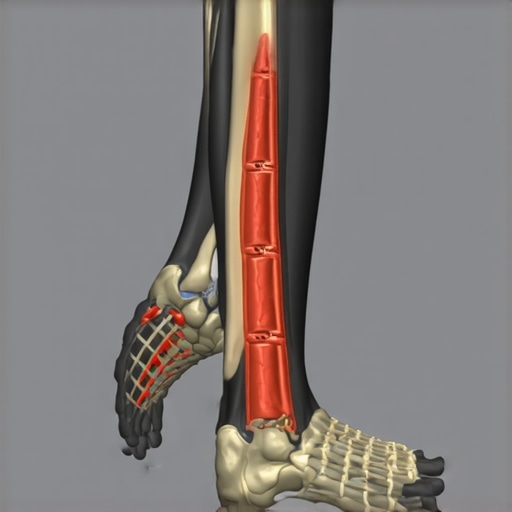
One of the biggest ‘oops’ factors I see in the mobility world is the obsession with stretching hamstrings. When your lower back feels tight after a day in flimsy shoes, your first instinct is likely to touch your toes. Stop right there. If your pelvis is tilted forward because your shoes lack arch support, your hamstrings are already in a state of ‘locked long.’ Stretching a muscle that is already over-extended is a recipe for disaster. In fact, why stretching your hamstrings might be making your back pain worse is one of the most important lessons for anyone with chronic lumbar issues. Instead of tugging on your legs, you should be focusing on the ‘reset’ techniques we discussed earlier. Your hamstrings aren’t tight because they are short; they are tight because they are trying to keep you from falling over.
To truly fix the cycle, you have to look at your body as a holistic unit. You can’t just fix the ‘foot’ and ignore the ‘pelvis,’ and you can’t just ‘stretch’ the back and ignore the ‘shoes.’ It requires a shift in mindset from ‘fixing’ a symptom to ‘optimizing’ a system. I started to adjust your routine daily spinal alignments for lasting relief by making small, 1% changes every day—like choosing shoes with a back strap and doing a 60-second toe-spread exercise. These aren’t just ‘tips’; they are the fundamental shifts that move you away from chronic pain and toward true mobility mastery.
When I finally committed to fixing my gait, I realized that my environment needed an overhaul. It wasn’t enough to just ‘try’ to walk better; I needed tools that provided immediate biofeedback. I eventually ditched the generic foam rollers and switched to a high-density lacrosse ball. While I previously used how to use a tennis ball to release tension in your feet and back, the lacrosse ball is my secret weapon because it doesn’t ‘give’ under pressure. This allows it to penetrate the deep layers of the plantar fascia, which is essential if you have spent years clawing your toes in sandals. I spend two minutes every morning on this, and it’s the only way I can ensure my mobility mastery simple exercises to relieve chronic back pain actually stick and create lasting change.
The Pro Tools That Actually Fixed My Arch Collapse
Another game-changer for me was the transition to ‘active’ standing mats. If you work from home, you’ve probably seen those flat, squishy foam pads. They are better than nothing, but I prefer a topographical mat like the Topo by Ergodriven. It has calculated mounds and ridges that force your feet to stay engaged, mimicking natural terrain. This constant, subtle movement prevents your arches from collapsing and stops the standing error that puts 50 pounds of pressure on your l5-s1 from becoming your default state. By keeping the intrinsic muscles of your feet awake, you’re essentially training your back to stay supported from the ground up without even thinking about it.
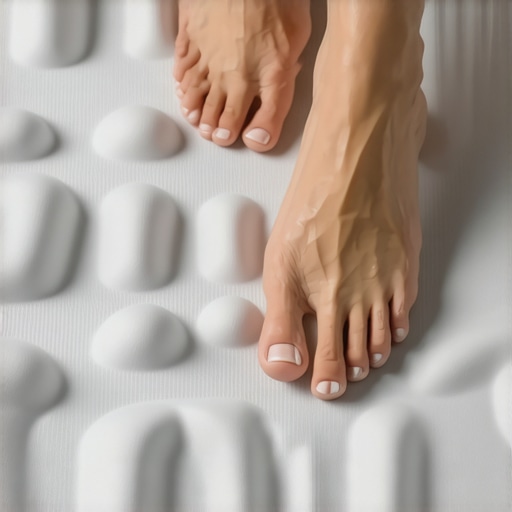
Beyond gear, I lean heavily on the research of Dr. Emily Splichal, a functional podiatrist who specializes in human movement. She emphasizes the importance of ‘sensory stimulation’ for the feet. She argues that our modern shoes act like sensory deprivation chambers, which is why our brains lose track of our pelvic position. This is a core reason I focus on master your mobility top strategies for moving without pain that prioritize barefoot stimulation. According to Splichal’s technical findings on proprioception, waking up the small nerves on the bottom of your feet can improve your balance and immediately reduce the shear force on your lower spine. This is why I often walk barefoot on different textures—like grass or pebbles—whenever I can.
How do I maintain foot and back health over time?
Maintenance is less about a 60-minute gym session and more about ‘micro-adjustments’ throughout your day. I live by the rule of the 30-minute switch. I never stay in one footwear state or one posture for more than half an hour. I’ll go from barefoot to structured slides, then to a standing desk while practicing the correct way to use a standing desk without hurting your feet. This variability is what keeps your tissues from becoming ‘glued’ into a painful pattern. You should also adjust your routine daily spinal alignments for lasting relief by incorporating a ‘short foot’ exercise—pulling the ball of your foot toward your heel without curling your toes—every time you’re waiting for the microwave or brushing your teeth.
The Future of Spinal Health is Sensory
Looking ahead, I predict we are going to see a massive shift toward AI-driven insoles and haptic feedback wearable tech. Imagine an insole that gently vibrates when it detects your toes are ‘scrunching’ or when your weight shifts too far forward onto your L5-S1. We are moving away from passive ‘cushion’ and toward active ‘coaching’ for our feet. This will make unlock better back health effective posture tips for 2025 much easier to implement because you won’t have to rely on willpower alone. Until then, I challenge you to try this advanced tip: stand barefoot right now and try to lift just your big toe while keeping the other four on the ground. If you can’t do it, your brain-to-foot connection is lagging—and your back is paying the price. Start practicing this ‘toe dissociation’ for 30 seconds a day to jumpstart your recovery.
Lessons My Feet Taught Me About My Aching Spine
Reflecting on my own journey from chronic lumbar tightness to fluid movement, there were a few ‘lightbulb moments’ that completely changed my perspective on physical health. First, I realized that ‘soft’ does not mean ‘supportive.’ I spent years buying the plushiest foam sandals, thinking I was being kind to my joints, when in reality, I was depriving my brain of the sensory feedback it needed to stabilize my core. Another hard truth was that my toe-scrunching habit was a neurological defense mechanism. My body was literally trying to ‘claw’ the ground for stability because my shoes offered none. This constant tension is a major reason why many posture correction secrets that transform back pain outcomes actually fail—they address the shoulders without looking at the feet. Finally, I learned that pain is a messenger, not an enemy. My back wasn’t ‘weak’; it was exhausted from overcompensating for my footwear choices.
A Few Favorites to Keep Your Foundation Solid
If you are ready to rebuild your foundation, I highly recommend a few specific tools that helped me bridge the gap. First, invest in a high-density lacrosse ball rather than a soft tennis ball; the firmness allows for a deeper release of the plantar fascia. I also swear by the book Born to Run by Christopher McDougall, which changed how I viewed human gait and natural foot function. For daily wear, I trust brands like Birkenstock or OOFOS that incorporate a deep heel cup and metatarsal support to keep the foot from sliding. These resources are part of my broader expert tips for easier movement in 2025 because they prioritize long-term structural health over temporary fashion trends.
Your Journey Toward Pain-Free Walking Starts Today
You don’t have to live in a cycle of constant stretching and temporary relief. By making the intentional choice to support your feet, you are giving your spine the chance to find its natural alignment again. It is about small, consistent changes—swapping out those foam slabs, practicing toe spreads, and learning to unlock better back health with effective posture tips. Your body is incredibly resilient, and once you remove the structural roadblocks, it knows exactly how to heal. Take that first step today, and your future self will thank you for the relief. Have you ever noticed your lower back pain flares up specifically after wearing a certain pair of shoes, or did you think the pain was coming from something else entirely? Let me know in the comments below.