
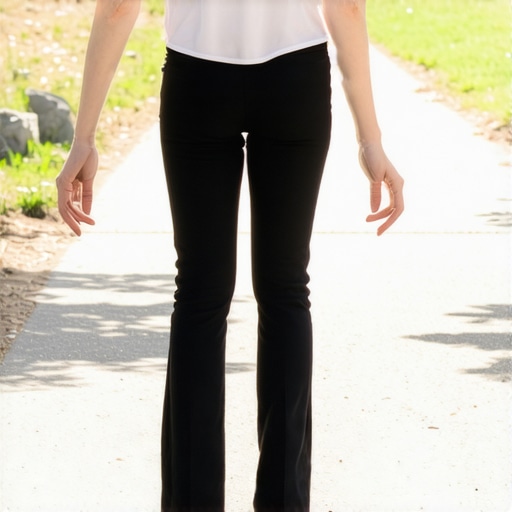
I remember it vividly: a sunny Saturday afternoon, a pair of fresh sneakers, and a plan to walk just two miles to the local coffee shop. By the time I hit the fifteen-minute mark, my right hip felt like someone had jammed a metal rod into the joint. By minute twenty, I was limping. It wasn’t an injury, and I hadn’t tripped. My body had simply decided to stop cooperating. I felt like a rusty gate hinge that desperately needed oil, and honestly, it was embarrassing. If you have ever felt that sudden, sharp tightness that makes every step a chore, you are not alone. Today, I am going to show you exactly why this happens and how we can stop your hips from shutting down mid-stroll. We are going to look at the mechanics of your movement so you can finally master your mobility and get back to enjoying the outdoors without the ’20-minute wall.’
Stop Blaming Your Birthday for That Rusty Hip Feeling
The biggest mistake I made early on was assuming my body was just ‘getting old.’ I spent months trying to ‘power through’ the pain, which only led to more compensation. I even tried aggressive stretching, but I soon realized why stretching your psoas might actually be making your back hurt more and tightening your hips further. The truth is, your hips lock up because they are trying to protect you. When your glutes aren’t firing or your core is unstable, the hip flexors take over the heavy lifting. According to research from the American Council on Exercise, prolonged sitting can lead to ‘reciprocal inhibition,’ where the muscles on the front of your hip become chronically shortened, effectively turning off the powerful muscles in your backside. When you go for a walk, those short muscles can’t handle the repetitive motion, so they seize up. It is a mechanical error, not a permanent flaw in your DNA. This is often the real reason your lower back hurts only after you go for a walk, as the tension radiates upward from the pelvis.
Will these small changes actually work if I have been stiff for years?
It is easy to be skeptical when you have tried every foam roller and massage gun on the market. However, the secret isn’t in ‘breaking’ the tension; it’s in changing the input your brain receives. I’ll show you the simple tweak to your walking stride that saves your hips by shifting the load back where it belongs. Have you ever had to cut a walk short or cancel plans because your hip just quit on you? If so, tell me about it in the comments. We are about to dive into the specific adjustments that will keep your joints fluid and your stride effortless. Before we move on, consider what your foot arch says about your chronic hip pain, because sometimes the problem starts much lower than you think.
Fire Up Your Glutes Before You Lace Up
The first thing I had to change wasn’t my gear; it was the ‘on switch’ for my posterior chain. Most of us walk out the door with ‘sleepy’ glutes because we’ve been sitting all morning. When the glutes don’t fire, your hip flexors try to do all the work, pulling your pelvis into a tilt that grinds the joint. I remember standing at the base of a steep trailhead last July, feeling that familiar pinch before I even started. Instead of ignoring it, I stood by my car and performed the morning glute squeeze that protects your spine all day. It felt silly for about thirty seconds, but that simple activation told my brain to stop using my hip flexors as primary movers. By the time I hit the two-mile mark—my usual breaking point—my hips felt springy rather than stuck.#IMAGE_PLACE_HOLDER_B#
Stop Spilling the Water from Your Pelvis
Think of your pelvis as a bucket filled to the brim with water. If you walk with your lower back arched—what we call anterior pelvic tilt—you are effectively spilling water out the front of that bucket. This position jams the head of your femur into the hip socket. To fix this, you need to master the simple pelvic tilt that makes sitting for hours painless and apply it to your movement. While you walk, imagine gently tucking your tailbone just enough to ‘level the bucket.’ This creates space in the joint and prevents that bone-on-bone sensation that makes you want to quit. If you find yourself arching your back to keep up a fast pace, you are actually fighting your own anatomy and inviting compression.
Shorten Your Stride to Stop the Shocks
We are often told that a longer stride is the key to faster walking, but for someone with tight hips, this is a recipe for disaster. Overstriding acts like a brake; every time your heel hits the ground way out in front of your body, it sends a jolt of force straight into your hip and lower back. I used to reach forward with my feet, thinking I was being efficient, but I was actually causing my pelvis to hike up on one side. Learning how to stop your pelvis from hiking every time you walk involves taking slightly smaller steps and focusing on pushing off with your back foot rather than reaching with the front one. This shift moves the effort to your hamstrings and glutes, where it belongs. If you feel a deep ache after your stroll, you might also need the psoas release that finally stops your deep lower back ache to reset the tension. Many people mistakenly try to stretch through this, but you must avoid the 90-90 hip stretch mistake that is hurting your lumbar spine if you want to see lasting progress. This isn’t about working harder; it’s about moving smarter by letting your big muscles handle the heavy lifting.
If you have been aggressively pulling on your legs every morning, you might actually be making things worse. I see so many people fall into the trap of thinking flexibility equals health. In reality, why you should stop stretching your hamstrings for back relief is one of the first things I explain to clients who can’t figure out why their ‘tightness’ won’t budge. If the muscle is already overstretched from a tilted pelvis, adding more tension just triggers the stretch reflex, making the muscle clamp down harder to avoid tearing. This is why you feel loose for ten minutes and then ‘reset’ back to stiffness by the time you reach the end of the driveway.
Your Nervous System is Just Trying to Save You
The nuance most people miss is that ‘tightness’ is often a neurological protection mechanism, not a physical length issue. When your brain senses that your joints are unstable—perhaps because you are not engaging your core correctly—it sends a signal to the surrounding muscles to tighten up and act as a biological splint. A study in the Journal of Bodywork and Movement Therapies highlights that ‘sensory-motor amnesia’—where the brain loses the ability to fully relax a muscle—is often the culprit behind chronic tightness, rather than a physical shortening of the tissue itself. Until you address the stability, the brain will never give you the ‘permission’ to be flexible. It is all about enhancing your mobility by convincing your nervous system that you are safe to move.
#IMAGE_PLACE_HOLDER_C#
Why does my hip still feel tight even after an hour of stretching?
This is the question that usually leads to the biggest breakthrough. If you have done the lunges, the pigeons, and the butterflies and you are still stiff, the issue is likely a lack of strength in the opposing muscle groups. When the glutes are weak, the hip flexors have to work overtime to stabilize the pelvis. You cannot stretch your way out of a weakness problem. Instead of more yoga, you might need the deadbug variation for people with weak lower backs to build the deep stability that finally allows those hips to let go. Have you ever fallen into this trap of stretching a muscle that actually needed strength? Let me know in the comments.
The Foam Roller Trap You Need to Avoid
One of the most common mistakes I see is people aggressively foam rolling their IT band. The IT band is a thick piece of connective tissue, not a muscle; you can’t ‘roll’ it out like dough. In fact, excessive pressure can inflame the bursa underneath, making your hip pain even sharper. Instead of attacking the side of your leg, look at your breathing. I know it sounds unrelated, but how your breathing pattern keeps your back muscles guarded is a major factor in pelvic tension. If you are a chest-breather, you are constantly signaling a state of ‘fight or flight’ to your body, which keeps your psoas and hips in a state of high alert. You also need to be careful with common poses; specifically, avoid the 90-90 hip stretch mistake that is hurting your lumbar spine if you are already dealing with instability. True mobility is about the conversation between your brain and your muscles, not just how far you can pull your joints.
Once I stopped chasing the latest vibrating foam roller and focused on high-leverage tools, my recovery actually stuck. I keep a firm lacrosse ball under my desk at all times because it allows for a pinpoint release that a standard roller simply cannot reach. If you haven’t tried it, learning how to use a tennis ball to release tension in your feet and back is the single most cost-effective way to reset your nervous system after a long day. I personally use a harder lacrosse ball for my glutes to ensure the deep tissue actually responds. This isn’t just about feeling good; it’s about maintaining the physical space we’ve created in your joints through movement.
Ditch the Fancy Gear for a Five-Dollar Lacrosse Ball
In my own journey, I realized that expensive massage guns often mask pain rather than solve the underlying mechanics. When you use a lacrosse ball, you are performing a manual ‘ischaemic compression’ that signals the brain to let go of chronic guarding. It is an active process. You aren’t just lying there; you are breathing into the tension and teaching your body that it is safe to relax. This type of self-care is essential for enhancing flexibility and mobility for active living. If you can spend five minutes every night on the floor with a ball, you’ll find that your morning stiffness starts to vanish.
Give Your Standing Desk This One Missing Tool
If you have made the switch to a standing desk but still find your back aching, you are probably missing one critical element. I noticed my own hips felt jammed until I started using a small footstool or a slant board to vary my stance throughout the day. This is the one thing your standing desk is missing for hip health because it prevents you from locking your knees and dumping your weight into your lower back. By constantly shifting which foot is elevated, you keep the pelvic floor active and prevent the hip flexors from shortening. According to technical reports from the International Society of Biomechanics, ’tissue creep’—the gradual deformation of ligaments under constant load—can be mitigated significantly by these frequent postural shifts rather than remaining in a static standing position.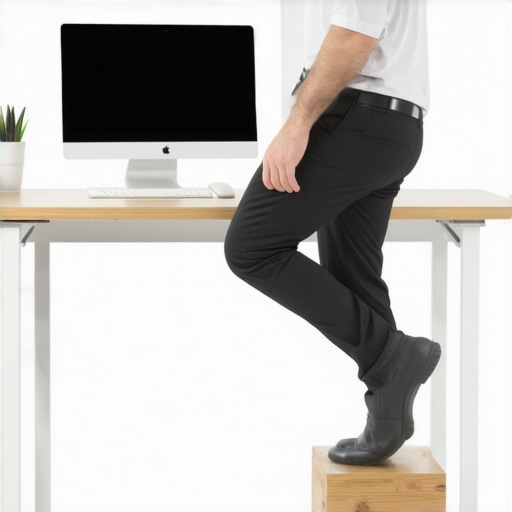
How do I keep my hips fluid for the long haul?
The answer isn’t a one-time workshop; it is the boring, daily stuff. You have to adjust your routine for lasting relief by baking movement into your transition times. I do three reps of a glute bridge every time I get up for a glass of water. It takes ten seconds, but over a year, that is thousands of activations that keep my brain connected to my glutes. You should aim for daily adjustments to alleviate back pain so that stiffness never has the chance to accumulate into a crisis. I predict that in the next five years, we will see a surge in ‘smart’ apparel with embedded haptic sensors that vibrate when our pelvis tilts too far forward, essentially acting as an external nervous system to guide our gait in real-time. Until then, you are your own best sensor. I want you to try one thing today: perform the 30-second wall reset for hunchback posture. Even though we are focused on hips, your upper body position dictates where your center of gravity falls. If your shoulders are slumped, your hips have to work harder to keep you upright. Do this reset after your next walk and see if your stride feels lighter tomorrow.
Lessons from a Recovering Hip Lifter
Looking back at my own transformation, the biggest shift wasn’t a specific stretch but a change in perspective. I finally understood that my body wasn’t ‘failing’; it was communicating. Here are the lightbulb moments that changed everything for me:
- Your hips are never the ‘bad guys.’ They tighten to protect you when your core is offline or your feet aren’t supporting you. Stop fighting the tension and start providing stability.
- Consistency beats intensity every time. Doing a 30-second glute squeeze every hour is ten times more effective than a grueling 90-minute yoga session once a week. I had to unlock better posture by making these tiny shifts habitual.
- Progress isn’t linear. Some days you’ll walk three miles and feel like a gazelle; other days, you’ll feel that familiar pinch at mile one. Don’t panic. Just use your ‘level the bucket’ reset and keep moving.
#IMAGE_PLACE_HOLDER_E#
Gear That Actually Earns a Spot in My Gym Bag
If you want to keep your joints happy without breaking the bank, I recommend these three staples. I carry a firm lacrosse ball for deep glute release—it’s the only tool small enough to hit the piriformis effectively. I also swear by a simple wedge for my standing desk to improve your back health by preventing knee lock. Finally, I suggest keeping a movement journal. Tracking which posture tweaks reduce your pain helps you spot patterns your brain might miss. These aren’t just gadgets; they are the foundation of mobility mastery.
Claim Your Freedom from Persistent Joint Stiffness
You don’t have to accept a life where your world gets smaller because of hip pain. By applying these adjustments and listening to the signals your body is sending, you can reclaim the joy of a long, effortless walk. Remember that posture correction secrets are often found in the smallest movements. Your next mile doesn’t have to be a battle; it can be a victory. Have you noticed your hips tightening more on flat ground or during uphill climbs? Let me know in the comments below!