
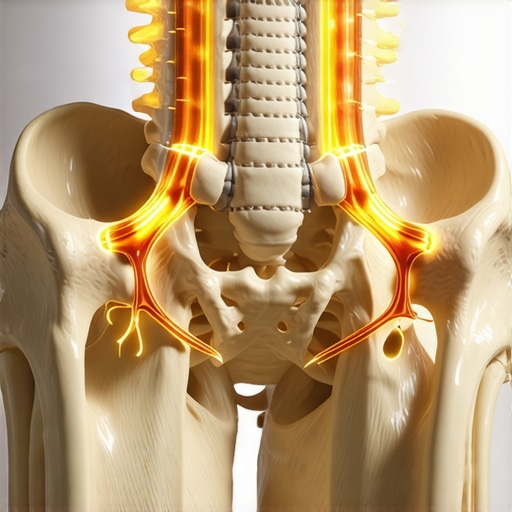
I’ll never forget the morning I thought I was finally winning. The burning sensation in my right glute that had plagued me for weeks was suddenly gone. I did a little victory dance—and then I felt it. A sharp, familiar tingle starting in my left hip. It felt like my body was playing a cruel game of ‘pass the parcel’ with my nerves. I was frustrated, confused, and honestly, a bit scared that something was seriously wrong with my spine. If you’ve ever felt your sciatica pack its bags and move to the other leg overnight, you know exactly how maddening it is. We are going to figure out why this traveling pain happens and how to stop it from bouncing back and forth.
Is this wandering pain actually all in my head?
It’s a fair question. When you tell a doctor your pain is moving, you sometimes get that ‘look’—the one that suggests you might be exaggerating. But let me tell you, the pain is very real. Early on, I made the classic mistake of thinking I just had tight muscles and doubled down on hamstring stretches. Looking back, I realized why stretching your hamstrings might be making your back pain worse because I was actually putting more tension on an already irritated nerve. Today, we’re going to dive into the mechanics of ‘alternating sciatica’ so you can stop guessing and start healing. We’ll look at everything from disc shifts to pelvic tilts, and I’ll show you the nerve glide that calms sciatica pain in seconds so you can finally get some peace.
Your Spine Is Signaling a Central Issue
When pain switches sides, it’s usually a signal that the underlying issue is central to your spine. Research published in the Journal of Neurosurgery indicates that a ‘central’ or ‘paracentral’ disc herniation can easily press on different nerve roots depending on your posture or even minor micro-movements. It’s not that you have two separate problems; it’s often one single issue affecting a junction point. Have you ever felt like your pain was playing tag with your legs? I’d love to hear your story in the comments. Knowing how to tell if your sciatica is coming from your piriformis versus a disc issue is the first real step toward a cure. By the time we’re done here, you’ll know how to stabilize your core and use a bedtime routine that stops sciatica flare-ups to keep that pain from migrating while you sleep.
Stop the Seesaw Effect in Your Lower Back
Think of your pelvis like a bowl filled to the brim with water. If that bowl tilts too far forward or backward, the water—your spinal pressure—sloshes over the sides, hitting whatever nerve is in its path. When pain switches legs, your bowl is likely wobbling. To stop this, we need to focus on ‘centering’ the load. This starts with how you sit. If you are slumping into your sofa, you are essentially pouring all that pressure onto one side of your disc. Using the chair hack to keep your pelvis neutral while working is the first step to ensuring that pressure stays dead-center and doesn’t migrate to your ‘good’ leg. This adjustment prevents the mechanical shift that allows the nerve compression to alternate.
Reset Your Pelvis Before the Pain Migrates
One of the most effective ways to stop the nerve from being pinched by a shifting disc is to master the simple pelvic tilt that makes sitting for hours painless. It’s not a big, dramatic movement. It’s a tiny, internal adjustment where you tuck your tailbone slightly under you to flatten the lower back against a chair or floor. This small change creates a protective ‘brace’ around your L5-S1 junction. 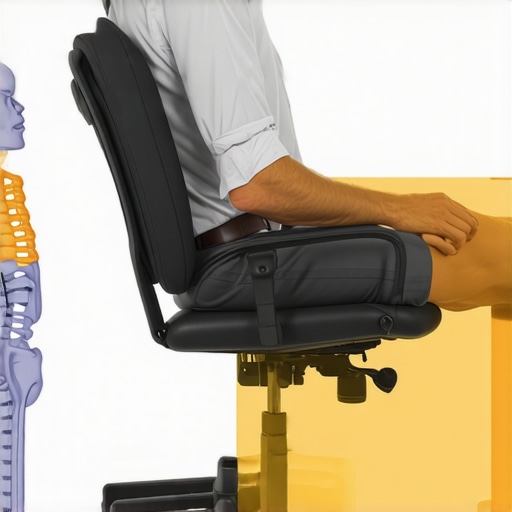
My Failed Stretch and the Real Solution
I remember a Tuesday morning when the pain had just jumped to my left side. My instinct was to grab my left foot and pull my hamstring into a deep stretch. I thought I was ‘opening up’ the nerve. Instead, I woke up the next day unable to stand straight. I was literally pulling the nerve taut against the herniation. The breakthrough came when I stopped stretching and started stabilizing. I began using the deadbug variation for people with weak lower backs. By keeping my spine glued to the floor while moving my limbs, I taught my body how to protect the nerve junction. If you feel that tingle starting to migrate, stop stretching and start engaging your deep core.
Walk Your Way Out of the Switch
If your pain moves while you are on your feet, your gait is likely the culprit. We often ‘hike’ one hip to avoid pain, which eventually forces the other side to overcompensate. This creates a cycle where the pressure moves back and forth across your spine. You need to focus on the simple tweak to your walking stride that saves your hips to keep the weight distribution even. Focus on pushing off through your big toe and keeping your hips level like a spirit level. This prevents the ‘shearing’ force that drives a disc to bulge toward the opposite nerve root.
Sleep Support to Lock in Your Progress
Your progress during the day can be undone in eight hours of poor sleep. You must understand how spinal alignment affects your sleep quality if you want to wake up without that ‘traveling’ sensation. If you sleep on your side, use the side-sleeper pillowing trick for optimal spine alignment. This prevents your top leg from dropping over and twisting your lower spine, which is a prime trigger for the pain to jump across the midline while you dream. Consistent alignment is the only way to convince your nerves to stop overreacting to every movement.Let’s dig deeper into why most advice on ‘getting mobile’ fails when your pain is migrating. The biggest misconception in the fitness world is that if something feels tight, you should stretch it until it lets go. When your sciatica is bouncing from left to right, your body isn’t ‘tight’ because it forgot how to relax; it’s tight because it’s trying to create a biological splint. If you force a stretch, you’re essentially ripping the Band-Aid off a spinal wound that hasn’t closed yet. This is exactly why stretching your psoas might actually be making your back hurt more. You are trying to lengthen a muscle that the brain has ‘locked down’ to protect your unstable L5-S1 junction. Have you ever fallen into this trap of stretching harder when the pain moves? Let me know in the comments.
Can your breathing pattern actually shift your disc?
It sounds wild, but your diaphragm is the ‘lid’ of your core’s pressure system. A study published in the Journal of Biomechanics by Dr. Manohar Panjabi suggests that spinal stability relies on a ‘neutral zone.’ When you lose control of this zone through poor mechanics, the vertebrae undergo micro-shearing. If you are a chest-breather, you are constantly changing the pressure in your abdominal cavity, which can cause a sensitive disc to ‘bulge’ slightly toward one side or the other depending on the day. This is why learning how your breathing pattern keeps your back muscles guarded is far more important for long-term relief than touching your toes. 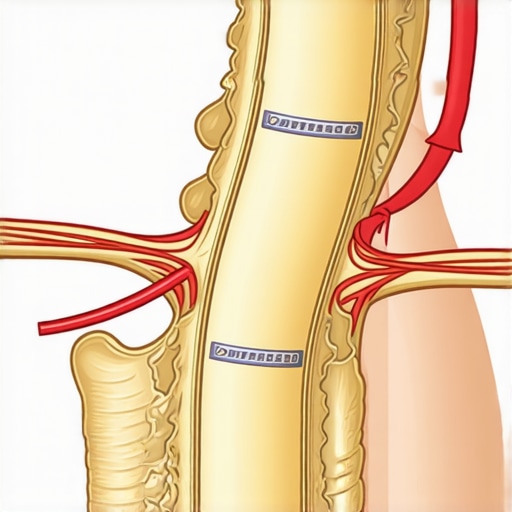
The Dangerous Allure of Hip Opening
We see it in every yoga class: the push for ‘open hips.’ But for someone with alternating sciatica, the popular 90-90 hip stretch mistake that is hurting your lumbar spine is a classic ‘oops’ factor. When you crank your leg into deep external rotation without a stabilized core, you aren’t just stretching your glutes—you are using your femur as a lever to pry your sacroiliac joint apart. This creates the exact micro-instability that allows the nerve compression to flip-flop across the midline. Instead of seeking ‘more’ range, we need to seek ‘better’ control through the deep core connection that stops your spine from shear stress.
Stop Sucking in Your Stomach to Save Your Spine
Most of us were told to ‘pull our navel to the spine’ to protect our backs. In reality, this ‘hollowing’ maneuver often thins out the support around the disc and increases the likelihood of the pain migrating. I’ve found that why you should stop sucking in your stomach to look thinner is one of the hardest habits to break, yet it’s the most rewarding for chronic sufferers. True stability comes from ‘bracing’—creating a 360-degree wall of pressure that keeps the disc centered. By applying these posture correction secrets that transform back pain outcomes, you move from simply managing a symptom to finally mastering your own spinal mechanics.
The Gear That Actually Kept Me Pain-Free
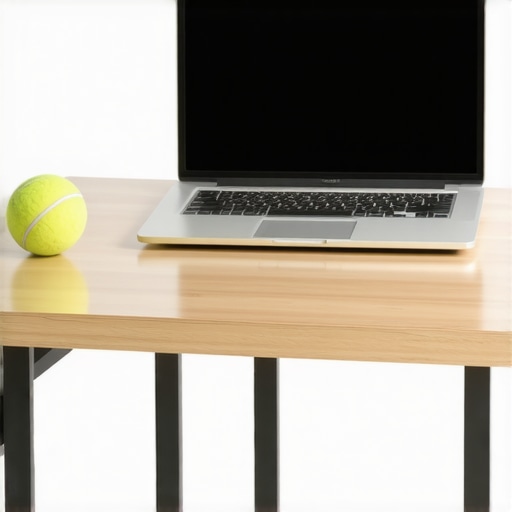
Once you stop the immediate fire of alternating sciatica, the real challenge begins: keeping the nerves quiet for good. I spent a small fortune on ‘ergonomic’ gadgets that did absolutely nothing until I understood that a tool is only as good as the mechanics it supports. For me, the game-changer wasn’t a thousand-dollar chair; it was a simple, adjustable laptop riser. I realized that my previous setup was forcing a subtle forward-lean that crushed my lower discs. Now, I strictly follow the 2-inch rule for your laptop stand to save your neck from strain, which sounds like it’s just for your neck, but it actually keeps your entire spinal stack from collapsing into that dreaded ‘C’ shape. If your eye line is off, your pelvis will eventually tilt to compensate, restarting the whole painful cycle.
I also keep a high-density tennis ball in my desk drawer. It’s my go-to for what I call ‘micro-releases.’ Throughout the day, I’ll use it against a wall to hit the trigger points in my mid-back or under my feet while I’m on a call. Learning how to use a tennis ball to release tension in your feet and back is arguably the cheapest and most effective maintenance strategy I’ve found. It breaks up the fascial adhesions that start to form when you’ve been sitting for more than twenty minutes, ensuring that one side doesn’t get ‘stuck’ and drag your pelvis out of alignment again.
How do I maintain spinal stability over the long haul?
Consistency is the only currency the spine accepts. You can’t ‘biohack’ your way out of poor daily movement patterns. This is why I integrated the morning glute squeeze that protects your spine all day into my routine before I even get out of bed. It wakes up the posterior chain and sets the ‘tension’ for the day, preventing the SI joint from becoming sloppy. Professional ergonomists often use the Rapid Upper Limb Assessment (RULA) to identify musculoskeletal risks, and I’ve learned to apply a simplified version to my own life. I constantly check my elbow-to-keyboard angle and my monitor placement. If you haven’t done it yet, check the monitor height hack for preventing c7-t1 nerve pressure because that junction is the gateway to your lower back health.
I believe the future of this field is moving toward ‘passive correction’—wearable tech that doesn’t just buzz when you slouch, but actually provides biofeedback on your center of gravity in real-time. Until then, you have to be your own sensor. If you use a standing desk, make sure you aren’t making the one mistake that ruins its benefits. Incorporating the one thing your standing desk is missing for hip health will prevent you from leaning on one leg, which is the fastest way to invite your sciatica back for a visit. You must adjust your routine daily spinal alignments for lasting relief to ensure you’re not building strength on top of a crooked foundation. My challenge for you today: grab a tennis ball or even a rolled-up sock and perform a two-minute release on the arch of each foot. You’ll be shocked at how much it relaxes your lower back.
I’ll never forget the morning I thought I was finally winning. The burning sensation in my right glute that had plagued me for weeks was suddenly gone. I did a little victory dance—and then I felt it. A sharp, familiar tingle starting in my left hip. It felt like my body was playing a cruel game of ‘pass the parcel’ with my nerves. I was frustrated, confused, and honestly, a bit scared that something was seriously wrong with my spine. If you’ve ever felt your sciatica pack its bags and move to the other leg overnight, you know exactly how maddening it is. We are going to figure out why this traveling pain happens and how to stop it from bouncing back and forth.
Is this wandering pain actually all in my head?
It’s a fair question. When you tell a doctor your pain is moving, you sometimes get that ‘look’—the one that suggests you might be exaggerating. But let me tell you, the pain is very real. Early on, I made the classic mistake of thinking I just had tight muscles and doubled down on hamstring stretches. Looking back, I realized why stretching your hamstrings might be making your back pain worse because I was actually putting more tension on an already irritated nerve. Today, we’re going to dive into the mechanics of ‘alternating sciatica’ so you can stop guessing and start healing. We’ll look at everything from disc shifts to pelvic tilts, and I’ll show you the nerve glide that calms sciatica pain in seconds so you can finally get some peace.
Your Spine Is Signaling a Central Issue
When pain switches sides, it’s usually a signal that the underlying issue is central to your spine. Research published in the Journal of Neurosurgery indicates that a ‘central’ or ‘paracentral’ disc herniation can easily press on different nerve roots depending on your posture or even minor micro-movements. It’s not that you have two separate problems; it’s often one single issue affecting a junction point. Have you ever felt like your pain was playing tag with your legs? I’d love to hear your story in the comments. Knowing how to tell if your sciatica is coming from your piriformis versus a disc issue is the first real step toward a cure. By the time we’re done here, you’ll know how to stabilize your core and use a bedtime routine that stops sciatica flare-ups to keep that pain from migrating while you sleep.
Stop the Seesaw Effect in Your Lower Back
Think of your pelvis like a bowl filled to the brim with water. If that bowl tilts too far forward or backward, the water—your spinal pressure—sloshes over the sides, hitting whatever nerve is in its path. When pain switches legs, your bowl is likely wobbling. To stop this, we need to focus on ‘centering’ the load. This starts with how you sit. If you are slumping into your sofa, you are essentially pouring all that pressure onto one side of your disc. Using the chair hack to keep your pelvis neutral while working is the first step to ensuring that pressure stays dead-center and doesn’t migrate to your ‘good’ leg. This adjustment prevents the mechanical shift that allows the nerve compression to alternate.
Reset Your Pelvis Before the Pain Migrates
One of the most effective ways to stop the nerve from being pinched by a shifting disc is to master the simple pelvic tilt that makes sitting for hours painless. It’s not a big, dramatic movement. It’s a tiny, internal adjustment where you tuck your tailbone slightly under you to flatten the lower back against a chair or floor. This small change creates a protective ‘brace’ around your L5-S1 junction. #IMAGE_PLACE_HOLDER_B#
My Failed Stretch and the Real Solution
I remember a Tuesday morning when the pain had just jumped to my left side. My instinct was to grab my left foot and pull my hamstring into a deep stretch. I thought I was ‘opening up’ the nerve. Instead, I woke up the next day unable to stand straight. I was literally pulling the nerve taut against the herniation. The breakthrough came when I stopped stretching and started stabilizing. I began using the deadbug variation for people with weak lower backs. By keeping my spine glued to the floor while moving my limbs, I taught my body how to protect the nerve junction. If you feel that tingle starting to migrate, stop stretching and start engaging your deep core.
Walk Your Way Out of the Switch
If your pain moves while you are on your feet, your gait is likely the culprit. We often ‘hike’ one hip to avoid pain, which eventually forces the other side to overcompensate. This creates a cycle where the pressure moves back and forth across your spine. You need to focus on the simple tweak to your walking stride that saves your hips to keep the weight distribution even. Focus on pushing off through your big toe and keeping your hips level like a spirit level. This prevents the ‘shearing’ force that drives a disc to bulge toward the opposite nerve root.
Sleep Support to Lock in Your Progress
Your progress during the day can be undone in eight hours of poor sleep. You must understand how spinal alignment affects your sleep quality if you want to wake up without that ‘traveling’ sensation. If you sleep on your side, use the side-sleeper pillowing trick for optimal spine alignment. This prevents your top leg from dropping over and twisting your lower spine, which is a prime trigger for the pain to jump across the midline while you dream. Consistent alignment is the only way to convince your nerves to stop overreacting to every movement.Let’s dig deeper into why most advice on ‘getting mobile’ fails when your pain is migrating. The biggest misconception in the fitness world is that if something feels tight, you should stretch it until it lets go. When your sciatica is bouncing from left to right, your body isn’t ‘tight’ because it forgot how to relax; it’s tight because it’s trying to create a biological splint. If you force a stretch, you’re essentially ripping the Band-Aid off a spinal wound that hasn’t closed yet. This is exactly why stretching your psoas might actually be making your back hurt more. You are trying to lengthen a muscle that the brain has ‘locked down’ to protect your unstable L5-S1 junction. Have you ever fallen into this trap of stretching harder when the pain moves? Let me know in the comments.
Can your breathing pattern actually shift your disc?
It sounds wild, but your diaphragm is the ‘lid’ of your core’s pressure system. A study published in the Journal of Biomechanics by Dr. Manohar Panjabi suggests that spinal stability relies on a ‘neutral zone.’ When you lose control of this zone through poor mechanics, the vertebrae undergo micro-shearing. If you are a chest-breather, you are constantly changing the pressure in your abdominal cavity, which can cause a sensitive disc to ‘bulge’ slightly toward one side or the other depending on the day. This is why learning how your breathing pattern keeps your back muscles guarded is far more important for long-term relief than touching your toes. #IMAGE_PLACE_HOLDER_C#
The Dangerous Allure of Hip Opening
We see it in every yoga class: the push for ‘open hips.’ But for someone with alternating sciatica, the popular 90-90 hip stretch mistake that is hurting your lumbar spine is a classic ‘oops’ factor. When you crank your leg into deep external rotation without a stabilized core, you aren’t just stretching your glutes—you are using your femur as a lever to pry your sacroiliac joint apart. This creates the exact micro-instability that allows the nerve compression to flip-flop across the midline. Instead of seeking ‘more’ range, we need to seek ‘better’ control through the deep core connection that stops your spine from shear stress.
Stop Sucking in Your Stomach to Save Your Spine
Most of us were told to ‘pull our navel to the spine’ to protect our backs. In reality, this ‘hollowing’ maneuver often thins out the support around the disc and increases the likelihood of the pain migrating. I’ve found that why you should stop sucking in your stomach to look thinner is one of the hardest habits to break, yet it’s the most rewarding for chronic sufferers. True stability comes from ‘bracing’—creating a 360-degree wall of pressure that keeps the disc centered. By applying these posture correction secrets that transform back pain outcomes, you move from simply managing a symptom to finally mastering your own spinal mechanics.
The Gear That Actually Kept Me Pain-Free
Once you stop the immediate fire of alternating sciatica, the real challenge begins: keeping the nerves quiet for good. I spent a small fortune on ‘ergonomic’ gadgets that did absolutely nothing until I understood that a tool is only as good as the mechanics it supports. For me, the game-changer wasn’t a thousand-dollar chair; it was a simple, adjustable laptop riser. I realized that my previous setup was forcing a subtle forward-lean that crushed my lower discs. Now, I strictly follow the 2-inch rule for your laptop stand to save your neck from strain, which sounds like it’s just for your neck, but it actually keeps your entire spinal stack from collapsing into that dreaded ‘C’ shape. If your eye line is off, your pelvis will eventually tilt to compensate, restarting the whole painful cycle.
I also keep a high-density tennis ball in my desk drawer. It’s my go-to for what I call ‘micro-releases.’ Throughout the day, I’ll use it against a wall to hit the trigger points in my mid-back or under my feet while I’m on a call. Learning how to use a tennis ball to release tension in your feet and back is arguably the cheapest and most effective maintenance strategy I’ve found. It breaks up the fascial adhesions that start to form when you’ve been sitting for more than twenty minutes, ensuring that one side doesn’t get ‘stuck’ and drag your pelvis out of alignment again.
How do I maintain spinal stability over the long haul?
Consistency is the only currency the spine accepts. You can’t ‘biohack’ your way out of poor daily movement patterns. This is why I integrated the morning glute squeeze that protects your spine all day into my routine before I even get out of bed. It wakes up the posterior chain and sets the ‘tension’ for the day, preventing the SI joint from becoming sloppy. Professional ergonomists often use the Rapid Upper Limb Assessment (RULA) to identify musculoskeletal risks, and I’ve learned to apply a simplified version to my own life. I constantly check my elbow-to-keyboard angle and my monitor placement. If you haven’t done it yet, check the monitor height hack for preventing c7-t1 nerve pressure because that junction is the gateway to your lower back health.
I believe the future of this field is moving toward ‘passive correction’—wearable tech that doesn’t just buzz when you slouch, but actually provides biofeedback on your center of gravity in real-time. Until then, you have to be your own sensor. If you use a standing desk, make sure you aren’t making the one mistake that ruins its benefits. Incorporating the one thing your standing desk is missing for hip health will prevent you from leaning on one leg, which is the fastest way to invite your sciatica back for a visit. You must adjust your routine daily spinal alignments for lasting relief to ensure you’re not building strength on top of a crooked foundation. My challenge for you today: grab a tennis ball or even a rolled-up sock and perform a two-minute release on the arch of each foot. You’ll be shocked at how much it relaxes your lower back.
The Counterintuitive Truths I Learned While My Pain Switched Sides
One of the biggest lessons in my recovery was realizing that ‘chasing the pain’ is a losing game. If your symptoms are migrating, your body is essentially crying out for a stable center. I had to stop stretching the side that hurt and start focusing on posture correction secrets that transform back pain outcomes. Here are the shifts that changed everything for me:
- Stability over flexibility: I stopped trying to ‘loosen’ my back and started trying to ‘brace’ it. A tight muscle is often a protecting muscle.
- Small shifts beat big workouts: I found that mobility mastery involves simple exercises to relieve chronic back pain through daily movement rather than once-a-week gym intensity.
- The ground-up connection: I never realized how much my feet dictated my spine until I addressed the foot arch connection to your chronic lower back spasms.
The Non-Negotiable Tools in My Recovery Kit
Building a pain-free life requires a tactical approach to your daily environment. These are the resources I trust to keep my spine from hitting that ‘seesaw’ tipping point:
A Real Laptop Riser: Don’t rely on a stack of books that might wobble. A sturdy riser ensures your eye line keeps your cervical and lumbar spine in a neutral stack. This is a core part of unlocking better posture through simple adjustments.
High-Density Tennis Ball: It’s the cheapest physical therapist you’ll ever own. Use it for micro-releases in the arches of your feet to reset your pelvic tilt from the ground up.
The Morning Decompression: Consistency is the only currency your spine accepts. You must adjust your routine with daily spinal alignments before you even sit down for breakfast to set a neutral foundation for the day.
You Aren’t Broken, Just Out of Alignment
It is incredibly easy to feel like your body is failing you when the pain refuses to stay in one place. But alternating sciatica is actually proof that your body is adaptable—it’s trying to find a way to carry your weight without further damaging the nerve. By focusing on centering your load and stabilizing your core, you give your spine the safety it needs to heal the central disc issue. The journey isn’t about being perfectly flexible; it’s about being perfectly stable. Have you ever noticed your pain switches sides after a specific activity, like driving or sitting at a particular chair? Let me know in the comments below.