
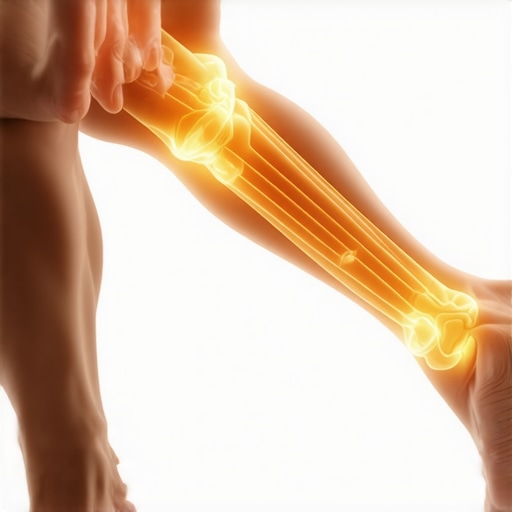
I’ll never forget the morning I couldn’t tie my own shoes without a sharp, biting pain shooting through my lumbar. I was only thirty-two, relatively fit, and yet there I was, hunched over like a question mark, nursing a lower back ache that felt like a hot poker. I spent years thinking I was just getting “old” way too early. Every morning was a ritual of groaning and rolling out of bed sideways. I bought three different “orthopedic” pillows, a standing desk, and enough heating pads to keep a small village warm. I felt like a total failure because no matter how many planks I did to strengthen my core, the throb returned every single afternoon. I tried everything until a physical therapist friend looked at me walking and pointed at my feet. It turns out, the real culprit wasn’t my spine or my core strength. It was hiding in plain sight at the end of my foot. My big toe was as stiff as a board. It wouldn’t bend, and because it wouldn’t move, my entire body was paying the price. [image-placeholder]
The Kinetic Chain is Real and It Starts at Your Toes
When I first started looking into this, I made a classic mistake: I assumed the pain was where the actual problem was. I spent months obsessing over my lumbar vertebrae and even thought why stretching your hamstrings might be making your back pain worse was the only insight I needed to find relief. I was wrong. Think of your body like a specialized suspension system in a car. If one tiny bolt—like your hallux (the big toe)—is rusted shut, the shock of every step travels straight up your leg, bypasses the foot’s natural shock absorbers, and slams directly into your lower back. This isn’t just neighborhood wisdom; researchers have found that limited big toe extension significantly alters gait mechanics. According to a study published in the Journal of Foot and Ankle Research, restricted movement in the first metatarsophalangeal joint changes how pressure is distributed across the entire foot, which can ripple up to the sacroiliac joint. If you’ve been wondering what your foot arch says about your chronic hip pain, you’re already halfway to understanding this mechanical connection. We’re going to look at how to unstick that toe and finally give your back some real breathing room.
Is it really possible for a toe to affect my spine?
I get it. It sounds like a massive stretch. You’re probably sitting there with a heating pad on your lower back thinking, “My spine is screaming, and you want me to wiggle my toes?” I was the ultimate skeptic too until I realized that every time my foot hit the pavement, I was “vaulting” over my stiff toe instead of rolling through it. This caused my pelvis to tilt awkwardly with every single step I took. If you’ve ever felt like you need to learn how to stop your pelvis from hiking every time you walk, you know exactly the frustration of a body that feels out of sync. Have you ever noticed that your back pain actually gets worse after a long walk, even though walking is supposed to be “good” for you? Have you faced this specific problem where exercise seems to backfire? Tell me in the comments, because you aren’t alone. Today, I’m going to show you how to use a tennis ball to release tension in your feet and back to break that cycle once and for all. We are moving past the expensive band-aid fixes and getting to the literal root of your posture.
Check Your Toe Mobility Before Your Next Walk
You cannot fix what you do not measure. Stand up and try to lift your big toe while keeping the other four flat against the floor. If it barely moves or requires you to twist your whole ankle, your internal suspension system is broken. I remember trying this in a cramped hotel room after a six-hour flight; I could not even get my toe a centimeter off the thin carpet. It was no wonder my spine felt compressed and my lumbar was screaming. This simple failure in movement is often the real reason your lower back hurts only after you go for a walk, as your body is forced to compensate for a joint that simply will not budge. If you cannot get about 65 degrees of extension in that big toe, every step you take is a micro-trauma to your L5-S1 disc.
Roll Away the Tension That Is Locking Your Spine
The most direct way to unstick this mechanism is by addressing the soft tissue directly beneath your arch. Take a firm tennis ball—or a lacrosse ball if you have a high pain tolerance—and place it right under the ball of your foot. Do not just roll aimlessly like you are playing with a toy. Instead, find the tender spots specifically near the base of the big toe and hold steady pressure for thirty seconds while breathing deeply into your belly. This is a crucial component of mobility mastery simple exercises to relieve chronic back pain. I used to do this discreetly under my desk at work until the ball rolled away and hit my boss’s shoe, but that ten-minute session of release saved me from the usual late-afternoon ibuprofen haze. 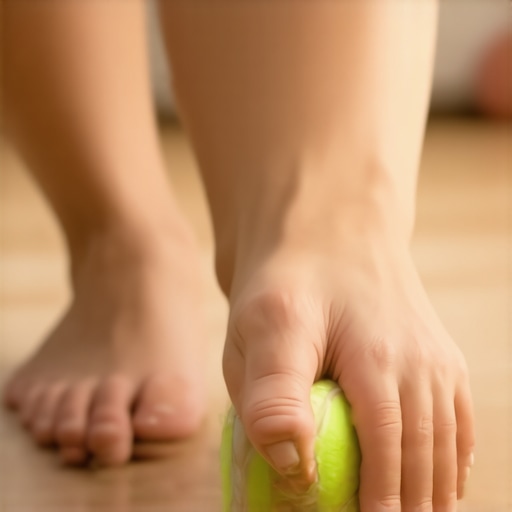
Stop Your Feet From Sabotaging Your Spine
We often choose footwear for convenience or style, but understanding why wearing flip flops is changing your gait and hurting your back is the first step in protecting your spine. When you wear loose sandals, your toes have to “grip” the shoe to keep it from flying off. This constant gripping keeps the plantar fascia in a state of chronic contraction. When you finally swap the flip-flops for sneakers, that fascia remains tight, pulling on your calf, your hamstring, and eventually your pelvis. This tension acts like a tight tether pulling your tailbone out of alignment with every stride.
Practice the Big Toe Push-Off Every Day
Next time you are moving through your house, focus on the final 10% of your stride. Instead of picking your foot up early or rolling to the outer edge of your foot, consciously push off through the pad of your big toe. It will feel strange at first—almost like you are over-exaggerating a “spring” in your step—but this action engages the deep core muscles that stabilize your lumbar spine. This tiny mechanical adjustment is far more effective than most daily adjustments to alleviate back pain and improve posture because it targets the root movement pattern rather than just the symptoms. You are essentially teaching your body how to absorb shock again.
Wake Up Your Feet for a Better Back
Incorporate a quick foot-wake-up call into the morning movement routine that lubricates your joints. Spend sixty seconds just wiggling your toes independently and doing “foot doming”—pulling the ball of your foot toward your heel without curling your toes. This reactivates the intrinsic muscles of the arch. When these muscles are “awake,” they provide a stable base for your hips, preventing the pelvic tilting that leads to that deep, localized ache in your lower back by lunchtime.
Why your core strength isn’t stopping your back aches
We have been told for decades that the answer to every back problem is a ‘stronger core.’ I spent years obsessing over planks and dead-bugs, yet my back still felt like it was made of dry glass. Here is the nuance most people miss: why your core strength isn’t stopping your back aches often comes down to the lack of an ‘anchor’ at the ground level. If your big toe isn’t providing a stable base, your core muscles can’t properly leverage your spine. It is like trying to build a high-performance engine in a car with flat tires. You can have all the horsepower in the world, but if the rubber doesn’t meet the road correctly, the whole system vibrates itself to pieces.
Can a stiff toe really turn off your glutes?
This is where things get fascinating for the movement geeks among us. There is a concept called the ‘Windlass Mechanism.’ Research published in the Journal of Biomechanics explains that when you lift your big toe, it tightens the plantar fascia, which arches the foot and creates a rigid lever for push-off. If this mechanism is broken because of a stiff toe, your brain actually inhibits your gluteus maximus. You end up with ‘glute amnesia,’ where your primary hip movers simply stop firing during your walk. When the glutes quit, your lower back—specifically the quadratus lumborum and erector spinae—has to do double duty. 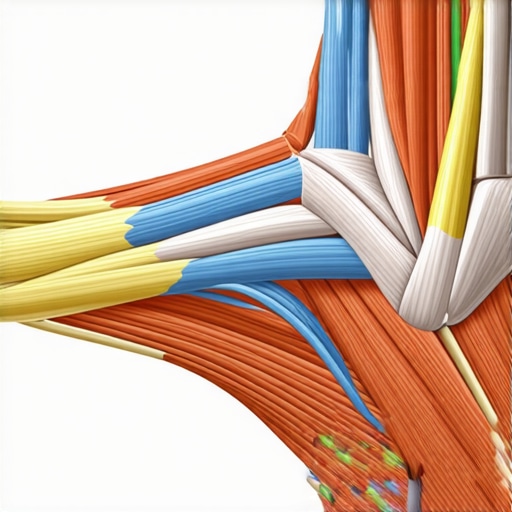
The danger of stretching a muscle that is trying to protect you
One of the most common mistakes I see—and one I made for far too long—is aggressively stretching the psoas or the lower back when they feel ‘tight.’ We think ‘tight’ means ‘short,’ but often ‘tight’ means ‘overworked.’ If your gait is compromised because of your feet, your psoas might be tightening up as a survival mechanism to stabilize your spine. In these cases, why stretching your psoas might actually be making your back hurt more becomes a painful reality. You are essentially pulling on a seatbelt that is trying to keep you safe. Instead of stretching, you need to provide the stability your body is craving through master your mobility top strategies for moving without pain.
Stop the ‘Self-Crack’ cycle before it causes damage
When our backs feel stiff, many of us develop the habit of twisting until we hear a satisfying ‘pop.’ It feels like instant relief, but it is a temporary neurological hack. I used to be a chronic self-cracker until I realized why self-cracking your neck makes the stiffness come back faster: you are usually moving the joints that are already too loose (hypermobile) rather than the ones that are actually stuck. This creates a cycle of instability that makes your muscles tighten up even harder to protect the area. True relief comes from targeted posture correction secrets that transform back pain outcomes, not random clicking and popping. Have you ever fallen into the trap of thinking a ‘tight’ muscle just needed more stretching, only to have it feel worse the next day? Let me know in the comments, because breaking that habit changed my life.
After I stopped the self-cracking madness, I needed a way to keep the progress I’d made. I started using toe spacers—specifically the soft silicone ones you can wear inside wide-toe-box shoes. These aren’t just for athletes; they are a mechanical necessity if you’ve spent decades in narrow dress shoes. I wear them for at least two hours every evening while I’m winding down. This passive stretch helps realign the metatarsals without me having to think about it. It’s one of those daily spinal alignments for lasting relief that pays dividends while you’re just relaxing. I also swear by a very specific tool: the textured ‘neuro-ball.’ Unlike a smooth tennis ball, the tiny nubs stimulate the mechanoreceptors in your skin. These receptors send faster signals to your brain than pain signals do, essentially ‘crowding out’ the discomfort and forcing your nervous system to pay attention to your feet again. This is a level-up from how to use a tennis ball to release tension in your feet and back because it works on a sensory level as well as a mechanical one.
How do I maintain my toe mobility over time?
The secret isn’t a sixty-minute gym session; it’s the ‘interstitial’ movements. I practice what I call the ‘Red Light Reset.’ Every time I’m standing still—waiting for the kettle to boil, standing in line, or even brushing my teeth—I do ten reps of big-toe lifts. I’ve found that mobility strategies for active living only work if they become as reflexive as breathing. If you aren’t consistent, your fascia will simply shrink-wrap back into its old, tight patterns. According to Dr. Ray McClanahan, a leading podiatrist, the human foot is naturally widest at the toes, yet almost every modern shoe is widest at the ball. This ‘tapered toe box’ is a structural design flaw that contributes directly to the biomechanical failures we feel in our spines. By using spacers and choosing wider footwear, you are fighting back against a structural design flaw that is literally shaping your pain. #IMAGE_PLACE_HOLDER_D#
The Future of Walking is Data Driven
Looking ahead, I predict we are going to see a massive shift toward AI-integrated insoles that track your ‘toe-off’ pressure in real-time. Imagine your phone buzzing when you start ‘vaulting’ over your stiff joint instead of rolling through it. We are moving away from passive ‘support’ and toward active ‘feedback.’ But until that tech is in every sneaker, you need to master your mobility using the tools you have today. It’s about staying ahead of the curve with effective posture tips for 2025. My challenge for you: tonight, spend five minutes barefoot on a hard floor. Try to spread your toes as wide as possible and hold it for thirty seconds. It sounds easy, but if you’ve been neglecting your foundation, it might be the hardest thing you do all day. This is the path to unlocking better posture that actually sticks.
I’ll never forget the morning I couldn’t tie my own shoes without a sharp, biting pain shooting through my lumbar. I was only thirty-two, relatively fit, and yet there I was, hunched over like a question mark, nursing a lower back ache that felt like a hot poker. I spent years thinking I was just getting “old” way too early. Every morning was a ritual of groaning and rolling out of bed sideways. I bought three different “orthopedic” pillows, a standing desk, and enough heating pads to keep a small village warm. I felt like a total failure because no matter how many planks I did to strengthen my core, the throb returned every single afternoon. I tried everything until a physical therapist friend looked at me walking and pointed at my feet. It turns out, the real culprit wasn’t my spine or my core strength. It was hiding in plain sight at the end of my foot. My big toe was as stiff as a board. It wouldn’t bend, and because it wouldn’t move, my entire body was paying the price. [image-placeholder]
The Kinetic Chain is Real and It Starts at Your Toes
When I first started looking into this, I made a classic mistake: I assumed the pain was where the actual problem was. I spent months obsessing over my lumbar vertebrae and even thought why stretching your hamstrings might be making your back pain worse was the only insight I needed to find relief. I was wrong. Think of your body like a specialized suspension system in a car. If one tiny bolt—like your hallux (the big toe)—is rusted shut, the shock of every step travels straight up your leg, bypasses the foot’s natural shock absorbers, and slams directly into your lower back. This isn’t just neighborhood wisdom; researchers have found that limited big toe extension significantly alters gait mechanics. According to a study published in the Journal of Foot and Ankle Research, restricted movement in the first metatarsophalangeal joint changes how pressure is distributed across the entire foot, which can ripple up to the sacroiliac joint. If you’ve been wondering what your foot arch says about your chronic hip pain, you’re already halfway to understanding this mechanical connection. We’re going to look at how to unstick that toe and finally give your back some real breathing room.
Is it really possible for a toe to affect my spine?
I get it. It sounds like a massive stretch. You’re probably sitting there with a heating pad on your lower back thinking, “My spine is screaming, and you want me to wiggle my toes?” I was the ultimate skeptic too until I realized that every time my foot hit the pavement, I was “vaulting” over my stiff toe instead of rolling through it. This caused my pelvis to tilt awkwardly with every single step I took. If you’ve ever felt like you need to learn how to stop your pelvis from hiking every time you walk, you know exactly the frustration of a body that feels out of sync. Have you ever noticed that your back pain actually gets worse after a long walk, even though walking is supposed to be “good” for you? Have you faced this specific problem where exercise seems to backfire? Tell me in the comments, because you aren’t alone. Today, I’m going to show you how to use a tennis ball to release tension in your feet and back to break that cycle once and for all. We are moving past the expensive band-aid fixes and getting to the literal root of your posture.
Check Your Toe Mobility Before Your Next Walk
You cannot fix what you do not measure. Stand up and try to lift your big toe while keeping the other four flat against the floor. If it barely moves or requires you to twist your whole ankle, your internal suspension system is broken. I remember trying this in a cramped hotel room after a six-hour flight; I could not even get my toe a centimeter off the thin carpet. It was no wonder my spine felt compressed and my lumbar was screaming. This simple failure in movement is often the real reason your lower back hurts only after you go for a walk, as your body is forced to compensate for a joint that simply will not budge. If you cannot get about 65 degrees of extension in that big toe, every step you take is a micro-trauma to your L5-S1 disc.
Roll Away the Tension That Is Locking Your Spine
The most direct way to unstick this mechanism is by addressing the soft tissue directly beneath your arch. Take a firm tennis ball—or a lacrosse ball if you have a high pain tolerance—and place it right under the ball of your foot. Do not just roll aimlessly like you are playing with a toy. Instead, find the tender spots specifically near the base of the big toe and hold steady pressure for thirty seconds while breathing deeply into your belly. This is a crucial component of mobility mastery simple exercises to relieve chronic back pain. I used to do this discreetly under my desk at work until the ball rolled away and hit my boss’s shoe, but that ten-minute session of release saved me from the usual late-afternoon ibuprofen haze.
Stop Your Feet From Sabotaging Your Spine
We often choose footwear for convenience or style, but understanding why wearing flip flops is changing your gait and hurting your back is the first step in protecting your spine. When you wear loose sandals, your toes have to “grip” the shoe to keep it from flying off. This constant gripping keeps the plantar fascia in a state of chronic contraction. When you finally swap the flip-flops for sneakers, that fascia remains tight, pulling on your calf, your hamstring, and eventually your pelvis. This tension acts like a tight tether pulling your tailbone out of alignment with every stride.
Practice the Big Toe Push-Off Every Day
Next time you are moving through your house, focus on the final 10% of your stride. Instead of picking your foot up early or rolling to the outer edge of your foot, consciously push off through the pad of your big toe. It will feel strange at first—almost like you are over-exaggerating a “spring” in your step—but this action engages the deep core muscles that stabilize your lumbar spine. This tiny mechanical adjustment is far more effective than most daily adjustments to alleviate back pain and improve posture because it targets the root movement pattern rather than just the symptoms. You are essentially teaching your body how to absorb shock again.
Wake Up Your Feet for a Better Back
Incorporate a quick foot-wake-up call into the morning movement routine that lubricates your joints. Spend sixty seconds just wiggling your toes independently and doing “foot doming”—pulling the ball of your foot toward your heel without curling your toes. This reactivates the intrinsic muscles of the arch. When these muscles are “awake,” they provide a stable base for your hips, preventing the pelvic tilting that leads to that deep, localized ache in your lower back by lunchtime.
Why your core strength isn’t stopping your back aches
We have been told for decades that the answer to every back problem is a ‘stronger core.’ I spent years obsessing over planks and dead-bugs, yet my back still felt like it was made of dry glass. Here is the nuance most people miss: why your core strength isn’t stopping your back aches often comes down to the lack of an ‘anchor’ at the ground level. If your big toe isn’t providing a stable base, your core muscles can’t properly leverage your spine. It is like trying to build a high-performance engine in a car with flat tires. You can have all the horsepower in the world, but if the rubber doesn’t meet the road correctly, the whole system vibrates itself to pieces.
Can a stiff toe really turn off your glutes?
This is where things get fascinating for the movement geeks among us. There is a concept called the ‘Windlass Mechanism.’ Research published in the Journal of Biomechanics explains that when you lift your big toe, it tightens the plantar fascia, which arches the foot and creates a rigid lever for push-off. If this mechanism is broken because of a stiff toe, your brain actually inhibits your gluteus maximus. You end up with ‘glute amnesia,’ where your primary hip movers simply stop firing during your walk. When the glutes quit, your lower back—specifically the quadratus lumborum and erector spinae—has to do double duty.
The danger of stretching a muscle that is trying to protect you
One of the most common mistakes I see—and one I made for far too long—is aggressively stretching the psoas or the lower back when they feel ‘tight.’ We think ‘tight’ means ‘short,’ but often ‘tight’ means ‘overworked.’ If your gait is compromised because of your feet, your psoas might be tightening up as a survival mechanism to stabilize your spine. In these cases, why stretching your psoas might actually be making your back hurt more becomes a painful reality. You are essentially pulling on a seatbelt that is trying to keep you safe. Instead of stretching, you need to provide the stability your body is craving through master your mobility top strategies for moving without pain.
Stop the ‘Self-Crack’ cycle before it causes damage
When our backs feel stiff, many of us develop the habit of twisting until we hear a satisfying ‘pop.’ It feels like instant relief, but it is a temporary neurological hack. I used to be a chronic self-cracker until I realized why self-cracking your neck makes the stiffness come back faster: you are usually moving the joints that are already too loose (hypermobile) rather than the ones that are actually stuck. This creates a cycle of instability that makes your muscles tighten up even harder to protect the area. True relief comes from targeted posture correction secrets that transform back pain outcomes, not random clicking and popping. Have you ever fallen into the trap of thinking a ‘tight’ muscle just needed more stretching, only to have it feel worse the next day? Let me know in the comments, because breaking that habit changed my life.
After I stopped the self-cracking madness, I needed a way to keep the progress I’d made. I started using toe spacers—specifically the soft silicone ones you can wear inside wide-toe-box shoes. These aren’t just for athletes; they are a mechanical necessity if you’ve spent decades in narrow dress shoes. I wear them for at least two hours every evening while I’m winding down. This passive stretch helps realign the metatarsals without me having to think about it. It’s one of those daily spinal alignments for lasting relief that pays dividends while you’re just relaxing. I also swear by a very specific tool: the textured ‘neuro-ball.’ Unlike a smooth tennis ball, the tiny nubs stimulate the mechanoreceptors in your skin. These receptors send faster signals to your brain than pain signals do, essentially ‘crowding out’ the discomfort and forcing your nervous system to pay attention to your feet again. This is a level-up from how to use a tennis ball to release tension in your feet and back because it works on a sensory level as well as a mechanical one.
How do I maintain my toe mobility over time?
The secret isn’t a sixty-minute gym session; it’s the ‘interstitial’ movements. I practice what I call the ‘Red Light Reset.’ Every time I’m standing still—waiting for the kettle to boil, standing in line, or even brushing my teeth—I do ten reps of big-toe lifts. I’ve found that mobility strategies for active living only work if they become as reflexive as breathing. If you aren’t consistent, your fascia will simply shrink-wrap back into its old, tight patterns. According to Dr. Ray McClanahan, a leading podiatrist, the human foot is naturally widest at the toes, yet almost every modern shoe is widest at the ball. This ‘tapered toe box’ is a structural design flaw that contributes directly to the biomechanical failures we feel in our spines. By using spacers and choosing wider footwear, you are fighting back against a structural design flaw that is literally shaping your pain. #IMAGE_PLACE_HOLDER_D#
The Future of Walking is Data Driven
Looking ahead, I predict we are going to see a massive shift toward AI-integrated insoles that track your ‘toe-off’ pressure in real-time. Imagine your phone buzzing when you start ‘vaulting’ over your stiff joint instead of rolling through it. We are moving away from passive ‘support’ and toward active ‘feedback.’ But until that tech is in every sneaker, you need to master your mobility using the tools you have today. It’s about staying ahead of the curve with effective posture tips for 2025. My challenge for you: tonight, spend five minutes barefoot on a hard floor. Try to spread your toes as wide as possible and hold it for thirty seconds. It sounds easy, but if you’ve been neglecting your foundation, it might be the hardest thing you do all day. This is the path to unlocking better posture that actually sticks.
What I Learned After Chasing Ghost Symptoms for a Decade
- Pain is a Liar: The spot that hurts is almost never where the injury started. Your back is often just the innocent victim of your foot’s laziness.
- Movement is Information: Stiffness isn’t just physical; it’s your brain’s way of saying it doesn’t trust that joint anymore. You have to rebuild that trust.
- Small Habits Win: Five minutes of daily toe mobility did more for my L5-S1 disc than an hour of core work ever could.
The Practical Tools That Rebuilt My Stride
I don’t recommend gadgets I don’t use daily. To truly enhance your mobility with expert tips for easier movement in 2025, you need to address the mechanical roots. I swear by Correct Toes for physical realignment, Altra shoes for their zero-drop wide toe box, and a textured neuro-ball for stimulating the nerves in the arch. These aren’t just accessories; they are structural investments in your ability to walk pain-free for the next forty years.
Your Spine Deserves a Solid Foundation
You don’t have to accept a life of “managing” back pain with ice and ibuprofen. By starting at the floor and working your way up, you are giving your body the structural integrity it was designed to have. It takes time to rewire these patterns, but every time you focus on a proper toe-off or spend a few minutes rolling your arches, you are applying posture correction secrets that transform back pain outcomes. Reclaiming your back health is a marathon, not a sprint, but the first step is as small as your big toe. Have you ever noticed your toes feeling stiff or cramped after a long day in dress shoes? Let me know in the comments below!