
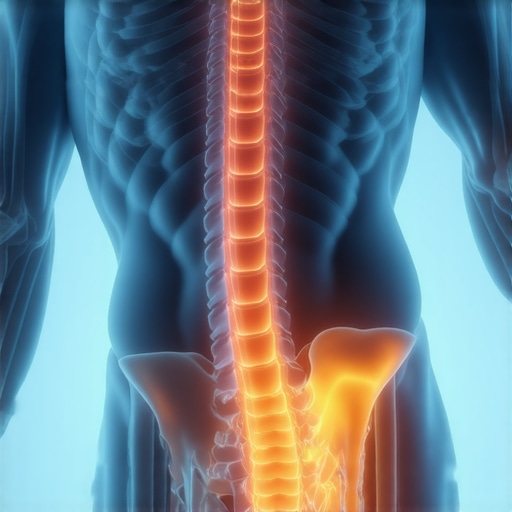
I spent three months religiously doing planks and “dead bugs” until my face turned bright purple every single morning. By all accounts, I was a fitness success story—I had the kind of core strength people pay trainers thousands to achieve. Yet, I still couldn’t lean over the sink to brush my teeth without a sharp, electricity-like bolt shooting through my lower back. It felt like a betrayal. I did everything right, yet my spine felt like it was made of dry twigs ready to snap. It turns out, I was falling for the same lie most of us do: that a “strong” core is the same thing as a “functional” one.
Your six-pack is actually hiding a stability problem
The biggest mistake I made early on was thinking that “sucking it in” and tensing my stomach like I was about to take a punch was the key to protection. In reality, why you should stop sucking in your stomach to look thinner is one of the first things I tell my neighbors now. When you over-brace, you actually create a rigid “canister” that lacks the subtle, reactive movements your spine needs to stay healthy. I used to think I was building a suit of armor, but I was actually just locking my joints in a cage. Today, we are going to look at the missing link between having “gym strength” and actually living a life without that nagging, deep ache. We’ll explore why the deep core connection that stops your spine from shear stress is far more important than how long you can hold a plank. If you’ve ever felt like your body is a puzzle with missing pieces, you’re in the right place. Have you ever felt like you’re doing all the right exercises but the pain just won’t budge?
Is more exercise really the answer here?
You might be skeptical. I get it. The last thing you want to hear when you’re in pain is that you need to do more of the stuff that isn’t working. But here is a surprising fact: Research published in the Journal of Orthopaedic & Sports Physical Therapy indicates that many people with chronic back pain actually have overactive superficial muscles and underactive deep stabilizers. This means your big, visible muscles are working too hard to compensate for the little ones that are asleep at the wheel. Sometimes, why stretching your psoas might actually be making your back hurt more is a better question to ask than “how do I get stronger?” You aren’t alone, and it is likely because you are treating the symptom, not the mechanics. By shifting our focus toward mobility mastery and simple exercises that favor coordination over brute force, we can finally stop the cycle of strengthening our way into more pain. It is time to stop fighting your body and start listening to what it is actually trying to tell you about those aches.
Stop Bracing and Start Breathing Through Your Ribs
Imagine your torso as a shock absorber on a mountain bike. If that shock is frozen solid, every pebble you hit sends a jarring vibration straight into the frame. That is exactly what happens when you ‘suck it in’ or over-brace your abs. Instead of protection, you get rigidity. The first step to real relief is learning how to breathe through your ribs to ease lower back tension. Most people are chest-breathers, which is often a side effect of stress or poor posture. I realized early on that how your mouth breathing habit is locking up your neck muscles was a major contributor to my morning stiffness. By shifting the breath down into the lower ribs, you create a natural, internal pressure that supports the spine from the inside out without making you as stiff as a board.
The Heavy Box Test
I remember trying to help my brother move a solid oak dresser up a flight of narrow stairs. I did what I’d been taught in the gym: I took a big breath, held it, and stiffened my core like a statue. Halfway up the landing, I had to pivot. Because I was so ‘braced,’ my spine couldn’t handle the rotation under load, and I felt that familiar, sickening twinge. I was strong, but I was brittle. Later, after I learned to maintain the deep core connection that stops your spine from shear stress, I tried a similar lift. This time, I kept my breath moving and allowed my hips to drive the movement. I wasn’t just ‘strong’; I was mobile. Learning how to pick up a heavy box without feeling it in your spine the next day is about coordination, not just muscle mass.
Reset Your Spine Before You Even Pour Coffee
Gravity is a constant tax on your intervertebral discs. By the time you wake up, your spine has been horizontal for hours, and jumping straight into a seated position at a breakfast table is a recipe for disaster. I started implementing the morning routine to decompress your spine before coffee, and it changed the trajectory of my entire day. It’s not about intense stretching; it’s about gentle mobilization. If you skip this, you’re likely starting your day with a compressed lumbar curve, making every step you take slightly more abrasive to your joints.
The 50-Pound Pressure Mistake You Make While Standing
Most of us stand with a slight lean or a ‘lazy’ hip tuck that we don’t even notice. However, the standing error that puts 50 pounds of pressure on your l5-s1 is usually just a matter of where your weight is distributed on your feet. When you shift your weight too far forward into your toes, you force your lower back muscles to fire constantly just to keep you from falling over. This leads to that ‘burning’ sensation after standing in line for ten minutes. Pair this with a poorly positioned workstation, and you’re in trouble. I found that using the 2-inch rule for your laptop stand to save your neck from strain was the easiest way to prevent my upper back from rounding, which naturally helped my lower back stay neutral. It is a chain reaction: fix the top, and the bottom has a much easier time staying in alignment.
Stop stretching your hamstrings if they feel like steel cables
We need to talk about the ‘stretch harder’ trap. For years, I spent twenty minutes every night touching my toes, absolutely convinced my hamstrings were the reason my back felt like a piano wire about to snap. But here is a contrarian truth that most beginners miss: your hamstrings probably aren’t short; they are guarded. When your brain senses instability in your spine, it locks down the surrounding muscles to prevent what it perceives as a catastrophic injury. If you keep pulling on them with aggressive stretches, you are just fighting your body’s survival mechanism. This is exactly why stretching your hamstrings might be making your back pain worse. You are trying to manually lengthen a muscle that is busy trying to save your L5-S1 from shifting under load. Research published in The Spine Journal indicates that ‘perceived stiffness’ often has more to do with neural protective signals than actual tissue length. When you ignore this, you’re not gaining mobility; you’re creating a tug-of-war with your own nervous system.
The dangerous relief of cracking your own neck
An even bigger ‘oops’ factor I see with my neighbors is the habit of self-cracking. I know that relief feels like magic for about five minutes, but understanding why self-cracking your neck makes the stiffness come back faster is a lesson I learned the hard way. When you ‘pop’ yourself, you aren’t actually hitting the ‘stuck’ or restricted segment. Instead, you are just hyper-mobilizing the joints above and below the problem area that are already working too hard. It is like trying to fix a jammed door by shaking the hinges off the one next to it. Real mobility mastery and simple exercises focus on stabilizing those loose, hyper-mobile spots while gently waking up the truly frozen ones. By repeatedly self-adjusting, you’re actually training your muscles to stay even tighter to protect those now-unstable joints.
Why does your sciatica pain change sides?
This is a question I get from people who have reached the frustration phase of their recovery. It is a sophisticated symptom that usually points to a shifting mechanical load rather than a single ‘pinched’ spot. If you’re wondering why your sciatica pain changes sides, it is often because your body is trying to ‘path-find’ a way to move without compression. As your primary stabilizing muscles fatigue, your pelvis shifts, and the pressure migrates from one nerve root to the other. Most people think an adjustment is just about ‘putting things back in place,’ but there is a deeper nuance here. It is actually a neurological reset. Understanding how an adjustment restores more than just range of motion changed my entire perspective. It is not just about the bones; it’s about decreasing the ‘background noise’ in your nervous system so your muscles can finally stand down from high-alert mode.
Even something as simple as a common ‘desk stretch’ can backfire if your mechanics are off. For instance, the 90-90 hip stretch mistake that is hurting your lumbar spine is a classic example of trying to help your hips but accidentally shearing your lower back because you are forcing a range of motion your spine hasn’t earned yet. It’s about quality of movement over the quantity of the stretch. Have you ever fallen into this trap of over-stretching only to feel more stiff the next day? Let me know in the comments.
Reading through your stories in the comments about stretching, it is clear we have all been there—fighting a body that just won’t quit its defensive posture. But how do you keep the progress you have finally made? I found that relying on willpower alone is a losing game. You need a toolkit that makes ‘good’ movement the path of least resistance. For me, that started with moving away from the squishy, cheap foam rollers you see at big-box stores. They feel good for a second, but they do not provide the targeted pressure needed for a real fascial release. Instead, I use high-density EVA foam or even a lacrosse ball for specific trigger points. Learning the proper way to use a foam roller on your upper back is a game-changer because most people just roll back and forth aimlessly, which actually irritates the nerves rather than calming the muscles.
Ditch the soft rollers for something with a bit more bite
High-density tools work because they actually penetrate the superficial fascia to reach the tissues that are ‘guarding’ your spine. If you are stuck at a desk all day, the equipment you choose dictates your long-term success. I stopped guessing and started using a hard-mounted monitor arm to ensure my screen was exactly at eye level. It sounds minor, but it stops the ‘forward-head’ creep that ruins your evening. If you are making the switch to a standing setup, make sure you know the best way to transition from a sitting to a standing desk so you do not trade back pain for swollen ankles and foot fatigue.
The secret tool hiding in your junk drawer
I also keep a tennis ball under my desk at all times. It is the most underrated piece of mobility equipment I own. Knowing how to use a tennis ball to release tension in your feet and back while you are on a Zoom call is my favorite ‘secret’ for keeping the posterior chain from locking up during a long shift. By rolling the arch of your foot, you are actually addressing the very bottom of the kinetic chain that ends at your lower back.
How do I keep my spine healthy for the next decade?
Maintenance is not a 20-minute session once a week; it is a series of micro-adjustments integrated into your life. Dr. Stuart McGill, Professor Emeritus at the University of Waterloo and author of the landmark text Low Back Disorders, emphasizes that building ‘endurance’ in the stabilizers is far more protective for the average person than building peak strength. This means you need to adjust your routine: daily spinal alignments for lasting relief. I personally use the 30-second wall reset for hunchback posture every time I get up for water. It acts as a neurological ‘save point’ for my alignment.
The future of posture is not a brace—it is biofeedback
Looking forward to 2025 and beyond, I predict we are going to see a massive shift toward biofeedback wearables that do not just ‘pull’ your shoulders back like a brace—which the truth about posture braces and muscle atrophy shows is a bad idea anyway—but instead vibrate to remind your brain to engage your own stabilizers. We are moving toward a world where your chair might actually tell you when your pelvis is tilting. Until then, your best tool is your own awareness and a few simple items in your gym bag. Tonight, I want you to try the side sleeper pillowing trick for optimal spine alignment. It is the lowest-effort, highest-reward change you can make before tomorrow morning to ensure your recovery happens while you sleep.
The Deepest Realizations From My Spine Rehab Journey
After years of trial and error, I learned that pain isn’t just a physical sensation; it is a communication from your nervous system. For a long time, I thought mobility mastery and simple exercises were about forcing my body into new positions, but the real breakthrough came when I realized my body was guarding itself because it didn’t feel safe. When you stop fighting the protective spasms and start working with your nervous system, the tension melts away. I also discovered that posture correction secrets that transform back pain outcomes are rarely about simply sitting up straight and more about changing the default settings of how your brain perceives your spine’s position in space. My biggest lightbulb moment was realizing that ‘stretching’ a tight muscle is often like trying to pull on a knot—it just makes the knot tighter if you don’t address the underlying stability first.
The Small Toolkit That Actually Saves My Spine
I don’t believe in buying every gadget on the market, but there are a few essentials that changed everything for me. First, I stopped using cheap, soft rollers and switched to high-density tools; knowing the proper way to use a foam roller on your upper back is worth more than any massage because it targets the fascia correctly. Second, I swear by the ‘lacrosse ball’ method for my psoas—sometimes the psoas release that finally stops your deep lower back ache is the only thing that works after a long day of sitting. Finally, I never underestimate the power of foot mechanics. I keep a tennis ball under my desk because how to use a tennis ball to release tension in your feet and back is a technique that provides instant relief by addressing the very bottom of your kinetic chain.
Take Back Your Freedom to Move Without Fear
The path to a healthy spine isn’t found in a single magic exercise, but in the small, daily choices you make. Whether it is how you breathe or using the side sleeper pillowing trick for optimal spine alignment, these micro-habits add up to a life without constant ache. Don’t be afraid to start small and listen to what your body is trying to tell you about its limits. You deserve to move with confidence and ease. Have you ever felt like a specific stretch was actually making your pain worse? Let me know in the comments below!