

I’ll never forget the Tuesday afternoon my back decided it had officially had enough. I was swaying my six-month-old, humming some forgotten lullaby, and reached just a few inches too far for a pacifier. *Snap.* It wasn’t a bone breaking, but a lightning bolt of pain that forced me to slide down the wall, baby in arms, praying I wouldn’t drop him. I’d been doing what every exhausted parent does: propping him on my right hip like a sack of groceries while I tried to live my life. It felt efficient at the time, but I was actually setting my spine up for a long-term disaster. We call it “Mommy Back,” and if you’re currently wincing every time you lean over the crib, I’ve been exactly where you are. Today, we’re going to fix the way you carry your world so you can actually enjoy those snuggles instead of dreading the physical toll they take.
Stop Treating Your Hip Like a Shelf
The biggest mistake I made—and I see this everywhere—was the “hip-hike.” It feels so natural to pop that hip out to create a little ledge for your little one. But when you do that, you’re essentially crushing your lumbar discs and throwing your pelvis into a tailspin. This isn’t just about a sore muscle; it’s about how your entire kinetic chain reacts to the load. I realized later that my habit was actually related to how my foot arch collapse was creating a hip impingement, making the pain even worse. You think you’re being helpful by freeing up a hand, but you’re really just inviting chronic inflammation. The weight of a baby might seem small, but according to the Mayo Clinic, repetitive lifting and carrying with poor form is a leading cause of musculoskeletal disorders in new parents. It’s the constant tension, the “rounded-shoulder” nursing pose, and the way we carry toddlers without constant lower back strain (or lack thereof) that adds up. My lightbulb moment came when I stopped trying to “tough it through” and started looking at my body as a structural system. Have you ever felt that terrifying “catch” in your spine after a long afternoon of rocking?
Does proper form even work when you’re this tired?
I know what you’re thinking: “I’m lucky if I’ve had four hours of sleep; how am I supposed to remember ergonomic principles?” It sounds like just one more chore on an endless list. But the truth is, once you stop the standing error that puts 50 pounds of pressure on your L5-S1, your body starts to reward you with less fatigue. It’s not about being perfect; it’s about making small, intuitive shifts that become second nature. We aren’t aiming for a gold medal in posture; we’re aiming to pick up our kids without a groan of agony. [IMAGE_PLACEHOLDER] Now, let’s dive into the literal “how-to” of holding your baby without the burn.
Stop Reaching and Start Hingeing
I’ll never forget standing in the middle of a crowded grocery store, trying to juggle a leaking gallon of milk and a 25-pound toddler who was currently in full-blown meltdown mode. My old instinct was to round my spine and just yank him up. Instead, I took a half-second to step closer and use a hip hinge. If you treat your baby like a deadlift rather than a backpack, your L5-S1 disc will thank you. You have to learn how to pick up a heavy box without feeling it in your spine the next day by using your glutes as the engine. Think of your hips as a high-performance hinge; when you bend at the waist, you’re basically asking your tiny spinal ligaments to hold up a bridge. By pushing your butt back and keeping your shins vertical, you transfer the load to the biggest muscles in your body. When I finally made this a habit, that terrifying ‘zipper’ of pain down my leg started to fade because I stopped the standing error that puts 50 pounds of pressure on your L5-S1 every time I leaned over.
Keep the Weight Near Your Heart
The further the baby is from your torso, the heavier they become—it’s simple physics. I used to hold my son out at arm’s length to avoid getting spit-up on my shirt, but that extra six inches of distance was shredding my mid-back. You want to keep the baby’s center of gravity as close to yours as possible. This creates the deep core connection that stops your spine from shear stress. When the load is tucked in tight, your skeleton can actually support the weight rather than forcing your muscles to stay in a state of high-alert contraction. It’s the difference between holding a gallon of water against your chest versus holding it with one arm extended.
Your Core Needs to Breathe Not Hide
Many well-meaning fitness gurus tell you to ‘brace your core,’ but most parents interpret that as holding their breath or sucking in. I spent months doing this, thinking I was protecting myself, but I was actually increasing my internal pressure in all the wrong ways. You should actually know why you should stop sucking in your stomach to look thinner and instead focus on 360-degree expansion. When you breathe into your sides and back, you create a natural air-cushion for your spine. I started practicing this while rocking the baby to sleep, and it was the first time my lower back didn’t feel like a tight guitar string by 8:00 PM.
Fix Your Shoulders in Seconds
Finally, we have to talk about the ‘nursing hunch.’ Whether you are bottle-feeding or breastfeeding, your shoulders naturally want to roll forward into a protective shell. This creates those miserable knots right between your shoulder blades. Whenever I felt that burning sensation, I’d perform the shoulder blade squeeze that fixes mid-back knots instantly. It isn’t about pulling your shoulders up to your ears; it’s about sliding the blades down into your back pockets. It’s a micro-adjustment you can do while standing in the checkout line or waiting for the microwave to beep, and it resets the tension before it turns into a tension headache.We’ve covered the mechanics of the ‘Mommy Back,’ but I want to pull back the curtain on something even more insidious: the ‘Perfect Posture’ trap. For years, I thought the goal was to stand as straight as a soldier, shoulders pinned back and spine like a ruler. I was wrong. In fact, most experts in spinal biomechanics, like Dr. Stuart McGill, argue that forcing a rigid, static position can actually be more damaging than slouching. Your spine is designed for dynamic stability, not a frozen state. If you are constantly holding yourself in what you think is ‘correct’ form, you’re likely creating a baseline of chronic tension that leads to the very aches you’re trying to avoid. Learning posture correction secrets that transform back pain outcomes means understanding that the best posture is actually your next posture. Movement is the lubricant your discs crave.
Stop Obsessing Over Standing Perfectly Straight
The biggest myth in the wellness world is that there is a single ‘right’ way to stand. When you force your body into a rigid upright position, you often end up with ‘flared ribs,’ which disconnects your diaphragm from your pelvic floor. This breaks the internal pressure system that protects your lower back. I spent months trying to look ‘aligned’ only to realize I was causing my own rib flare and mid-back burning. Instead of forcing a shape, focus on being ‘tall and relaxed.’ If you feel like you’re fighting your own muscles to stay upright, you’re doing it wrong.
The Dangerous Loop of Self-Cracking Your Own Spine
We’ve all done it—that quick twist or neck tilt to get a satisfying ‘pop’ when things feel tight. It feels like instant relief, right? But here is the ‘Oops’ factor most people miss: when you crack your own neck or back, you are almost always hitting the joints that are already too loose (hypermobile). The joints that are actually stuck and causing the problem stay stuck. This creates a cycle where you feel temporary relief from an endorphin rush, but the underlying instability gets worse. This is why self-cracking your neck makes the stiffness come back faster every single time. You’re essentially ‘feeding the beast’ of instability.
Could your fancy office chair be lying to you?
It sounds counterintuitive, but your $1,000 ergonomic chair might be making your back weaker. Many high-end chairs provide so much support that your deep stabilizer muscles—the ones we discussed regarding what your foot arch says about your chronic hip pain—simply turn off. When those muscles go to sleep, your spine takes the full brunt of your body weight. This is why your expensive desk chair might be giving you false sciatica; it’s encouraging ‘lazy’ sitting that compresses the piriformis muscle.
The Mental Tension Connection
We can’t talk about advanced mobility without talking about the brain. Your nervous system is the master controller of muscle tone. If you are stressed, your brain sends a signal to your muscles to ‘armor up,’ which usually manifests as tight traps and a locked jaw. You can have the best ergonomic setup in the world, but if your nervous system is in a state of high alert, your back will hurt. Learning how to relieve neck tension caused by high stress is just as important as knowing how to lift a heavy box. Have you ever fallen into the trap of trying to stand too straight and ended up in more pain? Let me know in the comments!
Forget the High-Tech Gadgets and Grab a Tennis Ball
I’ve spent a small fortune on vibrating massage guns and posture-correcting shirts that ended up in the back of my closet. The real hero in my mobility journey? A $2 tennis ball. I use it to break up the fascial adhesions in the soles of my feet because your foundation dictates your hip health. You can learn how to use a tennis ball to release tension in your feet and back to signal your nervous system to let go of that protective guarding. It’s not about smashing the muscle; it’s about slow, sustained pressure that tells your brain it’s safe to move again. According to Dr. Kelly Starrett, author of Becoming a Supple Leopard, the goal is to resolve these “positional inhibitions” before they turn into full-blown injuries. I also keep a firm foam roller nearby, but I had to learn the proper way to use a foam roller on your upper back to avoid just rolling over bone and actually targeting the soft tissue.
How do I keep my spine from relapsing?
The hardest part isn’t getting out of pain—it’s staying out of it. I rely on what I call “environmental triggers.” For instance, I use my car as a posture coach. Next time you sit up perfectly tall, take five seconds to adjust your rearview mirror to improve your posture. The moment you start to slouch, you’ll lose sight of the road behind you, and that physical cue forces you to re-engage your core. This is far more effective than a vibrating app because it ties your movement to a functional necessity. Consistency is born from these tiny habits, like the morning movement routine that lubricates your joints before you even have your first cup of coffee.
Why Your Favorite Hip Stretch is Secretly Hurting Your Lower Back
As you get more advanced in your mobility, you’ll likely try the 90-90 hip flow. It’s a gold standard for hip internal rotation, but I see so many people compensate by rounding their lumbar spine. If your back hurts after stretching your hips, you’re likely making the 90-90 hip stretch mistake that is hurting your lumbar spine. You have to keep a “proud chest” and a neutral pelvis, or you’re just shifting the stress from the hip joint to the delicate discs of your lower back. I predict that in the next few years, we’ll move away from static stretching entirely and focus more on “end-range control.” We won’t just want to be flexible; we’ll want to be strong in those deep, awkward positions. To get ahead of the curve, you should start focusing on mastering your mobility with top strategies for moving without pain rather than just chasing a temporary feeling of looseness. Try the “rearview mirror” trick on your drive tomorrow morning—it’s the single most effective way to turn your commute into a recovery session.
The Hardest Lesson I Learned While Carrying a Heavy Toddler
Looking back, I realize that my biggest mistake wasn’t just the way I moved, but the way I ignored the ‘whispers’ of discomfort before they became screams of pain. I spent months assuming that being a parent meant living with a constant ache as a rite of passage. The lightbulb moment came when I stopped trying to force a ‘perfect’ stance and started unlocking better posture through simple adjustments that actually felt natural. I also had to learn that ‘self-cracking’ my neck was just a temporary band-aid for deeper instability. You don’t need to be an athlete to have a healthy spine; you just need to stop fighting your own anatomy and start moving with it.
My Minimalist Toolkit for Spine Health
I’ve ditched the expensive, vibrating gadgets for three things that actually provide long-term relief. First, a firm tennis ball for releasing foot and hip tension—it’s a game-changer for foundation health. Second, the Back Mechanic guide by Dr. Stuart McGill, which helps you identify your specific pain triggers without the guesswork. Finally, I never skip the morning movement routine that lubricates your joints before the daily chaos begins. These aren’t just ‘wellness tips’; they are the functional habits that keep me out of the chiropractor’s chair and on the floor playing with my kids. 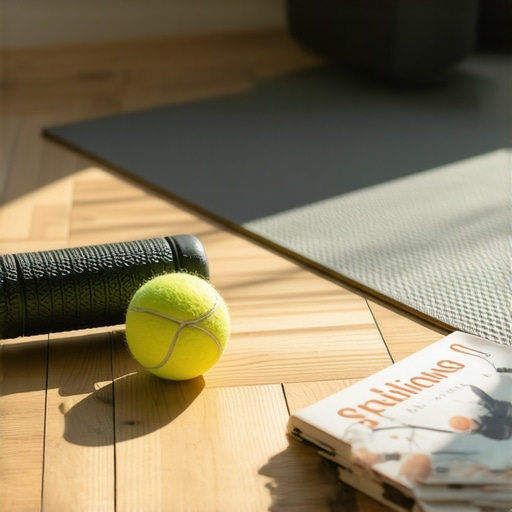
Stop Surviving and Start Thriving with Your Kids
You deserve to pick up your child without a sense of dread or a wince of pain. Overcoming ‘Mommy Back’ is a journey of small, consistent wins rather than a one-time fix. By enhancing your mobility with expert tips, you aren’t just fixing your back—you’re increasing your capacity to enjoy these fleeting, heavy-lifting years. Have you ever felt that sudden ‘catch’ in your spine while reaching for a toy on the floor? Let me know in the comments below!