
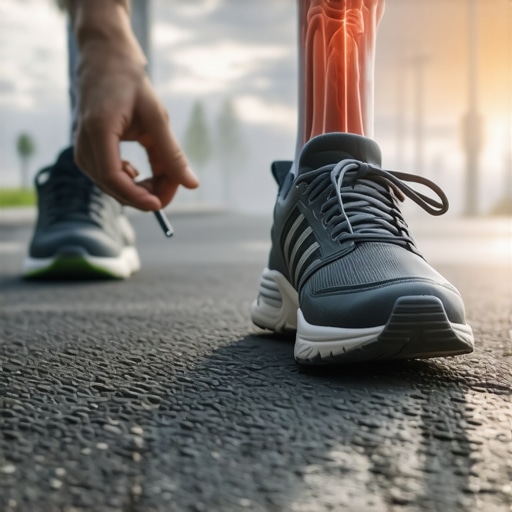
I remember the crisp morning I decided my couch-potato days were officially over. I laced up my sneakers, stepped out the door, and felt like a hero for exactly twelve minutes. Then, it started. That dull, throbbing ache along the front of my legs that turned every subsequent step into a chore. I thought I was just “out of shape,” so I did the worst thing possible: I kept going. I actually believed I could walk the pain away, as if my bones just needed to be “toughened up.” Spoiler alert: I couldn’t. I ended up limping back home, feeling defeated and wondering if my body was simply protesting the very idea of exercise. It wasn’t just physical pain; it was the psychological sting of failing a goal before I even got started.
Your Shins Aren’t Your Enemy
It’s incredibly demoralizing when your brain says “go” but your legs scream “stop.” Most people think it’s just muscle soreness that you should “embrace,” but medial tibial stress syndrome—the fancy term for shin splints—is actually an SOS from your bone and connective tissue. When I first started my fitness journey, I made the classic mistake of ignoring the subtle signals. I didn’t realize that how I walked in the summer was carrying over into my fitness routine, causing a chain reaction of stress that my shins simply couldn’t handle. My shins were essentially the “check engine light” for a much larger mechanical issue. Today, we are going to dive into why this happens and how you can reclaim your daily walk without the agonizing burn. [image]
Is this just a sign I’m getting too old for this?
You might be worried that your joints are just giving out or that fitness is a young person’s game. I’ve been there, sitting on my kitchen floor staring at my swollen shins while thinking my best days were behind me. But here’s a surprising fact: shin splints often have less to do with age and more to do with mechanical overload. In fact, research published in the British Journal of Sports Medicine indicates that sudden increases in activity frequency or duration are the primary triggers for bone stress injuries. It’s a “too much, too soon” problem, not a biological expiration date. Why does this happen the moment we try to do something good for ourselves? Often, the root cause isn’t even in your shins. It might be a lack of flexibility in your feet or a hidden issue with how your lower back handles movement. We’re going to fix this today. I’m going to show you how to identify the triggers and improve your mobility so you can actually enjoy your walk without feeling like your legs are on fire. Have you ever had to cut a walk short because the front of your legs felt like they were ready to snap? Let me know, because you’re definitely not alone in this frustration.
Stop Overstriding and Save Your Shins
Imagine you are driving a car and you slam on the brakes with every single rotation of the tires. That is exactly what you are doing to your legs when you take massive steps. Most people believe that to walk faster or get a better workout, they need to reach out as far as possible with their lead foot. This creates a hard heel strike that sends a shockwave directly up your tibia. I learned this the hard way when I tried to keep pace with a tall friend on a three-mile loop. By the second mile, my shins felt like they were being hit with a meat tenderizer because I was overextending my legs. I eventually realized that by shortening my stride and landing more softly under my center of gravity, I was no longer fighting my own momentum.
Shorten Your Stride for Immediate Relief
When you shorten your steps, you naturally increase your cadence. Think of it like a cyclist shifting into a lower gear to go uphill; your legs move more frequently, but with significantly less strain per pedal. This shift in mechanics reduces the eccentric load on the tibialis anterior, which is the muscle that usually screams when it is overworked. If you want to master your mobility, you have to stop treating your legs like hammers and start treating them like springs.
Release the Tension at the Source
Often, the pain in your shins is just the end of a long chain of tension that starts in the soles of your feet. If your feet are stiff or locked up, your shins have to work twice as hard to stabilize your gait. This is where you need to get proactive before you even step outside.
The Tennis Ball Hack for Your Arches
One of the most effective ways to prep your body is to learn how to use a tennis ball to release tension in your feet and back. I keep a tennis ball under my desk and roll it under my foot for five minutes every morning. The first time I did this, I felt a specific crunchy spot near my arch that radiated relief all the way up to my knee. It is like untying a knot in a shoelace; once the foot releases, the shin does not have to pull so hard. 
Align Your Pelvis for Better Mechanics
Your shins are also at the mercy of your hips. If your pelvis is tilting or shifting unevenly, one leg is going to take more impact than the other. This creates an asymmetrical load that almost always ends in a one-sided shin splint that feels impossible to shake. You need to learn how to stop your pelvis from hiking every time you walk to ensure that weight is distributed evenly across both limbs. When I finally fixed my pelvic alignment, the recurring pain in my left shin—which had plagued me for months—disappeared entirely. It is about creating a stable foundation that allows your joints to move through a full, healthy range of motion. Implementing a morning movement routine that lubricates your joints can prime your nervous system for the walk ahead, making sure everything from your lower back to your toes is ready to absorb impact efficiently without causing secondary bone stress.We’ve been taught that if something is tight, we should stretch it until it yields. This is the biggest ‘trap’ in the world of mobility. In my early days, I spent hours lunging to ‘open’ my hips, only to find my lower back feeling more fragile than ever. The truth is, why stretching your psoas might actually be making your back hurt more is because your brain is using that muscle as an ’emergency brake’ to stabilize your spine. When you force it to relax without providing a new source of stability, your spine loses its support system. A study published in the Journal of Orthopaedic & Sports Physical Therapy highlights that ‘tightness’ is often a neurological protective mechanism, not a physical length issue. We need to stop fighting our bodies and start listening to the ‘why’ behind the tension.
Why does my back still ache even though I have a strong core?
It’s a frustrating paradox that leaves many fitness enthusiasts scratching their heads. You can have ‘six-pack’ abs and still suffer from debilitating spasms because why your core strength isn’t stopping your back aches usually comes down to timing and coordination, not raw force. Your ‘global’ muscles—the ones you see in the mirror—often overcompensate for the tiny, deep stabilizers that have gone dormant. To fix this for good, you need to find the deep core connection that stops your spine from shear stress rather than just cranking out more heavy planks. 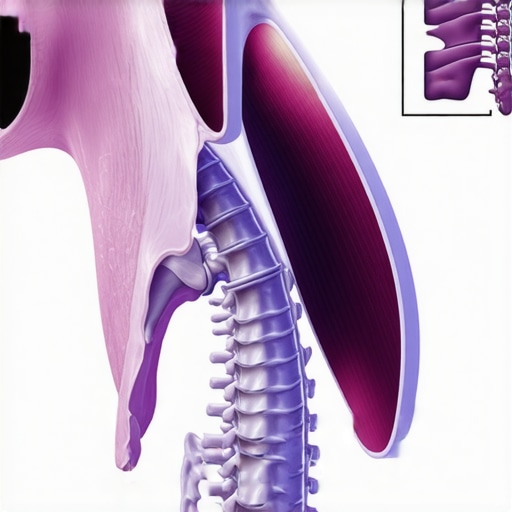
Don’t Fall for the ‘Suck it In’ Posture Trap
One huge mistake I see in every gym and office is people trying to look ‘fit’ or ‘tall’ by constantly contracting their midsection. Why you should stop sucking in your stomach to look thinner is simple: it paralyzes your diaphragm and forces your neck and back muscles to do the work of breathing. This ‘hourglass syndrome’ creates a massive amount of pressure in the abdominal cavity, eventually leading to lower back pain and even pelvic floor issues. Similarly, reaching for external gear often backfires; the truth about posture correctors and braces is that they frequently turn off the very muscles you are trying to train. Real progress happens when you learn how to breathe into your lower back to release tension, allowing your nervous system to feel safe enough to let go of that chronic stiffness. Have you ever fallen into the trap of over-stretching a ‘tight’ muscle only to have it feel worse the next day? Let me know in the comments, because understanding these nuances is what separates a quick fix from a lifetime of pain-free movement.
Tools That Actually Earned Their Spot in My Home
I’m a bit of a gear skeptic. Most ‘posture’ gadgets end up in a junk drawer within a month because they try to do the work for you rather than helping your body do the work better. However, there are a few items that changed the game for me. First is my foam roller, but I had to stop using it like a rolling pin on a piece of dough. I finally saw results when I learned the proper way to use a foam roller on your upper back to target the ribs and thoracic segments specifically. If you’re just rolling aimlessly, you’re likely missing the very joints that need the decompression.
The 2-Inch Rule That Saved My Neck
The most transformative tool in my arsenal wasn’t some high-tech vibrating gun; it was a simple, foldable laptop stand. I follow the 2-inch rule for your laptop stand to save your neck from strain religiously now. By bringing the screen to eye level, my upper back doesn’t have to work overtime just to keep my head from falling forward. This is vital because, according to research in the International Journal of Environmental Research and Public Health, prolonged neck flexion is a primary predictor of chronic musculoskeletal disorders in office workers. Just a few inches of height can reduce the effective weight on your cervical spine by up to thirty pounds. 
How do I maintain these mobility gains over time?
Maintenance isn’t about doing a sixty-minute workout every day; it’s about the small, daily adjustments to alleviate back pain and improve posture that happen while you are doing other things. I predict that in the next few years, we will see a massive shift toward ‘passive mobility’—furniture and clothing designed to encourage micro-movements rather than static sitting. Until then, you have to be your own advocate. You can start by making sure you know the best way to transition from a sitting to a standing desk so you don’t accidentally trade your back pain for foot and ankle issues. To keep your results lasting, you must adjust your routine for daily spinal alignments that reset your nervous system after a long day of work. If you want to see an immediate difference, I challenge you to implement the 2-inch rule today: prop your screen up so you aren’t looking down, and feel the tension in your shoulders melt away by lunchtime.
Lessons from the Sideline That Changed Everything
The most profound realization I ever had was that “pushing through the pain” is actually just a form of ignoring your body’s survival instincts. When I stopped fighting my shins and started asking why they hurt, my progress skyrocketed. I learned that posture correction secrets that transform back pain outcomes often apply to the lower legs too—it’s all one connected system. I also found that why self-cracking your neck makes the stiffness come back faster is the same logic as temporary stretches for your shins: if you don’t fix the mechanics, the relief is just a band-aid. Finally, I realized that unlocking better back health is actually the secret weapon for long-distance walking because a stable spine creates a stable gait. Don’t view your shins as the weak link; view them as the messengers telling you where the chain is broken.
The Essentials That Keep Me Moving
I don’t believe in buying every gadget on the market, but three things made a massive difference for me. First, a firm lacrosse ball is better than a soft one for deep tissue, but you have to know how to use a tennis ball to release tension in your feet and back properly so you don’t bruise the tissue. Second, I recommend looking into anatomical footwear; shoes with a wider toe box allow your arch to function naturally, taking the load off the tibia. Third, using a simple foam roller remains a staple, especially when you master the proper way to use a foam roller on your upper back to ensure your whole chain is open. To round it out, I always suggest people enhance flexibility with top mobility strategies that focus on active movement rather than static holding.
Reclaiming the Joy in Every Step
You deserve to walk through your neighborhood or finish a hike without calculating how many minutes of “burn” you have left. Dealing with shin splints is a journey of patience, but once you align your mechanics, the world opens up again. By focusing on mobility mastery and simple exercises, you aren’t just fixing a symptom; you are building a body that can handle the adventures you’ve planned for years to come. Remember, every small adjustment is a win for your future self. Have you ever found that changing your shoes or shortening your stride made an immediate difference in your shin pain? Let me know in the comments below!