
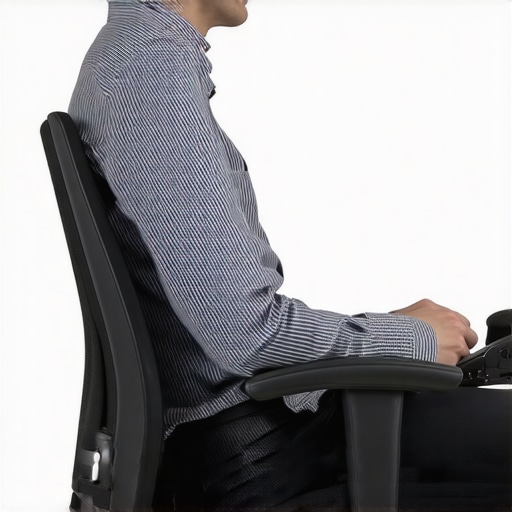
I was catching my reflection in the dark screen of my laptop yesterday and, honestly, I didn’t recognize the person staring back. I looked like a human question mark. My chin was jutting toward the monitor, my shoulders were up around my ears, and my lower back was arched in that weird, painful way we all do when we’re deep in a deadline. It was a visceral wake-up call. I realized that my [why your tailbone hurts after sitting for only 10 minutes](https://chiromasteryz.com/why-your-tailbone-hurts-after-sitting-for-only-10-minutes) wasn’t just bad luck; it was a choice I was making every single hour. Today, I’m going to show you the exact 2-minute habit that saved me from that slump, without requiring you to buy a $1,000 ergonomic throne or a torture-device back brace.
Stop Fighting Your Spine and Start Working With It
For years, I made the classic mistake of thinking I could just ‘willpower’ my way into better posture. I’d sit up straight, hold it for thirty seconds until my muscles burned, and then slowly melt back into a puddle of poor alignment. I even wasted money on gadgets, but let me tell you [the truth about posture correctors and braces](https://chiromasteryz.com/the-truth-about-posture-correctors-and-braces)—they often make your muscles lazier rather than stronger. The real issue is that our bodies aren’t designed for the static load of a desk. According to research cited by the Mayo Clinic, sitting for long periods without movement increases the pressure on your spinal discs by up to 40% compared to standing. That is a lot of weight for your vertebrae to carry while you’re just trying to answer emails. This 2-minute habit isn’t about being perfect; it’s about a [daily adjustment to alleviate back pain](https://chiromasteryz.com/daily-adjustments-to-alleviate-back-pain-and-improve-posture) that resets your nervous system before the damage sets in.
Does a Two-Minute Drill Really Beat a Padded Office Chair?
I know what you’re thinking because I thought it too: ‘How can two minutes fix eight hours of damage?’ It sounds like a gimmick. But the magic isn’t in the intensity; it’s in the frequency of the reset. When I first started, I failed constantly because I tried to do too much at once. Now, I use a [simple move that fixes rounded shoulders instantly](https://chiromasteryz.com/the-simple-move-that-fixes-rounded-shoulders-instantly) as my ‘anchor’ habit. Have you ever stood up from your desk and felt like your spine was literally crunching back into place? If you’ve felt that stiffness, you’re already behind the curve.
How I Finally Stopped the Mid-Day Back Burn
Most of us wait until the pain is a 7 out of 10 before we move. That was my biggest mistake early on. I’d wait until I had a [stuck feeling in my mid-back](https://chiromasteryz.com/how-to-fix-a-stuck-feeling-in-your-mid-back) before I’d even think about stretching. The secret to this habit is performing it when you feel *fine*. It’s a preventative strike. By the time your [upper back burns after using a mouse](https://chiromasteryz.com/why-your-upper-back-burns-after-using-a-mouse-for-2-hours), the muscle fatigue is already deep. We need to talk about why your brain forgets where your shoulders are supposed to be the moment you open a spreadsheet.Your brain is effectively a ‘save energy’ machine, and unfortunately, it thinks slouching is the most efficient way to exist. It isn’t. To break that cycle, you need to master three specific micro-moves that take about 40 seconds each.
Stop the Pelvic Tilt and Reset Your Foundation
Think of your pelvis like a bucket of water. Most of us sit in a way that ‘spills’ the water out the front, arching our lower back and making our bellies hang out. This is exactly [why your glutes go to sleep after one hour of sitting](https://chiromasteryz.com/why-your-glutes-go-to-sleep-after-one-hour-of-sitting). If you’ve ever felt that sharp pinch when standing up, you’re likely stuck in an anterior tilt. Imagine your hip bones are the headlights of a car; if they’re pointing at the floor, you’re asking for a disc disaster. To fix this, you don’t even need to stand up; you just need a ‘glute squeeze.’ Tighten those muscles for five seconds, release, and feel your pelvis snap back into a neutral position. By practicing [the glute squeeze hack for pain-free standing](https://chiromasteryz.com/the-glute-squeeze-hack-for-pain-free-standing-at-the-sink), even while seated, you create a stable platform for your spine to sit on rather than a collapsing foundation. I remember doing this during a three-hour budget meeting; everyone thought I was just intensely focused on the spreadsheets, but I was actually preventing a week of sciatica.
Ditch the Hunch with a 30-Second Blade Pin
Once your base is set, we have to deal with the ‘Human Question Mark’ look. Your shoulders naturally want to rotate inward when you type. Instead of forcing them back with your willpower, use the [30-second wall slide for instant shoulder relief](https://chiromasteryz.com/the-30-second-wall-slide-for-instant-shoulder-relief-2). If you’re stuck in your chair, simply pin your shoulder blades back and down—imagine you’re trying to tuck your shoulder blades into your back pockets.  This activates the small muscles between your vertebrae that usually stay dormant all day. The ‘Blade Pin’ isn’t about puffed-out-chest bravado; it’s about recalibrating the tension between your front and back. I used to get these brutal knots under my right shoulder blade and thought I needed a professional massage, but I actually just needed to wake up my rhomboids. This simple trick reminds your nervous system [why your spine needs movement every 30-minutes](https://chiromasteryz.com/why-your-spine-needs-movement-every-30-minutes) to stay lubricated and functional.
Turn Your Breath into a Natural Internal Brace
This is the part most people skip because it sounds too ‘zen,’ but it’s pure biomechanics. When you breathe shallowly into your chest, your neck muscles have to help pull up your ribcage. This leads to that agonizing tension in your traps. By learning [how to breathe using your belly to lower spinal tension](https://chiromasteryz.com/how-to-breathe-using-your-belly-to-lower-spinal-tension), you create internal pressure that supports your lower back from the inside out. Think of your core as a pressurized canister. If the pressure is only at the top (your chest), the bottom (your back) is prone to buckling. When you inhale into your belly, you’re essentially inflating a cushion for your L4 and L5 vertebrae. It’s incredible [how a tight diaphragm could be the secret cause of your back pain](https://chiromasteryz.com/how-a-tight-diaphragm-could-be-the-secret-cause-of-your-back-pain). Take three slow, deep breaths, expanding your stomach like a balloon, and you’ll feel the pressure in your lumbar spine literally dissipate. This isn’t just about relaxation; it’s about mechanical decompression using the most portable piece of ergonomic equipment you’ll ever own.Wait, there’s a trap here that almost every ‘posture-conscious’ person falls into. You spend all this time trying to sit perfectly straight, chest out, shoulders back—and by 3 PM, you feel like a piece of dry kindling ready to snap. Here is the contrarian truth: there is no such thing as a perfect static posture. If you hold the ‘best’ position for four hours straight, you are still starving your spinal discs of the nutrients they get through movement. This is one of the biggest posture correction secrets that transform back pain outcomes: the best posture is always your next posture. Movement is the only way to facilitate the ‘imbibition’—the sponge-like action that pumps fluid into your discs.
Stop Obsessing Over Sitting Perfectly
For years, I thought if I just bought the right lumbar support and sat like a statue, the pain would vanish. Instead, I became stiff and brittle. Expertise in spinal health tells us that our tissues thrive on variability. Even the most ergonomic setup can’t compensate for a lack of blood flow. If you are locked into one position, no matter how ‘correct’ it looks, you’re essentially creating a slow-motion crush injury. This is why a daily adjustment to alleviate back pain is less about forcing bones into place and more about restoring the rhythm of movement your nervous system expects.
Why Your Core Exercises Aren’t Saving Your Spine
I often see people who are incredibly fit but still in agony. They think they can ‘muscle’ through the pain with heavy gym sessions. But why your core strength isn’t stopping your back aches usually comes down to the difference between raw strength and functional stability. Dr. Stuart McGill, a world-renowned expert in spine biomechanics, emphasizes that endurance of the deep stabilizers—not just having a six-pack—is what prevents injury. If your large muscles are always ‘on’ but your deep stabilizers are sleeping, your vertebrae will shift and grind during simple movements like reaching for a coffee cup. 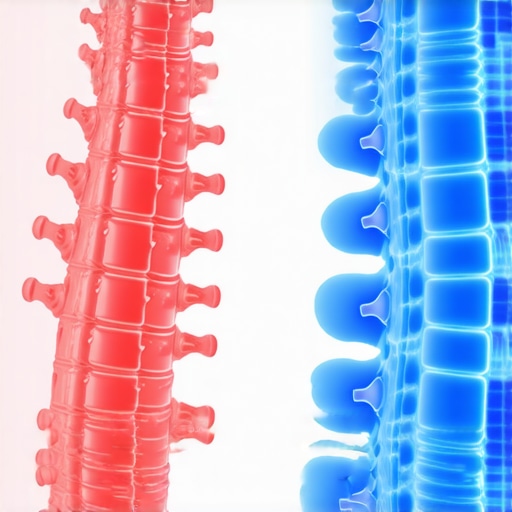
The Dangerous Mistake of Stretching Tight Hamstrings
Here is a massive ‘oops’ factor that almost everyone gets wrong. I used to stretch my hamstrings every single morning because they felt tight. I thought I was being a mobility master. However, if you have an anterior pelvic tilt, your hamstrings are already being pulled like an over-tightened rubber band by your tilted pelvis. Why your hamstrings feel tight even though you stretch every day is often because they are over-lengthened, not short. Adding more stretch to an already over-extended muscle just irritates your sciatic nerve and makes your lower back more unstable. According to research in the Journal of Bodywork and Movement Therapies, stretching these ‘distressed’ muscles can actually trigger a protective spasm. Instead of reaching for your toes, try releasing your hip flexors without stretching them. This allows the pelvis to tilt back into neutral, which naturally gives your hamstrings the slack they need to finally relax.
Does My Back Need an Adjustment or Just a Rest?
It is a sophisticated question that many high-performers struggle with. Often, the ache you feel is the difference between muscle soreness and a misaligned vertebra. If the pain is sharp, localized, or limits your range of motion in one specific direction, rest alone won’t fix it. You’re likely dealing with a joint that is ‘stuck’ in a bad pattern, and your muscles are spasming to protect it. Working out on top of this structural glitch is like trying to drive a car with a bent axle—you can do it, but you’re going to destroy the tires. Have you ever fallen into the trap of trying to ‘stretch out’ a pain that actually needed a structural reset? Let me know in the comments.Once you realize that your body is a dynamic system, the ‘quick fix’ mentality starts to fade. I stopped looking for a magic bullet and started looking for a sustainable system. To truly adjust your routine daily spinal alignments for lasting relief, you have to look at the environment you spend 90% of your time in. For me, that meant a hard look at my desk. I realized that even with the best intentions, if my equipment was forcing me into a slump, I was fighting a losing battle.
The Gear That Actually Earned a Spot on My Desk
I’m not a fan of ‘ergonomic’ gear just for the sake of it, but two things changed my life: a dedicated laptop stand and an external keyboard. I use these because they decouple the screen from the keys. If your keyboard is attached to your screen, you are forced to choose between straining your wrists or straining your neck. By using a stand, I can achieve the correct height for your laptop to prevent shoulder burn, keeping my gaze level with the top third of the screen. This one change stopped the ‘peering down’ habit that was wrecking my cervical spine. I also swapped my standard mouse for a vertical one. Why? Because a standard mouse forces your forearm into pronation, which can actually rotate your shoulder forward. A vertical mouse keeps your hand in a ‘handshake’ position, which is the natural resting state of your limb. 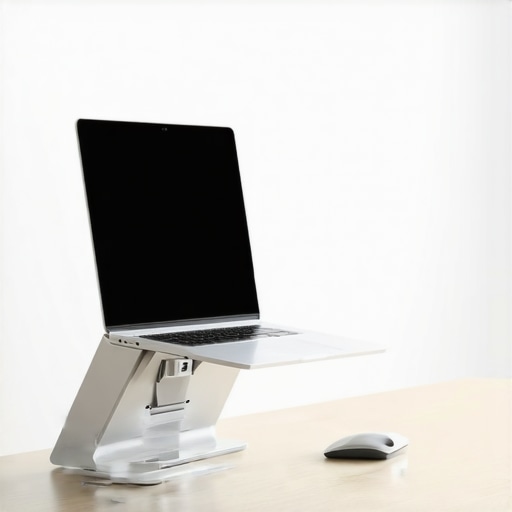
How Do I Keep My Spine Healthy for the Long Haul?
Maintenance isn’t about doing a 60-minute yoga flow every day; it’s about micro-dosing movement. I follow the ‘Upstream’ principle popularized by Dr. Kelly Starrett in his technical guide, Becoming a Supple Leopard. He argues that most of our ‘downstream’ pain (like wrist or lower back issues) is caused by ‘upstream’ tension in the shoulders and hips. To combat this, I use a simple timer app that pings me every 25 minutes. When it pings, I don’t just stand up; I perform one of the top strategies for moving without pain, like a quick hip flexor release. If you’re looking to enhance your mobility with expert tips for easier movement in 2025, understand that the future of this field is moving toward ‘passive’ correction. We are seeing more smart-fabrics and wearable sensors that provide biofeedback in real-time. I predict that within five years, your shirt will gently vibrate when your shoulders slouch for more than three minutes. Until then, you are your own sensor. You have to learn the difference between ‘good’ fatigue and the warning signs of lumbar support rolls and lower back spasms. My challenge for you today: move your monitor up by just two inches—use a stack of books if you have to—and see how your neck feels by 5 PM. Your spine will thank you for the extra breathing room.
The Hardest Lesson I Learned About My Spinal Rhythm
Reflecting on my journey from a ‘human question mark’ to someone who moves without fear, I realized that my biggest hurdle wasn’t a lack of equipment, but a lack of awareness. I used to think I could out-stretch a bad habit, but the truth is that consistency in the small moments is what rebuilds a body. Here are a few lightbulb moments that finally clicked: First, pain is almost always a ‘lagging indicator.’ By the time your back aches, the mechanical failure happened an hour ago. Second, your body is a tension-based system; if you’re tight in the front, you’ll be weak in the back. Mastering posture correction secrets that transform back pain outcomes isn’t about being perfect for ten minutes; it’s about being ‘good enough’ for eight hours. Finally, your breath is the most portable brace you own—use it to decompress from the inside out.
The Tiny Toolkit That Actually Saves My Spine
#IMAGE_PLACEHOLDER_E#
I’ve tested dozens of gadgets, but these are the only ones that actually moved the needle for me. First, Dr. Kelly Starrett’s technical guide, Becoming a Supple Leopard, is my bible for understanding how to stabilize my trunk before I even think about moving my limbs. Second, a simple laptop stand is non-negotiable—if your screen is low, your chin will follow. Third, I highly recommend a vertical mouse to keep your hand in a natural handshake position, preventing that internal shoulder rotation. These tools support your intent to unlock better back health with effective posture tips for 2025 without turning your office into a physical therapy clinic. Remember, the best gear in the world won’t help if you don’t use it to facilitate more movement throughout your day.
Make Your Next Move Your Best Move
Your spine is your lifeline, and it doesn’t ask for much—just a little bit of space and a lot of movement. You don’t have to overhaul your entire life today. Just commit to that one 2-minute reset during your next meeting. As you integrate these daily adjustments to alleviate back pain, you’ll find that the mid-afternoon brain fog starts to lift along with your chest. You deserve to finish your workday with enough energy and mobility to actually enjoy your evening rather than collapsing on the sofa in a heap. Let’s stop surviving the desk and start thriving in spite of it. Which of these micro-moves felt the most relieving for you today—the glute squeeze or the shoulder blade pin? Let me know in the comments below.