
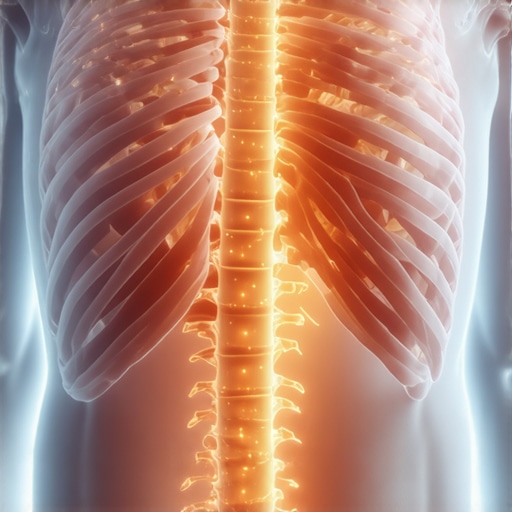
I was sitting at my desk, reaching for a coffee, when I took what should have been a satisfying deep breath. Instead, it felt like someone had jammed a screwdriver between my ribs. I froze. My first thought wasn’t ‘Oh, I must have slept funny.’ It was ‘Is this it? Is my heart giving out?’ It is a terrifying sensation that turns every subsequent breath into a cautious, shallow sip of air. I spent weeks breathing like a nervous goldfish before I realized I wasn’t dying; I was just mechanically locked up.
Why Your Ribs Feel Like They Are in a Vice
Most of us don’t think about our rib cage until it starts screaming at us. We treat it like a solid box, but it is actually a dynamic system of 24 ribs that need to expand and contract thousands of times a day. When you feel that sharp twinge during a big inhale, it is usually because one of those tiny joints has decided to stop playing nice. Early on, I made the classic mistake of trying to ‘power through’ the pain by twisting my torso violently on a foam roller. I thought I could just pop it back into place, but I ended up making the inflammation ten times worse. What I actually needed was to address the underlying tension. Often, how a tight diaphragm could be the secret cause of your back pain and rib discomfort is overlooked by most people.
Is this really just a muscle thing or is something broken?
It is a fair question. The pain feels so internal and sharp that it is hard to believe it is just a ‘stuck’ rib or a strained muscle. However, according to research published in the journal American Family Physician, musculoskeletal chest wall pain accounts for up to 25% of emergency department visits for chest pain, proving how common—and convincing—this sensation can be. We are going to fix this by looking at your mechanics and localizing the source. Today, I am showing you how to find relief without the panic. Have you ever felt that sudden ‘catch’ in your chest that made you afraid to take your next breath? If you have been struggling, you might have even noticed a stuck feeling in your mid-back that seems to travel around to the front. We need to stop the cycle of shallow breathing because why your breath is the key to releasing spine tension is the first step toward getting your mobility back. Sometimes, a simple lat stretch that stops your ribs from feeling stuck is the missing piece of the puzzle.I remember the first time I tried to fix this myself. I thought if I just twisted hard enough, I would hear a loud ‘crack’ and everything would instantly align. Instead, I woke up the next morning feeling like I had been kicked by a mule. The lesson I learned the hard way? You cannot bully your ribs into submission; you have to coax them back into place with strategic movement.
Stop Sucking in Your Gut and Start Breathing
Most of us are chronic ‘chest breathers.’ When we get stressed or feel that familiar rib pain, we instinctively tighten our abdominals and lift our shoulders toward our ears. This creates a massive amount of pressure within the thoracic cage. To break the cycle, you need to learn how to breathe using your belly to lower spinal tension. Place one hand on your chest and one on your belly. Your goal is to make the bottom hand move while the top one stays still. This eccentric load from the inside out is what actually pushes the ribs back into their natural range of motion. If you find your ribs are still resisting, it is likely because how a tight diaphragm could be the secret cause of your back pain remains an unaddressed issue in your daily routine.
Open Your Chest Without Snapping Your Spine
Once you have mastered the breath, you have to move the joints. I used to avoid movement entirely because I was afraid of the ‘catch’ in my chest, but why your spine needs movement every 30 minutes is a biological reality you cannot ignore. The best way to start is with the ‘Wall Slide.’ Stand against a flat surface and slowly raise your arms like you are making a snow angel. This forces the ribs to rotate upward without the violent shearing force of a foam roller. For a more targeted approach, try the 30-second wall slide for instant shoulder relief which helps unglue the fascia sitting between your shoulder blades and your rib cage. 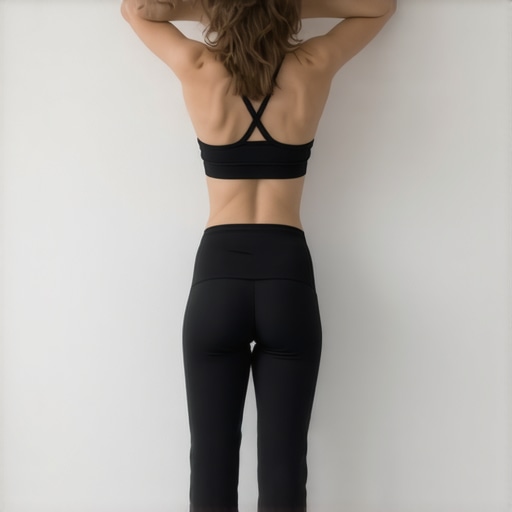
The Bird Dog is Your Best Friend
If your pain is felt more toward the back of the ribs, you need stability just as much as you need mobility. I started doing the Bird Dog exercise every morning after a particularly bad flare-up where I could not even lean over the bathroom sink. It felt awkward at first, and I kept losing my balance, but the bird dog move that every back pain sufferer needs eventually became my go-to for resetting my core. By extending the opposite arm and leg, you create a diagonal tension that stabilizes the mid-back and takes the ‘shear’ off those angry rib joints.
Fix Your Desk Before Your Ribs Fix You
We spend hours slumped over laptops, which is effectively a slow-motion car crash for your rib cage. If your upper back is constantly burning by 2:00 PM, you need to understand why your upper back burns after using a mouse for 2 hours and adjust your setup immediately. I realized my monitor was just three inches too low, forcing my ribs into a permanent ‘crunch’ position. Raising my screen was the simplest adjustment I ever made, and it did more for my long-term comfort than any massage or adjustment ever could. By creating a environment where your ribs are not constantly compressed, you give the inflammation a real chance to fade.People often tell me they are working on their posture by ‘sitting up straight,’ but that’s a dangerous trap. When you force a rigid, military-style posture, you’re just swapping one type of tension for another. The real goal isn’t a fixed position; it’s variability. A meta-analysis published in the journal The Lancet highlighted that there is no strong evidence connecting specific postural ‘faults’—like a slight slouch—directly to the onset of chronic pain. This is where most people get it wrong—they think they need a brace or a rigid chair, but they actually need to understand posture correction secrets that transform back pain outcomes by focusing on movement rather than stillness. 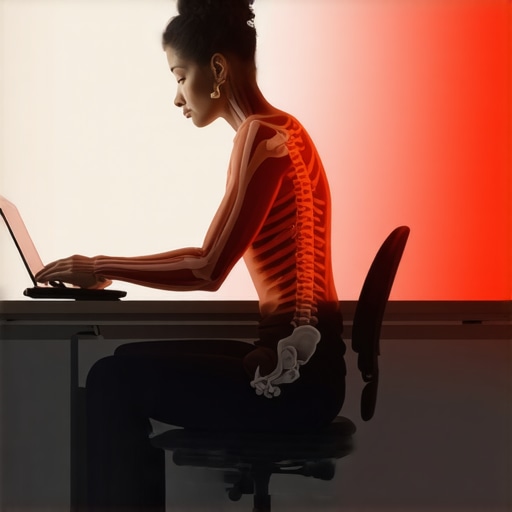
Stop Trying to Sit Like a Soldier
If you are forcing your shoulder blades back and down all day, you are essentially putting your middle-back muscles into a state of constant isometric contraction. This leads to that familiar, deep burning sensation. Instead of looking for a ‘perfect’ seat, you should be looking for your next position. Even something as simple as learning how to use a footrest to save your lower back at work can provide the micro-adjustments your spine craves. Movement is the only true ergonomic solution. This is why I always recommend the morning movement routine that lubricates your joints to prepare your tissues for the day’s demands before you ever sit down.
The Trap of Self-Cracking for Quick Relief
There is another ‘oops’ factor I see constantly: the serial self-adjuster. We have all done it—twisting your torso or neck until you hear that satisfying pop. It feels like an instant release, right? Well, that is a neurological illusion. In reality, the truth about why cracking your own neck feels good but harms you is that you are likely hitting the segments above or below the actual restriction. This creates ‘hypermobility’—where your ligaments get overstretched and loose while the truly stuck joint stays frozen. This is why you feel the need to pop it again ten minutes later. To get real, lasting change, you have to understand what happens to your spine during a professional adjustment and why targeted precision matters more than a loud sound.
Why does my back still ache even though I’m incredibly flexible?
This is a classic nuance that stumps many of my patients. Flexibility is simply the passive range of a muscle, but mobility is your ability to control and stabilize that range. If you can do the splits but can’t hold a proper squat without your back rounding, your spine is in serious trouble. You might think more stretching is the answer, but often enhance your mobility expert tips for easier movement in 2025 involve building stability within those ranges rather than just pulling on muscles. This is also why your core strength isnt stopping your back aches—your ‘six-pack’ muscles are movers, but they don’t stabilize the tiny segments of your spine. If you rely on external aids like the truth about posture correctors and braces, you’re essentially telling those deep stabilizers to go on permanent vacation. I see these traps every day. People try to stretch their way out of a stability problem or ‘crack’ their way out of a mechanical restriction. Have you ever fallen into this trap where you keep stretching a muscle but it just feels tighter the next day? Let me know in the comments.
Fix Your Sightline to Save Your Neck
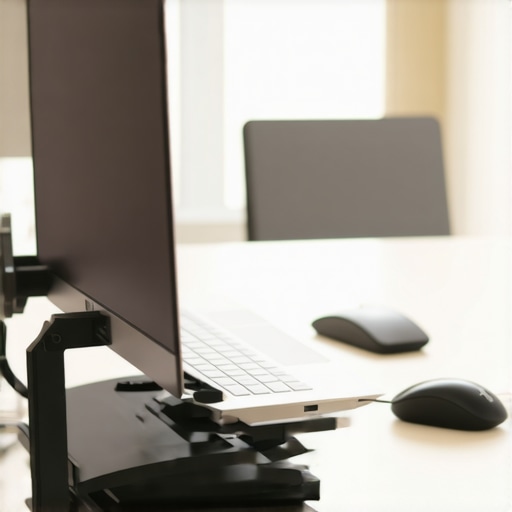
I learned the hard way that you can have the most expensive chair in the world, but if you’re staring down at a screen, your ribs are going to pay the price. I used to think a stack of books was a temporary fix, but it turned out to be the most vital ergonomic move I ever made. Knowing how to adjust your monitor height to stop peering down is more important than your lumbar support. When your eyes drop, your head follows, and your rib cage collapses into a rounded, compressed position. I also discovered that the simple change to your keyboard that stops shoulder pain—bringing it closer so your elbows stay at 90 degrees—removes the constant tugging on your upper thoracic joints. If you are on the go, you need to be just as vigilant about the correct height for your laptop to prevent shoulder burn, especially in coffee shops where tables are notoriously low and force a hunch.
How do I keep my ribs from locking up again?
Maintenance isn’t about doing an hour of yoga every morning; it’s about the small, daily adjustments to alleviate back pain and improve posture that happen in the gaps of your schedule. A 2023 study published in The Spine Journal highlighted that frequent, short-duration movement breaks—often called micromovements—are far more effective at managing intradiscal pressure than one long exercise session at the end of the day. This research aligns perfectly with why your spine needs movement every 30 minutes to keep the fascia from sticking. I personally use a simple digital timer on my desktop. Every 30 minutes, I perform three deep belly breaths and a quick wall slide to reset my nervous system. If you want to master your mobility with top strategies for moving without pain, you have to treat these micro-breaks as non-negotiable appointments with your spine.
The Future of Spinal Health is Proactive
As we move into the next few years, I predict we’re going to see a massive shift away from posture correction wearables that buzz and toward smarter environmental design. We’re finally realizing that our surroundings dictate our movement more than our willpower. In the future, enhance your mobility expert tips for easier movement in 2025 will likely focus on dynamic workstations that encourage standing, perching, and leaning rather than just better chairs. The best tool you have right now, however, is simple awareness. Don’t wait for the screwdriver sensation in your ribs to return before you take action. My challenge to you is simple: stop what you’re doing right now and raise your screen so the top third is at eye level. It’s a 10-second fix that your ribs will thank you for by tomorrow morning.
What I Finally Figured Out After Years of Chronic Rib Pain
The biggest realization I had was that ‘more stretching’ is often a trap. When I stopped trying to pull my muscles apart and started focusing on control, everything changed. I learned that my rib pain wasn’t a sign that I was fragile, but a signal that my mechanics were temporarily locked. Another major lightbulb moment was realizing that the lat stretch that stops your ribs from feeling stuck works better than any aggressive manipulation. I also found that my ‘core strength’ was useless if I couldn’t breathe under load; you have to train your diaphragm just as much as your abs to keep those joints happy.
The Tools That Saved My Spine From the 9-to-5 Slouch
If you’re serious about recovery, you don’t need a thousand gadgets. I trust a simple lacrosse ball for pinpointing how to fix the sharp pain under your shoulder blade because it allows for specific pressure that a foam roller misses. I also swear by a laptop stand—or even a stack of sturdy books—to keep my eyes level. For those who wake up feeling like they’ve been in a wreck, establishing the best morning routine for a stiff lower back is the most valuable resource you can ‘own.’ Lastly, I recommend a simple ‘posture cue’ like a piece of tape on your monitor to remind you to move, which beats any buzzing wearable device any day.
Reclaim Your Movement and Breathe Easy Again
Healing isn’t a straight line, but it is possible once you stop fighting your body and start listening to it. You aren’t stuck with this discomfort forever; you just need to provide the right environment for your joints to thrive. By making these daily adjustments to alleviate back pain and improve posture, you are building a foundation for a life without constant ‘catches’ or sharp twinges. Don’t let the fear of rib pain stop you from moving. Start with one deep belly breath and one wall slide today. Have you ever felt that terrifying ‘catch’ in your chest that made you freeze mid-breath? Let me know your experience in the comments below!