

I used to sit at my kitchen table, shoulders hunched up to my earlobes, wondering why my mid-back felt like a knotted mess of old rope. I’d stretch, I’d foam roll until I was bruised, and I’d even buy those expensive chairs that promised the moon. Nothing worked for more than ten minutes. Then one afternoon, I caught myself. I was literally holding my breath while typing an email. My chest was tight, my ribs were frozen, and I was shallow-breathing like I was running from a bear—all while sitting perfectly still. That was my lightbulb moment: my spine wasn’t just stiff; it was suffocating. We spend so much time looking for external fixes that we forget we have an internal expansion system designed to move us from the inside out. Today, I want to show you how to tap into that system and finally stop the cycle of constant stiffness.
Your Lungs are the Internal Foam Roller You’ve Been Ignoring
For years, I made the classic mistake of thinking that back health was only about muscles and bones. I spent way too much time trying to relieve chronic back pain with external movements while ignoring the massive pump sitting right inside my ribcage. If you’ve ever wondered why your ribs feel tender near your spine, it’s often because they’ve stopped moving. When we don’t breathe deeply, the joints where your ribs meet your vertebrae essentially “rust” in place. I used to think I needed a chiropractor to crack every single joint, but often, I just needed to let my diaphragm do its job.
Does breathing actually do anything for real pain?
I get it. It sounds like some “woo-woo” advice you’d hear at a retreat, not a practical solution for someone who can barely stand up straight after a long day. But here is the reality: the diaphragm is actually attached directly to your lumbar spine. A study published in the Journal of Bodywork and Movement Therapies highlights that improper breathing patterns are a primary driver of decreased spinal stability and increased muscle fatigue. When I stopped trying to force my posture and started focusing on how to breathe into my lower back, that “stuck” feeling in my vertebrae finally started to melt away.
Stop Sucking Your Stomach In
Let’s talk about a mistake I made for over a decade. I used to think that “core strength” meant keeping my abs pulled in tight at all times. I was obsessed with that “sucked-in” look to appear thinner. But learning why you should stop sucking in your stomach was the turning point for my mobility. When you grip your belly, you force all that internal pressure upward, jamming your neck and locking your lower back into a rigid, painful state. Have you ever noticed that your back pain gets worse when you’re stressed or trying to “look fit” in a photo? You aren’t alone—I’ve been there, and it’s a mechanical disaster for your discs. Do you find yourself holding your breath when you’re focused on a task, or is it just me? We are going to break that habit right now and get your spine moving again.
Turn Your Torso into a 360-Degree Pressure Chamber
Imagine your torso is a soda can. If that can is full and pressurized, you can stand on it without it buckling. But if you put a dent in the side—by sucking in your stomach or collapsing your ribcage—the whole structure loses its strength. To stop the cycle of stiffness, you have to pressurize the ‘can’ from the inside out. I remember a grueling five-hour drive where my lower back felt like it was being compressed by a hydraulic press. Instead of pulling over to stretch my hamstrings (which usually makes things worse), I started focusing on expanding my lower ribs against the car seat with every inhale. By the time I reached my destination, the sharp ache was gone because I’d used internal pressure to create space between my vertebrae. This is the secret to strengthening your deep core without sit-ups or heavy lifting. It’s about managing the pressure that supports your spine from within.
How to find your 3D breath
Sit tall and place your hands on the very bottom of your ribcage, just above your waist. Your goal isn’t to lift your chest toward the ceiling; it’s to push your hands out toward the walls. As you inhale through your nose, feel your ribs widen like an opening umbrella. If you only feel your belly move forward, you aren’t getting the lateral expansion needed to decompress the mid-back. This lateral movement is exactly how to fix a stuck feeling in your mid-back that stretches and foam rollers simply can’t reach. 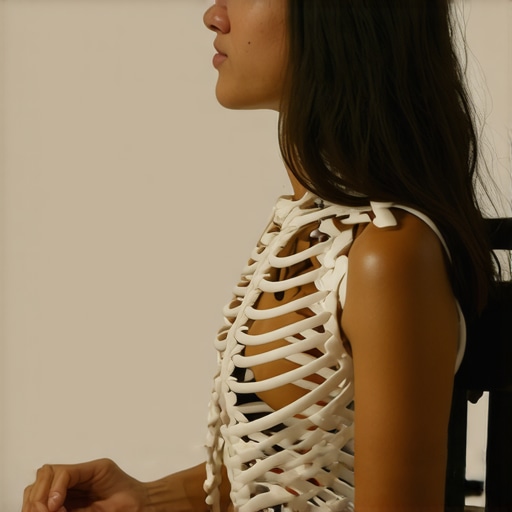
Push Your Breath into Your Back Ribs
Most of us are ‘front-breathers,’ meaning we only expand into our chest or belly. This leaves the back of the ribcage—where your ribs attach to your spine—completely frozen. When these joints don’t move, they stiffen, leading to that burning sensation between your shoulder blades. To fix this, you need to direct your breath into your ‘back-body.’ I used to struggle with this until I tried breathing while rounded over a large exercise ball. The restriction in the front forced the air into my back, and I felt a literal pop of relief in my thoracic spine. If you don’t have a ball, you can do this at your desk by leaning forward and resting your elbows on your knees. This creates a natural internal traction that is more powerful than many simple exercises to relieve chronic back pain because it addresses the root of the stiffness.
Release the straps of the corset
If your ribs feel like they are glued together, it’s often because your lats and intercostal muscles are too tight. You can perform the lat stretch that stops your ribs from feeling stuck to manually open that space. Once those muscles let go, your lungs can actually do their job of ‘flossing’ your spine from the inside. This is why why your spine needs movement every 30 minutes is so critical; it’s not just about the muscles, it’s about keeping the internal pressure shifting.
Use Internal Pressure to Create Spinal Space
Every time you inhale correctly, your diaphragm moves down and your ribs move out, creating a gentle pull on the connective tissue surrounding your spine. Think of it as a micro-adjustment that happens 20,000 times a day. When I finally mastered this, I realized I was performing daily adjustments to alleviate back pain without ever needing to crack my own back. If you feel your shoulders hiking up toward your ears during this process, stop. Reset by performing the 30-second wall slide for instant shoulder relief to drop your ribcage back into a neutral position. By keeping the ribcage and pelvis stacked, you ensure that every breath you take is actually contributing to your spinal health rather than adding to the strain.
We have been told since kindergarten to sit up straight, pull our shoulders back, and puff our chests out. But here is the contrarian truth that most posture gurus won’t tell you: there is no such thing as a perfect static posture. In fact, trying to maintain a rigid, ‘correct’ position all day is one of the fastest ways to exhaust your nervous system and create chronic tension. Your spine is designed for movement, not for being a statue. When you force yourself into a military-style upright position, you are essentially trading one type of strain for another.
Why Your Quest for Perfect Posture is Hurting You
I see it constantly in people who are desperate to unlock better back health. They buy expensive braces or trainers, but the truth about posture correctors is that they often act as a crutch, allowing your deep stabilizer muscles to go on vacation. Instead of building resilience, you are training your body to be stiff. A study published in the Journal of Physical Therapy Science suggests that postural variability—the ability to shift and move frequently—is far more important for pain prevention than holding a single ‘ideal’ alignment. If you are staying still, you are already losing the battle against stiffness.
The Military Straight-Back Trap
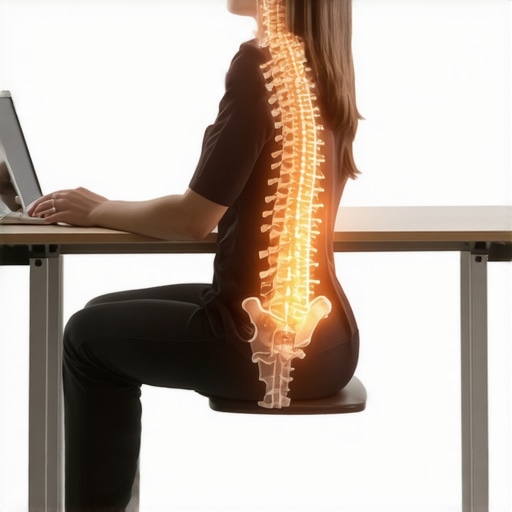
One of the biggest ‘oops’ factors I encounter is the tendency to over-correct a slouch by pinning the shoulder blades together and arching the lower back. This isn’t good posture; it’s just a different way of being tense. When you arch your back aggressively to ‘look tall,’ you are actually compressing the facet joints of your lumbar spine. I used to do this until I realized the 90-90 hip stretch mistake I was making was actually a result of this same over-arching habit. You don’t need a flat back or a hollowed back; you need a neutral, adaptable back that can handle the weight of your head without a struggle.
Why does my back still hurt even when I exercise my core?
This is the question that drives most people crazy. They do the planks, the deadbugs, and the sit-ups, yet the dull ache persists. The nuance most people miss is that why your core strength isn’t stopping your back aches usually comes down to ‘bracing’ versus ‘breathing.’ If you are clenching your abs like someone is about to punch you, you are creating a rigid cage around your spine that prevents natural micro-movements. True spinal stability is dynamic. It’s about the timing of the muscles firing, not just the raw strength of the six-pack.
Stop Stretching Your Tight Hamstrings
Here is another trap: many people feel ‘tight’ and immediately assume they need to stretch. But often, that tightness is a protective mechanism. For example, why stretching your hamstrings might be making your back pain worse is a concept many find hard to swallow. If your pelvis is tilted forward, your hamstrings are already being pulled like a guitar string. Stretching them further just irritates the nerve and makes the back tighten up more to compensate. Instead of forcing more length into the muscle, we need to address the position of the pelvis and the ribcage. Have you ever fallen into this trap of stretching a muscle that just won’t let go? Let me know in the comments. We need to shift from a mindset of ‘stretching the pain away’ to ‘moving the pressure away.’
The weird tools I actually keep in my desk drawer
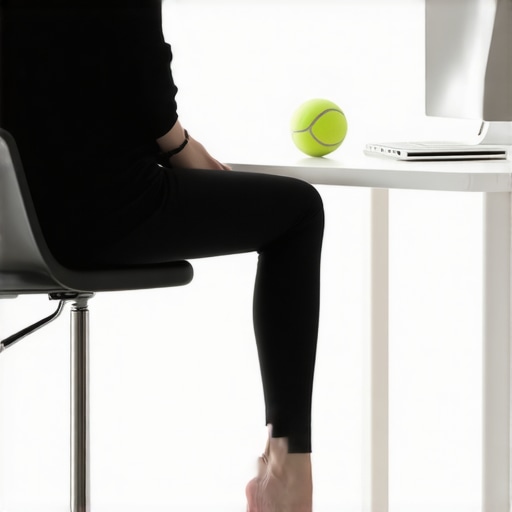
Once you realize that the ‘stuck’ feeling is just a lack of internal movement, the solution shifts from intense gym sessions to small, tactical interventions. I don’t use those fancy vibrating posture trainers that beep when you slouch; I find them annoying and counterproductive. Instead, I keep a simple tennis ball and a yoga block under my desk. The tennis ball is my secret weapon for the ‘bottom-up’ approach. I roll it under my feet while I’m on Zoom calls. Why? Because the fascia on the bottom of your feet is connected all the way up to your neck. Learning how to use a tennis ball to release tension in your feet and back has saved me more times than a professional massage ever could. It’s about stimulating the nervous system to let go of that protective gripping I mentioned earlier.
How do I keep my spine feeling this good every day?
Consistency beats intensity every single time. I used to think I needed an hour of yoga every morning to stay mobile, but now I focus on ‘movement snacks.’ Every 30 minutes, I perform a 10-second posture check to do every time you check your phone. It’s a simple reset: ribcage over pelvis, chin tucked slightly, and a 360-degree breath. To really maintain these gains, you have to adjust your routine daily spinal alignments for lasting relief. This isn’t about complex maneuvers; it’s about making sure your environment isn’t fighting you. For instance, if you stand, make sure you know the correct way to use a standing desk without hurting your feet, which usually involves a slight stagger in your stance and frequent weight shifting.
As Dr. Stuart McGill, a world-renowned expert in spine biomechanics, emphasizes in his research on spinal stability, true resilience comes from the ability to maintain a neutral spine under load. This is why I swear by the bird dog move that every back pain sufferer needs. It teaches your brain how to move your arms and legs while keeping your spine perfectly stable. It’s an insurance policy against the sudden ‘twinges’ that happen when you bend over to pick something up. Incorporating these daily adjustments to alleviate back pain turns your recovery into an automated system rather than a chore you have to remember.
The future of sitting is movement
I believe we are heading toward a world where ‘ergonomic’ chairs become obsolete. The trend is shifting toward dynamic seating—surfaces that force you to engage your core and balance, like wobble stools or even simple floor sitting. In the next few years, I expect to see biofeedback clothing that doesn’t just tell you you’re slouching, but actually monitors your breathing depth and diaphragm activation. Until then, the best ‘tool’ you have is your own awareness. I challenge you to try this: for the next three days, don’t worry about ‘sitting straight.’ Instead, focus entirely on that 360-degree breath we talked about. You’ll be surprised how much your body wants to align itself when you give it the internal space to do so.
Three Lies My Brain Used to Tell My Back
Reflecting on my journey from chronic stiffness to effortless movement, I’ve realized that my biggest hurdles weren’t physical; they were mental. First, I had to stop believing that ‘feeling tight’ meant I needed to pull harder on my muscles. I learned that posture correction secrets that transform back pain outcomes usually involve letting go of tension rather than adding it. Second, I realized that if I ignored the subtle signals, my body would eventually scream. If you’ve ever wondered how to tell if your leg numbness is serious, you know that threshold of fear well. Finally, I discovered that my spine didn’t need a complete overhaul—it just needed small, frequent invitations to move.
The Gear and Wisdom I Actually Use Daily
I’ve tested every gadget on the market, but my daily toolkit is surprisingly low-tech. My go-to is a simple tennis ball because learning how to use a tennis ball to release tension in your feet and back provides immediate relief without a trip to the clinic. I also rely heavily on the ‘Back Mechanic’ principles by Stuart McGill to ensure I’m not accidentally irritating my discs. For those looking to enhance your mobility with expert tips for easier movement, I recommend keeping a yoga block nearby—not for intense stretching, but for supporting the hips during floor work. These tools aren’t magic, but they support the internal pressure system we’ve built throughout this guide.
#IMAGE_PLACEHOLDER_E#
Your Spine Deserves a Second Chance
Transformation doesn’t happen in a single intense gym session; it happens in the quiet moments between emails and the way you breathe while stuck in traffic. You now have the blueprint to stop the cycle of stiffness and start reclaiming your mobility. When you adjust your routine for daily spinal alignments, you are investing in a version of yourself that moves with grace and less pain. Your posture is not a fixed sentence; it is a living, breathing conversation between your brain and your ribs. Have you noticed your back pain flares up specifically when you are stressed or holding your breath? Let me know your thoughts in the comments below!