
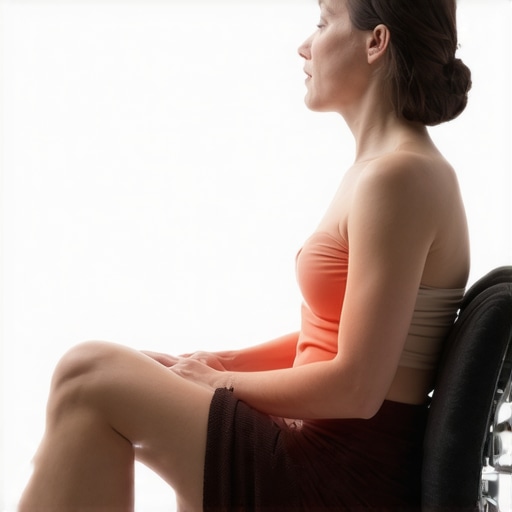
Ten minutes. That was my limit. I remember sitting in my favorite local café, latte in hand, ready to crush some emails. But by the time I finished my first paragraph, a sharp, nagging ache began to bloom right at the base of my spine. It wasn’t a dull throb; it was a specific, localized “get up right now” kind of pain. I felt like I was sitting on a marble. I spent the next hour doing a subtle, embarrassing dance—shifting from left cheek to right cheek—praying no one noticed my “tailbone wiggle.” It felt ridiculous. How could a healthy adult be defeated by a wooden chair in less time than it takes to boil an egg?
Your Tailbone Shouldn’t Scream at You This Quickly
If you are nodding along because your coccyx feels like it’s being pinched every time you hit the ten-minute mark, I have some good news: you aren’t broken. But you are likely ignoring some very loud signals your body is sending about your mechanics. I made the massive mistake early on of thinking I could just “tough it out” or, worse, that a fifty-dollar donut cushion would solve the root cause. I even ignored the hidden danger of soft couches for disc health, thinking that sinking into a pillow would help. It didn’t. In fact, it made things worse because I was just masking the issue rather than unlocking better posture through intentional adjustments.
The reality is that your tailbone, or coccyx, is part of a complex tripod of weight-bearing. When you sit, your weight should be distributed between your two “sit bones” (the ischial tuberosities) and the coccyx. According to the Cleveland Clinic, coccydynia is five times more common in women than in men because the female pelvis is broader, leaving the coccyx more exposed. I didn’t realize that why your glutes go to sleep after one hour of sitting was actually the primary culprit for why my tailbone was taking all the heat. When those muscles stop supporting you, your tailbone becomes the primary “landing gear,” and it simply isn’t designed for that level of constant pressure.
[image]
Is this just a sign that I’m getting old?
I hear this all the time, and I used to believe it myself. We blame the miles on the odometer for why we can’t sit through a movie anymore. But age isn’t the problem; it’s the adaptation of our tissues. Today, we are going to fix that. We are going to dive into the specific shifts that stop the pinch and explain why your tailbone aches after long car rides so you can finally stop the wiggle and start sitting with confidence again. Have you ever found yourself doing that frantic butt-wiggle just to survive a short meeting? Let me know—I promise you aren’t the only one. The path to relief starts with understanding that your body is a system of pulleys and levers, and right now, one of those levers is stuck.
Stop Hiding Your Tailbone Under Your Pelvis
The most common mistake people make when their tailbone starts to ache is leaning back further. It feels intuitive—you want to get the weight off the sore spot. But by leaning back into a ‘slumped’ position, you are actually rolling your pelvis backward (a posterior tilt), which puts the coccyx in direct contact with the chair. Imagine your pelvis as a bowl of water. If you tilt the bowl backward, the water spills over your tailbone. You want to keep the water level or tilted slightly forward. This is why unlocking better posture through a neutral pelvic position is the only way to get lasting relief.
Find Your Sit Bones and Use Them
To stop the pinch, you must locate your ischial tuberosities—those hard bones at the bottom of your glutes. I remember a grueling three-hour flight where I forgot my usual travel cushion. By the second hour, my tailbone was screaming. I took a thin, rolled-up sweatshirt and placed it specifically under my thighs, just in front of my sit bones. This simple ‘wedge’ effect tilted my pelvis forward, lifting my tailbone entirely off the seat. You can achieve this same effect by learning how to use a footrest to save your lower back at work, which helps maintain that critical forward angle of the thighs. When your knees are slightly lower than your hips, the tailbone naturally floats.
Bring Your Glutes Back to Life
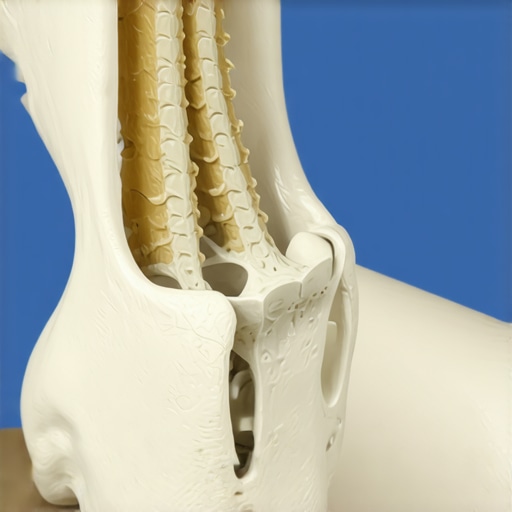
If your glutes are ‘asleep,’ they provide zero cushioning for your skeleton. This isn’t just about comfort; it’s about shock absorption. When those muscles aren’t firing, every ounce of your upper body weight travels straight down the spine and hammers into the coccyx. This is a primary reason why your glutes go to sleep after one hour of sitting. To fix this, you don’t need a gym; you need ‘micro-activations.’ Every twenty minutes, perform a five-second glute squeeze while sitting. It sounds silly, but it forces blood flow back into the tissue and reminds your brain to use those muscles for support rather than relying on the delicate tailbone for stability.
Release the Front to Save the Back
Your tailbone doesn’t exist in a vacuum. It is often the victim of tight hip flexors (the psoas) pulling on the front of your pelvis. Think of your psoas as a tight rubber band; if it’s too short, it yanks your pelvis out of alignment and jams the tailbone into the seat. Using the one move that fixes a tight psoas muscle can provide immediate slack to the system. I’ve found that even a thirty-second standing lunge after a long session can ‘reset’ the tension levels, preventing that sharp, localized pain from returning the moment you sit back down. For those who spend the majority of their day at a desk, integrating the best exercises for people who sit all day is non-negotiable for long-term coccyx health.
Why Your Six-Pack Isn’t Saving Your Tailbone
I see it in my inbox every week: “I do planks every morning, so why does my back still ache?” It’s a classic trap. We’ve been conditioned to believe that a rock-solid midsection is the ultimate armor against pain. But here’s the contrarian truth: over-bracing your core can actually increase the pressure on your pelvic floor and tailbone. If you are constantly “sucking it in” to maintain a flat stomach, you are likely creating a pressure cooker in your abdomen that has nowhere to go but down. This is why your core strength isn’t stopping your back aches—you’ve prioritized rigidity over functional stability. In my experience, a rigid spine is a fragile spine.
Can your big toe really dictate how your spine feels?
It sounds like a stretch, but the kinetic chain is unforgiving. If your big toe doesn’t have the mobility to push off correctly during a walk, your hip has to overcompensate. This creates a ripple effect that ends with your pelvis tilting into a position that grinds your coccyx into your seat. This nuance is often overlooked in standard physical therapy, yet how a stiff big toe is causing your chronic lower back pain is a very real phenomenon. A study published in the Journal of Orthopaedic & Sports Physical Therapy highlights that regional interdependence—the idea that seemingly unrelated body parts affect one another—is a primary factor in chronic spinal issues. You aren’t just a tailbone; you are a series of interconnected gears.
#IMAGE_PLACE_HOLDER_C#
The Hamstring Stretch That Backfires
Here is the “oops” factor that drives me crazy: stretching your hamstrings to fix tailbone pain. When the back of your leg feels tight, your first instinct is to reach for your toes. However, if your tailbone is already irritated, that tightness might actually be neural tension—your nerves being pulled taut like a guitar string. Aggressively stretching can aggravate the nerve roots, making the “pinch” feel even more electric. This is exactly why stretching your hamstrings might be making your back pain worse. Instead of pulling, we need to focus on mobility mastery that respects the nerve’s need for space, not just the muscle’s desire for length.
I once spent three months religiously stretching my hamstrings every morning, only to find I couldn’t sit for more than five minutes by noon. I was literally pulling on my own pain. Have you ever fallen into this trap of “stretching through the pain” only to find it made things worse? Let me know in the comments—I’d love to hear how you pivoted. To truly fix the system, you need to look at posture correction secrets that prioritize movement variability over “perfect” static positions. Your body craves the next position, not just the “right” one.
My maintenance kit isn’t filled with $1,000 ergonomic chairs or high-tech massage gadgets. In fact, most of what I use would look like junk to the average person. But for someone who has felt the localized fire of coccydynia, these tools are worth their weight in gold. I’ve realized that long-term results don’t come from a one-time fix; they come from a relentless commitment to movement variability and the right gear. I stopped looking for the ‘perfect chair’ and started focusing on daily spinal alignments for lasting relief. This shift in mindset changed everything.
The Simple Tool for Deep Relief
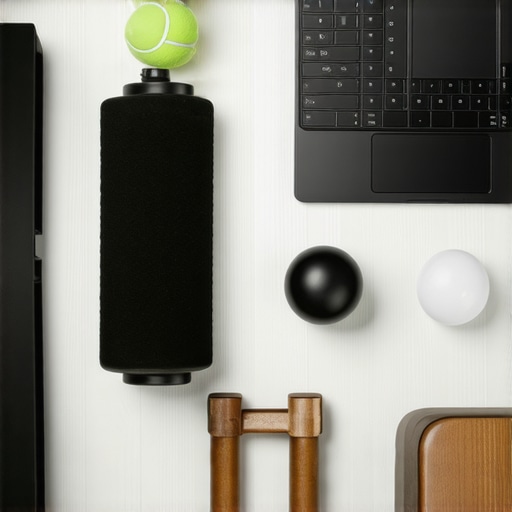
I swear by the humble tennis ball. It is the most underrated piece of equipment in my home office. By understanding how to use a tennis ball to release tension in your feet and back, you can address the distal causes of pelvic tilting. I spend two minutes every morning rolling my arches while the coffee brews. It sounds disconnected, but by loosening the plantar fascia, I’m sending a ‘slack’ signal up the entire posterior chain, making my pelvis much less likely to jam into a posterior tilt the moment I sit down. When I’m deep in a writing session, I use a dense foam roller to address my thoracic spine. Learning the proper way to use a foam roller on your upper back is a game changer. It’s not about rolling aimlessly; it’s about creating extension points that counteract the hunched-over ‘laptop look.’
How do I maintain tailbone health over time?
Consistency is the only currency that matters here. You can’t just do one mobility session on a Sunday and expect to sit comfortably for 40 hours during the week. According to Dr. Stuart McGill, a world-renowned expert in spine biomechanics, the ‘cumulative load’ on the spine is what leads to injury, not just a single event. To combat this, I’ve integrated a 10-second posture check into my routine. Every time my phone pings, it’s a cue to reset my pelvis. I also follow the 2-inch rule for your laptop stand to ensure my gaze is at a level that prevents my neck from dragging my entire spine into a slump. Looking forward, I predict we will see a massive rise in ‘biofeedback wearables’—smart sensors that will gently vibrate against your tailbone the moment you start to ‘slump-sit.’ We are moving away from passive chairs and toward active feedback systems.
Your New Daily Routine
Scaling these results means making them automatic. I no longer think about my posture; I think about my environment. I’ve refined my workspace so that it practically forces me into better habits. For instance, I always keep a small footstool under my desk. By knowing how to use a footrest to save your lower back, I can change the angle of my hips every thirty minutes, which redistributes the pressure on my coccyx. I also utilize expert tips for easier movement to stay ahead of any stiffness. My challenge to you today is to try one advanced move: the 30-second wall slide. Do it right now, against the nearest flat surface. It will immediately reset your scapular position and take the ‘drag’ off your lower back, giving your tailbone some much-needed breathing room.
I didn’t arrive at these solutions overnight; I arrived at them through a series of frustrating failures and ‘aha’ moments. If you are struggling right now, I want you to know that the localized fire in your coccyx is not a life sentence. It is a puzzle that we are solving together, piece by piece.
Lessons My Sacrum Taught Me the Hard Way
Reflecting on my own journey, there are a few core truths that shifted everything for me. First, pain is a signal, not a resident. I spent years treating my tailbone like it was the enemy, but it was actually just the messenger telling me my glutes had checked out for the day. Second, I realized that passive support—like those expensive ergonomic chairs—can actually make you weaker if you don’t combine them with active movement. The chair isn’t supposed to do the work for you; it’s just supposed to stay out of your way. Finally, I learned that the smallest changes often have the biggest impact. You don’t need a total lifestyle overhaul; you just need to posture correction secrets that prioritize how your pelvis interacts with the world.
My Zero-Fluff Toolkit for Daily Relief
I’ve trimmed my routine down to the essentials that actually move the needle. Here is what I personally use and trust:
- The Humble Tennis Ball: I use this for more than just my back. Knowing how to use a tennis ball to release tension in your feet and back is my secret weapon for loosening the entire posterior chain before I even sit down.
- The Laptop Elevation Rule: To keep my spine from slumping, I strictly follow the 2-inch rule for your laptop stand. It keeps my head up and my pelvis in a neutral, happy position.
- A Dedicated Footstool: This is non-negotiable for shorter folks or anyone with high desks. Learning how to use a footrest to save your lower back at work allows me to tilt my thighs downward, which is the only way to truly un-weight the coccyx.
It’s Time to Stop Sitting in Pain
The path forward is simple, but it requires you to be proactive. You deserve to sit through a movie, a flight, or a dinner without that nagging ache at the base of your spine. By choosing to adjust your routine with daily spinal alignments, you are giving your body the space it needs to heal. Don’t wait for the pain to become unbearable before you make a change; start with one small adjustment today and watch how your body responds with gratitude. Have you ever found yourself doing that frantic ‘tailbone wiggle’ just to get through a short meeting? Let me know in the comments—I’d love to hear which of these tips you’re trying first.