
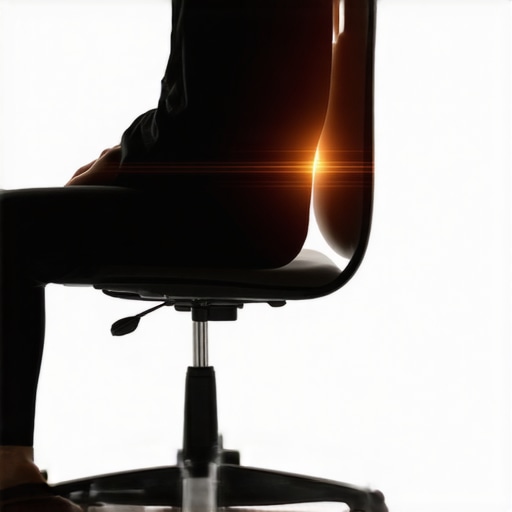
I was deep into a deadline last Tuesday when I finally stood up to grab a coffee, only to realize my legs didn’t quite work. It wasn’t just a tingle; it felt like my entire backside had been replaced by two heavy bags of sand. I actually wobbled and had to catch myself on the edge of the desk. It is a terrifying feeling when your own body parts decide to clock out early. I had only been sitting for about sixty minutes, but my glutes had entered a deep, unresponsive coma.
Stop Treating Your Glutes Like a Simple Seat Cushion
If you have ever experienced that hollow, dead-weight sensation in your hips after a short stint in your office chair, you are dealing with what experts call Gluteal Amnesia. I spent years ignoring this, thinking I just needed a softer cushion or a more ergonomic setup. I even tried the chair hack to keep your pelvis neutral while working, and while it helped my posture, my glutes remained stubbornly asleep. The reality is that when you sit, your hip flexors tighten up and literally tell your glutes to shut down. I learned the hard way that why your spine needs movement every 30 minutes is not just a suggestion; it is a fundamental requirement to keep your muscles from forgetting their primary job. Have you ever stood up and felt like your legs just were not plugged in for those first few steps?
Can I just gym my way out of this?
Many people—myself included—think they can offset a day of sitting by smashing out a heavy leg day at the gym. This was the biggest mistake I made early on. I would go to the gym and do squats, but because my glutes were still asleep from my commute and workday, my lower back did all the heavy lifting. I was not getting stronger; I was just grinding down my discs. According to the Harvard Health Publishing, the lack of muscle activity during sitting can lead to a host of metabolic and musculoskeletal issues that a single hour of exercise cannot always undo. If you are struggling with how to relieve sciatica while you are stuck at your desk, we have to talk about waking up those muscles before they cause a chain reaction of pain. It is time to move beyond just sitting better and start focusing on how to keep those powerhouse muscles active, even when the job demands you stay in your seat. I am going to show you exactly how I stopped the dead butt syndrome without having to quit my desk job.To fix gluteal amnesia, we have to treat your muscles like a light bulb that has been unscrewed just enough to lose the connection. You can flip the switch—meaning, you can go to the gym and try to squat—all you want, but if the bulb isn’t screwed into the socket, you get no light. The first thing I do now, and this is a non-negotiable part of my workday, is the ‘Isometric Desk Wake-up.’ You don’t even have to stand up. While you are typing, squeeze your glutes as hard as you can for ten seconds, then release. Do this five times every hour. It sounds simple, but it is essentially the hidden nerve trick to stop leg tingling while sitting at your desk that forces your brain to acknowledge those muscles exist. I used to do this under the radar during Zoom calls. No one knew I was ‘working out,’ but by the time the meeting ended, my legs actually felt like they belonged to me again. 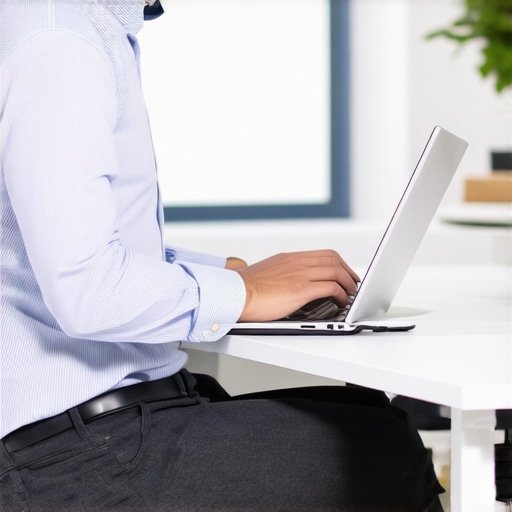
Force Your Glutes to Turn Back On
If your glutes are asleep, your hip flexors are almost certainly overworking to compensate. Most people think the solution is to stretch the front of their hips until they feel like a rubber band. I spent months doing deep lunges every morning, only to find my back felt even tighter by lunch. I eventually realized that how to release your hip flexors without stretching them is the real secret. When you over-stretch a muscle that is already guarded and tight, your nervous system often reacts by tightening it even more to protect the joint. Instead of aggressive pulling, I started using reciprocal inhibition. By aggressively engaging the glutes (the muscle on the opposite side), the brain is forced to send a signal to the hip flexors to relax. I remember a specific three-hour drive where why your tailbone aches after long car rides became my painful reality. I stepped out of the car and my right hip just gave out; I looked like a newborn giraffe trying to walk for the first time. It wasn’t until I stopped the car and did a series of glute bridges on the grass that my gait returned to normal.
Give Your Hip Flexors a Real Break
Beyond just squeezing your muscles, you need to change the mechanical environment of your desk. I started using the 3-minute desk stretch that targets your psoas while waiting for my coffee to brew. This isn’t about flexibility; it is about blood flow and neurological ‘permission’ for the muscle to let go. If you are constantly fighting your own anatomy, you will never win. I also found that how to use a footrest to save your lower back at work allowed my pelvis to tilt just enough to take the constant tension off my anterior chain.
Stop Sucking in Your Gut to Save Your Back
One of the most counterintuitive things I learned was that why you should stop sucking in your stomach to look thinner is actually a major contributor to back pain. When you pull your belly in, you create internal pressure that keeps your hip flexors in a state of high alert. This constant ‘bracing’ prevents the glutes from ever fully engaging. When I finally let my core relax and breathed into my lower back, the ‘dead butt’ sensation vanished within days. To truly master your mobility, you have to stop treating your body like a collection of parts and start treating it like a single, interconnected circuit. If one breaker is tripped, the whole house goes dark.One of the biggest lies we are told is that there is a ‘perfect’ posture you need to maintain like a statue. I see people trying to sit with a perfectly flat back and shoulders pinned back like they’re in a Victorian boarding school. This ‘military’ posture is a trap. According to research by Dr. Stuart McGill, a world-renowned expert in spine mechanics, static postures—even ones that look ‘correct’—create localized muscle fatigue and unnecessary disc pressure. When you force your shoulders back, you often end up with shoulders hiking up to your ears while you type because you are overworking the upper trapezius muscles to compensate. The real goal isn’t a fixed position; it’s ‘dynamic’ sitting. I finally started unlocking better posture through simple adjustments that allow for micro-movements throughout the day. I also learned the truth about posture correctors and braces; they often act as a crutch that lets your stabilizers get even lazier.
Why do my hamstrings still feel tight after years of stretching?
This is the nuance most people miss. If you have an anterior pelvic tilt—where your butt sticks out and your lower back arches excessively—your hamstrings are already being pulled taut like a bowstring. They aren’t ‘short’; they are over-stretched and holding on for dear life to keep your pelvis from tipping further forward. This is exactly why stretching your hamstrings might be making your back pain worse. You are pulling on a muscle that is already at its physical limit. Instead of aggressive pulling, you need to enhance your flexibility with top mobility strategies that focus on pelvic control and glute engagement. I spent years in this cycle until I realized my ‘tightness’ was actually a protective neurological guard, not a lack of flexibility. 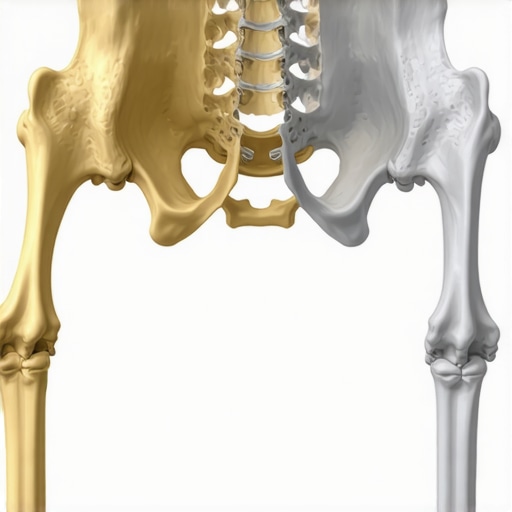
The Danger of the Quick Fix
Another dangerous ‘oops’ factor is the habit of self-adjusting. We’ve all done it—that quick twist of the neck to get a satisfying ‘pop’ or ‘crack.’ But why self-cracking your neck makes the stiffness come back faster is due to hypermobility. You are usually cracking the segments that are already moving too much, while the ‘stuck’ segments stay restricted. You get a temporary endorphin rush, but you’re actually destabilizing your cervical spine over time. To get lasting relief, you need daily adjustments to alleviate back pain and improve posture that target specific restricted joints. Let’s talk about the ‘core’ obsession too. Most people think a strong core means doing a thousand sit-ups. In reality, why your core strength isn’t stopping your back aches is often because you’re training the ‘show’ muscles (the six-pack) instead of the deep stabilizers. Without the deep core connection that stops your spine from shear stress, your back will continue to ache regardless of your gym routine. I found that the secret to strengthening your deep core without sit-ups involves functional breath-work. I also discovered how a stiff big toe is causing your chronic lower back pain by changing how you push off the ground during your walk. When I shifted my focus from ‘looking strong’ to ‘functioning stable,’ my chronic aches finally vanished. Have you ever fallen into the trap of thinking more stretching or more cracking was the answer? Let me know in the comments.
I realized early on that I couldn’t just fix my back once and expect it to stay that way while I continued to spend eight hours a day in a digital cage. Maintenance isn’t about being perfect; it’s about having the right gear to support your skeleton when your brain is focused on spreadsheets. For me, the game-changer was finally implementing the 2-inch rule for your laptop stand to save your neck from strain. I spent years looking down at a screen, unaware that I was adding nearly thirty pounds of effective weight to my cervical spine. By simply elevating my screen, I stopped the cycle of chronic tension that led to those brutal afternoon headaches.
How can I actually keep my back feeling good long-term?
Consistency beats intensity every single time. You don’t need a two-hour mobility session; you need daily adjustments to alleviate back pain and improve posture that fit into the gaps of your life. I personally swear by the concept of ‘Neutral Body Posture,’ a standard originally developed by NASA to minimize physical stress on astronauts. When I applied these principles to my desk, using things like how to use a footrest to save your lower back at work, the ‘heavy sand’ feeling in my legs never came back. It turns out that when your feet are supported, your pelvis doesn’t have to work as hard to keep you upright, which keeps your glutes from checking out. I also recommend a specific check when you’re out of the office; I even learned how to adjust your rearview mirror to improve your posture so that if I start to slump while driving, I can no longer see the road clearly. It’s a brilliant, self-correcting feedback loop.
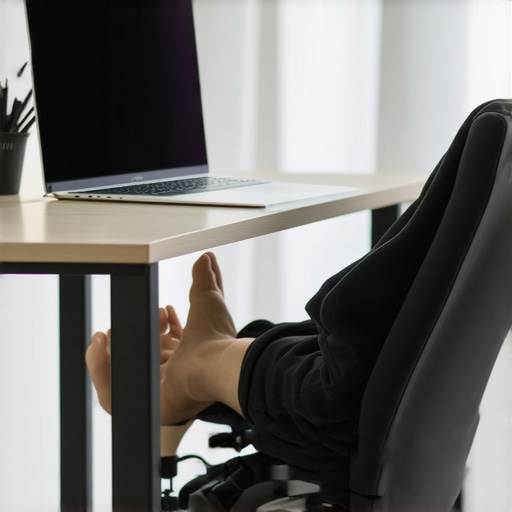
Your environment should do the work for you
We are moving toward a future where our environments will likely be ‘smart’ enough to detect our muscle fatigue before we do. I predict that within five years, we will see chairs equipped with haptic sensors that gently vibrate when they detect your glutes have gone inactive for more than twenty minutes. Until then, you have to be your own sensor. I’ve found that unlocking better back health with effective posture tips is mostly about removing the friction of movement. I keep a tennis ball under my desk at all times because knowing how to use a tennis ball to release tension in your feet and back while you’re on a conference call is a superpower. It’s about building a toolkit of mobility mastery and simple exercises that you can do without even standing up. If you really want to see a difference, I challenge you to try the ‘Isometric Desk Wake-up’ every hour for just one full day. You’ll be shocked at how much more energy your legs have by 5:00 PM. Don’t wait for the pain to return to start adjusting your routine for lasting relief; the best time to fix your back was ten years ago, but the second best time is right now.
The Pain Reality Check That Changed My Approach
One thing I wish someone had told me years ago is that pain is often a ‘liar.’ Just because your lower back throbs doesn’t mean your back is actually weak. Often, your spine is just the innocent victim of lazy glutes or even how your foot arch collapse is creating a hip impingement that forces your pelvis out of alignment. I also learned that more intensity isn’t always better. I used to stretch my hips for 20 minutes every morning, but I eventually discovered why stretching your psoas might actually be making your back hurt more if you aren’t providing the stability those joints crave. The biggest ‘lightbulb moment’ for me was realizing that the most effective posture correction secrets that transform back pain outcomes aren’t found in a gym; they are the micro-habits you do while the microwave is running or while you are reading an email thread.
My Recovery Toolkit for a Desk-Bound Life
I don’t believe in expensive gadgets that promise a quick fix, but a few specific tools have become non-negotiable for my spinal health. First, a simple tennis ball is the cheapest physical therapist you will ever own for myofascial release. Second, a dedicated laptop stand is vital; elevating your gaze to eye level is the fastest way to enhance your mobility and reduce cervical strain without even leaving your chair. I also highly recommend looking into the original NASA research on Neutral Body Posture; it provides a mechanical blueprint for human ergonomics that most office furniture designers completely ignore. These simple adjustments combined with mobility mastery and simple exercises create an environment where your body can finally heal itself.
Reclaim Your Movement Before It Reclaims You
Living with chronic back pain can feel like you are slowly losing your identity. You start saying ‘no’ to weekend hikes, ‘no’ to playing on the floor with your kids, and ‘no’ to those long road trips you used to love. But you have to remember that your body isn’t broken; it’s just slightly out of sync from years of sitting. By reclaiming your glutes and learning how to move with neurological intention, you can return to the version of yourself that doesn’t constantly scan the room for the nearest chair. Don’t let your desk define your physical limits. Have you ever noticed your legs feeling heavy or ‘dead’ after a long day at the office? Let me know your experience in the comments below.