
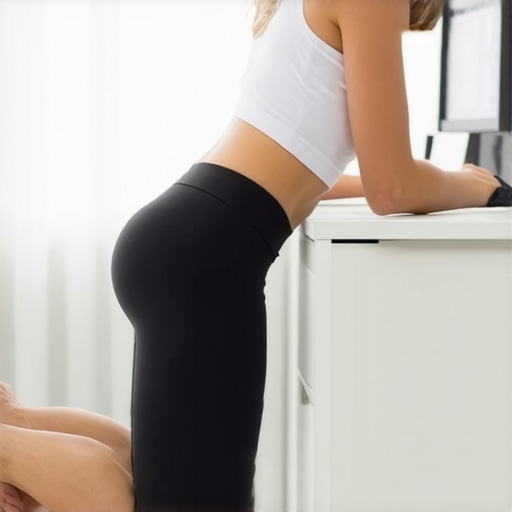
I’ll never forget the Tuesday I tried to stand up from my fancy ergonomic chair and literally couldn’t straighten my spine. It felt like someone had tightened a heavy-duty ratchet strap across my pelvis, pinning my torso to my thighs. I was only in my thirties, but there I was, hobbling toward the kitchen like I was bracing against a gale-force wind. My lower back was screaming, and no amount of ‘sitting up straight’ was doing a lick of good. I realized then that my desk wasn’t just where I worked; it was where my mobility went to die. Today, I’m going to show you how to break that cycle in less time than it takes to microwave a burrito.
Stop Blaming Your Spine for Hip Tightness
For years, I made the classic mistake of thinking my lower back was the primary antagonist in my life. I’d spend twenty minutes every night on the floor doing hamstring stretches, but I eventually learned that stretching your hamstrings might be making your back pain worse if you aren’t addressing the real culprit. That culprit is the psoas—the deep, powerful muscle that connects your spine directly to your legs. When we sit for eight hours, it shortens and pulls on our lumbar vertebrae like a taut bowstring. I finally had a lightbulb moment when I discovered the psoas release that finally stopped that deep ache. By focusing on simple exercises to relieve chronic back pain, I stopped managing the symptoms and started fixing the source.
Is This Just Another Exercise That Won’t Work?
Look, I’m as skeptical as a cat at a dog show. I’ve tried the posture braces and the expensive gadgets, only to find that the truth about posture braces is that they often lead to more weakness. But the science is hard to ignore: a study in the Journal of Physical Therapy Science found that even short bouts of targeted stretching can significantly reduce the ‘compressive load’ on your lumbar discs. I wasted so much time on complex routines before realizing that simple adjustments to relieve back pain are what actually stick. Have you ever felt that sharp, ‘stuck’ sensation in your hips after a long Zoom call? It’s a miserable feeling, and I want to help you kick it for good.
Stop Letting Your Chair Eat Your Spine
Think of your pelvis like a bucket of water. When you sit and slouch, that bucket tilts backward, dumping water all over your lower back and forcing your lumbar vertebrae to carry a weight they weren’t designed for. To stay dry, you need to find your neutral baseline. I remember a grueling flight from London where my back felt like it was being squeezed in a vice. I didn’t have a fancy pillow, so I rolled up a thick scarf and wedged it firmly into the small of my back, just above the beltline. It felt weirdly aggressive at first, almost like I was being pushed forward, but within ten minutes, that sharp, stinging pull in my legs subsided. This is the chair hack to keep your pelvis neutral while working that saves your discs from the dreaded ‘C-shape’ slump. By propping up the base of your spine, you force your lumbar curve to stay natural, which stops the psoas muscle from becoming a tightened bowstring that yanks on your spine every time you move. 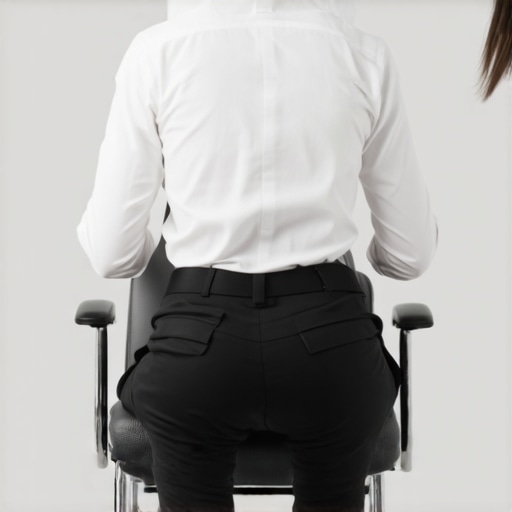
Find Your Neutral Baseline Without Overthinking It
You don’t need a gym membership or a standing desk to start correcting this. The first step is mastering the simple pelvic tilt that makes sitting for hours painless. While seated, imagine your hip bones are the handles of that water bucket. Slowly rock them forward to arch your back slightly, then slowly rock them back to flatten it against the chair. Find the middle ground—the ‘sweet spot’ where you aren’t straining in either direction. If you’re struggling with a stubborn, ‘pinched’ sensation in the front of your leg, you likely need the quick hip flexor release for people who sit 8 hours a day. I once tried to perform this mid-presentation by subtly lunging one leg back under the conference table while I was speaking. It was a bit clumsy, and I almost tripped over a power cord, but the relief was instant. This move unhooks the deep psoas muscle from your vertebrae, allowing your spine to finally settle without constant ‘shear stress.’
The 30-Second Micro-Reset You will Actually Do
Most people forget that the lower back is often the victim of a stiff upper back. If your ribcage is locked up like a rusty gate, your lower back has to move twice as much to compensate for your body’s lack of rotation. This is usually why how to fix a stuck feeling in your mid-back becomes a top priority for long-term relief. To break the ‘rust’ in your thoracic spine, use the 30-second wall reset for hunchback posture. Stand against a flat surface, press your shoulder blades and the back of your head into the wall, and reach your arms up like you’re doing a slow-motion victory cheer. It sounds deceptively simple, but it creates an immediate ‘decompression’ effect that opens up your chest. I’ve made it a habit to do this every time I head to the kitchen for a fresh cup of coffee. Combining this with the seated hip stretch that saves you from afternoon slump pain turns your desk from a torture device into a manageable workspace. You aren’t just stretching; you are recalibrating the tension levels in your entire kinetic chain to ensure your spine remains a pillar of support rather than a point of failure.
Stop Sucking in Your Stomach to Save Your Spine
Most people think that a ‘strong core’ means having a flat stomach or being able to hold a plank for five minutes. But here is the nuance: if you are constantly pulling your belly button toward your spine to look thinner, you are actually creating a massive amount of internal pressure that has nowhere to go but against your lumbar discs. I see this all the time—people who are physically fit but have the spine of an eighty-year-old because they’ve forgotten how to breathe. This is exactly why you should stop sucking in your stomach to look thinner if you want your back to stop throbbing. It creates a rigid, ‘braced’ state that prevents your spine from moving naturally during simple tasks like walking or reaching for a glass of water.
Why does my back still hurt if I do planks every day?
The answer often lies in the difference between stability and rigidity. A study by world-renowned spine expert Dr. Stuart McGill highlights that ‘bracing’ the core—stiffening the entire midsection like a 360-degree shield—is far more effective for spinal health than ‘hollowing’ the stomach. When you hollow, you lose the support of your oblique muscles and put excessive load on your vertebrae. This explains why your core strength isn’t stopping your back aches despite your gym routine. You aren’t training for stability; you’re training for tension. Real relief comes when you find the deep core connection that stops your spine from shear stress, which is about coordination, not just brute force. 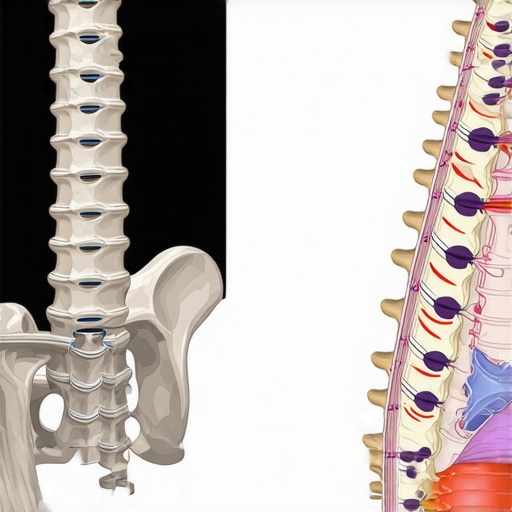
Don’t Stretch a Muscle That’s Trying to Protect You
One of the biggest ‘oops’ moments I see is the obsession with stretching the psoas. We’re told it’s tight from sitting, so we lunge and pull until we’re blue in the face. But sometimes, a muscle feels tight because it is actually weak or over-lengthened, and it’s ‘locking down’ to protect your spine from instability. In these cases, why stretching your psoas might actually be making your back hurt more becomes clear: you’re essentially picking a scab that your body is trying to heal. I’ve had clients who spent months stretching their hips only to find that why your lumbar support might be making your pain worse was the real issue because it was forcing their psoas into a constant state of high alert. Instead of forcing a stretch, try focusing on gentle mobilization and proper alignment. Have you ever fallen into this trap? Let me know in the comments. We often think we are ‘fixing’ ourselves when we are actually just adding more stress to an already overwhelmed system. Mastering your body means knowing when to push and when to let go, which is the cornerstone of top strategies for moving without pain.I used to think maintenance meant a grueling hour at the gym, but real spinal longevity is built in the tiny gaps between your emails. My personal toolkit isn’t expensive; in fact, the most valuable item is a standard lacrosse ball that lives under my desk. I use it for the tennis ball release for foot and back tension every afternoon around 3:00 PM. By rolling out the plantar fascia, I’m actually addressing the ‘downstream’ tension that pulls on my hamstrings and, eventually, my lower back. This isn’t just bro-science; mobility expert Dr. Kelly Starrett, author of ‘Becoming a Supple Leopard,’ emphasizes that your feet are the foundation of your pelvic position. If your feet are locked up, your spine is essentially building on quicksand. By focusing on expert tips for easier movement in 2025, I’ve learned that the secret isn’t more strength, but better mechanics. 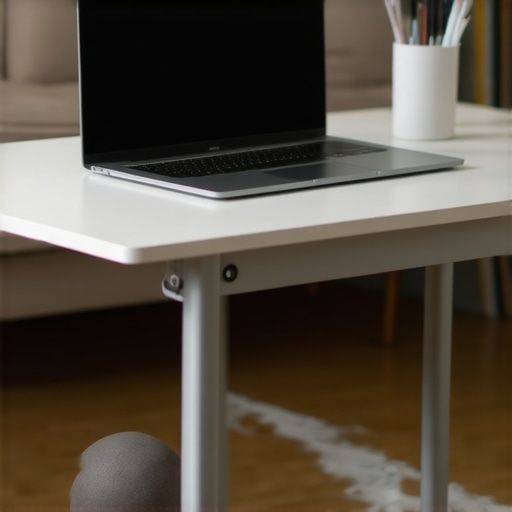
Stop Letting Your Laptop Dictate Your Neck Angle
Then there is the hardware side of the equation. I stopped using my laptop on my lap years ago because your laptop screen height is killing your upper back. I now swear by a simple, height-adjustable aluminum stand. I follow the 2-inch rule for your laptop stand to ensure the top third of the screen is at eye level. This tiny shift prevents that ‘turtle neck’ effect that puts nearly 60 pounds of pressure on your cervical discs. If you’re a heavy user, look into micro-break software that forces you to step away every twenty minutes. It’s the digital equivalent of daily spinal alignments for lasting relief. I’ve found that the wrong laptop stand can actually make neck tension worse if it isn’t adjusted to your specific seated height, so don’t just buy the cheapest one on the market.
How do I keep my spine healthy for the next twenty years?
It comes down to habit stacking. Don’t try to overhaul your life in a day. Instead, focus on simple adjustments to relieve back pain that occur naturally throughout your routine. I do the morning routine to decompress your spine before coffee while the kettle is boiling. It’s a non-negotiable two-minute window that resets my vertebrae after eight hours of sleep-induced compression. I predict that in the next few years, we’ll see ‘smart’ apparel with haptic feedback—basically shirts that vibrate when your shoulders roll forward—making posture correction secrets accessible to everyone without even thinking about it. Until then, you have to be your own sensor. If you do nothing else today, try this: elevate your laptop by just two inches and see how much lighter your head feels by 5:00 PM. It’s the easiest win you’ll ever get for your neck health.
The Reality Check I Needed About My Own Spine
I spent years thinking I could ‘fix’ my back with one 60-minute gym session, but the truth is much more subtle. My biggest lightbulb moment was realizing that effective posture tips for 2025 aren’t about being rigid; they are about fluid, frequent micro-movements. I learned the hard way that you cannot out-stretch a lifestyle that ignores the environment you live in for eight hours a day. Another hard lesson was that the spot where it hurts is rarely the spot where the problem actually starts. Often, I found that daily adjustments to alleviate back pain were more about my feet and my breathing than my actual lumbar spine. Finally, I stopped viewing my back as ‘broken’ and started seeing it as ‘overwhelmed.’ This shift in mindset changed everything about how I approached top mobility strategies for active living.
What I Keep in My Daily Maintenance Kit
If you want to take this seriously, you don’t need a thousand-dollar setup. I rely on three core things: first, the works of Dr. Stuart McGill, whose ‘Back Mechanic’ approach completely redefined how I view core stability. Second, a high-quality, adjustable laptop stand because your laptop screen height is killing your upper back if you don’t fix it. Third, a firm lacrosse ball for my feet and glutes—it is the most cost-effective massage therapist I’ve ever ‘hired.’ These tools, combined with simple adjustments to relieve back pain, form the foundation of my daily routine. I trust these resources because they focus on mechanics rather than temporary ‘cracking’ or quick fixes.
Turning Your Workspace Into a Source of Health
You aren’t destined to have a ‘bad back’ just because you work in an office. By layering in posture correction secrets like the 2-inch rule for your screen and the pelvic bucket visual, you are actively decompressing your spine while you work. It feels daunting at first, but remember that spinal health is a marathon, not a sprint. Every time you choose to reset your shoulders or breathe into your ribs, you are casting a vote for a future without chronic pain. You deserve to move without that constant ‘pinched’ feeling holding you back. Which of these tiny desk shifts are you going to try first to save your spine? Let me know in the comments below.