

I remember the morning I finally hit a wall. I was twenty-eight years old, reaching for a simple carton of milk, and my back completely locked up. It wasn’t a sports injury or a dramatic fall; it was just the culmination of years spent hunched over a laptop. I spent months trying every fancy gym machine and ‘core’ class I could find, but the pain wouldn’t budge. I was doing it all wrong. I thought I needed a six-pack to protect my spine, but the truth is that your core strength isn’t stopping your back aches because you are likely training the wrong muscles. Today, I am going to show you why one boring, simple movement called the Bird-Dog is actually the secret weapon you’ve been missing for a pain-free life.
Stop Doing Crunches if You Want a Healthy Spine
Most of us were taught that a strong core means doing sit-ups until our abs burn. I made that exact mistake for years. I thought if I just did enough crunches, my back would magically feel supported. Instead, I was just putting more pressure on my discs. When I finally met a specialist who explained the deep core connection that stops your spine from shear stress, everything changed. The Bird-Dog isn’t about looks; it is about stability. It teaches your body how to keep your spine perfectly still while your limbs are moving. This is a skill we use every single day, whether we are walking the dog or just trying to fix your posture while washing dishes. Have you ever felt like your back is ‘fragile’ even though you work out regularly? Drop a comment below if you have ever been frustrated by fitness routines that seem to make your pain worse rather than better.
Is this simple move actually worth the hype?
You might look at someone doing a Bird-Dog and think it looks too easy to be effective. I certainly did. But when done correctly, it is one of the most challenging and rewarding things you can do for your longevity. According to research led by Dr. Stuart McGill at the University of Waterloo, the Bird-Dog is part of the ‘Big Three’ exercises that maximize spinal stability while minimizing dangerous compression on your vertebrae. It is about strengthening your deep core without sit-ups by focusing on anti-rotation. My early failure was trying to arch my back too high, thinking I was getting a better stretch. In reality, the goal is to be as stiff as a board.
The Hidden Reason Your Core Workouts Are Failing
The reason most people fail to see results with back exercises is that they focus on movement rather than stability. Your lower back doesn’t actually want to move much; it wants to be the solid anchor for your hips and shoulders. When you master the Bird-Dog, you are training the multifidus and the transverse abdominis—the ‘internal corset’ of your body. This is the same principle behind strategies for moving without pain in your everyday life. If you can’t hold a Bird-Dog for thirty seconds without wobbling, your spine is likely picking up the slack every time you lift a grocery bag. We are going to break down the exact form you need to stop the wobble and start the healing.
Master the Setup Before You Ever Lift a Limb
To do this right, you have to start on all fours. Position your hands directly under your shoulders and your knees directly under your hips. Think of your torso as a sturdy coffee table. If I were to place a hot cup of coffee on your lower back, it shouldn’t spill a single drop during the entire movement. This setup is the foundation of posture correction secrets that transform back pain outcomes because it forces your spine into a neutral position before you add any load.
Find Your Neutral Spine and Lock It In
Most people either sag their back like an old horse or arch it like a scared cat. You want the middle ground. Gently tuck your chin so your neck is long, and pull your belly button toward your spine without holding your breath. This engages the transverse abdominis, which is the key to strengthening your deep core without sit-ups. 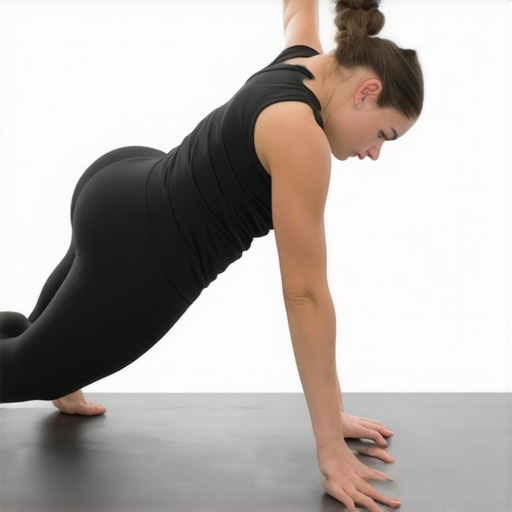
The Three-Phase Move to End the Wobble
When I first tried this, I was a mess. I thought the goal was to get my leg as high as possible, like a gymnast. I ended up arching my back so hard that I actually felt a sharp pinch. I was shaking like a leaf on a windy day. The breakthrough came when a physical therapist told me to stop ‘lifting’ and start ‘reaching.’ Instead of going up, go out. This shift is one of the most effective mobility mastery simple exercises to relieve chronic back pain because it prioritizes length over height.
Reach for the Walls Instead of the Ceiling
Slowly extend your right arm forward and your left leg backward. Imagine there is a button on the wall in front of you and another on the wall behind you that you need to press with your fingertips and heel. By reaching in opposite directions, you create tension that stabilizes the spine. This is exactly how you should think about unlocking better posture simple adjustments to relieve back pain—it is about creating space in the joints rather than compressing them. Keep your foot flexed, toes pointing toward the floor. If you feel your hips tilting or your weight shifting heavily to one side, you have gone too far.
Why Your Breath is the Final Piece of the Puzzle
The biggest mistake I see is people holding their breath while they struggle to stay balanced. When you hold your breath, you create internal pressure, but you aren’t actually training your muscles to support you during real-life activities. You need to learn how to breathe into your lower back to release tension while keeping the core braced. Take a deep ‘360-degree’ breath into your ribs. As you exhale, imagine your core tightening like a corset. This ensures that your spine remains protected even when you are moving your limbs to reach for a high shelf or pick up a grocery bag. Repeat this for five controlled reps on each side, focusing entirely on the stillness of your torso. If you can do this for two minutes without your ‘coffee cup’ spilling, you are well on your way to a resilient back.Once you start feeling the benefits of a stable core, it is tempting to go looking for the next ‘big stretch.’ I see it every single day: people who have finally found some relief through stability exercises start undoing their progress because they think they need to be more flexible. This is where most people get it wrong. We have been conditioned to believe that ‘tight’ equals ‘short,’ so we spend twenty minutes a day pulling on our legs. In reality, that tightness is often your brain’s way of creating a protective splint around a vulnerable spine. If you force that muscle to relax through aggressive stretching, you are essentially pulling the supports out from under a bridge.
Stop Pulling on Your Hamstrings to Fix Your Back
It sounds counterintuitive, but why stretching your hamstrings might be making your back pain worse is one of the most important concepts to master. When your pelvis is unstable, your hamstrings tighten up to help hold everything together. If you stretch them into oblivion, your lower back has to work twice as hard to maintain your upright posture. I spent years in a ‘stretch-pain-stretch’ cycle before I realized that my back didn’t need more length; it needed more control. The same goes for the front of your body; why stretching your psoas might actually be making your back hurt more is often because that muscle is trying to stabilize your lumbar spine from the inside.
The Hidden Danger of the Aesthetic Core
We also need to talk about the ‘oops’ factor that almost everyone falls for: the aesthetic suck-in. For decades, fitness magazines told us to ‘draw the navel to the spine’ to look thinner and ‘engage’ the core. This is a massive mistake for functional health. Dr. Stuart McGill’s research on ‘proximal stiffness’ shows that true spinal protection comes from bracing—pushing the abdominal wall slightly outward in all directions—rather than sucking it in. This is why I tell my clients why you should stop sucking in your stomach to look thinner if you want to actually protect your discs. Sucking in creates a hollow cylinder that buckles under pressure; bracing creates a solid pillar. Have you ever fallen into this trap of prioritize looks over function? Let me know in the comments. 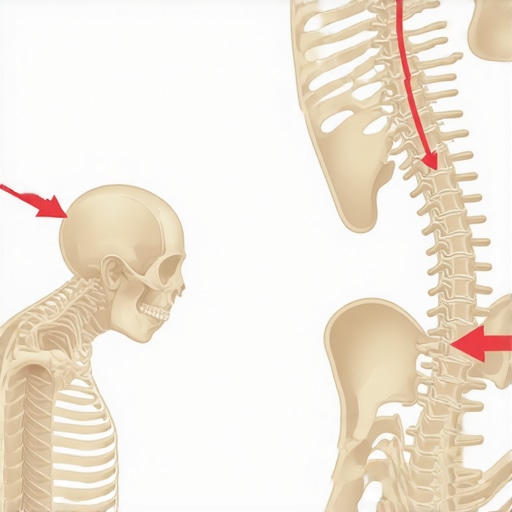
Could Your Big Toe Be the Real Culprit Behind Your Lumbar Pain?
If you have mastered the Bird-Dog and corrected your bracing but still feel a nagging ache after a long walk, the problem might be further down the chain than you think. There is a fascinating connection between your gait and your spine. For instance, how a stiff big toe is causing your chronic lower back pain is a nuance that even many experienced athletes miss. If your toe cannot extend properly when you step, your hip cannot fully extend, which forces your lower back to arch excessively to compensate. This is why posture correction secrets that transform back pain outcomes always involve looking at the whole body, not just where it hurts.
What to Expect When Things Start Shifting
As you begin to implement these advanced stability tactics, your body might feel different—sometimes even a bit ‘off’ at first. It is very common to feel a strange sensation of lightness or even a bit of disorientation as your nervous system recalibrates. This is similar to why you feel wobbly after your first adjustment; your brain is learning a new way to map your movements. Don’t let that initial wobbliness scare you off. It is a sign that you are finally breaking the old, painful patterns and building a foundation that will last for decades.
Turn Your Desk into a Recovery Zone
Once you have that foundation, you have to protect it from your own daily habits. I used to think that a sixty-minute workout could outrun ten hours of sitting in a cheap chair. I was wrong. If you are serious about keeping the pain away, you need to look at your environment with a critical eye. I personally started seeing the biggest shifts when I stopped treating my laptop like a portable device and started treating it like a workstation. This is why how to set up your home office on a budget for your back is the first conversation I have with anyone struggling with recurring stiffness. You don’t need a thousand-dollar chair; you need the right geometry.
How do I maintain these core gains over time?
Consistency in your environment is just as vital as consistency in your movement. The most common pitfall I see is people returning to the ‘C-shape’ hunch as soon as they open their email. To combat this, I swear by a specific ergonomic standard popularized by the Cornell University Ergonomics Web, which emphasizes that the top of your monitor should be at eye level to prevent the chin from dropping. Following the 2-inch rule for your laptop stand to save your neck from strain is the easiest way to keep your head from drifting forward. If you don’t have a stand, a stack of books works perfectly. The goal is to stop the mechanical stress before it even starts. 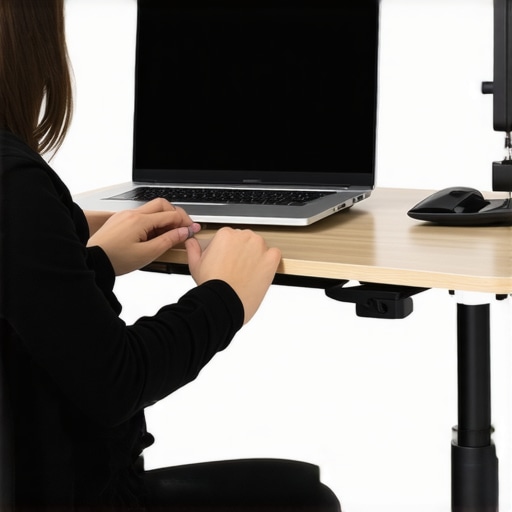
Stop Working in a C-Shape with One Quick Tweak
Beyond the gear, you have to address the ‘dead butt’ syndrome that happens when we sit for hours. I used to get so focused on work that I wouldn’t move for three hours, and then I wondered why my hips felt like they were made of rusted iron. Now, I set a silent haptic alarm on my watch. Research from the American College of Sports Medicine suggests that breaking up sedentary time every 30 minutes significantly reduces musculoskeletal discomfort. This is exactly why your spine needs movement every 30 minutes. It isn’t just about the joints; it is about keeping the blood flowing to the discs. When you stay static, those discs lose their hydration, making them more prone to the ‘shear stress’ we talked about earlier. If you are struggling with a screen that is too low, remember that why your laptop screen height is killing your upper back is usually the culprit for that burning sensation between your shoulder blades.
What the Future of Spine Health Looks Like
Looking ahead, I predict we are going to see a massive shift toward wearable biofeedback. We are already seeing sensors that vibrate when you slouch, but the next generation will likely track deep core activation in real-time. Until then, you have to be your own sensor. You have to adjust your routine daily spinal alignments for lasting relief by checking in with your body every morning. I want you to try this right now: set an alarm for 30 minutes from now. When it goes off, stand up, perform one single, slow Bird-Dog on each side, and notice how your posture resets. It takes less than sixty seconds, but it is the difference between a spine that lasts and one that wears out. For those just starting out, check out the morning movement routine that lubricates your joints to start your day with a win.
Lessons That Finally Shifted My Spinal Reality
Looking back at my journey from chronic stiffness to functional strength, I realized that most of what we are told about fitness is actually detrimental to spine health. First, I had to accept that stability beats flexibility every single time. I spent way too long thinking I needed more range of motion when I actually needed more control through mobility mastery simple exercises to relieve chronic back pain. If your foundation is shaky, adding more movement just creates more friction and inflammation.
Second, sucking in your stomach is a vanity trap that ruins your internal mechanics. When I stopped trying to look thin and started bracing for real support, my lower back finally stopped throbbing after long walks. Finally, I learned that consistency is the only ‘hack’ that truly exists. Five minutes of adjusting your routine for lasting relief is worth far more than a grueling two-hour gym session once a week.
The Toolkit for a More Resilient Body
I don’t believe in overcomplicating things. My own recovery was built on a few high-quality resources that I still use and trust today. I highly recommend diving into Dr. Stuart McGill’s work; his research-based approach to the ‘Big Three’ exercises is the reason I no longer fear bending over to tie my shoes. For my workday, a simple Laptop Stand was a game-changer. I trust it because setting up your office correctly stops the neck strain that usually trickles down to the lower back. Lastly, a Silent Timer is my best friend. It ensures I am giving my spine movement every 30 minutes, keeping my discs hydrated and my muscles from locking up.
Start Your Journey to Freedom Today
Healing isn’t always a straight line, but it is absolutely possible. You don’t have to accept a ‘bad back’ as your permanent identity or limit your life because of fear. By focusing on these small, smart movements and refining your daily environment, you can reclaim your ability to move with confidence and ease. Your future self will thank you for starting your daily adjustments to alleviate back pain today. Don’t wait for the next flare-up to take action; the best time to build a resilient spine is right now.
Have you ever found that aggressive stretching actually makes your back feel tighter or more vulnerable the next day? Let me know your experience in the comments below!