

I stepped off the chiropractic table, reached for my car keys, and almost tipped over like a Jenga tower in a breeze. My brain was telling my feet to move, but my knees felt like they’d been replaced by jelly. It was my very first adjustment, and instead of the ‘instant relief’ everyone promised, I felt like I was walking on a boat deck in a heavy swell. I remember gripping the door handle of my sedan, wondering if I’d just been ‘un-aligned’ rather than fixed. If you’re reading this right now, chances are you’ve just had your spine moved for the first time, and you’re wondering why your balance has gone on a sudden vacation. Maybe you even feel a little lightheaded or ‘floaty.’ I’ve been exactly where you are, clutching the hallway wall and questioning the whole process. Today, I’m going to explain exactly why your body is throwing this little temper tantrum and why it’s actually a fantastic sign that things are changing.
That First Walk Back to the Car Feels Like Learning to Stand Again
We spend years—decades, even—training our brains to accept a ‘crooked’ normal. For me, it was years of slouching, and I didn’t realize how much my laptop screen height is killing your upper back until I finally sought help. When a chiropractor finally shifts those vertebrae back into their rightful homes, your nervous system gets a sudden, loud wake-up call. When I first started, I made the huge mistake of thinking the adjustment didn’t ‘take’ because I felt so unsteady; I actually tried to crack my own neck later that night to ‘reset’ it, which was a huge error in judgment that just caused more stiffness. The truth is, your brain is currently rewriting its internal map of where your limbs are in space. This is a process called proprioception. According to a study published in the Journal of Manipulative and Physiological Therapeutics, spinal adjustments can significantly impact the brain’s ability to process where the body is in space, which explains that temporary ‘sea legs’ feeling.
Wait, Is This Wobbly Feeling Actually Normal?
It’s more than normal; it’s expected. You might even find yourself wondering why you feel taller after a professional adjustment. Your muscles, which have been locked in a ‘protective’ mode for years, are finally being told they can let go. But they don’t always listen immediately. Some are still tight, others are suddenly firing differently, and your center of gravity has shifted by a fraction of an inch. That’s enough to make you feel like you’re walking on a trampoline. Before we dive into how to stabilize yourself and master your mobility with strategies for moving without pain, I have to ask: did you experience that weird ‘floaty’ sensation right after your session, or did the wobbliness kick in a few hours later? Understanding what your chiropractor specifically checks during a first visit can help you realize that your body isn’t broken—it’s just recalibrating.
Rebooting Your Internal GPS Without Crashing the System
To get past those sea legs, you need to treat your body like a high-performance computer that just finished a massive hardware update. You wouldn’t immediately start running a heavy 4K video render while the operating system is still configuring vital files, and your nervous system is in that exact state of ‘configuring’ right now. The first and most vital thing you must do is hydrate like it’s your full-time job. Think of water as the lubricant that helps your newly aligned vertebrae settle into their new homes without friction. When I had my first session, I was so focused on the weird wobbliness that I forgot to drink anything but coffee. It was a massive mistake; I woke up the next morning feeling like my muscles had been vacuum-sealed against my ribs. Water helps flush out the toxins released from muscles that have been ‘locked’ for years.
Ditch the Soft Couch for a Few Hours
I’ll never forget the afternoon of my second adjustment. I felt fantastic, drove home, and immediately melted into my favorite overstuffed armchair to celebrate. Thirty minutes later, I tried to stand up and felt a sharp, familiar twinge that nearly brought me to my knees. I had basically folded my newly aligned spine into a C-shape while the ligaments were still ‘plastic’ and highly receptive to change. You have to realize the hidden danger of soft couches for disc health during this critical four-hour recovery window. Stick to firm chairs where you can keep your feet flat on the floor and your hips slightly higher than your knees. This allows your ligaments to tighten up around the new, correct position rather than molding to the shape of a sagging cushion. 
Master the Log Roll When Getting in the Car
The most dangerous thing you can do when you feel wobbly is to twist your spine while it’s under a vertical load. This usually happens in the driveway or the grocery store parking lot. Instead of the usual ‘one leg in, then pivot’ move that torques the lower back, you need to use the best way to get into a car if you have back pain: the sit-and-swing. Sit on the edge of the seat with your back to the interior, then swing both legs in together as one unit. Keeping your knees and shoulders aligned prevents those micro-tears in the connective tissue that lead to more instability and that ‘floating’ feeling.
Stop Fishing for That DIY Neck Crack
It’s incredibly tempting. You feel a little stiff, or maybe one side feels ‘higher’ than the other, and you think a quick self-pop will ‘finish the job’ the chiropractor started. Resist it with everything you’ve got. I used to be a chronic self-cracker, thinking I was helping my own mobility mastery simple exercises to relieve chronic back pain, until I learned the truth about why cracking your own neck feels good but harms you. When you crack your own neck, you’re usually just hitting the joints that are already too loose (hypermobile), leaving the actually ‘stuck’ joints completely untouched. It creates a cycle of ligament laxity that makes that wobbly feeling last for days instead of hours.
Check Your Phone Without Killing Your Progress
Since your brain is currently recalibrating its sense of balance and proprioception, looking down at your lap for twenty minutes of scrolling is a recipe for a neurological crash. It sends conflicting signals: the chiropractor just opened up your nerve pathways, but you’re immediately forcing the cervical spine back into a ‘tech-neck’ strain. Use the 10-second posture check to do every time you check your phone. Bring the device to eye level and keep your chin tucked. It sounds like a small thing, but it’s the difference between your adjustment ‘sticking’ or slipping back into the old, painful patterns. As you adjust your routine daily spinal alignments for lasting relief, you’ll notice the wobbly feeling fades faster each time because your body finally trusts its new, stable center of gravity.
Stop Trying to Stand Like a Statue
Most of us are taught that ‘good posture’ means shoulders pinned back and a chest puffed out like a military recruit. In my years of rehabilitating my own spine, I’ve found that this rigid, static approach is actually a massive trap. When you force your body into a ‘perfect’ position, you’re often just trading one type of strain for another. The real secret to unlocking better posture with simple adjustments isn’t about finding a single ‘right’ spot and staying there; it’s about postural variability. A study published in the Journal of Bodywork and Movement Therapies suggests that the inability to shift between different postures is a better predictor of pain than any single ‘bad’ position like slouching. If you try to hold yourself perfectly still after an adjustment, you’re essentially fighting the natural fluid motion your chiropractor just restored. Instead, focus on small, frequent movements throughout your day to keep those new pathways open.
The Hamstring Trap Most People Fall Into
When that post-adjustment wobbliness or lower back tightness kicks in, the first instinct for many is to drop down and stretch their hamstrings. I used to do this religiously, thinking I was helping my ‘tight’ back. However, this is one of the most common mistakes in recovery. Often, your hamstrings feel tight because they are overstretched and ‘locked long’ due to a pelvic tilt, not because they are actually short. If you keep pulling on them, you’re actually destabilizing your pelvis and pulling your lumbar vertebrae out of their new, corrected alignment. This is why stretching your hamstrings might be making your back pain worse. It creates a tug-of-war where your spine loses every time. 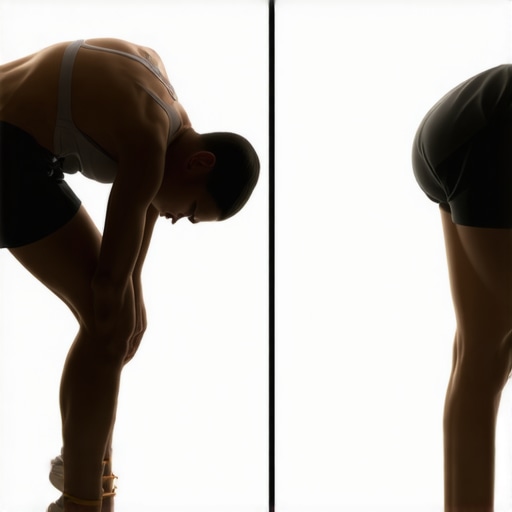
Why Does My Lower Back Only Hurt After I’ve Been Walking?
This is a sophisticated question I get all the time. You feel great sitting or standing, but twenty minutes into a walk, that dull ache returns. This usually happens because your body has ‘forgotten’ how to use its glutes to stabilize the SI joint, forcing the lower back muscles to do all the heavy lifting. If you haven’t mastered expert tips for easier movement, your walking gait might be ‘hiking’ your pelvis with every step. I’ve personally struggled with this ‘pelvic hike,’ and it wasn’t until I learned the real reason your lower back hurts only after you go for a walk that I was able to walk for miles without that familiar ‘wobbly’ collapse afterward.
Core Strength is Not a Bulletproof Shield
Another common myth is that a ‘strong core’ will fix everything. I’ve seen powerlifters with abs of steel who have the most unstable spines I’ve ever encountered. The nuance lies in ‘core stability’ versus ‘core strength.’ You don’t need a six-pack to protect your back; you need your deep stabilizer muscles to fire at the right millisecond. If you are constantly ‘bracing’ your stomach, you’re actually increasing intra-abdominal pressure that can irritate your discs. This is why your core strength isn’t stopping your back aches—you’re likely using the wrong muscles for the job. True posture correction secrets involve learning how to let your breath support your spine rather than just your muscles. Have you ever fallen into the trap of trying to ‘stretch away’ the pain only to make it worse? Let me know in the comments.
My Secret Weapon for Tight Arches
I used to think my back pain started in my back. It sounds obvious, right? But the more I experimented with tools, the more I realized that my foundation was the real culprit. I now keep a standard lacrosse ball—or a tennis ball if I’m feeling sensitive—right under my desk. Whenever I feel that wobbly sensation returning, I spend three minutes rolling out the fascia on the bottom of my feet. It’s incredible how much tension travels up the posterior chain. If you haven’t tried it, you need to learn how to use a tennis ball to release tension in your feet and back. This isn’t just a ‘feel-good’ massage; it’s about signaling your nervous system that the ground is stable.
Can You Keep the Progress Without Seeing the Doc Every Day?
Maintaining your alignment is less about ‘holding’ a pose and more about ‘greasing the groove’ of movement. You have to incorporate daily adjustments to alleviate back pain and improve posture through micro-breaks. Dr. Stuart McGill, a world-renowned spine biomechanics expert, emphasizes the concept of ‘spinal hygiene’—the idea that small, repetitive movements like the Cat-Camel or bird-dog are far more effective for long-term stability than a single 60-minute gym session once a week. I’ve found that doing three sets of ‘Wall Angels’ every time I finish a Zoom call does more for my wobbly sea legs than any expensive ergonomic chair ever could.
The Monitor Setup That Saved My Cervical Spine
I spent way too much money on a high-end mesh chair, only to realize I was still hunching forward. The real game-changer was a simple monitor arm. By getting my screen to exactly eye level, I eliminated the ‘looking down’ strain that was constantly pulling my C7 vertebrae out of whack. If you work from home, you must implement the monitor height hack for preventing c7-t1 nerve pressure. It’s a 10-minute fix that provides 10 hours of relief. 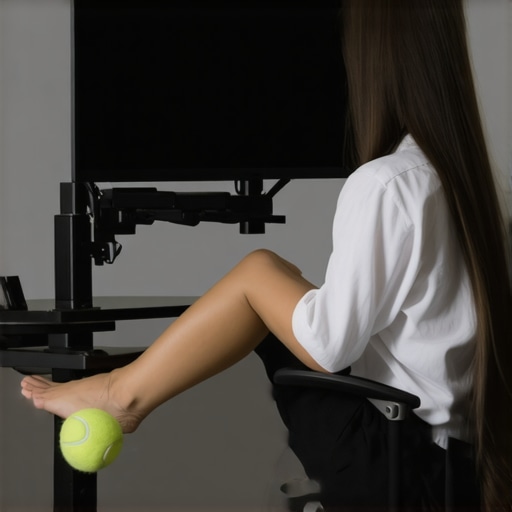 Looking toward the future, I predict we’re going to see a massive shift toward wearable biofeedback—think small sensors on your shoulder blades that gently vibrate when you’ve been in a static position too long. This tech will move us away from ‘passive’ care and toward real-time ‘active’ corrections.
Stop Waiting for the Pain to Return
Don’t just wait for your next appointment to feel aligned. Start today by trying the ‘Sit-to-Stand’ transition I mentioned earlier. If you find yourself struggling with the wobbly feeling after a walk, it’s time to enhance flexibility with top mobility strategies that focus on your hip hinges rather than just your spine. As you adjust your routine for lasting relief, remember that the goal isn’t a perfect spine—it’s a resilient one. Try the tennis ball trick under your desk for just five minutes today and see if that ‘floaty’ feeling doesn’t ground itself immediately.
The Hardest Lessons I Learned While Reclaiming My Alignment
After years of trial, error, and plenty of “wobbly” days, I’ve realized that a chiropractic adjustment is just the beginning of the conversation. First, I learned that silence isn’t always health; just because your back isn’t screaming doesn’t mean your alignment is optimal. It’s better to maintain your spine through daily adjustments to alleviate back pain and improve posture than to wait for a crisis. Second, your body has a “memory” for its old, crooked state. You have to actively override that muscle memory every single hour by being mindful of how you sit and move. Finally, I discovered that my mental stress was literally pulling my vertebrae out of place. Learning posture correction secrets helped me see that a tight jaw or clenched shoulders can undo an adjustment faster than a heavy lifting session.
The Essential Toolkit for a Resilient Spine
I don’t leave my spinal health to chance anymore. My “mobility first-aid kit” includes a standard lacrosse ball for myofascial release—it’s the best way to signal to your nervous system that it can relax. I also swear by a high-quality monitor arm to ensure my screen is at eye level, which is the only real way to unlock better posture with simple adjustments at your desk. For those looking for deeper reading, I highly recommend Becoming a Supple Leopard by Dr. Kelly Starrett. It’s the ultimate guide to enhance flexibility with top mobility strategies. Lastly, never underestimate a simple flat wall; doing “Wall Angels” for two minutes a day is more effective than any gadget you can buy online. #IMAGE_PLACEHOLDER_E#
Take a More Stable Step Forward
Healing isn’t a straight line, and those “sea legs” you’re feeling today are just a sign that your body is busy building a better foundation. Don’t be discouraged by the temporary wobbles; they are the price of admission for a body that finally moves the way it was designed to. As you adjust your routine daily spinal alignments for lasting relief, focus on the small wins—a walk without pain, a morning without stiffness, or a car ride where you don’t feel “stuck.” You’ve already done the hardest part by seeking help. Now, it’s just about giving your body the space and time it needs to master your mobility with strategies for moving without pain. What’s the strangest sensation you’ve felt right after leaving the chiropractor’s office? Did you feel taller, wobbly, or just incredibly sleepy? Let me know in the comments below!