

I used to be a chronic neck cracker. I’d sit at my desk, feel that familiar, dull ache creeping up into my skull, and I would just twist. Crack, crack, pop. For a few glorious seconds, the pressure would vanish, and I’d feel like I could actually turn my head again. But then, ten minutes later, the stiffness would return, even tighter than before. I was caught in a cycle I didn’t understand until I woke up one Tuesday morning unable to move my head at all. It turns out, that “sweet relief” I was chasing was actually the very thing making my problem worse. Today, I’m going to share why your DIY adjustments are a dangerous game and how you can finally find relief that doesn’t involve turning your neck into a glow stick.
The Addictive Pop That Keeps You Coming Back for More
When you forcefully twist your neck to get that sound, you are causing a rapid change in pressure within the joint fluid, which releases gas bubbles—a process known as cavitation. This release triggers a small burst of endorphins, your body’s natural painkillers. That is the exact reason it feels so good for five minutes. However, I made the massive mistake of thinking that sound meant I was “aligning” something. In reality, I was usually just popping the joints above and below the one that was actually stuck. This is why self-cracking your neck makes the stiffness come back faster; you aren’t actually fixing the source of the tension, you’re just over-stretching the healthy ligaments.
Is self-cracking actually worth the risk?
It is tempting to think it’s a harmless habit, but the long-term consequences are real. Research published in the journal Spine indicates that repetitive, non-specific self-manipulation can lead to ligamentous laxity, which is a fancy way of saying your neck becomes unstable because the “rubber bands” holding it together have been stretched out too far. This instability is often why your neck cracks every time you turn your head even during normal movements. When I finally stopped my DIY habit, I realized that why cracking your own back is only a temporary fix also applied to my neck—I was treating the symptom while ignoring the structural cause. Often, the root of the problem is something as simple as why your pillow is actually pushing your head forward at night, creating a strain that no amount of popping will ever solve. Have you ever felt that sharp, momentary regret right after a self-crack? It is time to look at what is actually happening under the skin before that habit turns into a permanent injury.To break the cycle of chronic cracking, you have to treat your neck like a high-tension cable system rather than a rusty hinge. If one cable is too tight, you don’t just yank it; you adjust the anchors and the tension at the source. Moving from the ‘pop’ to true stability requires a shift in how you move and how you sit.
Stop the Hunch with a 30-Second Wall Reset
The first thing I did to replace my cracking habit was implementing the 30-second wall reset for hunchback posture. This isn’t just about standing straight; it’s about recalibrating the mechanoreceptors in your joints. I remember the first time I actually committed to this: I stood against my office door, heels and head touching the wood, and performed a series of slow wall slides. My mid-back felt like it was on fire, and my shoulders kept wanting to creep up toward my ears. It wasn’t the instant, addictive pop I was used to, but when I stepped away, my head felt five pounds lighter. This move works because the shoulder blade squeeze that fixes mid-back knots instantly engages the muscles that are designed to hold your head up, rather than forcing your delicate cervical joints to do all the heavy lifting. 
Save Your Neck by Fixing Your Desk Setup
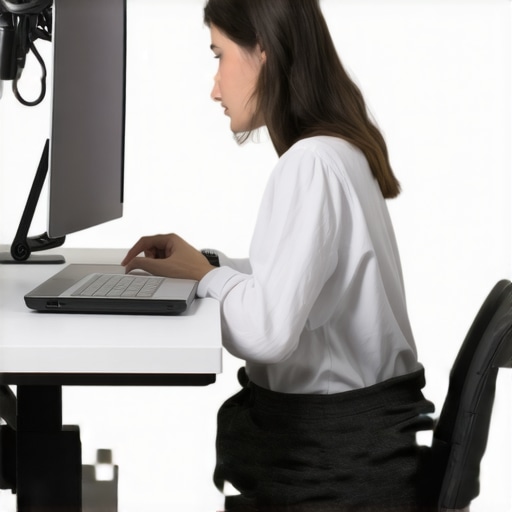
If you spend eight hours a day staring down at a screen, no amount of stretching will save you from the eventual urge to crack your neck. Think of your head like a bowling ball. When it sits directly over your shoulders, it’s easy to hold. When you tilt it forward just an inch to look at a laptop, it doubles the weight your neck muscles have to support. This is where the monitor height hack for preventing c7-t1 nerve pressure becomes your best friend. I used to use a haphazard stack of old textbooks to get my screen to eye level, and the difference was immediate. By bringing the world to your eyes rather than bringing your eyes down to the world, you stop the mechanical strain that leads to that ‘stuck’ feeling in the first place.
Stop Fighting Your Pillow Every Night
We spend a third of our lives sleeping, yet most of us use pillows that turn our spines into a permanent question mark. I eventually realized why your pillow is actually pushing your head forward was the secret reason I woke up reaching for my neck to crack it every morning. If your pillow is too thick, it keeps your neck in a state of constant flexion all night long. You want a neutral spine where your ears are aligned with your shoulders even while lying down. This transition is essential if you want to master your mobility and use top strategies for moving without pain throughout the day. When I finally switched to a setup that supported the natural curve of my neck, the morning stiffness—the primary trigger for my cracking habit—vanished within a week.
Even after the morning stiffness faded, I hit a plateau. I thought the answer was more stretching, but I was wrong. Most people believe that if a muscle feels tight, the only solution is to pull it into a long, deep stretch until it gives up. This is one of the most common mistakes in self-care, and I fell for it for years. In reality, that “tight” feeling is often your brain’s way of creating a protective splint around a joint it perceives as unstable. When you stretch a muscle that is already over-lengthened from poor posture, you are actually weakening your body’s last line of defense. This is precisely why stretching your psoas might actually be making your back hurt more or why your neck feels even more vulnerable after a yoga class.
Stop Stretching Your Neck if it Already Feels Loose
The contrarian truth that most people miss is that your neck might not be tight because it’s short; it’s tight because it’s weak. When you spend your day in a forward-head position, the muscles at the back of your neck are constantly being pulled like a rubber band stretched to its limit. They feel tight because they are under extreme tension, not because they need to be longer. If you keep stretching them, you increase ligamentous laxity. A study in the Journal of Manipulative and Physiological Therapeutics emphasizes that joint stiffness is frequently a result of altered proprioception—your brain’s sense of where your body is in space—rather than actual muscle shortness. To fix this, you need to enhance your mobility with expert tips for easier movement that focus on activation rather than just passive stretching.
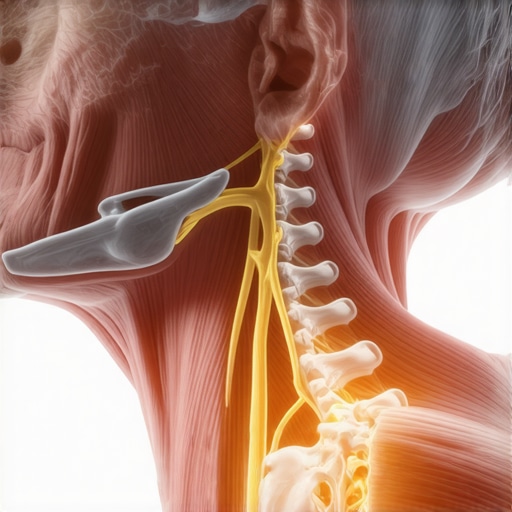
Can a professional adjustment solve a habit you’ve had for years?
Many patients ask if a chiropractor can undo a decade of self-cracking in a single visit. The answer lies in how an adjustment resets the nervous system. I learned that how an adjustment restores more than just range of motion involves a rapid input to the mechanoreceptors, which tells the brain the joint is safe. However, the biggest “oops” factor I see is people trying to “hold” their posture by sucking in their gut. You must understand why you should stop sucking in your stomach to look thinner; it creates intra-abdominal pressure that actually locks up your mid-back and prevents your diaphragm from moving, which in turn forces your neck muscles to work harder just to help you breathe. This is often why your core strength isnt stopping your back aches—you are using the wrong muscles for the job. Have you ever fallen into this trap of over-stretching or “bracing” your core the wrong way? Let me know in the comments.
Maintaining a healthy spine isn’t about a single heroic effort; it’s about the boring, daily rituals that prevent the ‘stuck’ feeling before it starts. For me, that meant looking at my environment with a critical eye and moving beyond generic advice. I stopped relying on products just because they were labeled ‘ergonomic’ and started measuring my own body’s response. If you want to adjust your routine with daily spinal alignments for lasting relief, you have to look at the tools you use for hours on end. I personally use a simple wooden footrest—not for my feet, but to change the angle of my hips. I discovered that using a footrest to save your lower back at work was the only way to stop my pelvis from tilting into a position that strained my neck. When your foundation is off, everything above it suffers.
My Desk Setup is Now My Best Physical Therapist
I learned the hard way that why your lumbar support might be making your pain worse is often because it’s placed too high, forcing your spine into an unnatural arch. I now use a specific chair hack to keep your pelvis neutral while working, which involves a slight forward wedge to prevent the pelvic slumping that triggers my neck tension. Combined with the 2-inch rule for your laptop stand to save your neck from strain, these minor adjustments created a workspace that actively prevents the urge to crack my neck. I no longer feel that mid-afternoon ‘compression’ because the environment is doing the heavy lifting of support for me.
How do I keep these results from slipping away?
The key to longevity is consistency over intensity. I don’t spend an hour in the gym; instead, I commit to the morning routine to decompress your spine before coffee. This five-minute window is when your discs are most hydrated and responsive to movement. I also swear by the 5-minute fix for constant gamer neck twice a day to reset my visual field. According to Dr. Stuart McGill, a leading expert in spine biomechanics and author of Low Back Disorders, spinal stability is achieved through ‘stiffening’ the core musculature to protect the joints rather than just chasing flexibility. This technical approach is why posture correction secrets that transform back pain outcomes always focus on how you move when you *aren’t* exercising.
Smart Clothing will Soon Fix Your Slouch Automatically
In the next few years, I predict we will see a massive shift toward wearable biofeedback integrated directly into our clothes. We already have apps that track steps, but soon we’ll have shirts with haptic sensors that vibrate the moment your shoulders roll forward past a certain degree. Until that technology becomes mainstream, you have to be your own sensor. I use the 10-second posture check to do every time you check your phone as my manual version of this future tech. It’s about building a mind-body connection where your brain sends the ‘reset’ signal before your neck even feels tight. To truly enhance flexibility with top mobility strategies for active living, you must stop viewing your body as something to ‘fix’ once and start viewing it as a system that requires constant, small calibrations. Try this right now: Perform one 60-second ‘Wall Angel’ to reset your shoulders and notice how your breathing immediately deepens.
The Reality of Spinal Health After a Decade of Self-Cracking
The most important thing I learned isn’t just about mechanics; it’s about the brain. When you self-crack your neck for the tenth time in a day, you are essentially yelling at your nervous system to relax, but it’s only listening for a second. I realized that the loudest pop was often the least effective because it occurred at a hypermobile joint rather than the one actually causing the problem. True relief came when I stopped chasing the noise and started focusing on posture correction secrets that transform back pain outcomes. Another lightbulb moment was realizing how your mouth breathing habit is locking up your neck muscles; I was straining my neck just to get oxygen because my diaphragm was turned off.
#IMAGE_PLACEHOLDER_E#
My Daily Toolkit for a Tension-Free Workspace
If you’re serious about ending the cycle, you need more than willpower; you need a supportive environment. I personally swear by three things. First, a firm foam roller is indispensable, but only if you know the proper way to use a foam roller on your upper back without irritating your ribs. Second, I ditched the laptop screen for a dedicated monitor, and I checked is your laptop stand actually making your neck tension worse to ensure my eyes weren’t pulling my head forward. Lastly, I keep a tennis ball at my desk to use a tennis ball to release tension in your feet and back during long calls, which keeps my entire posterior chain from tightening up.
Your Path to Sustainable Mobility and Comfort
Changing a habit like neck cracking is a marathon, not a sprint. It’s about making daily adjustments to alleviate back pain and improve posture until your body forgets why it ever wanted to pop in the first place. When you prioritize structural stability over temporary relief, you’re not just fixing a sore neck; you’re investing in your future ability to move freely. You can master your mobility and move without pain if you treat your spine with the respect it deserves. Have you ever felt that instant regret right after a self-crack? Let me know your story in the comments below.