
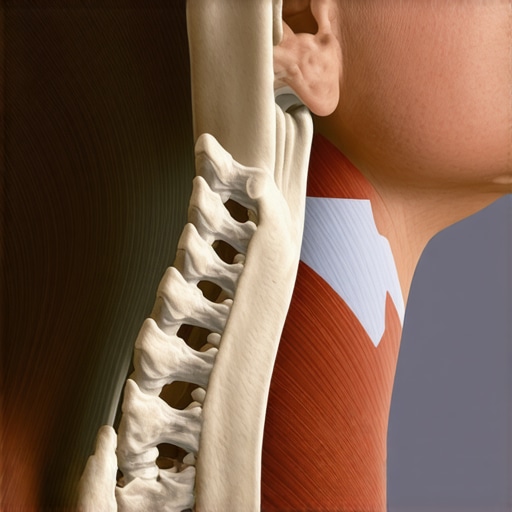
The first time it happened, I was backing out of my driveway. I twisted my head to check the blind spot, and pop-pop-crack. It sounded like a dry branch snapping right inside my skull. I actually pulled the handbrake and sat there for a second, wondering if I had just permanently damaged my spine. For years, I lived with that ‘crunchy’ sensation, thinking I was just getting older or that my neck was simply out of alignment. I even spent months obsessively self-cracking, thinking I was doing myself a favor. Spoiler alert: I was not. In fact, why self-cracking your neck makes the stiffness come back faster is a lesson I learned the hard way through constant headaches and even more stiffness. Let’s get real about that sound today. I am going to show you exactly why it happens and how you can actually settle those joints down without feeling like you are an old, rusty gate.
Stop Fearing the Pop and Start Listening to Your Body
If you have ever wondered why your neck crunches when you look over your shoulder while driving, you are not alone. It is one of the most common things people ask me about over the back fence. Usually, that sound—technically called cavitation—is just gas bubbles popping in the fluid surrounding your joints. According to Harvard Health Publishing, these noises are generally harmless as long as they are not accompanied by sharp pain or numbness. But when it happens every single time you move, it is usually a signal that your muscles are so tight they are pulling your joints slightly out of their natural rhythm.
Is that grinding sound actually wearing down my bones?
This was my biggest fear. I was terrified I was literally grinding my vertebrae into dust. Most of the time, the ‘gritty’ sound is actually soft tissues or ligaments snapping over bony bumps, not bone-on-bone contact. I used to think I needed a massive overhaul, but I found that simply applying the 2-inch rule for your laptop stand to save your neck from strain did more for my neck crunchiness than any amount of self-popping ever did. It turns out, my ‘broken’ neck was just a neck that was tired of being slumped over a screen. Have you ever felt like your neck was full of gravel during a simple morning stretch? Tell me, have you ever heard a crack so loud you actually stopped moving to make sure your head was still attached? [image_placeholder_1] Understanding the mechanics is the first step toward getting that smooth, silent range of motion back.
Fix the Foundation Before You Fix the Joint
Think of your neck like a high-tension suspension bridge. When the cables—those are your muscles—are pulled too tight on one side, the whole structure groans. To quiet the noise, you have to slacken the cables. I spent years trying to stretch my way out of pain, but I was ignoring the fact that I spent eight hours a day in a ‘C-shape’ at my desk. Your joints aren’t actually the problem; they are just reacting to the constant tug-of-war happening in your soft tissue.
Why Your Screen Height Is Non-Negotiable
I remember one Tuesday afternoon at a local coffee shop. My neck felt like it was filled with broken glass. I looked at my reflection in the window and realized I was staring almost directly into my lap while typing. I grabbed three thick hardcover books from a nearby shelf, stacked them under my laptop, and forced myself to sit upright. It felt awkward for ten minutes, but by the time I left, that sharp ‘driving-blind-spot’ crunch was significantly quieter. This is why the 2-inch rule for your laptop stand to save your neck from strain is the single most effective change you can make today. If your eye level is even slightly below the top third of your screen, your suboccipital muscles at the base of your skull will never relax.
Stop Fighting Your Pillow Every Night
Even if you fix your desk, you might be undoing it all while you sleep. If you wake up and your first instinct is to ‘crack’ your neck to get things moving, your pillow is likely the culprit. I used to use two plush pillows, thinking more was better, but I was actually forcing my neck into a permanent side-bend. Once I switched to the side sleeper pillowing trick for optimal spine alignment, that morning gravel sensation vanished. Your goal is a neutral spine where your nose is perfectly centered between your shoulders, not tilted toward the ceiling or tucked into your chest.
The Active Reset for Noisy Joints
Once the environment is set, you need to teach the muscles how to let go. Most people try to ‘stretch’ their neck by pulling their head to the side. Stop doing that. It just irritates the nerves further and creates a rebound effect of even more tightness.
This 30-Second Reset Beats Any Self-Crack
Instead of pulling on your head, focus on your shoulder blades. Your neck muscles are physically tied to your mid-back. When I started performing the simple scapular reset for instant shoulder tension relief, I noticed the popping in my upper neck stopped almost immediately. You are essentially ‘resetting’ the anchor points for your neck. If you combine this with the 30-second wall reset for hunchback posture, you tackle the rounded shoulders that are likely pulling your neck joints out of their natural tracks.
Learn to Breathe Through Your Ribs
Finally, check your breathing. If you are a ‘chest breather,’ you are using your neck muscles to lift your ribcage thousands of times a day. It is like doing thousands of tiny, shallow shrugs. Knowing how to relieve neck tension caused by high stress often starts with deep diaphragmatic breathing. When your ribs expand outward, your neck doesn’t have to do the heavy lifting, and the joints finally get the slack they need to move silently.Most people think that if a muscle feels tight, it needs to be elongated. I used to be the ‘king of the hamstring stretch,’ but my back never felt better—it actually felt more fragile. Here is the contrarian truth: many times, your brain is keeping a muscle tight because it doesn’t trust the joint it is protecting. When you force a stretch, you are essentially ripping away the only stability your body has left. This is exactly why stretching your psoas might actually be making your back hurt more if your deep core is not firing correctly.
Is Your Joint Truly Stuck or Are You Just Fighting Your Own Reflexes?
This is where the nuance of a professional adjustment comes in. A lot of people assume an adjustment is just about ‘putting a bone back in place,’ but that is a massive oversimplification. Research published in the Journal of Manipulative and Physiological Therapeutics suggests that the real magic happens in the nervous system—it is a high-velocity, low-amplitude input that ‘resets’ the local muscle tone. It is less like a hammer hitting a nail and more like rebooting a frozen computer. This explains how an adjustment restores more than just range of motion; it communicates with your brain to stop the guarding reflex. One of the biggest ‘oops’ factors I see is people becoming ‘flexibility junkies’ without any underlying strength. If you have hypermobile joints and you keep chasing that ‘pop,’ you are likely creating micro-instability. This is why cracking your own back is only a temporary fix—you are hitting the same segments that are already too loose, while the ones that are actually stuck stay frozen. To truly fix the issue, you have to pair mobility with control. Use the 30-second wall reset for hunchback posture to find your neutral, but then you must own that space. Have you ever fallen into the trap of stretching the same spot for months with no progress? Let me know in the comments.Maintaining a quiet, fluid neck isn’t about achieving a state of perfection; it’s about having a toolkit that works even when you’re tired or busy. I’ve realized over the years that most people fail because they think they need an hour of daily mobility work. You don’t. You need five minutes of the right stuff. For me, that meant moving past the expensive, vibrating gadgets and getting back to basics.
The Three-Dollar Solution for My Persistent Back Knots
While I love a professional session, I can’t live at the chiropractor’s office. I had to find ways to manage the ‘crunch’ at home. My go-to is a simple tennis ball. It sounds too easy, but learning how to use a tennis ball to release tension in your feet and back changed how I handled midday stiffness. By pinning the ball between my shoulder blade and the wall, I can hunt down those ‘trigger points’ that pull on my neck. It provides a specific, targeted pressure that a broad foam roller just can’t reach. If you do use a roller, make sure you know the proper way to use a foam roller on your upper back so you aren’t accidentally putting too much pressure on your floating ribs or lower spine.
Smart Devices Are Going to Change How We Sit Forever
I predict that within the next five years, we won’t have to ‘remember’ our posture anymore. We are seeing a massive shift toward wearable haptic feedback. According to research published in the Journal of Electromyography and Kinesiology, constant low-level haptic alerts—tiny vibrations when you slouch—can reduce spinal deviation by up to 40% compared to self-monitoring alone. While I’m wary of the truth about posture braces and muscle atrophy (which can actually make you weaker), smart sensors that simply remind your brain to engage your own muscles are the future of spinal health. Until those are built into every shirt we buy, I rely on the monitor height hack for preventing c7-t1 nerve pressure to keep my tech from destroying my alignment.
How Do I Keep These Gains Without Making It a Full-Time Job?
The secret is integration, not addition. You don’t add a ‘posture hour’ to your day; you adjust your routine with daily spinal alignments for lasting relief by doing them while you work. I perform the 10-second posture check to do every time you check your phone. It becomes a pavlovian response. This is how you enhance your mobility with expert tips for easier movement in 2025 without needing to buy a single piece of gym equipment. If you can commit to just one thing today, try the monitor height adjustment. It’s a one-time fix that pays dividends every single second you’re at your desk.
What I Finally Realized After Years of Chasing the Perfect Pop
The biggest ‘aha!’ moment for me wasn’t when I finally got a loud crack, but when I realized that a healthy joint is often a silent one. I used to think a pop meant I was ‘back in place,’ but I was actually just overstretching the same loose segments while my stiffest spots stayed frozen. To really master your mobility, you have to stop looking for the quick fix of a self-crack and start focusing on the slow, steady work of building stability. I also learned that brain fog isn’t always about sleep; sometimes it’s the sheer amount of sensory input from a jammed neck, which is how chiropractic adjustments can clear brain fog after a long week by lowering that background noise. When we stop force-feeding our joints movement and start listening to their limits, the crunchiness naturally begins to fade.
The Gear and Sources That Kept Me Sane
I don’t believe in buying every gadget on the market, but three things made a massive difference for me. First, a simple, firm tennis ball for those hard-to-reach spots between the shoulder blades. Second, a dedicated laptop stand—not just a stack of books—to ensure I’m hitting the monitor height hack for preventing c7-t1 nerve pressure perfectly every day. Lastly, I highly recommend keeping a simple anatomy app on your phone. Visualizing exactly where your C1 and C2 vertebrae sit helps you realize why gentle, precise movements are far safer than aggressive twisting. [image_placeholder_final]
A Future Without the Constant Crunch
It takes time to retrain a body that has spent years in a protective ‘hunch’ mode. Be patient with yourself as you unlock better posture through these small, daily tweaks. You don’t need to be perfect; you just need to be consistent. Your neck was designed for fluid, silent motion, and by respecting its mechanics, you can get back to that place. Start with the morning routine to decompress your spine before coffee tomorrow and see how much lighter your head feels by noon. Have you ever found that a specific stretch actually made your neck feel noisier or tighter? Let me know below.