

I remember three years ago, I didn’t get out of bed; I surrendered to the floor. My feet hit the carpet, and my lower back felt like it had been fused together with industrial-grade epoxy overnight. I spent ten minutes hunched over like a question mark, just trying to shuffle to the coffee pot. It was humiliating, painful, and frankly, it made me feel twice my age. You might know that feeling—the one where you’re terrified to sneeze because your lumbar spine feels like a brittle glass rod.
Move Away from the Tin Man Morning
If you’re waking up stiff, you aren’t alone. It’s a common struggle, especially when the weather turns and you find your lower back hurts more on cold rainy days. Today, we’re going to fix that. I’m not talking about an hour-long yoga session that you’ll never actually do. I’m talking about a specific, five-minute sequence that mimics how a cat wakes up—slow, intentional, and effective. We are going to lubricate those rusty joints so you can actually put your socks on without making a sound like a creaky door hinge. Have you ever felt that sudden catch in your back before you’ve even brushed your teeth? Let me know in the comments if you’ve ever had to roll out of bed sideways just to survive the first five minutes of the day. [image_placeholder_1]
Is a morning routine really worth all this effort?
I get it. You’re busy. The last thing you want is another to-do list item when you’re already running late. But here’s the thing: skipping this is why your back feels like lead by 2 PM. My biggest mistake early on was thinking I could just tough it out or, worse, that I should jump straight into intense toe-touches. I actually made my inflammation worse by forcing my body to move before it was ready. According to researchers at Harvard Health, our spinal discs actually swell slightly with fluid overnight, making them more sensitive to aggressive movements right after we wake up.
Why your spine hates your early morning stretch
When you first open your eyes, your spine is at its most vulnerable. If you’ve spent the night struggling with how to sleep on your back without waking up stiff, your muscles are likely in a protective guarding mode. Forcing a deep stretch is like trying to pull a frozen rubber band—it’s going to snap or fray. Instead, we need a morning movement routine that lubricates your joints without triggering a spasm. We’ll focus on gentle activation moves, like the bird dog move, once we’ve properly primed the pump. This isn’t about flexibility; it’s about survival and reclaiming your morning.I remember a Tuesday last month when I skipped my routine. I thought I was ‘good enough’ to just jump into the day. By the time I reached my first meeting, I felt that familiar, sharp pull in my lumbar. I had to excuse myself just to find a wall to lean against. It was a stark reminder that these daily adjustments to alleviate back pain and improve posture are not optional; they are the tax we pay for a functional body.
Wake Up Your Hips Before You Even Sit Up
Your first move shouldn’t be for the floor; it should be for your bed. Think of your spine like an old engine in winter—you don’t just redline it immediately. While you are still under the covers, start with gentle pelvic tilts. Slowly flatten the small of your back against the mattress, then relax and allow it to arch naturally. This micro-movement pumps fluid back into the discs that have been compressed or swollen overnight. It is the gentlest way to signal to your nervous system that it is safe to move. 
Breathe Into the Tightness to Melt the Armor
Once the joints feel slightly ‘unglued,’ you need to use oxygen as a tool. Most of us are chest-breathers, especially when we are in pain, which only tightens the accessory muscles in our neck and mid-back. You need to learn how to breathe into your lower back to release tension. Imagine your lower back is a balloon. As you inhale through your nose, try to push that ‘balloon’ down and out against the bed. This creates internal pressure that gently pushes the vertebrae apart. Understanding why your breath is the key to releasing spine tension is the secret weapon for anyone who feels like they are wearing a suit of lead every morning.
The Bird Dog Strategy for Morning Stability
After you’ve rolled out of bed—sideways, of course—get on all fours. This is where we transition from lubrication to stability. Perform the bird dog move that every back pain sufferer needs. The first time I did this, I was so unstable I nearly tipped over, which showed me exactly how weak my deep stabilizers had become. Extend your opposite arm and leg, focusing on a long line rather than height. This is one of the most effective mobility mastery simple exercises to relieve chronic back pain because it ‘wakes up’ the multifidus muscles that support each individual segment of your spine.
Protect Your Spine at the Bathroom Sink
The most dangerous part of your morning isn’t the floor—it’s the sink. We have a destructive habit of locking our knees and hunching over to brush our teeth or wash our face. I used to do this and feel a sharp ‘ping’ every single day. Mastering the proper way to lean over the sink while brushing your teeth involves a slight hinge at the hips or using one hand to support your weight on the counter. These posture correction secrets that transform back pain outcomes are what keep your progress from being wiped out before you’ve even had breakfast. You aren’t just moving; you are moving with intent.
You’ve mastered the art of the sideways roll and the bathroom sink hinge, but now we need to talk about the ‘Expert’s Trap.’ Most people assume that if a muscle feels tight, it needs to be pulled, elongated, and stretched into submission. This is where the nuance of true recovery begins. In my years of rehabilitating my own spine, I discovered that ‘tightness’ is often just a neurological mask for weakness or instability. When your brain senses that your lumbar spine is vulnerable, it clamps down on the surrounding muscles like a protective cage. If you try to force those muscles to relax through aggressive stretching, your brain actually panics and makes the muscles tighter the moment you stop. This is exactly why stretching your psoas might actually be making your back hurt more. You aren’t releasing tension; you’re triggering a survival reflex.
Stop Trying to Stretch Your Way Out of Stiffness
The biggest mistake I see beginners make—and I made it for years—is the ‘Toe Touch Obsession.’ We think if we can just reach our feet, the back pain will vanish. But for many of us, especially those with disc issues, forward flexion is the enemy in the morning. Research from Dr. Stuart McGill, a leading expert in spine biomechanics, suggests that the ‘stretching’ sensation people enjoy is often just the stretching of the neural tissues, not the muscles, which can lead to further inflammation. Instead of reaching for your toes, focus on master-your-mobility-top-strategies-for-moving-without-pain that prioritize neutral spine positions. This is about building a ‘stiff’ core that supports you, rather than a ‘loose’ spine that collapses.
The Foam Roller Trap That Aggravates Your Nerves
Another common ‘nuance’ people miss involves that cylindrical piece of foam in the corner of your gym. We’ve been told to roll out everything that hurts. However, taking a foam roller directly to your lower back is a recipe for disaster. Unlike your upper back, which has the rib cage for support, your lower back has no bony protection for your internal organs or the delicate structures of the lumbar vertebrae. Pushing a roller into that space can cause your muscles to spasm in self-defense. This same logic applies to the side of your leg; the truth about foam rolling your it band is that the band itself is a thick piece of connective tissue that can’t actually be ‘stretched’ or ‘rolled out.’ You’re likely just compressing the bursae and nerves underneath it, which increases your overall pain sensitivity. 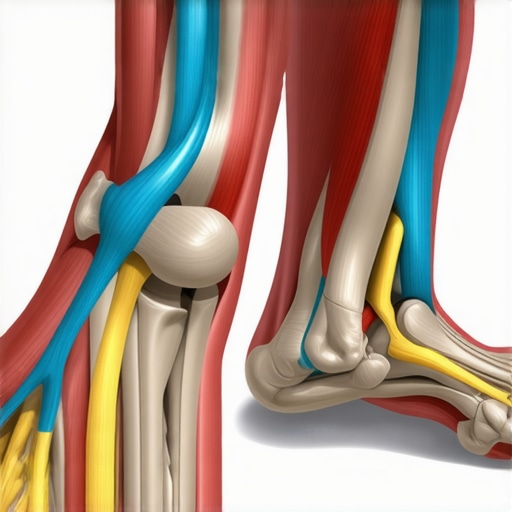
How do I know if my ‘tight’ muscle is actually just weak?
This is the question that separates the amateurs from those who actually heal. If you stretch a muscle and the relief lasts less than twenty minutes, it isn’t a flexibility problem; it’s a stability problem. Your body is using that ‘tightness’ to create the stability your deep core muscles are failing to provide. I spent years doing crunches to ‘fix’ my back, only to realize why your core strength isnt stopping your back aches: traditional core exercises often focus on the superficial ‘six-pack’ muscles rather than the deep stabilizers. You need to pivot toward the secret to strengthening your deep core without sit-ups to provide the internal corset your spine actually needs.
How a Stiff Big Toe Ruins Your Lumbar Alignment
Let’s go even deeper. Sometimes the pain in your lower back has nothing to do with your back. If you have limited range of motion in your lower extremities, your spine has to compensate for every step you take. Believe it or not, how a stiff big toe is causing your chronic lower back pain is a very real phenomenon. If your toe doesn’t bend, your foot turns out; if your foot turns out, your hip rotates; if your hip rotates, your pelvis tilts, and suddenly your L5-S1 disc is taking the brunt of your entire body weight. This is why a holistic approach to mobility is non-negotiable. Have you ever fallen into the trap of stretching a ‘tight’ muscle only to have it feel tighter an hour later? Let me know in the comments if you’ve been stuck in that endless cycle, because it’s time we break it together. By shifting from ‘stretching’ to ‘stabilizing,’ you’re not just managing pain; you’re engineering a body that doesn’t break in the first place.
Building a bulletproof back isn’t a one-time event; it’s a series of micro-decisions you make throughout the day. Once I moved past the initial ‘crisis’ phase, I realized I needed a system to stop the damage from recurring. I shifted from ‘fixing’ my back to ‘maintaining’ a functional machine. This is where the right tools come into play—not the gimmicks you see in late-night infomercials, but the specific adjustments that alter your biomechanics. For example, knowing how to use a footrest to save your lower back at work was a game-changer for me. It wasn’t about the footrest itself, but about how it changed the angle of my pelvis while I worked, preventing the slow creep of lumbar tension that used to ruin my evenings.
How do I maintain my back health over the long haul?
Maintenance is about consistency over intensity. You can’t undo eight hours of sitting with twenty minutes of gym time. I live by the rule that why your spine needs movement every 30 minutes is a biological requirement, not a suggestion. I set a silent vibrate timer on my watch. Every half hour, I stand up, perform one or two movements, and reset my posture. This prevents the ‘setting’ effect where your fascia begins to stiffen around a slumped position. As Dr. Andreo Spina, creator of Functional Range Conditioning (FRC), often emphasizes, you must expand your joint’s capacity to handle load rather than just hoping it doesn’t break. This philosophy is the core of the master-your-mobility-top-strategies-for-moving-without-pain that I now use to ensure my spine stays resilient under pressure.
Gear I Actually Use
I’ve thrown away a lot of junk over the years. Now, my ‘survival kit’ is lean. It includes a high-quality laptop stand because the 2-inch rule for your laptop stand to save your neck from strain is the easiest way to prevent ‘tech neck’ without overthinking your setup. I also keep a simple lacrosse ball in my bag for pinpoint muscle release and a lumbar roll for long car rides. These aren’t just accessories; they are structural supports that allow me to adjust your routine daily spinal alignments for lasting relief even when I’m away from home.
#IMAGE_PLACE_HOLDER_D#
Build a Barrier Against Future Spasms
Looking ahead, I predict we are going to see a massive shift toward wearable biofeedback. In 2025 and beyond, we won’t just guess if our posture is failing; our clothes will likely give us a gentle haptic pulse the moment our shoulders roll too far forward. For now, you have to be your own biofeedback loop. Use these expert tips for easier movement in 2025 to stay ahead of the curve. If you want one specific tip to start with: implement the 2-inch rule for your laptop tomorrow morning. It sounds small, but the reduction in cervical strain is massive. It’s these tiny, consistent wins that turn a ‘bad back’ into a distant memory.
Why I Stopped Chasing the Perfect Stretch
Over the years, I’ve realized that the ‘more is better’ philosophy is a trap for anyone with spinal issues. My biggest lightbulb moment was understanding that my brain uses muscle tightness as a safety brake. When I stopped forcing my body into deep stretches and started focusing on stability, the pain finally began to recede. Another hard lesson? Your morning ‘warm-up’ isn’t a workout; it’s a biological handshake with your spine, signaling it’s safe to move. You need to unlock better back health effective posture tips for 2025 to see real longevity. Lastly, don’t ignore the distant parts of your body—a stiff toe or a locked hip can be the silent architect of your lumbar agony.
The Low-Tech Tools That Keep Me Moving
You don’t need a thousand-dollar chair to heal. I trust a few simple items that have made a massive difference. First, a high-quality laptop riser to maintain the eye-level rule; it’s one of the best unlocking better posture simple adjustments to relieve back pain. Second, I swear by a basic tennis or lacrosse ball for targeting mid-back knots, provided you keep it away from the sensitive lumbar spine. Finally, a simple vibration timer on your phone is the most underrated tool in your arsenal, reminding you why your spine needs movement every 30 minutes to stay lubricated and resilient. These tools are the foundation for anyone looking to enhance flexibility top mobility strategies for active living.
Take Back Your Mornings
Living with back pain feels like carrying an invisible weight, but it doesn’t have to be your forever reality. By shifting your focus from ‘fixing’ symptoms to mastering your daily movement, you can reclaim the freedom of a body that feels light and capable. These daily adjustments to alleviate back pain and improve posture are your roadmap to a better quality of life. Don’t wait for the perfect time to start; begin with one small pelvic tilt tomorrow morning. Which part of your morning routine—or lack thereof—is currently the biggest hurdle for your back? Let me know in the comments below!