
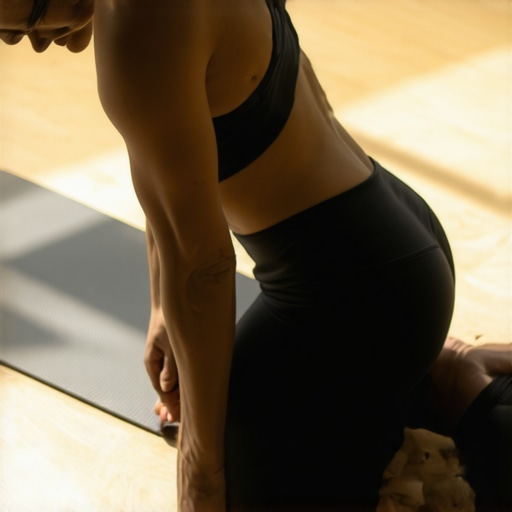
I will never forget the morning I tried to get out of bed and felt like a rusty gate hinge. My lower back was screaming, and my hips felt like they had been superglued shut overnight. I had been ‘stretching’ for weeks, or so I thought. In reality, I was just cranking on a muscle that was already exhausted and protective. It was a frustrating, visceral pain that made me realize I was making the classic rookie mistake of confusing neural tension with actual muscle shortness. My spine was paying the price for my ignorance, and I could not even figure out why my lower back hurt only after a simple walk. It took a long time to admit that my daily routine was actually making me less mobile, not more.
Stop Stretching Your Hips the Wrong Way
We have been told for decades that if something feels tight, we should just pull on it harder. But your hip flexors are smarter than that. When you sit for eight hours a day, those muscles are not just getting ‘short’; they are becoming weak, inhibited, and angry. According to research cited by Harvard Health, static stretching without proper alignment can actually be counterproductive if the muscle is already in a state of ‘protective tension.’ I spent months doing deep, aggressive lunges, only to find that stretching my psoas was actually making my back hurt more because I was simply shearing my hip joint forward instead of lengthening the tissue. I was chasing a sensation rather than a result, and my posture was suffering for it. Today, I am going to show you how to stop that cycle for good. We are going to focus on a single, refined movement that targets the root cause of that ‘stuck’ feeling.
Does this one move actually live up to the hype?
You might be skeptical. I certainly was. I used to think I needed an hour-long yoga flow or expensive mobility gadgets to see real results. But once I found the right technique—the one I am sharing today—the relief was almost instantaneous. We are going to focus on a specific isometric variation of the couch stretch that prioritizes your pelvic position over how far you can lean. This is not about being a contortionist; it is about mastering your mobility so you can move through your day without that constant, nagging tug in your pelvis. Have you ever felt like no matter how much you stretch, your hips just ‘snap’ right back to being tight ten minutes later? If you have faced that specific frustration, you are exactly where I was two years ago. Let’s get into the mechanics of why this works where others fail.
To truly reset your range of motion, we have to look at your pelvis as a bucket of water. If the bucket is tilted forward, the water—and your stability—spills out the front. Most people stretch their hips by tilting the bucket even further, which just jams the lumbar vertebrae together and increases neural guarding. Instead, we are going to focus on mobility mastery by keeping that bucket level through intentional, isometric control.
Stop Chasing the Burn and Start Controlling the Bone
We often think the goal of mobility is a deep, agonizing stretch, but depth is often the enemy of effectiveness. Think of your psoas like a guitar string; if you pull it too hard, the bridge of the guitar—your spine—takes all the tension and eventually warps. We want to dampen the vibration, not break the bridge. By using a wall for feedback, you turn a passive tug-of-war into a neurological conversation. This approach is the foundation of the one move that fixes a tight psoas muscle for people who spend the majority of their day seated.
Find Your Anchor Against the Wall
Start by placing a pillow or a yoga block on the floor about six inches away from a wall. Drop one knee onto the pillow and slide your shin up the wall so your toes are pointing toward the ceiling. Your other leg should be out in front in a lunge position with the foot flat on the floor. I remember my first attempt at this move; I tried to shove my heel all the way to my glutes immediately, thinking more was better. I ended up nearly face-planting because my balance was gone and my hip felt like it was on fire. Move slowly and give yourself space. If your shin is against the wall and you feel like your muscles are screaming in protest, move the knee further away from the wall. The goal is to be in a position where you can actually breathe and maintain control, not just survive the timer.
The Tiny Tuck That Changes Everything
This is where most people fail and where the magic actually happens. Instead of leaning your chest forward to increase the intensity, I want you to stay perfectly tall. Imagine there is a hook on your belt buckle pulling up toward your chin, while a heavy weight on your tailbone pulls down toward the floor. This posterior pelvic tilt is the secret to how to release your hip flexors without stretching them into a state of chronic irritation. You should feel a localized, intense line of tension on the front of the thigh, but absolutely no pinching in the low back. If you feel it in your spine, you have lost the tuck and are simply shearing your vertebrae. 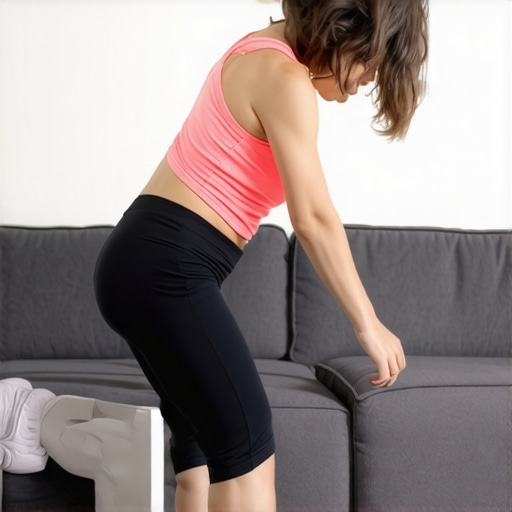
Exhale Your Way Out of Protective Tension
Once you have the tuck and the alignment, do not try to move further. Instead, use your breath as a tool for manual release. When you inhale, your diaphragm moves down, which can actually increase internal pressure on a tight psoas. When you exhale, you can often sink a millimeter deeper into the pelvic tuck without shifting your torso. This is why why your breath is the key to releasing spine tension during any corrective movement. I used to hold my breath while stretching, which sent a panic signal to my brain. My muscles stayed locked to protect me from what felt like a threat. The moment I started exhaling fully and slowly, my hip finally let go. By staying in this position for two minutes and focusing on the long exhale, you are unlocking better posture by training the nervous system to accept this new, lengthened state as safe and permanent.
The biggest mistake I see—and one I lived through for years—is the assumption that ‘tightness’ is a request from your body for more stretching. In reality, that nagging sensation is often ‘protective guarding.’ Your nervous system is smart; if it senses that your spine is unstable, it will literally lock down your hips and hamstrings to act as secondary stabilizers. This is a nuance often missed by casual gym-goers. You might think you are helping by hammering away at your range of motion, but you are actually stripping away the only stability your body has left. This is precisely why your core strength isn’t stopping your back aches—you are training the big, global muscles while the deep, local stabilizers are still asleep at the wheel.
Stop Pulling on Your Nerves
One of the most dangerous traps to fall into is confusing neural tension with muscle shortness. If you feel a sharp, zingy, or radiating sensation when you reach for your toes, you aren’t stretching a muscle; you are tensioning a nerve. Nerves hate being stretched. According to research by Dr. Stuart McGill, a leading expert in spine biomechanics, increasing flexibility in the wrong places can actually ‘de-stabilize’ the spine, leading to more frequent injury. When you aggressively stretch an area that is already hyper-mobile to compensate for a stiff segment elsewhere, you are creating a recipe for a disc issue. It is a common ‘oops’ moment that leads people to wonder why your lower back aches after doing crunches or other standard movements. You are essentially pulling on a frayed rope and wondering why it is getting weaker.
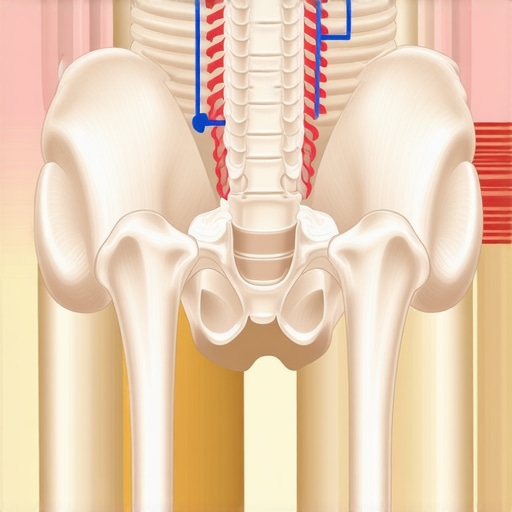
Is It Truly Tightness or Is Your Brain Just Scared?
Think of your nervous system as a security guard. If the guard doesn’t trust the door (your joints), he’s going to hold the handle shut. No amount of ‘releasing’ the handle will work until the guard feels the door is secure. This is why the truth about foam rolling your IT band is so controversial—you can’t actually ‘stretch’ that thick band of connective tissue; you are just desensitizing the nerves underneath it. To see real change, you have to prove to your brain that it is safe to let go. This requires specific, controlled movements that integrate the whole body, rather than isolated tugging. These are the posture correction secrets that transform back pain outcomes because they address the neurological ‘why’ instead of just the physical ‘where.’
I spent years in a cycle of stretch-relief-pain-repeat because I refused to acknowledge that my hips were tight because my spine was weak. I was chasing a phantom. Have you ever fallen into this trap of stretching the same spot for months with zero permanent change? Let me know in the comments. We need to stop looking at muscles in isolation and start looking at the system as a whole. If you are ready to stop the guesswork, reach out to us to find the actual source of your restriction.
Maintaining this newfound freedom in your hips isn’t about being perfect; it’s about being consistent. I learned the hard way that you can’t just ‘fix’ a psoas and then go back to sitting like a pretzel for ten hours a day. You have to adjust your routine to include micro-breaks that remind your brain where ‘center’ actually is. If you don’t, the old patterns will creep back in, and you’ll find yourself back at square one, wondering why your lower back feels like it’s made of lead again.
Why I Swear by a High-Density Lacrosse Ball
People often ask me about expensive massage guns or vibrating foam rollers, but I always point them toward a simple, $5 lacrosse ball. I use it for targeted myofascial release on my glutes and the upper part of my hip flexors. Unlike a tennis ball, which has too much ‘give,’ a lacrosse ball stays firm. This allows you to pin down a specific trigger point and then move the limb through its range of motion—a technique known as ‘tack and stretch.’ According to Dr. Kelly Starrett, author of Becoming a Supple Leopard, this type of mobilization is essential because it addresses the sliding surfaces between your tissues, not just the muscle fibers themselves. When I do this, I can feel the difference in my gait immediately; it’s like someone finally oiled the gears. This is one of those top mobility strategies that actually yields long-term results rather than just temporary relief.

How do I maintain my hip mobility over the long haul?
Consistency beats intensity every single time. I’ve found that a three-minute morning movement routine is more effective than a two-hour gym session once a week. You want to focus on ‘interstitial’ movement—the little things you do between tasks. I use a standing desk, but I don’t just stand still; I constantly shift my weight and perform occasional pelvic tilts. I also keep a footrest under my desk to periodically change the angle of my hips, which is a great way to save your lower back at work. The goal is to never let your joints ‘settle’ into a stagnant position for more than thirty minutes at a time.
The Future of Posture is Haptic
Looking ahead, I predict we are moving toward a world where ‘smart’ apparel and wearable sensors will do the heavy lifting for us. We’re already seeing the rise of devices that provide haptic feedback—a tiny vibration on your skin—whenever your shoulders slump or your pelvis tilts into a dangerous ‘bucket-spilling’ position. While these tools are great for building awareness, they should supplement, not replace, your internal body map. By 2025, I expect to see effective posture tips focusing heavily on this integration of tech and mindfulness. If you want to get ahead of the curve, start practicing that ‘pelvic tuck’ I mentioned earlier while you’re standing in line for coffee today. Try doing it for just 60 seconds and see if that ‘stuck’ feeling in your back starts to fade. If you’re still struggling to find that neutral spine, don’t hesitate to contact us so we can help you fine-tune your mechanics.
Small Shifts That Finally Saved My Spine
Over the years, I have realized that my biggest breakthroughs didn’t come from pushing harder, but from listening more closely to the subtle signals my body was sending. Here are the ‘lightbulb moments’ that shifted everything for me:
- Stability is the precursor to mobility. If your brain doesn’t think your spine is safe, it will never let your hips move freely. You can’t stretch your way out of a stability problem.
- Neural tension is a red flag, not a challenge. That zingy feeling is a warning. If you feel it, back off. I learned that why your hips lock up after a 20-minute walk is often a neurological ‘brake’ rather than a physical knot.
- Environment matters more than exercise. You cannot undo 10 hours of slouching with 10 minutes of stretching. You have to weave daily adjustments to alleviate back pain and improve posture into your workspace and lifestyle.
Tools That Earned a Permanent Spot in My Kit
I have tried every gadget on the market, but these four are the only ones I actually use every single week. I trust them because they focus on mechanics rather than marketing hype.
- The Lacrosse Ball: It’s unforgiving, but it’s the only thing that gets deep enough into the glute medius to make a difference.
- A Dedicated Laptop Stand: Following the 2-inch rule for your laptop stand changed my neck and shoulder tension almost overnight.
- Dr. Stuart McGill’s ‘Back Mechanic’: This book is my bible for understanding how to move without shearing my discs.
- The 3-Minute Routine: On days I’m short on time, I strictly follow the 3-minute desk stretch that targets your psoas to keep my pelvis in check.
#IMAGE_PLACEHOLDER_E#
Reclaim Your Range One Breath at a Time
The journey toward pain-free movement isn’t about achieving a specific pose or hitting a certain flexibility metric. It is about building a relationship with your body where you actually trust your own mechanics again. By staying consistent and implementing these expert tips for easier movement in 2025, you can break the cycle of chronic tightness. Don’t be afraid to start small—even a single pelvic tuck today is a win for your future self. Have you ever felt that annoying ‘snap’ or ‘click’ in your hip during a lunge? Let me know in the comments below!