
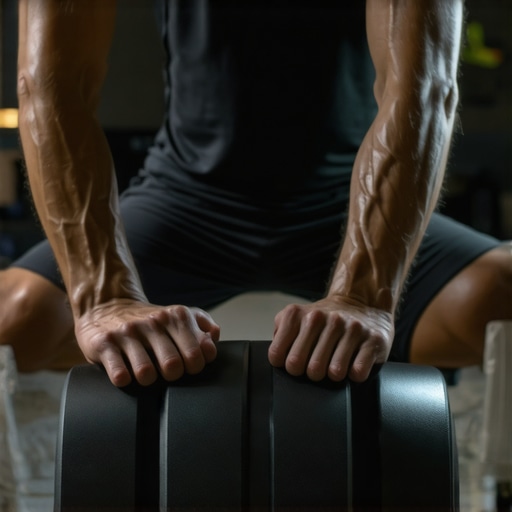
I spent years gritting my teeth while dragging my outer thigh across a hard piece of plastic, convinced that the agonizing “good pain” was the only way to fix my runner’s knee. I was essentially trying to tenderize my own leg like a piece of flank steak. It was a ritual of misery that left me with bruises and, somehow, even tighter hips. One afternoon, after a particularly brutal session, I realized I couldn’t even walk to my car without wincing. That was my lightbulb moment: if this “fix” was so effective, why was I getting worse? We’ve all been told that if it hurts, it must be working, but when it comes to that stubborn band of tissue on the side of your leg, we have been doing it all wrong. [image_placeholder_1]
Stop Smashing Your IT Band into the Floor
The hard truth is that most of us have been lied to about mobility. We treat the Iliotibial (IT) band like a tight muscle that needs to be ironed out, but the anatomy tells a completely different story. My biggest mistake early on was treating my body like a collection of isolated parts rather than a connected system. I’d roll that outer thigh for twenty minutes, completely ignoring how why your knees hurt when you have a pelvic tilt actually plays a much larger role in that pulling sensation. Today, I want to clear the air. We are going to look at why that foam roller is likely your enemy in this specific scenario and how you can actually master your mobility without the unnecessary bruising. Have you ever spent weeks rolling a “tight” spot only for the pain to come roaring back the second you stop? If you’re nodding your head, you’re not alone; I was right there with you, wasting hours on a gym mat for zero results.
Is rolling your IT band actually worth the agony?
In a word: No. At least, not the way you’re doing it. Here is the science that changed everything for me: the IT band isn’t a muscle you can just stretch or compress into submission. It is a thick, fibrous band of connective tissue. According to research published in the Journal of Anatomy, the IT band is so incredibly strong that it would take forces far beyond what a foam roller can produce to actually “stretch” it even one percent. When you compress it against the bone, you aren’t releasing a knot; you’re likely just irritating the highly sensitive nerves and the fat pad underneath. It’s no wonder you feel like you’re fighting a losing battle. Sometimes, the stiffness you feel is actually a protective response from your brain because your deep core connection isn’t stabilizing your pelvis correctly. We need to stop attacking the symptom and start looking at the mechanics. If you’ve been chasing that “stretch” by rolling your lateral leg, you might actually be causing more inflammation than relief, similar to how stretching your psoas might be making your back hurt more. It’s time to put the roller down and address the muscles that actually control the tension.
Shift Your Focus to the Muscles That Actually Contract
The IT band is essentially a giant, stubborn leather strap. You can’t massage a leather strap into becoming longer, but you can certainly loosen the winch that is pulling it tight. That winch is your Tensor Fasciae Latae (TFL) and your gluteus medius. I remember a specific Tuesday afternoon when I was training for a local 10k. Every step felt like a hot needle was being driven into the side of my knee. In the middle of the trail, I stopped, but instead of rolling my thigh on a log, I used a firm rock to find that small pocket of muscle right where my front pocket would be. I worked into the TFL for sixty seconds, and the pull on my knee vanished. I finished the run pain-free. This works because you are addressing the source of the tension, not the symptom. Learning how to release your hip flexors without stretching them is the first real step in de-escalating that tug-of-war on your outer leg. #IMAGE_PLACE_HOLDER_B#
Wake Up Your Glutes to Take the Pressure Off
If your glutes are on vacation, your IT band is forced to do overtime to stabilize your hip. This is a classic case of a lazy employee causing the rest of the team to burn out. Most of us suffer from dormant butt syndrome because we spend eight hours a day parked in a chair. This is exactly why your glutes go to sleep after one hour of sitting, leaving your IT band to fend for itself when you finally decide to go for a walk or hit the gym. To fix this, you need to incorporate lateral movements—think monster walks or side-lying leg raises—before you start your main workout. You want to feel a burn in the meaty part of your hip, not a stretch in your knee. These active contractions signal to your brain that the glutes are ready to handle the load, naturally allowing the IT band to relax.
Own Your Pelvic Position During Every Step
Think of your pelvis as a bowl of water. If that bowl tips forward, it pulls the IT band taut across the hip bone and down toward the knee. This mechanical disadvantage makes even the best exercises useless if you do not fix the tilt. This is where the deep core connection that stops your spine from shear stress becomes vital. By engaging your lower abdominals and leveling your pelvis, you effectively slack the rope. When I finally started focusing on my pelvic alignment during my morning walks, I realized that my tight IT band was actually just a symptom of my hips being out of whack. You can enhance your mobility significantly just by learning to keep that bowl of water level while you move.
Master the Controlled Step-Down
To put these concepts into practice, stop doing passive stretches and start doing the slow, controlled step-down. Stand on a small box or a bottom stair, and slowly lower one heel to the ground while keeping your standing knee tracking directly over your toes. If your knee dives inward, your IT band is going to scream. By forcing your hip stabilizers to control that movement, you are building the exact strength needed to keep the IT band from rubbing against the femur. It is a tedious, small movement, but it is the definitive way to master your mobility and ensure your joints stay happy for the long haul.
The biggest mistake I see athletes and weekend warriors make is the obsession with gaining more range of motion at any cost. We’ve been conditioned to think that if something feels tight, we must stretch it until it gives way. But here is the nuance: your brain often creates that feeling of tightness as a defensive parking brake. If your joints lack stability, your nervous system will clamp down to prevent injury. In these cases, enhance your mobility isn’t about getting looser; it’s about getting stronger in the right places. Stretching a protective spasm is like trying to pull a knot tighter, which is precisely why stretching your hamstrings might be making your back pain worse. You are fighting against your own biology.
Stop Chasing Flexibility at the Expense of Stability
In my experience, stability beats flexibility every single time when it comes to long-term pain relief. When you have a hyper-mobile joint without the strength to control it, your body recruits the IT band to act as a secondary stabilizer. This is why you can roll it out for hours and still feel like a rusty gate the next morning. You are essentially trying to remove a support beam from a sagging house without first reinforcing the foundation. A study led by Dr. Helene Langevin at the University of Vermont demonstrated that chronic stiffness is often linked to a lack of gliding between layers of fascia, a process that is improved through varied movement and load, not just static compression. If you want to master your mobility, you have to stop thinking of your body as a rubber band and start thinking of it as a complex hydraulic system.
Could your stiff big toe be the reason your hip feels stuck?
This is the ultimate hidden nuance of human movement. We rarely look at the feet when the knee or hip hurts, but the kinetic chain doesn’t care about our compartmentalization. If you have a collapsed arch or a stiff big toe, your entire leg rotates inward during every step. This internal rotation puts a massive, constant tug on the IT band. Exploring what your foot arch says about your chronic hip pain can reveal why your lateral leg tension never seems to go away despite your best efforts at the gym. When the foot fails to provide a stable base, the hip has to overcompensate, and the IT band is the first tissue to pay the price. 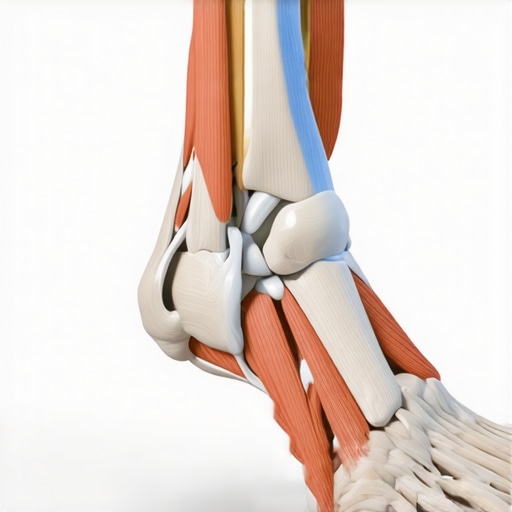
The Cosmetic Posture Trap That Destroys Your Progress
Here is a specific warning for those trying to look their best while they train: stop sucking in your stomach. It sounds harmless, but it is an absolute trap for your spinal and hip health. When you constantly pull your navel to your spine to look thinner, you disrupt the natural pressure of your core and force your hip flexors into a state of chronic high-tension. This is exactly why you should stop sucking in your stomach to look thinner if you ever want your hips to move freely. This habit creates a rigid midsection that prevents your pelvis from oscillating naturally during your gait, which keeps the IT band in a state of permanent tension. Have you ever fallen into this trap of prioritizing aesthetics over actual function? Let me know in the comments. We need to move away from the smash and stretch mentality and embrace a strategy that honors how our parts actually work together. By addressing the foot, the pelvic tilt, and the core pressure, you finally give that IT band the permission it needs to relax.
Upgrade to a Lacrosse Ball for Precision Work
I stopped using those giant, soft foam rollers years ago because they are essentially like trying to perform surgery with a sledgehammer. Instead, I keep a standard lacrosse ball in my gym bag and another one under my desk. I use this specific tool because the firm, rubberized texture does not give under your body weight, allowing you to pin down the TFL or the lateral glutes with surgical precision. If you are just starting and find the density too intense, you can use a tennis ball to release tension in your feet and back, but once you desensitize those tissues, the lacrosse ball is the only way to get deep enough to make a structural difference. I personally spend two minutes every evening rolling the arches of my feet while I brush my teeth. It sounds trivial, but it is the most effective way I have found to keep my gait from collapsing after a long day of standing.
Why the Rearview Mirror is My Favorite Posture Coach
Long-term maintenance does not always happen in the gym; it happens in your car and at your desk. I have a specific rule for my morning commute: I sit up as tall as I possibly can, then I adjust my rearview mirror to that specific height. The moment I begin to slouch or my pelvis tips, I lose my clear line of sight. It is an immediate physical signal to my brain to re-engage the core and level the pelvis. This kind of biofeedback is far more effective than any expensive ergonomic chair. According to Dr. Stuart McGill, a world-renowned expert in spine biomechanics at the University of Waterloo, it is the ‘cumulative load’ of minor postural deviations that eventually leads to tissue failure. By making these micro-adjustments, you are preventing that load from ever reaching the breaking point. #IMAGE_PLACE_HOLDER_D#
How do I maintain my pain-free mobility over time?
The secret to longevity is frequency over intensity. I would much rather you perform a 10-second posture check to do every time you check your phone than attend a single hour-long yoga session once a week. Your nervous system needs constant reminders of what ‘neutral’ feels like to overwrite decades of poor habits. Looking ahead, I predict the next big trend will be AI-driven gait analysis apps that use your smartphone’s camera to track your knee tracking and pelvic dip in real-time. We are moving away from ‘one-size-fits-all’ stretching toward highly personalized stability training. Until those apps are mainstream, you have to be your own sensor. You can enhance your mobility significantly by setting a simple timer to stand up every 30 minutes. If you want to take this to the next level today, try this: every time you walk through a doorway, perform a quick glute squeeze to reset your pelvic alignment. It is a tiny habit that yields massive results for your lower back and IT band health. Mastery starts when you finally commit to the deep core connection that protects your spine during every move you make.
The Hard Truths About Why Your Hips Still Feel Glued Together
Looking back on my years of frustration, there were three specific lightbulb moments that changed everything. First, I had to accept that my IT band wasn’t a tight muscle that needed ‘fixing,’ but a protective response to instability elsewhere. Learning master your mobility strategies taught me that the sensation of ‘tight’ is often just my nervous system hitting the emergency brake because it doesn’t feel stable. Second, I realized that the way my feet interact with the ground dictates everything upstream; in fact, how a stiff big toe is causing your chronic lower back pain is the exact same chain reaction that keeps the lateral leg under constant tension. Finally, I stopped looking for a one-time cure and focused on the cumulative effect of small, daily habits.
My Personal Toolkit for Keeping the Aches at Bay
If you want to maintain these results, you do not need a gym full of fancy equipment. I rely on a standard lacrosse ball for surgical precision on the TFL and glutes, and I keep my laptop elevated to prevent the pelvic slumping that pulls the IT band taut while I work. I also highly recommend focusing on unlocking better posture by using simple biofeedback tricks, like the rearview mirror adjustment I mentioned earlier. These simple, low-cost tools are far more effective than the most expensive foam roller on the market because they address the root cause of your tension rather than just massaging the symptoms.
Stop Fighting Your Body and Start Working With It
You do not have to live in a state of ‘good pain’ or ritual misery to see real results. True progress happens when you stop trying to force your tissues into submission and start giving them the stability and alignment they crave. By addressing your foot mechanics, pelvic tilt, and core engagement, you can enhance your mobility for the long haul. Remember, your body is not trying to annoy you with stiffness; it is trying to protect you from a perceived weakness. Listen to that signal, adjust your foundation, and you will find that the tension disappears on its own. Have you ever tried foam rolling your IT band only to find the pain came right back the next day? Let me know in the comments below!