
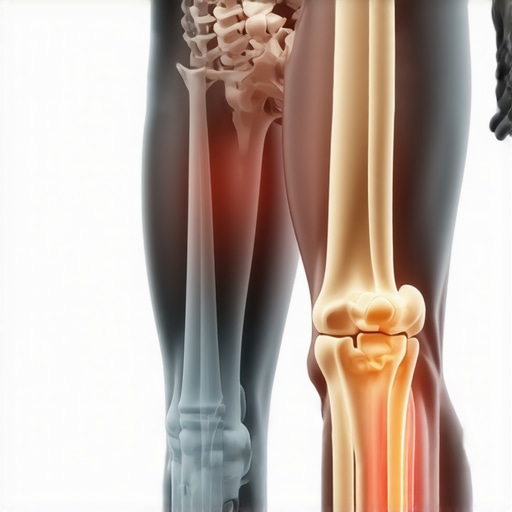
I vividly remember the afternoon my right knee finally gave out during a simple walk around the block. I wasn’t running a marathon or lifting heavy; I was just walking. For months, I had been babying that joint, convinced I had some mysterious injury. I bought the fancy copper-infused sleeves. I swallowed glucosamine like it was candy. Nothing worked. It wasn’t until I caught my reflection in a shop window and noticed my lower back was arched like a frightened cat that I realized the problem wasn’t in my knees at all. My duck butt—that classic anterior pelvic tilt—was throwing my entire kinetic chain out of whack. If you have ever felt like your knees were grinding every time you stood up, you might be looking at the wrong part of your body. [image_placeholder]
Stop Treating the Symptom and Start Looking at the Source
We often treat our bodies like a collection of separate parts, but they are more like a complex suspension bridge. When the main cables, your pelvis, are out of alignment, the whole structure starts to creak. When your pelvis tilts forward, it forces your thigh bones to rotate inward. This internal rotation puts a massive amount of lateral pressure on your kneecaps. I spent years making the classic mistake of stretching my hamstrings because they felt tight, only to realize I was actually destabilizing my pelvis further. Today, we are going to stop the guesswork. I want to show you how to identify if your posture is the secret reason your knees are screaming and how a few daily adjustments can take the pressure off. Have you ever felt like you were doing everything right for your joints but the pain just would not budge?
Is my pelvis really the boss of my knee pain?
It sounds a bit far-fetched, does it not? Skepticism is healthy. However, the science of biomechanics is pretty clear on this. Research published in the Journal of Orthopaedic & Sports Physical Therapy highlights that proximal factors—meaning things closer to your core, like your hips and pelvis—are often the primary drivers of patellofemoral pain. When your pelvis is tilted, your glutes often turn off, leaving your knees to pick up the slack. I have seen it a dozen times: people think they need surgery when they really just need to learn how to keep their pelvis neutral.
Why Your Knees Buckle Under the Pressure
The mechanical reality is that for every degree your pelvis tilts forward, your knees have to compensate to keep you upright. This is not just a minor annoyance; it is a recipe for long-term wear and tear. I used to wonder why my hips would lock up after a short stroll, never connecting the dots to the burning sensation in my patella. Once you understand that your knee is just the messenger, you can stop shooting it and start fixing the mailroom.
Master the Pelvic Clock for Instant Alignment
To fix the mechanical stress on your knees, you have to learn how to manipulate your pelvis like a dial. Imagine your pelvis is a bowl of water. When you have an anterior tilt, that water is splashing out over your toes. The goal isn’t to tip it so far back that it splashes over your heels, but to find that level ‘neutral’ point. I remember standing in a 20-minute line at the post office last December. My knees were starting to throb, and my lower back felt like it was being compressed by a hydraulic press. Instead of shifting my weight from foot to foot, I focused on my belt line. I realized my belt was angled sharply toward the floor. I performed a tiny posterior tilt—tucking my tailbone just an inch—and I could literally feel the ‘lock’ on my kneecaps release. Learning the simple pelvic tilt that makes sitting for hours painless is your first line of defense against this mechanical grinding. 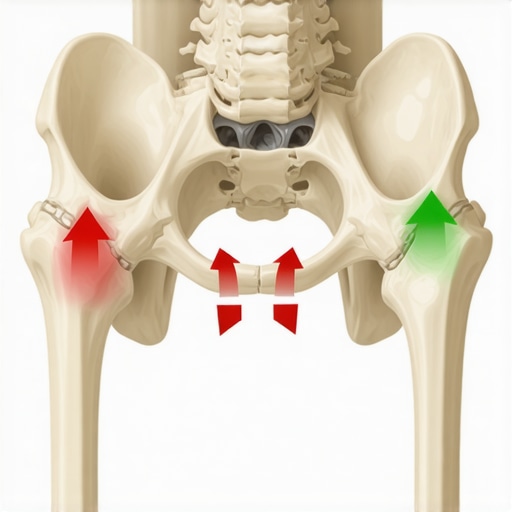
Release the Hip Flexors Before They Pull You Down
Your pelvis doesn’t just tilt on its own; it is pulled into that position by tight muscles in the front of your thighs. Think of your hip flexors like high-tension bungees. When they are tight, they yank the front of your pelvis down, which in turn forces your knees to cave inward. If you spend most of your day in a chair, you need a quick hip flexor release to counteract the shortening that happens while sitting. I have found that stretching the quads without first stabilizing the pelvis is a waste of time. You must ‘set’ the pelvis in a neutral position first, then perform your mobility work to see real changes in how your knees track. This is a core part of mobility mastery simple exercises to relieve chronic back pain and joint stress.
Stop Sucking in Your Gut
One of the most common mistakes I see people make when trying to fix their posture is bracing their midsection too hard. I’ve noticed many people try to hide their ‘duck butt’ by aggressively sucking in their stomach, but why you should stop sucking in your stomach is one of the first things I tell anyone with chronic SI joint pressure. When you suck in your stomach, you actually increase the pressure on your lower spine and prevent your diaphragm from moving properly. This creates a rigid, brittle torso that forces your hips and knees to take the brunt of every step you take. Instead of ‘sucking in,’ focus on ‘stacking.’ Stack your ribcage directly over your pelvis. When those two cylinders are aligned, your weight is distributed through your bones rather than hanging off your knee ligaments. This simple shift is a key part of posture correction secrets that transform back pain outcomes and joint health alike.For years, I believed the lie that more flexibility was the universal cure for joint pain. If a muscle felt tight, I stretched it. But here is the nuance most people miss: tightness is often a protective response from your nervous system, not a physical lack of length. When your brain senses that your spine is unstable—perhaps because you have neglected the deep core connection that stops your spine from shear stress—it sends a signal to your muscles to ‘brace’ or ‘guard.’ This is called protective tension. If you try to stretch through this guard, you aren’t fixing the problem; you’re actually stripping away your body’s last line of defense. This is precisely why stretching your psoas might actually be making your back hurt more. You are taking a muscle that is already working overtime to hold your pelvis together and forcing it to let go.
Tightness Is Often a Lie Your Nervous System Tells You
The biggest trap I see is the ’90-90′ hip stretch. It’s the darling of the fitness world right now, but if you don’t keep a neutral lumbar spine during the movement, you’re essentially using your lower back as a hinge. I’ve seen people give themselves disc issues trying to fix their hips because they ignored the 90-90 hip stretch mistake that is hurting your lumbar spine. It’s a classic example of doing the right exercise the wrong way.
Why does my mobility seem to reset to ‘zero’ every single morning?
This frustration usually stems from a lack of integration. You might spend ten minutes on a foam roller, but if you immediately go back to sitting on your wallet or crossing your legs, your nervous system reverts to its ‘safe’ (but painful) default. Research in the Journal of Bodywork and Movement Therapies suggests that without subsequent motor control training—basically teaching your brain how to use your new range of motion—the gains from stretching are temporary. You need to enhance your mobility expert tips for easier movement in 2025 by following every stretch with a stability exercise that ‘locks in’ the new range.
Your Feet Are Secretly Steering Your Pelvis
We also need to talk about the ‘ground up’ effect. You can spend all day tilting your pelvis, but if your feet are collapsing, your knees will follow. I finally realized that what your foot arch says about your chronic hip pain is often more telling than a pelvic X-ray. If your arch drops, your tibia rotates, your femur follows, and your pelvis has no choice but to tip forward to compensate. It is a domino effect that ends with your lower back taking the hit. 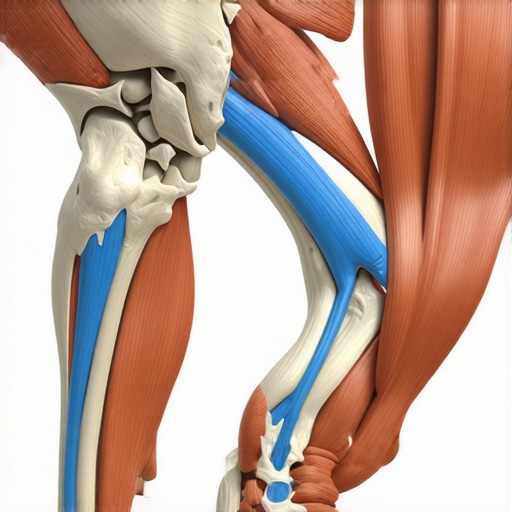 Have you ever fallen into this trap of stretching the same muscle for months without relief? Let me know in the comments.Maintenance isn’t about a once-a-week yoga class; it’s about the tools you use every hour of your workday. I keep a firm lacrosse ball under my desk at all times. By using it to roll out the fascia on the bottom of my feet throughout the afternoon, I am essentially giving my pelvis a permission slip to stay neutral. It is one of those how to use a tennis ball to release tension in your feet and back tricks that actually works because it targets the literal foundation of your posture. Then there is the workspace itself. Most people think they need a thousand-dollar ergonomic chair, but usually, they just need to stop looking down at their laps. I am a huge advocate for the 2-inch rule for your laptop stand to save your neck from strain. If your screen is too low, your mid-back will inevitably burn, no matter how many daily adjustments to alleviate back pain and improve posture you perform. According to the late Dr. Vladimir Janda, the pioneer of the ‘Upper Cross Syndrome’ model, these muscle imbalances are predictable and cumulative. If you do not break the cycle with simple equipment like a proper stand, you are fighting a losing battle against gravity.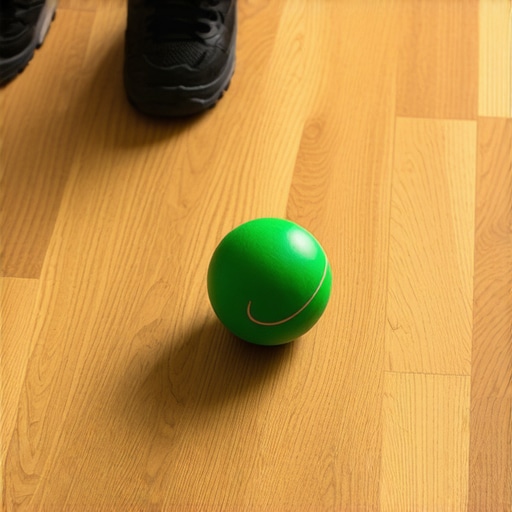
How can I ensure these posture gains actually stick over time?
To scale your results and make them permanent, you have to stop thinking about ‘fixing’ your back and start thinking about ‘managing’ your environment. In the next few years, I predict we will see a massive surge in wearable biofeedback—tiny, invisible sensors in our clothing that vibrate the second our shoulders roll forward or our pelvis tilts. Until that technology becomes mainstream, you have to be your own sensor. Every time you reach for your smartphone, perform the 10-second posture check to do every time you check your phone. If you find yourself working from a cafe or a social setting, you need to know how to sit on a bar stool without trashing your lower back. It is about being proactive rather than reactive.
Future-Proofing Your Spine with Active Recovery
Beyond the desk, I also swear by a high-density foam roller for my thoracic spine. However, I have seen too many people rolling their lower backs, which is a massive mistake. You should focus on the proper way to use a foam roller on your upper back to unlock the ribcage. When the mid-back moves, the lower back does not have to overwork. I often tell my clients that mobility is like a bank account; you have to make small deposits every day to avoid going into ‘pain bankruptcy.’ This is where master your mobility top strategies for moving without pain comes into play. It is the difference between a month of relief and a lifetime of movement. If you are serious about this, do not just guess. What your chiropractor specifically checks during a first visit can give you a roadmap of your specific structural weaknesses so you are not just rolling muscles that are already too loose. My advanced tip for you today is this: find a flat wall and perform the 30-second wall reset for hunchback posture every time you finish a video call. This small action resets your nervous system’s internal map of where your shoulders should be, preventing the slow creep of the ‘desk-slump’ before it can take hold.
The Moment I Stopped Blaming My Knees
The hard truth is that your knees are often just the victims of a “protective bracing” strategy your brain has adopted. I used to think I had weak joints, but the reality was that my nervous system was locking everything up because it felt unstable. I finally learned that the deep core connection that stops your spine from shear stress is the only thing that signals your hip flexors to let go. If you do not address that core instability, why stretching your psoas might actually be making your back hurt more becomes painfully obvious—you are removing the only thing holding your pelvis together. I also discovered that alignment is not a static pose, but a constant conversation between your feet and your brain.
My Daily Toolkit for a Pain-Free Stride
I do not leave my home or office setup to chance anymore. My essential gear includes a simple tennis ball because how to use a tennis ball to release tension in your feet and back is my secret weapon for relaxing the fascia that pulls on my shins and knees. For my workspace, I never compromise on screen height; the 2-inch rule for your laptop stand to save your neck from strain ensures I do not collapse forward and tilt my pelvis into that “duck butt” position. Finally, for total body maintenance, I always refer back to unlock better back health effective posture tips for 2025 to stay ahead of new habits.
Reclaim Your Movement Today
Your body is not broken; it is just out of tune. By implementing these daily adjustments to alleviate back pain and improve posture, you are teaching your nervous system that it is safe to move again. True mobility mastery simple exercises to relieve chronic back pain are not about being an athlete; they are about moving through your day with ease. Have you ever felt a “clicking” in your hip or knee that disappeared once you stood up straighter? Let me know in the comments below!