

I remember the first time it happened during a quiet office meeting. I stood up to grab a coffee, and my lower back let out a sound like a dry branch snapping under a hiking boot. It was visceral. It wasn’t just loud; it felt like my spine was trying to reorganize itself in real-time. I sat back down, red-faced, wondering if I was suddenly decades older than my birth certificate claimed. That moment was my wake-up call. I realized that my body was sending me a noisy, crunchy SOS signal that I had been ignoring for months while hunched over a keyboard.
Why Your Spine Sounds Like a Bowl of Rice Krispies
If you are tired of your joints announcing your presence before you even speak, you are in the right place. We are going to dive into the mechanics of that annoying ‘pop’ and look at how moving without pain is actually possible, even if you feel like a rusty gate right now. For a long time, I made the classic mistake of thinking more stretching was the only answer. I would spend twenty minutes every night aggressively yanking on my legs, but stretching your psoas might actually be making your back hurt more if you aren’t careful with your technique. I learned the hard way that stability often matters more than raw flexibility. Today, we are going to fix your approach so you can finally stand up without the sound effects.
Is all this clicking actually something to worry about?
It is the big fear, isn’t it? We worry that every pop is a disc slipping or a bone grinding away. However, most of the time, it is just physics. According to a study published by researchers at the University of Alberta, that ‘popping’ sound is frequently just the rapid formation of a gas cavity within the synovial fluid of the joint—a process known as tribonucleation. While the sound itself is usually harmless, the frequency of it often points to a deeper issue: your muscles are likely ‘falling asleep’ during your work day. When your glutes go to sleep after one hour of sitting, your lower back has to pick up the slack, leading to the misalignment that causes those clicks. We need to address why your body feels the need to reset itself every time you move. [image placeholder] Have you ever felt that weird, sharp ‘stuck’ sensation right before the click happens? It’s a frustrating cycle, but it is one we can break by changing how we handle our daily seated marathons. Understanding why your spine needs movement every 30 minutes is the first step in silencing the snap for good.
How to reboot your body after an hour of sitting
To stop the clicking, you have to stop the stagnant ‘melting’ of your posture. Think of your spine like a hinge on an old door; if it stays shut for months, it is going to creak and groan when you finally try to open it. The first thing you need to master is the physical reset. Most people wait until they are in active pain to move, but the trick is to move before the stiffness sets in. We need to move from passive sitting to active engagement.
Wake up your glutes to save your spine
Your glutes are the massive engines of your lower body, but sitting turns them into useless, squishy cushions. When they switch off, your lower back has to take the brunt of every single movement, which is usually when that ‘snap’ happens. I remember a time when I was training for a long mountain trek and ignored this—I ended up desperately researching how to fix hiker’s back after a long trail day because my glutes had completely checked out, leaving my lumbar spine to do all the heavy lifting. To fix this at your desk, try a simple glute squeeze every twenty minutes. It sends a vital signal to your nervous system that these muscles are still needed for stability. 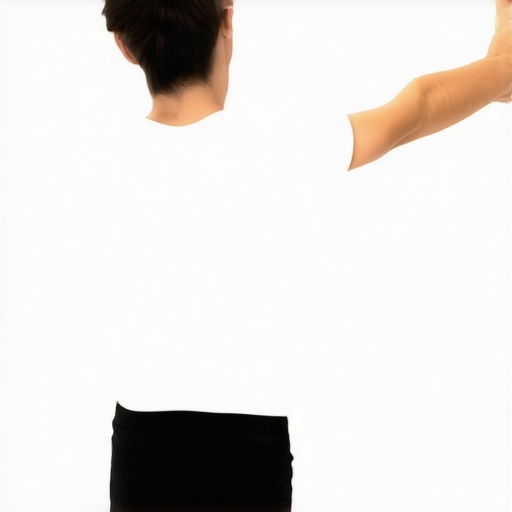
The 30-second wall slide for instant shoulder relief
If your upper back feels like it is on fire or constantly clicking when you reach for things, your chest is likely too tight and pulling your skeleton forward. The 30-second wall slide for instant shoulder relief is my non-negotiable move. You stand with your back against a wall, arms at 90 degrees, and slowly slide them up and down like you are making a snow angel. It is significantly harder than it looks if you do it right, but it forces your shoulders out of that ‘keyboard hunch’ and back into a neutral alignment.
Adjust your workstation to match your eye level
You simply cannot out-exercise a bad environment. If you are constantly looking down at a laptop, you are putting nearly 60 pounds of pressure on your cervical spine. I learned this the hard way when I realized the 2-inch rule for your laptop stand to save your neck from strain was the difference between a productive afternoon and a massive tension headache. If you are on a budget, how to set up your home office on a budget for your back involves using old books or sturdy boxes to get that screen at eye level so your neck is not doing a swan dive all day.
Reinforce stability with the Bird Dog
Stability is the glue that holds your progress together. While stretching feels good in the moment, the bird dog move that every back pain sufferer needs is what actually prevents the clicking from returning. It teaches your core to stabilize your spine while your limbs are in motion—precisely the skill you need to stop those random pops when you reach for a coffee mug or bend to tie your shoes. By integrating these daily adjustments to alleviate back pain and improve posture, you stop being a passenger in your own body’s decline and start taking control of your mobility.Most of us were raised with the idea that ‘good posture’ means shoulders back, chest out, and sitting as straight as a board. However, this is one of the biggest myths in the world of mobility. In my experience, trying to maintain a rigid, static posture is actually a recipe for chronic tension. Your body isn’t meant to be a statue; it’s a dynamic system. When you force yourself into a ‘perfect’ upright position for hours, you’re just trading one type of strain for another. Real posture correction secrets that transform back pain outcomes focus on movement variability, not staying still. Research published in the Journal of Bodywork and Movement Therapies suggests that the inability to vary your posture—rather than the ‘bad’ posture itself—is what leads to discomfort. If you aren’t moving, you’re stagnating.
Stop trying to sit like a statue
I see people all the time who are so focused on ‘sitting right’ that they end up with more neck tension than when they were slouching. This is because they are over-engaging their stabilizer muscles, leading to fatigue and that familiar burning sensation. Instead of seeking a perfect angle, you should focus on expert tips for easier movement in 2025 that prioritize shifting your weight frequently. If you feel ‘stuck,’ it’s likely because you’ve stayed in one position for too long, even if that position looked ‘correct’ in a textbook. [image placeholder]
Why does my back still hurt despite my expensive ergonomic chair?
This is the advanced question I get most often. You spent $1,200 on a chair that promises to save your spine, yet you still feel like you need a massage every Friday. The ‘trap’ here is that a high-end chair can actually make you lazy. It supports you so well that your deep stabilizers completely clock out for the day. This is often why your core strength isn’t stopping your back aches—you’re relying on the chair’s skeleton instead of your own. You need to mix in some active sitting or, better yet, learn the correct way to use a standing desk without hurting your feet to keep the system engaged.
The hidden danger of “sucking it in”
Another common mistake is the habit of sucking in your stomach to look thinner or ‘engage the core.’ I used to do this constantly until I realized why you should stop sucking in your stomach to look thinner for the sake of your spine. When you chronically pull your belly in, you disrupt your diaphragm’s ability to move. This limits your intra-abdominal pressure, which is the very thing that stabilizes your lower back from the inside out. It’s a classic ‘oops’ factor: you think you’re helping your back, but you’re actually making it more vulnerable to injury. You need to learn the secret to strengthening your deep core without sit-ups, which involves proper breathing patterns rather than just constant tension. If you’ve ever felt that weird ‘wobble’ after an appointment, it’s often because your body is finally letting go of these artificial bracing patterns, and it’s why you feel wobbly after your first adjustment. Have you ever fallen into the trap of trying to maintain a ‘perfect’ posture all day? Let me know in the comments!
I’ve spent thousands of dollars on ergonomic gadgets over the years, but the most effective tool in my kit is currently sitting on my floor and cost me exactly three dollars. I’m talking about a standard yellow tennis ball. It’s my go-to because it mimics the pinpoint pressure of a manual therapist without the $150 hourly rate. Learning how to use a tennis ball to release tension in your feet and back changed everything for me. I don’t use it for a full-body massage; I use it specifically to ‘tack and stretch’ the fascia around my shoulder blades and glutes when they start to feel like concrete. This isn’t just about feeling good; it’s about maintaining the space between your vertebrae that gravity tries to steal every single day.
The $3 secret to keeping your joints lubricated
The reason I swear by this low-tech approach is that it forces you to become an expert on your own anatomy. When you find that one spot—the one that makes your eyes water—you’re identifying a restriction that no expensive chair can fix for you. If you combine this with the morning movement routine that lubricates your joints, you’re creating a resilient system that can handle the occasional 10-hour flight or marathon coding session. Dr. Stuart McGill, a world-renowned expert in spine biomechanics at the University of Waterloo, points out in his research that the ‘spine is a beautiful machine,’ but it requires ‘clean’ movement patterns rather than just brute strength. This means your goal isn’t just to be strong; it’s to move without friction.

How do I maintain my spinal health over time?
Consistency usually fails because people try to do too much. I tell my clients to stop thinking about a ‘one-hour workout’ and start thinking about ‘micro-adjustments.’ If you can adjust your routine daily spinal alignments for lasting relief by just 1%, the cumulative effect is massive. I personally use a digital ‘break reminder’ (like the Time Out app for Mac) that literally locks my screen for 20 seconds every 20 minutes. It’s annoying, and that’s why it works. It forces me to stand up, shake out my limbs, and reset my vision. These small windows are when you should implement top mobility strategies for active living, like a quick standing hip flexor stretch or a few deep diaphragmatic breaths.
What the future of posture looks like
I predict we are moving away from ‘dumb’ ergonomic furniture and toward smart biofeedback. Within the next few years, I expect to see wearable sensors integrated directly into our clothing that provide haptic nudges when our deep stabilizers (like the multifidus) stop firing. We won’t need to remind ourselves to stand up; our shirts will tell us. Until then, we have to rely on the feedback our bodies give us. If you’re feeling that familiar ache right now, I want you to try one thing: take that tennis ball, place it right in the meaty part of your glute while standing against a wall, and breathe into it for 60 seconds. You might be surprised at how much ‘stuck’ energy you’re carrying around. It’s a small, advanced tip that offers immediate proof that your body wants to heal if you just give it the right signal.
The 3 Mistakes I Made Before My Spine Finally Shut Up
Looking back at years of stiff mornings and noisy joints, I realize I was fighting the wrong battles. First, I treated every ‘pop’ as a sign of injury rather than a signal for movement. I lived in fear of my own skeleton. Second, I obsessed over ‘sitting straight’ instead of focusing on movement variability. The biggest lightbulb moment was realizing that a quiet back isn’t always a healthy back; sometimes, joints stop clicking simply because they’ve become too restricted to move at all. You want your joints to be free, not frozen. Finally, I stopped chasing long stretching sessions and started prioritizing simple exercises to relieve chronic back pain that I could do right at my desk.
The Small Toolkit That Keeps My Lower Back Happy
You don’t need a gym full of equipment to maintain a resilient spine. My personal favorites are the ones I can take anywhere. I always recommend checking out professional mobility manuals like ‘Becoming a Supple Leopard’—it is essentially the user manual we never got for our bodies. For daily maintenance, I use a high-density foam roller [image placeholder] but you have to learn the proper way to use a foam roller on your upper back so you don’t accidentally cause more irritation. I also swear by a digital interval timer to enforce the 30-minute movement rule. These tools help you implement effective posture tips for 2025 without needing a PhD in kinesiology.
Stop Waiting for the Perfect Time to Move
Your body is incredibly forgiving if you start giving it what it needs today. You don’t need to be an athlete to enjoy a life without constant ‘cracking’ and ‘snapping.’ By making simple adjustments to relieve back pain, you are investing in a future where you can stand up from your chair and feel light, agile, and ready for whatever comes next. Movement is the only real medicine for a body built for action. Don’t let another hour pass in stagnation. Which part of your body ‘clicks’ the most during your workday? Let me know in the comments, and let’s figure out a movement reset that works for you!