
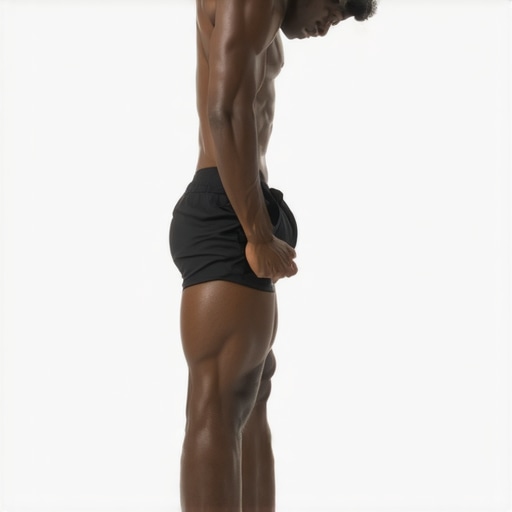
I spent three long, grueling years convinced that my hamstrings were simply shorter than everyone else’s. Every single morning, I would religiously drape myself over my legs, reaching for my toes until my face turned bright purple and my eyes started to water. I would gain maybe an inch or two of range, feel like a flexible yoga master for about ten minutes, and then, the moment I walked to the kitchen to grab my coffee, my legs would snap right back into that familiar, stiff-as-a-board state. It was an exhausting cycle of futility that left me more frustrated than a cat in a bathtub. I assumed I just had bad genetics, or perhaps I wasn’t trying hard enough, so I pushed even further into the pain. I was wrong. I was so incredibly wrong.
Your Body Is Keeping Those Muscles Tight on Purpose
When I finally had my lightbulb moment, it didn’t happen in a gym or a yoga studio; it happened when I realized I was trying to solve the wrong problem entirely. I was treating a symptom, not the underlying cause. See, most of us think that tightness always equals a short muscle that needs to be yanked on, but often, it is actually your nervous system pulling the emergency brake. If your pelvis is unstable or your core is failing you, your brain will force your hamstrings to lock up to keep your spine from taking the hit. I had to learn how to tell if your hip pain is actually a lower back issue before I could stop the endless, useless tug-of-war with my legs. According to research published in the *Journal of Physical Therapy Science*, hamstring tightness is frequently a protective compensatory mechanism for pelvic instability rather than a lack of physical muscle length. By aggressively stretching, I was actually fighting my body’s own defense system. This realization changed everything for me. I stopped the mindless toe-touches and started focusing on mobility mastery and simple exercises that addressed my pelvic alignment. I discovered that why your glutes go to sleep after one hour of sitting was a much bigger factor in my leg tension than the length of my hamstrings themselves.
Is All This Daily Stretching Actually Damaging Your Progress?
That is the question I get asked most often when I tell people to put down the yoga strap. It sounds counterintuitive, right? But if you have been at this for months and still feel like a rusty gate, you are likely ignoring the fact that your tight psoas muscle might be the real culprit pulling your pelvis out of whack. I made the classic mistake of thinking more intensity was the answer. I used heavy straps and even had a friend push on my back during stretches—nearly causing a serious disc issue in the process because I didn’t understand why your spine needs movement every 30 minutes instead of just one intense, stressful stretch session. Today, we are going to stop the madness and look at why you need to adjust your routine to focus on stability and pelvic position rather than just pulling on your tendons like they are stubborn rubber bands. Does this sound like your morning routine? Have you been doing the same toe-touch for a decade with absolutely zero lasting results? Tell me in the comments, because I promise you, there is a better way to find that relief without the grunt work.
Fix the Foundation Instead of Pulling the String
To fix the ‘fake’ tightness in your legs, you have to look at your pelvis like a bucket of water. If that bucket is tipping forward—a position known as anterior pelvic tilt—your hamstrings are already stretched to their absolute limit just to hold your skeleton together. When you lean over to touch your toes, you aren’t ‘stretching’ a short muscle; you are trying to over-lengthen a muscle that is already screaming for help. I remember trying a 30-day deep squat challenge back in 2019. I thought I was being a mobility hero, but because my pelvis was stuck in a massive tilt, my hamstrings felt like they were going to snap every time I hit the bottom of the movement. Instead of getting more flexible, I ended up with a sharp pain in my patellar tendon because I didn’t realize why your knees hurt when you have a pelvic tilt. I spent a week hobbling around because I prioritized the ‘feel’ of a stretch over the reality of my bone structure.
Turn Off the Nervous System Panic Signal
The first step to real relief is convincing your brain that it is safe to let go. You do this by creating stability elsewhere. If your core is ‘off,’ your hamstrings stay ‘on.’ Instead of reaching for your toes, try the glute squeeze hack for pain-free standing. By engaging your glutes, you manually pull your pelvis back into a neutral ‘level’ position. This instantly slackens the hamstring muscle without you having to pull on it at all. It is like taking the tension out of a bowstring by moving the ends of the bow closer together. I used to do this while waiting for my coffee to brew, and within a week, that ‘gnawing’ tightness in the back of my thighs simply evaporated.
The One Move That Changes Everything
If you want a concrete exercise, stop doing standard hamstring stretches and start doing the bird-dog move that every back pain sufferer needs. This exercise forces your cross-body stability to kick in, which signals to the nervous system that your spine is supported. When the brain feels supported, it stops using the hamstrings as emergency guy-wires. You should also learn how to release your hip flexors without stretching them, because often the front of your hip is so tight it is physically winching your pelvis forward.
Use Your Breath to Unlock Your Legs
Most people hold their breath when they feel tight, which is the worst thing you can do. Breath-holding triggers the fight-or-flight response, which only increases muscle tone and stiffness. Instead, you need to learn why your breath is the key to releasing spine tension. By taking deep, diaphragmatic breaths, you are effectively massaging your spine from the inside out and calming the nerves that control your leg muscles. Combine this with the secret to strengthening your deep core without sit-ups, and you will find that your hamstrings naturally lengthen because they are no longer doing the job of your abdominal muscles. I stopped my aggressive stretching routine entirely and replaced it with three minutes of focused breathing and pelvic resets. The result? I reached my toes for the first time in my adult life without even trying.
Why Sitting Up Straight Is Actually Exhausting Your Back
It’s easy to get caught up in the idea that if we just find the ‘perfect’ way to sit or stand, our pain will vanish forever. But here is where most people get it wrong: posture isn’t a static destination; it’s a fluid conversation between your nervous system and the environment. Everyone tells you to pull your shoulders back and tuck your chin, but in my experience, forcing a ‘military’ posture is one of the fastest ways to develop chronic fatigue and mid-back spasms. You aren’t a statue, and trying to act like one only creates new layers of tension. This is why posture correction secrets that transform back pain outcomes usually involve learning how to move through different positions rather than freezing in one. When you focus too hard on ‘proper’ alignment, you often end up bracing your core so tightly that you restrict your natural breath, which actually increases the mechanical stress on your lumbar discs.
The Painful Trap of Trying to Stretch Your IT Band
The most common ‘oops’ factor I see in the gym is the relentless pursuit of foam rolling the IT band. I’ve seen people bruise their thighs trying to ‘loosen’ that thick band of tissue on the side of their leg. Here is the hidden nuance: your IT band isn’t a muscle—it’s a massive, dense piece of connective tissue. It doesn’t ‘stretch’ like a rubber band. In fact, the truth about foam rolling your IT band is that you are often just compressing the sensitive nerves and bursae underneath it, making the inflammation worse. If that area feels tight, it’s usually because your glutes are weak or your pelvis is misaligned, not because the band itself is too short. You cannot roll away a structural stability issue.
Wait, Is There Actually Such a Thing as ‘Perfect’ Posture?
You’ve likely seen the diagrams of the ‘ideal’ ergonomic setup, but a growing body of evidence, including studies published in the *British Journal of Sports Medicine*, indicates that there is no single ‘correct’ posture that prevents pain. Instead, the real culprit is ‘postural stasis’—staying in any one position for too long. This is why your spine needs movement every 30 minutes regardless of how ‘perfectly’ you are sitting. Even if you use posture correctors and braces, you are still fighting against the biological necessity for variety. When you stop obsessing over a ‘straight’ spine and start focusing on strategies for moving without pain, you give your joints the blood flow they actually crave.
Stop Chasing the Symptom and Start Challenging the Movement
Most mobility enthusiasts make the mistake of thinking flexibility is about the muscle, when it’s actually about the nervous system’s tolerance. If your brain doesn’t trust your strength in a certain range of motion, it will create ‘stiffness’ as a safety net. I spent years trying to enhance my mobility with passive stretches, but the results only stuck when I began using active resistance at my end-ranges. By implementing simple adjustments to relieve back pain that involve movement variety rather than static holds, you teach your brain that these positions are safe. Have you ever fallen into this trap of trying to force a ‘perfect’ posture only to end up in more pain? Let me know in the comments. We’ve all been there, thinking we were doing the right thing while our bodies were silently screaming for a break.Once I realized that my body was using tightness as a protective shield, the game changed from ‘stretching harder’ to ‘managing smarter.’ I had to build a toolkit that worked in the real world, not just in a pristine yoga studio. I stopped buying generic equipment and started being surgical about what I brought into my space. For instance, I completely re-evaluated my seating. I discovered the truth about lumbar support rolls and lower back spasms after realizeing that most off-the-shelf cushions were actually pushing my vertebrae into an unnatural, stressed position. I switched to a thin, firm roll that I only use when I feel my deep core muscles fatiguing, rather than relying on it as a permanent crutch. This subtle shift taught my body how to support itself again. I even took this logic to my car, learning how to adjust your rearview mirror to improve your posture. By setting the mirror slightly higher than my ‘slumped’ eye level, I created a visual feedback loop that forces me to sit tall every time I check traffic. It is a genius, low-tech way to unlock better back health without having to constantly remind myself to ‘stand up straight.’
How do I make these mobility gains last for years?
The secret isn’t intensity; it’s the integration of tiny, habitual wins. I stopped looking for the ‘one hour workout’ and started looking for daily adjustments to alleviate back pain and improve posture that I could do while my morning coffee was brewing. I committed to the morning movement routine that lubricates your joints because I noticed that if I missed even two days, my nervous system would start to pull those emergency brakes again. In the world of spine biomechanics, experts like Dr. Stuart McGill emphasize that the spine is a ‘load-bearing pillar’ that thrives on stability rather than just endless flexibility. I predict that over the next few years, we will see a massive trend toward ‘smart’ furniture and AI-driven wearables that monitor our spinal shear forces in real-time, but for now, you have to be your own advocate. You can start today by mastering top strategies for moving without pain that focus on how you move throughout the entire day. If you want a quick win, I highly recommend trying the 30-second wall slide for instant shoulder relief right now. It is the single most effective way to reset your upper body after a long day at the keyboard. What is one tool or habit that has actually made a difference for your back?
Lessons from the Years I Spent Fighting My Own Body
I wasted thousands of hours thinking of my body as a machine with rusty parts that needed to be forced into submission. What I eventually realized was that my nervous system was simply trying to protect me. Here are the core truths that changed my perspective forever: First, stability is the precursor to flexibility. Your brain will never allow you to be flexible in a range of motion it cannot control. Strengthening your core is often the fastest way to “release” your legs. Second, consistency trumps intensity every single time. A thirty-second movement break every hour is worth more than a two-hour yoga session on Sundays. Finally, you must learn to listen to the whispers so you do not have to hear the screams. That nagging tightness is a whisper from your pelvis; if you ignore it, it will eventually become a scream in your lower back.
My Go-To Tools for a Resilient Spine
You do not need a gym full of gadgets to fix your posture. I have narrowed my daily kit down to a few things that actually provide daily adjustments to alleviate back pain and improve posture. A firm lumbar roll is essential for retraining your spine natural curve while you work. I also rely heavily on the morning movement routine that lubricates your joints to prime my body before the sitting begins. These are not just exercises—they are signals to your brain that it is safe to move without the emergency brake on. Using these tools allows you to enhance your mobility without the frustration of temporary fixes.
#IMAGE_PLACEHOLDER_E#
You Are More Than Just Your Tight Muscles
It is incredibly easy to feel defeated when your body does not respond the way you want it to. But remember, your tightness is a sign that your body is working for you, not against you. It is protecting your spine and your nerves with the only tools it has. By learning how to unlock better back health through stability and mindful movement, you are finally speaking the same language as your nervous system. Don’t be afraid to slow down and focus on the quality of your movement rather than the depth of your reach. Have you ever noticed that your tightness disappears for a few minutes after you do a core workout? Let me know in the comments below!