

I spent way too many years leaning against a doorframe, digging a tennis ball into that burning spot between my shoulder blade and my spine, thinking I was finally winning the war. I thought I was fixing the problem by bruising my muscles into submission, but the tension always came back with a vengeance the next morning. It wasn’t until I had a lightbulb moment while looking at my reflection in a store window—shoulders practically touching my earlobes—that I realized I was treating the symptom, not the cause. The mistake I made was simple: I was shouting at a smoke detector instead of putting out the fire. Today, I want to show you exactly why your upper traps are acting like overstressed bodyguards and how we can finally give them the day off they deserve. [image_placeholder]
Your Traps Are Only Doing Their Job
I used to think my traps were just naturally ‘tight’ and ‘angry.’ I spent a fortune on gadgets, but even [the 30-second wall slide for instant shoulder relief](https://chiromasteryz.com/the-30-second-wall-slide-for-instant-shoulder-relief-2) only gave me an hour of peace. The reality is that your traps are often the victims, not the villains. When we spend our days hunched over, our [chest muscles are pulling your shoulders forward](https://chiromasteryz.com/why-your-chest-muscles-are-pulling-your-shoulders-forward), leaving the traps to pull back with everything they have just to keep us upright. It is a constant, exhausting tug-of-war. According to research published in the Journal of Physical Therapy Science, a forward head posture can increase the effective weight of your head on your spine by up to 60 pounds. Your traps are essentially trying to hold up a heavy bowling ball that is falling forward. Have you ever noticed that your shoulders seem to have a mind of their own the second you start typing?
Is this just another temporary fix that won’t last?
You might be skeptical because you have tried every foam roller and massage gun on the market. I understand that frustration deeply. But the reason those tools fail is that they don’t address the environment. If you don’t understand [why your laptop screen height is killing your upper back](https://chiromasteryz.com/why-your-laptop-screen-height-is-killing-your-upper-back), you are just pouring water into a leaky bucket. We have to change the mechanics. By integrating moves like [the wall angel move that reverses a day of hunching over a phone](https://chiromasteryz.com/the-wall-angel-move-that-reverses-a-day-of-hunching-over-a-phone), we start to address the structural imbalances. We are going to move beyond just ‘rubbing the sore spot’ and actually look at the postural habits that keep your muscles in a state of high alert. It is time to stop the cycle of constant pain and start moving with ease again.
Put Your Shoulder Blades Back Where They Belong
Imagine your shoulder blades are like the base of a crane. If the base is wobbly or tilted, the cables—your traps—have to work twice as hard to lift the load. Most of us walk around with our cranes tilted forward. To fix this, stop trying to pull your shoulders back with force. Instead, think about tucking your shoulder blades into your back pockets. This subtle downward rotation takes the slack out of the overstretched muscles in your mid-back and tells the upper traps they can finally let go. I remember the first time I tried this during a three-hour writing session; I realized why your shoulders always hike up to your ears when you type wasn’t just a habit, it was a mechanical failure. By keeping the blades tucked, the burning sensation under my skull actually started to fade within minutes.
Ditch the Laptop Screen and Save Your Neck
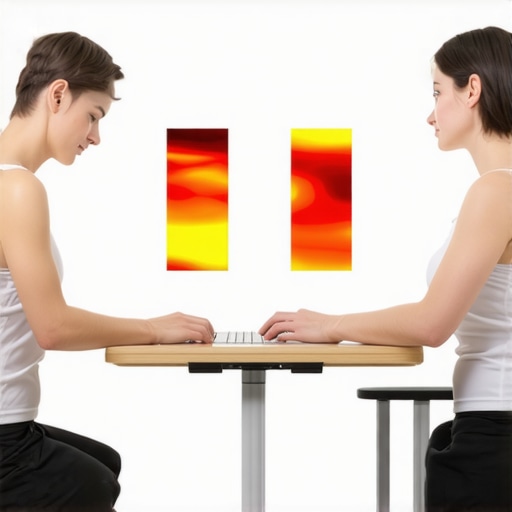
If you are working directly on a laptop, you are essentially asking for a neck spasm. Your eyes lead your posture. If your gaze is directed downward, your head follows, and your traps engage to prevent your head from hitting the desk. I once thought I was being clever by propping my laptop up on a stack of old encyclopedias, but because I didn’t have an external keyboard, I ended up reaching upward at a 45-degree angle. By the end of the day, my wrists were numb and my traps felt like hot guitar strings. You must separate your screen from your keyboard. When you how to set-up your home office on a budget for your back, the goal is to keep your elbows at a 90-degree angle while your eyes look straight ahead. This is the simple change to your keyboard that stops shoulder pain that most people ignore because it requires a small investment in a separate keyboard and mouse.
Use Your Belly to Turn Off the Stress Response
Your traps are secondary respiratory muscles. This means when you take shallow chest breaths, your traps literally lift your ribcage up with every single inhale. If you breathe 20,000 times a day, that is 20,000 mini-shrugs. No wonder they are tired! You have to retrain your diaphragm to do the heavy lifting. When you learn how to breathe using your belly to lower spinal tension, you stop the mechanical shrugging motion. It is like turning off a motor that has been idling for a decade. I have found that even the 30-second move for people who get headaches while working works significantly better if you pair it with deep, expansive belly breaths that widen the lower ribs rather than lifting the collarbones.
Balance Your Weight to Prevent One-Sided Tension
We often lean into our dominant side without realizing it. For years, I leaned heavily on my right elbow while mousing, which spiked my right trap into a permanent knot. I had to learn how to distribute my weight evenly through my sit-bones. If you use a standing desk, you aren’t safe either; many people hang on one hip, which creates a chain reaction of tension up to the neck. Learning the correct way to use a standing desk without hurting your feet is just as much about your shoulders as it is about your ankles. Keep your weight centered, and your traps won’t feel the need to stabilize a leaning tower.
Stop Fighting Your Spine with Rigid Posture
I see it all the time: someone decides to “fix” their back and suddenly they are sitting as straight as a board, barely breathing. This is what I call the ‘statue trap.’ We have been told that posture is a static position to be held at all costs, but that is a myth. Your spine is designed for movement, not for being a structural pillar that never shifts. In my experience, those who try to maintain a perfect 90-degree angle all day often end up with more tension than those who slouch occasionally. This is because sustained static loading, even in an ‘optimal’ position, reduces blood flow to the muscles. According to a study published in the Journal of Biomechanics, static posture leads to increased disc pressure and decreased nutrient exchange compared to dynamic sitting. If you want posture correction secrets that transform back pain outcomes, you have to realize that your best posture is your next posture.

The Common Mistake of Forcing Your Shoulders Back
There is a massive ‘oops’ factor in the way we try to fix rounded shoulders. Most people respond to a hunch by aggressively pulling their shoulder blades together. This actually creates a new problem: it flares your ribcage and puts your lower back into hyper-extension. You aren’t fixing your alignment; you are just shifting the stress from your upper traps to your lumbar spine. I spent years doing this, wondering why my mid-back felt like it was in a vice. I had to learn the truth about posture correctors and braces—they often just teach your muscles to be lazy or force you into these exaggerated, harmful positions. Instead of pulling back, think about growing ‘tall’ through the crown of your head. It is a subtle shift that aligns the vertebrae without muscular force.
Does more core strength always equal less back pain?
This is the question I get from the gym rats who are frustrated that their deadlift PRs are not stopping their morning stiffness. It is a sophisticated trap to believe that a strong core is a protective shield. If your ‘strength’ is just surface-level rectus abdominis (the six-pack), you might actually be increasing spinal compression. True stability comes from the deep stabilizers, not just the muscles you can see in the mirror. I often have to explain why your core strength isn’t stopping your back aches to people who are doing 500 crunches but cannot stabilize their pelvis during a simple walk. We also have to distinguish the difference between muscle soreness and a misaligned vertebra; you cannot out-train a structural issue. Have you ever fallen into this trap of trying to ‘strength-train’ your way out of a pain that actually needed a mobility shift? Let me know in the comments!
Stop Spending Money on Gadgets That Mask the Problem
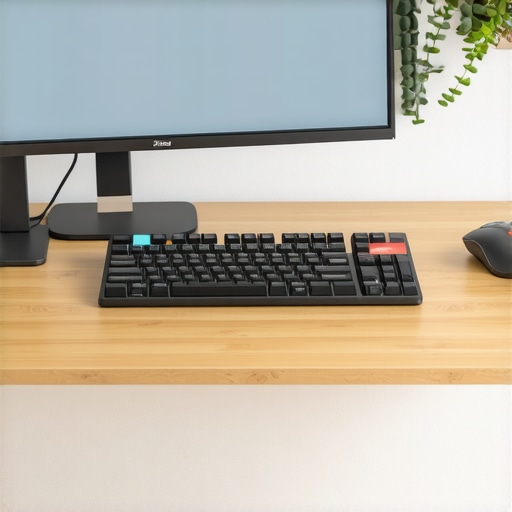
I have a closet full of foam rollers and expensive ‘posture shirts’ that promised to fix my life. Most of them were a waste because they tried to do the work for my muscles instead of teaching them how to function. If you want to move better, you need tools that facilitate movement, not ones that restrict it. For me, the game-changer was switching to a split mechanical keyboard. If you are looking for the simple change to your keyboard that stops shoulder pain, this is it. It allows your chest to stay open naturally rather than forcing your hands into a narrow, cramped position. When you combine this with how to use a footrest to save your lower back at work, you create a neutral environment where your spine can actually relax. According to a study in the Journal of Clinical Biomechanics, even a minor 10-degree tilt in your monitor or workspace layout can increase cervical muscle strain by up to 15%. Authority comes from these small, technical tweaks, not from a fancy chair that claims to be ‘NASA-inspired.’
Your Workspace Needs to Breathe
I used to think a standing desk was the ultimate cure, but I quickly realized that standing still is just as bad as sitting still. The real secret is ‘dynamic workstations.’ I now use a small balance board under my desk. It keeps my ankles and hips in constant, micro-movements, which prevents the joints from locking up. This is a crucial part of how I enhance your mobility expert tips for easier movement in 2025. Looking forward, I predict we will see smart desks that use subtle vibrations or height shifts of just half an inch every twenty minutes to force our bodies out of static patterns without us even noticing. Until then, you have to be your own advocate. I highly recommend setting a ‘movement alarm.’ Use the 3-minute desk stretch that targets your psoas every time that timer goes off. It is the only way to counteract the thousands of hours we spend in a flexed position.
How do I keep my spine healthy for the long haul?
Maintenance isn’t a one-time event; it is a rhythm. Think of it like brushing your teeth. You don’t just brush once and expect no cavities for life. You need daily adjustments to alleviate back pain and improve posture that become second nature. I personally spend the first five minutes of every morning on the floor. No phone, no coffee yet—just movement. I focus on master your mobility top strategies for moving without pain by gently rotating my spine and waking up my glutes. This ‘pre-flight check’ tells my nervous system that it’s safe to move. If I feel a ‘catch’ in my mid-back, I don’t ignore it. I address it immediately with how to fix a stuck feeling in your mid-back techniques before I even sit down to start my workday. Consistency beats intensity every single time when it comes to spinal health. I want you to pick one tool—maybe it’s a footrest or a separate mouse—and implement it today. Don’t wait until you’re in a full-blown spasm to care about your ergonomics.
The Painful Lie I Believed About My Upper Traps
For years, I thought I just needed to stretch my traps harder to stop the burning. The hardest lesson I learned was that stretching an already over-extended muscle is like pulling on both ends of a frayed rope. Instead of relief, I was creating more instability. Realizing that my posture was a dynamic conversation rather than a rigid position changed everything. I stopped focusing on “holding still” and started focusing on adjust your routine daily spinal alignments for lasting relief. Another lightbulb moment? My chronic back pain was actually a signal that my body didn’t trust my movement patterns. When I prioritized mobility mastery simple exercises to relieve chronic back pain, the tension finally started to melt away without a single massage gun session.
What I Keep in My Daily Spinal Health Kit
You do not need a thousand-dollar chair to fix your life, but you do need tools that respect your anatomy. I personally swear by a split mechanical keyboard; it is the single most effective way to unlock better back health effective posture tips for 2025 because it allows your chest to stay open naturally. I also keep a simple tennis ball nearby—not to crush my traps, but to roll out the arches of my feet, which surprisingly releases tension all the way up to the neck. Finally, I never start my workday without the morning movement routine that lubricates your joints. These are not just gadgets; they are facilitators for a body that wants to move well.
Your New Relationship with Gravity Starts Now
Taking control of your physical well-being does not happen overnight, but the moment you stop fighting your own skeleton is the moment you start winning. You deserve to work and move without that nagging weight on your shoulders. By making these small adjustments to your environment and your mindset, you are building a foundation for a lifetime of healthy mobility. Don’t wait for the next flare-up to take action; start small and stay consistent. Your spine will thank you for years to come.
Have you ever noticed your shoulders creeping up to your ears during a stressful deadline? Let me know in the comments below!