
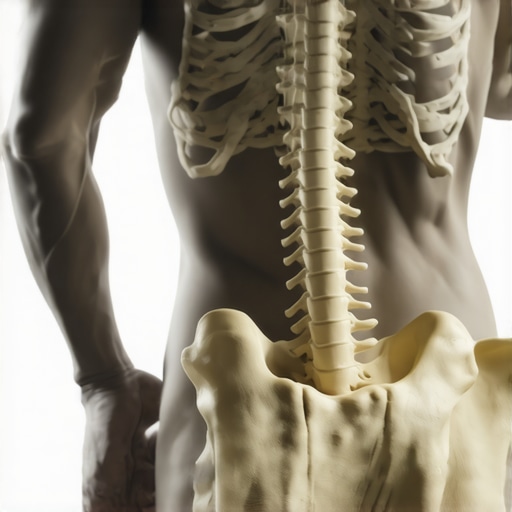
I remember waking up three years ago, barely able to swing my left leg out of bed without a sharp, biting sensation in my groin. I was absolutely certain I had torn something in my hip socket during a weekend hike. I spent months—and way too much money—on fancy massage tools and ‘hip-opening’ yoga classes, thinking I just needed to stretch it out. But here is the kicker: the more I stretched, the worse it felt. It was a classic ‘barking up the wrong tree’ moment that cost me half a year of mobility. It turns out, my hip was perfectly fine; it was just a messenger for a screaming lower back. If you are currently rotating your leg in circles trying to find relief that never comes, you might be in the same boat I was. Today, I am going to help you stop the guesswork and figure out if your lumbar spine is playing tricks on your hip joint. [image_placeholder]
Stop Stretching Your Hips and Look at Your Spine Instead
I made a massive mistake early on by assuming that where the pain is located must be where the problem lives. If it hurts in the hip, it must be the hip, right? Well, not exactly. Your body is a master of redirection. In many cases, issues in the L4 or L5 vertebrae send pain signals straight to the side of the hip or down into the glute. When I finally stopped obsessing over the truth about foam rolling your IT band and started focusing on my spinal alignment, the ‘hip’ pain vanished almost overnight. It is a concept called referred pain. According to a study published in the Journal of Orthopaedic & Sports Physical Therapy, nearly 40% of patients who complain of hip pain actually have a primary source in their lumbar spine. Have you ever spent weeks treating one body part only to find the problem was somewhere else entirely?
Is a Professional Diagnosis Really Necessary for Simple Hip Aches?
You might be thinking that a little ache isn’t worth a trip to the clinic, but waiting is exactly how a minor annoyance turns into a chronic limitation. I thought I could out-stretch my way through the discomfort, but I was actually aggravating a disc issue. A professional can help you distinguish between a local joint problem and a neurological one, especially when you need to know how to spot the early signs of a pinched nerve before it gets serious.
Why Your Glutes Go to Sleep While Your Back Does the Heavy Lifting
One of the biggest red flags that your hip pain is actually a back issue is ‘dead glute syndrome.’ When the nerves in your lower back are compressed, they stop sending strong signals to your gluteal muscles. You might notice why your glutes go to sleep after one hour of sitting, which then forces your hip flexors and back to work twice as hard to keep you upright. This creates a cycle of tightness that feels like a hip injury but is actually a lack of support from the rear. To combat this, I started incorporating a morning movement routine that lubricates your joints, which helped wake up those dormant muscles and take the pressure off my spine. If you feel like your hip is ‘locking up’ after a short walk, the culprit is likely your lower back failing to stabilize your pelvis properly.
Test Your Spine Before You Blame Your Joint
I spent months thinking my hip joint was decaying, but the real test was much simpler than an MRI. I sat on the edge of my kitchen table, rounded my shoulders, and tucked my chin to my chest. When I straightened my ‘bad’ leg, a sharp zing traveled from my glute to my calf. That was the moment I realized my hip wasn’t the problem—my nerves were being pinched by a misaligned lumbar spine. If you feel similar sensations, you need to know how to tell if your leg numbness is serious before you continue aggressive hip stretches. This simple ‘slump’ position creates tension along the neural pathway; if your hip pain intensifies while your chin is tucked, you are likely dealing with a back issue. 
Stop Cramming Your Wallet in Your Back Pocket
It sounds like a joke, but my physical therapist pointed out that my thick leather wallet was acting like a wedge under one side of my pelvis for eight hours a day. This creates a functional scoliosis that makes one hip feel ‘stuck.’ I had to learn why your wallet in your back pocket is ruining your spine the hard way—through a month of persistent sciatica. Now, I move everything to my front pockets. If you sit for long periods, this tiny shift can immediately reduce the ‘pinch’ you feel when you stand up.
Reset Your Pelvis With a 30-Second Squeeze
When your back is the culprit, the muscles surrounding the hip go into a protective spasm. Instead of stretching the life out of them, you need to trick the nervous system into relaxing. I started using a simple glute squeeze whenever I was standing at the counter. By engaging the posterior chain, you force the hip flexors to let go. This glute squeeze hack for pain-free standing at the sink was a game-changer for my morning routine. It stabilizes the sacroiliac joint, which often mimics hip bursitis.
Breathe Into Your Lumbar to Create Space
Most of us are chest breathers, which keeps our spine in a state of high alert. When I learned how to breathe into your lower back to release tension, I felt my hips physically drop away from my ribcage. Imagine your lower back expanding like a balloon with every inhale. This internal pressure creates ‘decompression’ from the inside out.
Build Stability Without the Painful Crunches
I used to think ‘core strength’ meant doing 100 situps, but that just crushed my lumbar discs further and made my hips feel tighter. You have to stop the traditional abdominal work because why your lower back aches after doing crunches is usually due to excessive spinal flexion. Instead, I switched to the Bird Dog. It is the bird dog move that every back pain sufferer needs because it teaches your spine to stay neutral while your limbs move—exactly what happens when you walk or run.
Release Your Hip Flexors Without a Single Stretch
It sounds counterintuitive, but if your hip flexors are tight because they are trying to protect your back, stretching them will only make them tighten more. I found that how to release your hip flexors without stretching them involves using ‘isometrics’ to reset the muscle’s resting length. This provides long-term relief that a standard lunge stretch never could.I used to think that ‘good posture’ was a fixed destination, like a military salute you had to maintain all day. But here is the nuance most experts forget to tell you: the best posture is actually your next posture. Research published in the British Journal of Sports Medicine suggests that there is no evidence that one specific ‘ideal’ posture prevents back pain better than others. In fact, forcing yourself into a rigid upright position can create more tension in your paraspinal muscles than just relaxing. Instead of trying to be a statue, you should focus on why your spine needs movement every 30 minutes to keep the discs hydrated and the nerves firing correctly. 
Stop Trying to Sit Like a Statue
I fell into a common trap early in my recovery: thinking I needed to ‘fix’ my slouch by pinning my shoulders back and puffing out my chest for eight hours a day. This is what I call the ‘military posture’ mistake. By over-correcting, I was actually jamming my facet joints together and wondering why my mid-back felt like it was on fire by 3 PM. I had to learn posture correction secrets that transform back pain outcomes without resorting to these rigid, unnatural positions. Real mobility isn’t about looking like a mannequin; it’s about having the capacity to move through different positions without catching, pinching, or fatigue. Another common trap is the ‘stretch until it gives’ mentality. Most people believe that if a muscle is tight, it needs to be elongated. However, often a muscle is tight because it is weak and trying to create stability where there is none. If you keep stretching a muscle that is already overextended, you are just making the instability worse. This is why learning to master your mobility strategies for moving without pain is about strengthening the right areas, not just pulling on your joints.
Can a Stiff Big Toe Really Kill Your Lower Back?
This sounds like a reach, doesn’t it? But the body is a kinetic chain where every link depends on the next. If your big toe can’t extend properly when you walk—a condition called hallux rigidus—your body compensates by over-extending your lower back to finish the stride. This is the kind of hidden nuance that separates a temporary fix from a permanent solution. I spent months treating my L5-S1 area before I realized how a stiff big toe is causing your chronic lower back pain. If you find your back pain only flares up after a long walk or a run, look at your feet before you book another lumbar MRI.
The Trap of the Postural Brace Quick Fix
Many people reach for a gadget the moment they feel their shoulders slumping forward. I’ll be honest: I bought two of them during my worst months. But here’s the contrarian truth: braces are often a crutch that signals to your brain that your core muscles no longer need to work. When you finally take the brace off, you’re often left with even more instability than when you started. It’s vital to understand the truth about posture correctors and braces before you spend money on a piece of neoprene that might actually atrophy your stabilizers. True relief comes from unlocking better posture through simple adjustments that you perform yourself, training your body to find its own center. Have you ever fallen into this trap of buying a ‘magic’ gadget only for it to make things worse? Let me know in the comments.Even after you ditch the postural braces and start moving better, the real challenge begins: staying consistent. I used to think that once my hip and back pain stopped screaming, I could go back to my old habits. But recovery isn’t a destination; it is a system. If you want to keep those results, you have to integrate small, high-leverage movements into your daily rhythm. I realized that daily adjustments to alleviate back pain and improve posture are not just about the big fixes, but about the micro-choices you make at your desk every single afternoon.
Why I Trust a Humble Tennis Ball More Than a $400 Massage Gun
I have a drawer full of expensive vibrating gadgets, but none of them have done as much for my mobility as a simple tennis ball. When my back feels tight, it is usually because the fascia in my feet or my glutes has become restricted. I keep a ball under my desk and use it to roll out my arches while I am on Zoom calls. This bottom-up approach is one of the best ways how to use a tennis ball to release tension in your feet and back without needing a dedicated gym session. By hitting these trigger points, you signal to your entire posterior chain to let go, which takes the immediate pressure off your lumbar discs. 
How do I keep my back from regressing once the pain is gone?
The answer lies in ‘spinal hygiene,’ a term coined by Dr. Stuart McGill, a world-renowned expert in spine biomechanics at the University of Waterloo. He emphasizes that just as we brush our teeth to prevent decay, we must move our spines to prevent stiffness. For me, this means never sitting for more than 30 minutes without a ‘reset.’ I utilize the 3-minute desk stretch that targets your psoas as my go-to move. This isn’t about getting a deep, painful stretch; it is about reminding the nervous system that your hip flexors don’t need to stay in a shortened, defensive state. Consistency beats intensity every single time when it comes to spinal health.
The Correct Way to Use a Standing Desk Without Hurting Your Feet
Many people transition to a standing desk thinking it is the holy grail of back health, only to end up with sore heels and a different kind of lower back ache. I made this mistake for months. The secret isn’t just standing; it is staying active while you stand. You need to know the correct way to use a standing desk without hurting your feet, which usually involves a fatigue mat and a small stool to rest one foot on periodically. This ‘Captain Morgan’ pose shifts your pelvic tilt and prevents your lumbar spine from locking into an exaggerated arch.
AI and the New Era of Personalized Spinal Care
Looking ahead to 2025 and beyond, I predict we will see a massive shift toward wearable biofeedback that does more than just count steps. We are already seeing the emergence of sensors that can track the shear force on your L5-S1 joint in real-time. This technology will finally bridge the gap between what we think we are doing with our posture and what is actually happening. You can stay ahead of the curve by learning expert tips for easier movement in 2025 that focus on these technical nuances. If you want to see immediate progress, I challenge you to try the psoas reset I mentioned above twice a day for the next week—your lower back will thank you.
The Hardest Truths I Faced While Chasing My Own Tail
Looking back, the biggest hurdle wasn’t the pain itself—it was my own ego. I wanted a quick fix, a single ‘pop’ or a magical stretch that would make the ache go away forever. But the real ‘aha’ moment came when I realized that my body isn’t a collection of separate parts; it’s an interconnected system. If you keep focusing only on the spot that hurts, you are missing the bigger picture. I learned that pain is a signal, not the enemy. My hip didn’t need to be ‘fixed’; it needed my lower back to step up and do its job. I also discovered that ‘perfect’ posture is a myth that creates more tension than it solves. Instead of trying to be still, I focus on why your spine needs movement every 30 minutes to keep everything fluid.
My Personal Back Health Arsenal
You don’t need a gym full of equipment to maintain a healthy spine. My toolkit is surprisingly low-tech but highly effective. First, the humble tennis ball remains my most-used tool because I know how to use a tennis ball to release tension in your feet and back whenever I feel a flare-up coming on. Second, I swear by the ‘Big Three’ exercises from Dr. Stuart McGill, particularly the bird dog move that every back pain sufferer needs for true lumbar stability. Finally, I’ve replaced my high-intensity core workouts with posture correction secrets that transform back pain outcomes without stressing my discs. These tools shifted my focus from ‘recovery’ to ‘prevention,’ which is where the real freedom lies.
Your Spine is More Resilient Than You Think
It is easy to feel fragile when every step sends a zinger through your hip, but your body is designed to adapt. You aren’t broken; you just have some wires crossed between your lumbar spine and your leg. By making small, daily adjustments to alleviate back pain and improve posture, you are giving your nervous system the safety it needs to let go of that protective tension. Don’t wait until you can’t walk to start caring for your movement. Take that first step today—whether it’s clearing out your back pocket or trying a psoas reset—and watch how quickly your body rewards you with expert tips for easier movement in 2025. You’ve got the knowledge; now it’s time to move.
Have you ever spent weeks treating one part of your body only to find out the problem was coming from somewhere else entirely? Let me know your story in the comments below!