

I spent years thinking I was just bad at buying jeans. Every single pair I owned eventually ended up with a shredded left hem while the right side looked brand new. I blamed the manufacturers, I blamed my shoes, and I even blamed the way I walked. It wasn’t until I caught my reflection in a store window—shoulders tilted, one hip noticeably higher than the other—that I realized the problem wasn’t my clothes. It was my skeleton. That moment of visceral realization was the start of my journey into understanding how a slight leg length difference can sneakily twist your spine into a scoliosis-like curve. We are going to dig into why this happens and how you can spot it before the pain becomes your new normal. [image1]
Your uneven hemline is more than a fashion fail
Early on, I made the classic mistake of thinking I could just force myself to stand straighter to fix the tilt. I spent weeks consciously hiking my right shoulder, which honestly just gave me a massive headache and neck tension. If you’ve ever felt like you’re fighting your own body just to stay level, you know the frustration. The truth is, stopping your pelvis from hiking isn’t about willpower; it’s about recognizing the mechanical imbalance under your feet. When one leg is shorter—whether it is born that way or your pelvis is just tilted—your spine has to bend to keep your eyes level with the horizon. It is a brilliant survival mechanism by your brain, but it’s absolute murder on your lower back discs over time.
Is a quarter-inch difference actually worth the hype?
You might think a tiny discrepancy is too small to cause a literal curve in your spine, but the math says otherwise. According to research published by the National Institutes of Health, even a leg length discrepancy (LLD) as small as 5 to 10 millimeters can trigger compensatory scoliosis and significant gait changes. It’s like a house with a foundation that is slightly off-level; the roof is going to slant eventually, and the walls will crack. If you don’t catch it early, you might find yourself searching for posture correction secrets that don’t actually address the root cause of why your hips are uneven in the first place. My promise to you today is that we will move past the guesswork and look at the actual signals your body is sending you. Have you ever noticed that one of your shoes wears down on the outer heel much faster than the other? Drop a comment below if you’ve seen that specific red flag!
Why your spine mimics scoliosis to save your balance
The most fascinating (and frustrating) part is that your spine isn’t necessarily ‘broken.’ Often, it’s just reacting. I remember the relief I felt when a professional explained that why you feel taller and lighter after a professional adjustment is often because your spine has finally stopped fighting that leg length war. When the foundation is corrected, the ‘scoliosis’ can sometimes disappear almost instantly if it’s functional rather than structural. We are going to explore the simple tests you can do at home—like the ‘mirror check’ and the ‘iliac crest test’—to see if your back pain is a result of your legs playing favorites. Understanding daily adjustments to alleviate back pain starts with knowing if you are standing on a level playing field.
Stop guessing and use the mirror test
To stop the cycle of back pain, you have to see the tilt before you can fix it. Stand in front of a full-length mirror in your underwear or form-fitting gym clothes. Place your index fingers on the very top of your hip bones—the iliac crests. If you were to draw a line between your fingers, would it be parallel to the floor? Most of us are shocked to find a half-inch cliff between the two sides. If your belt line slants, your spine has no choice but to curve to keep your head upright. This is exactly the real reason your lower back hurts only after you go for a walk; you are essentially walking on an incline even on flat pavement. Check your shoulders too. Usually, the shoulder on the side of the ‘long’ leg will drop lower to compensate for the high hip. This constant tug-of-war is why you might need the 30-second desk fix for your tight pectoral muscles just to stop your upper back from burning by noon.
The magazine stack method for finding your balance
Once you’ve confirmed the tilt, you need to determine if it’s structural or functional. I spent years thinking my left leg was physically shorter, but it turned out my right hip was just hiked up due to a tight psoas. I figured this out using what I call the ‘Magazine Stack’ test. I grabbed a stack of thin fashion magazines and started sliding them one by one under the heel of my ‘short’ leg while looking in the mirror. I’ll never forget the moment I hit three magazines—about half an inch—and my shoulders suddenly leveled out. It felt like my entire nervous system took a deep breath. However, it was a messy process; I realized that by over-correcting, I had actually started making my opposite knee ache. This is why precision matters. If you find that a small lift under one foot makes you feel ‘straight,’ you’ve just identified the foundation of your scoliosis-like curve.
Why your arch collapse ruins everything
You cannot talk about leg length without looking at your feet. Often, the ‘short’ leg is actually just a victim of a fallen arch. If one foot flattens more than the other, that leg effectively loses height, dropping that side of the pelvis. You must understand what your foot arch says about your chronic hip pain because a lift won’t fix a collapsing foundation. This mechanical failure is how your foot arch collapse is creating a hip impingement, leading to that sharp, pinching feeling when you try to squat or sit too long. To combat this, you should incorporate the simple pelvic tilt that makes sitting for hours painless into your daily routine. By leveling the pelvis through both foot support and muscular retraining, you stop the ‘scoliosis’ from becoming a permanent structural deformity.The biggest mistake I see—and I fell for this for years—is the obsession with ‘tightness.’ We feel a pull in our hip or a knot in our back and immediately reach for a foam roller or a yoga mat. But here is the nuance: tension is often a protector, not a predator. If your body has created a scoliosis-like curve to compensate for a leg length difference, those muscles are tight for a reason. They are literally holding you upright. If you blindly follow strategies for moving without pain by stretching out that ‘tight’ side, you might actually destabilize your spine further. This is why stretching your psoas might actually be making your back hurt more. You are taking away the tension the body is using to keep your head from tilting. I’ve seen people go from a dull ache to a full-blown disc flare-up because they tried to ‘loosen’ a muscle that was working overtime to protect them. Have you ever spent weeks stretching only to feel even stiffer? Let me know in the comments, because that’s the first sign you’re fighting your own neurology.
Why your core strength isn’t the magic bullet you think it is
We’ve been told for decades that ‘weak cores’ are the root of all evil. However, why your core strength isn’t stopping your back aches often comes down to the quality of movement rather than raw power. If you have a functional leg length discrepancy, your core is already working in an asymmetrical pattern. Doing a thousand sit-ups won’t fix a foundation that is skewed five millimeters to the left. In fact, over-training the rectus abdominis can actually lock your ribcage down, making it harder for an adjustment to restore your range of motion. You end up with a ‘stiff’ core that can’t adapt to the uneven ground you walk on.
Does your jaw alignment secretly control your hip height?
This sounds like sci-fi, but the ‘Lovett Brother’ relationship in chiropractic circles suggests that the top and bottom of your spine are mirrors. Research into biotensegrity suggests that the dural membrane—the tough sleeve surrounding your spinal cord—can transmit tension from your jaw all the way down to your sacrum. If you’re grinding your teeth at night, you might be creating a reflexive hip hike. I often find that how a tight jaw leads to chronic upper neck pain is only the beginning; that tension travels. If we don’t look at the cranium, we might be chasing a leg length issue that actually starts in the skull.
The trap of the ‘perfect’ posture brace
I see people buying posture correctors online every day, thinking they can ‘pull’ their spine into alignment. This is the ultimate ‘oops’ factor. The truth about posture braces and muscle atrophy is that they turn your muscles off. When you have a compensatory curve, you need your muscles to be smarter, not lazier. Instead of a brace, you should focus on effective posture tips for 2025 that focus on proprioception—teaching your brain where your body is in space. Remember, an adjustment is meant to clear the neurological path, but the way you move daily is what keeps that path open. If you’re still struggling, check out daily adjustments to alleviate back pain to see how to maintain that level foundation throughout the day.
Use a digital baseline to outsmart your brain
Maintaining a level pelvis isn’t a weekend project; it is a lifestyle of micro-adjustments. I have found that the most reliable tool in my kit isn’t a fancy brace, but a simple digital inclinometer app on my phone. Why? Because your internal GPS is often calibrated to your old, crooked self, and you need an objective measurement to stay honest. According to research in the Journal of Manipulative and Physiological Therapeutics, even a 5mm lift can significantly reduce muscle activity in the overactive paraspinals of the long leg side, but you cannot just set it and forget it. The brain constantly tries to revert to its old patterns.
How do I maintain my pelvic alignment over time?
The secret is in the Check-and-Balance method. Every three months, I redo the magazine stack test. Your soft tissues—your ligaments and fascia—actually adapt to the new height over time. If you do not adjust your routine to account for these changes, you might find your old symptoms creeping back. This is also where expert tips for easier movement in 2025 suggest looking toward smart insoles. I predict that in the next few years, we will all be wearing pressure-sensitive socks that alert our phones when our weight distribution shifts by even 2%. We are moving toward a future of real-time biofeedback that stops the curve before it starts. 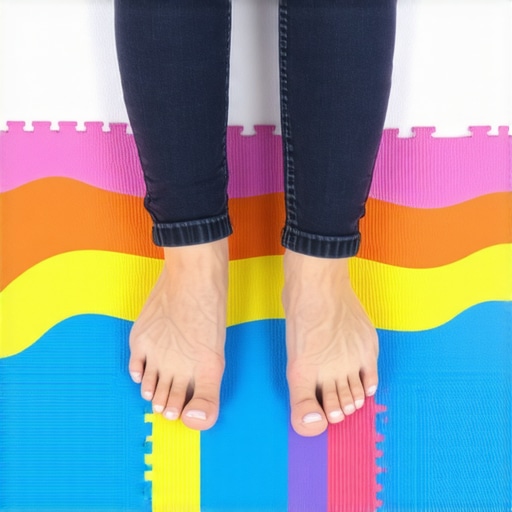
Choose firm support over squishy drugstore fixes
When it comes to equipment, I swear by firm-soled shoes with zero drop for my long leg and a custom-fitted cork lift for the other. Avoid the squishy gel lifts you find at the drugstore; they compress unevenly and throw your gait off even more. If you are a desk worker, you must learn the correct way to use a standing desk without hurting your feet. Standing on a flat, hard surface for eight hours with a leg length discrepancy is like asking for a disc bulge. I use a topographical anti-fatigue mat—the ones with the built-in hills—to keep my ankles moving and my pelvis from locking into a hike. Also, pay attention to your car. Most car seats are bucket-shaped, which can actually trap a hiked hip into a deeper tilt. I recommend using a small, firm wedge to level out the seat pan. It is these tiny, specific tools that make the difference between managing pain and actually living without it. If you are ready to take this seriously, I want you to try the Foot-Swap challenge today: Spend ten minutes barefoot on a hard floor and notice which foot feels heavier. That is your brain signaling the imbalance. For those wanting a long-term plan, effective posture tips for 2025 can give you the roadmap for the months ahead.
Truths That Finally Stopped My Search for the Perfect Stretch
Over the years, I realized that my ‘tight’ side was often the only thing preventing my spine from collapsing further; chasing flexibility without addressing the foundation is a mistake many of us make. I found that most fixes are temporary because they don’t recalibrate the neurological map in the brain that thinks ‘crooked’ is ‘straight.’ Most importantly, I learned that ignoring even a 5mm difference is the fastest way to wear out a hip joint prematurely. Once I stopped trying to stretch my way out of a skeletal issue, the real healing began. It was a lightbulb moment when I saw that my body was reacting to an uneven floor, not a lack of yoga.
The Gear That Actually Kept Me Standing Straight
I rely on a few specific tools to keep my pelvis from reverting to its old, hiked position. First, I use a firm cork heel lift rather than the cheap gel versions, as cork doesn’t compress and throw off your gait. Second, I recommend downloading a digital inclinometer app to your phone to get an objective measurement of your hip levels during your ‘mirror checks.’ Finally, I suggest following effective posture tips for 2025 and implementing top strategies for moving without pain to ensure your muscles aren’t fighting the new alignment. These resources, combined with mobility strategies for active living, provide the blueprint you need to stop the mechanical breakdown of your spine.
Your Body Deserves a Level Foundation
It is easy to feel defeated when your spine seems to have a mind of its own, but remember that a scoliosis-like curve is often just your body’s best attempt at balance. By addressing the leg length discrepancy and giving your pelvis the support it needs, you are removing the constant stress on your discs and nerves. It is time to stop compensating and start thriving by building from the ground up. If you want to keep these gains and stop the cycle of pain, make sure to adjust your routine for lasting relief. Have you ever tried a heel lift only to find it moved the pain to a completely different part of your body? Let me know in the comments below!