
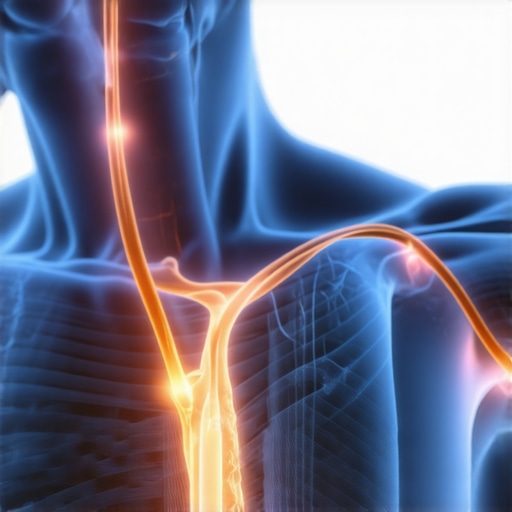
I was standing in my kitchen, clutching a jar of pickles like it was the Holy Grail, and I couldn’t even get the lid to budge. It wasn’t because I lacked the strength. It was because a searing, white-hot pain shot straight through my elbow every time I tried to twist. I spent weeks rubbing menthol cream on my forearm until I smelled like a walking pharmacy and wearing a compression sleeve I bought at the drugstore. I was convinced I had developed a nasty case of tennis elbow from all that weekend gardening. But then, I had my lightbulb moment. While sitting at my desk, I tilted my head to the side to stretch a stiff muscle, and that same elbow pain flared up like a lightning bolt. It hit me: my arm wasn’t the problem. My neck was the culprit holding my mobility hostage. Today, we are going to peel back the layers on this referred pain mystery so you can stop wasting money on braces that do not work. Have you ever felt a pain in one spot only to find out the source was somewhere else entirely?
Your Arm is Just the Messenger for a Grumpy Neck
I made a huge mistake early on by hyper-focusing on where it hurt instead of where the nerves actually live. I spent a small fortune on massage guns for my triceps, but the relief lasted about ten minutes. The reality is that the nerves controlling your arm originate in your cervical spine. When those nerves get squeezed by a bulging disc or tight muscles, the brain gets confused. It reports the pain in the elbow because that is where the nerve ends, not where the pinch is happening. This is often why your shoulder pain is actually a neck nerve issue in disguise. When we ignore the spine, we are just putting a bandage on a broken pipe.
Is a neck-elbow connection just some wellness hype?
It sounds a bit far-fetched at first, doesn’t it? How could a crick in your neck make your grip fail? But the science of cervical radiculopathy is very real. According to the Mayo Clinic, nerve root compression in the neck can cause pain, numbness, or weakness that radiates all the way to the hand. If you spend your day hunched over a computer, you might find that your laptop stand is actually making your neck tension worse, which trickles down to that nagging elbow ache. I learned the hard way that you cannot fix a downstream problem if the dam is broken upstream. By applying the 2-inch rule for your laptop stand, you can often take the pressure off those nerves before they even have a chance to complain to your elbow. We are going to look at exactly how to test this for yourself and get your arm back in working order.
Test Your Neck Before You Buy More Ice Packs
Before you commit to another round of expensive physical therapy for your elbow, you need to perform a simple diagnostic test at home. Think of your nerves like a garden hose. If someone is stepping on the hose in the garden (your neck), it doesn’t matter how much you scrub the nozzle (your elbow); the water still won’t flow. Sit up straight and slowly rotate your head toward the side that hurts. Now, gently tilt your chin up. If that ‘tennis elbow’ pain intensifies or you feel a zing down your arm, you have just confirmed that the issue is proximal, not distal. You are dealing with a mechanical pinch at the source. This is why many people find that mastering your mobility through spinal awareness is more effective than any forearm brace ever could be.
Floss Your Nerves Like a Pro
Once you know the neck is the culprit, you have to stop ‘stretching’ the pain and start ‘gliding’ the nerve. Nerves hate being stretched—they are like brittle wires, not elastic bands. Instead, we use a technique called nerve flossing or glides. Imagine a piece of dental floss moving back and forth between your teeth. You want the nerve to slide through the muscles and vertebrae without tension. I remember sitting in a parking lot midway through a four-hour drive to a wedding. My right arm was buzzing so loudly I could barely grip the steering wheel. Instead of rubbing my elbow, I performed a few ulnar nerve glides: I circled my eye with my thumb and index finger like a ‘monocle’ and rotated my elbow upward. I felt a weird, zipping sensation, and within two minutes, the numbness vanished. It was a total game-changer. You can find similar relief by using the quick nerve glide for instant relief, which resets the neural tension throughout the entire limb.
#IMAGE_PLACE_HOLDER_B#
Fix the Hidden Setup Flaws in Your Office
You can do all the glides in the world, but if you go right back to a desk that crushes your C7 vertebrae, the pain will return by lunchtime. Most of us have our screens too low, forcing the head into a forward ‘turtle’ position. This puts massive shear stress on the lower neck, exactly where the nerves for your elbow exit. By implementing the monitor height hack for preventing c7-t1 nerve pressure, you keep your head stacked over your shoulders. This ‘stacking’ prevents the muscles in the front of your neck from becoming tight and pulling on the first rib. If you feel like your chest is collapsing, try the wall based move that opens your chest instantly to reverse that desk-slump. When your rib cage and shoulders are open, the nerves have a clear, unblocked path from your brain to your fingertips. Stop treating the symptoms and start clearing the path.
Stop Pulling on Your Nerves Like They Are Rubber Bands
The most common mistake I see—and one I definitely fell for—is the urge to stretch everything that feels tight. We have been conditioned to believe that ‘tight equals short’ and therefore needs to be elongated. However, when your elbow pain is actually a nerve issue stemming from the neck, aggressive stretching is the equivalent of pulling on both ends of a frayed electrical wire. You aren’t loosening the muscle; you are irritating an already inflamed nerve. In my experience, if your ‘tennis elbow’ feels like a sharp zing or a burning sensation rather than a dull muscle ache, you should put down the foam roller. Instead of the typical stretches, focusing on the quick nerve glide for instant relief is far more effective because it encourages movement without adding tension. Research published in the Journal of Manual & Manipulative Therapy suggests that neural mobilization (nerve gliding) is significantly more effective for reducing symptoms of cervical radiculopathy than traditional static stretching. Stop the tug-of-war with your nervous system.
#IMAGE_PLACE_HOLDER_C#
Why a Strong Core Won’t Save a Pinched Nerve
There is a massive trend in the wellness world right now suggesting that ‘core stability’ is the panacea for every physical ailment. While I love a strong midsection, here is the nuance: you can have world-class abs and still have a neck that is absolutely crushing your ulnar nerve. This is the ‘Oops’ factor many enthusiasts miss. They spend hours doing planks but ignore the fact that they are ‘sucking in’ their stomach, which actually increases intra-abdominal pressure and locks up the rib cage. When your ribs can’t move, your neck muscles have to work double-time to help you breathe, leading to that chronic tightness that radiates to the arm. This is exactly why your core strength isn’t stopping your back aches or your elbow pain. You need to learn how to breathe through your ribs to ease lower back tension and neck strain simultaneously. If you’re bracing your core like you’re about to get punched, you’re likely choking off your own recovery.
Why does my neck crack every time I look at my monitor?
If you find that your neck feels ‘crunchy’ or makes a popping sound every time you turn your head to check a second screen, you are likely dealing with micro-instability or gas bubbles escaping the joint capsule due to poor alignment. Many people think this ‘self-cracking’ is helping, but why self-cracking your neck makes the stiffness come back faster is a lesson in temporary relief versus long-term stability. You are usually cracking the joints above or below the one that is actually stuck. This creates hyper-mobility in the wrong places, which eventually leads to more nerve irritation down your arm. Professional daily spinal alignments for lasting relief are designed to target the specific segment that is frozen, rather than just making noise for the sake of it. When that ‘stuck’ segment in the lower neck is finally released, the pressure on the nerve to your elbow often vanishes instantly.
The Posture Brace Trap That Ruins Your Progress
Another trap to avoid is the ‘posture corrector’ or brace. It seems like a quick fix—just strap it on and let it pull your shoulders back, right? Wrong. Relying on an external strap is the fastest way to make your postural muscles lazy. I’ve seen people end up with more neck pain after using these because they don’t address the truth about posture braces and muscle atrophy. Your body stops trying to support itself. If you want real change, you have to do the work of the wall angel move that reverses a day of hunching. This builds the actual muscle memory required to keep your head over your shoulders without a nylon strap doing it for you. Have you ever fallen into this trap of buying a gadget instead of fixing the movement? Let me know in the comments! Once you stop looking for the quick-fix brace and start focusing on mastering your mobility through consistent, small adjustments, that ‘mystery’ elbow pain usually decides to pack its bags and leave for good.
The gear that actually saved my elbow
I stopped buying those ‘posture shirts’ and started looking at my environment through a more critical lens. I found that a simple $30 laptop riser was more effective than a thousand-dollar chair. By following the 2-inch rule for your laptop stand, I stopped the forward-head tilt that was strangling my ulnar nerve at the source. I also added a small wedge under my feet. Learning how to use a footrest to save your lower back at work might seem unrelated to your arm pain, but it stabilizes your pelvis, which keeps your rib cage from collapsing and pulling on your neck muscles. When your foundation is solid, your neck doesn’t have to act like a crane holding up a bowling ball.
#IMAGE_PLACE_HOLDER_D#
How do I keep my nerves happy for the long haul?
Maintenance is less about intense workouts and more about what Dr. Stuart McGill, a world-renowned expert in spine biomechanics, calls ‘spine hygiene.’ In his seminal work, Back Mechanic, McGill emphasizes that recovery happens in the micro-movements we make every hour. I began incorporating the morning movement routine that lubricates your joints to wake up my nervous system before I even touch my phone. If I am stuck at a desk for a marathon session, I perform the 30-second wall reset for hunchback posture every time I finish a meeting. These daily adjustments to alleviate back pain and improve posture actually stick because they are integrated into my workflow rather than being a separate chore.
Why the future of posture is hidden in your smartwatch
I predict that within the next five years, we will see a massive shift toward bio-responsive ergonomics. Instead of us trying to remember to sit up, our wearables will use haptic feedback to detect the specific shear stress on the lower neck. We are already seeing the beginnings of the monitor height hack for preventing c7-t1 nerve pressure being integrated into smart-monitor software that alerts you when your eye line drops too low. Until that tech is perfected, I rely on low-tech solutions. I keep a mobility ball under my desk at all times; knowing how to use a tennis ball to release tension in your feet and back is a secret weapon for keeping the whole kinetic chain loose. If you want to stop the cycle of recurring pain, you must commit to adjusting your routine for lasting relief. Go find a flat wall right now and try that 30-second reset—your elbow will thank you by the end of the day.
The Hardest Lesson I Learned About My ‘Fake’ Tennis Elbow
The biggest shift in my recovery happened when I stopped viewing my body as a collection of separate parts and started seeing it as an interconnected electrical grid. Here are the ‘lightbulb moments’ that finally allowed my arm to heal:
- Pain is a messenger, not the master. I realized that my elbow was screaming because it was the end of the line for a pinched nerve, not because the tendons were actually damaged. Focusing on the elbow was like screaming at a smoke detector instead of putting out the fire in the kitchen.
- Small habits trump big fixes. You cannot undo eight hours of slouching with a ten-minute massage. Real change came when I started using effective posture tips for 2025 throughout my workday to keep my spine neutral.
- Nerves need space, not just stretching. I learned the hard way that ‘powering through’ a stretch often makes nerve irritation worse. Creating space in the cervical spine through proper alignment is the only way to let the inflammation subside.
My Essential Toolkit for Lasting Mobility
I don’t believe in expensive gadgets, but I do believe in the right tools. These are the resources that helped me transition from constant pain to fluid movement:
- Back Mechanic by Stuart McGill: This isn’t just a book; it is a manual for how to move without destroying your discs. It taught me the importance of ‘spine hygiene’ and how to protect my neck during everyday tasks.
- A Dedicated Laptop Riser: It seems simple, but getting my screen to eye level was the catalyst for my arm recovery. When I combined this with posture correction secrets that transform back pain outcomes, the ‘zinging’ sensations in my elbow finally stopped.
- Mobility Balls: I keep a pair of lacrosse balls in my desk drawer. They are my go-to for following expert tips for easier movement in 2025 by releasing the tight chest muscles that pull my neck forward.
#IMAGE_PLACE_HOLDER_E#
Take the First Step Toward a Pain-Free Arm
Recovery isn’t a straight line, but it is much faster when you are heading in the right direction. Stop treating your elbow like it is the enemy and start giving your neck the support it deserves. By integrating simple exercises to relieve chronic back pain and nerve tension, you are building a foundation for a body that moves without hesitation. You deserve to live without that nagging elbow pain holding you back from the things you love. Have you ever found that a pain in one part of your body was actually coming from somewhere else entirely? Let me know in the comments below!