
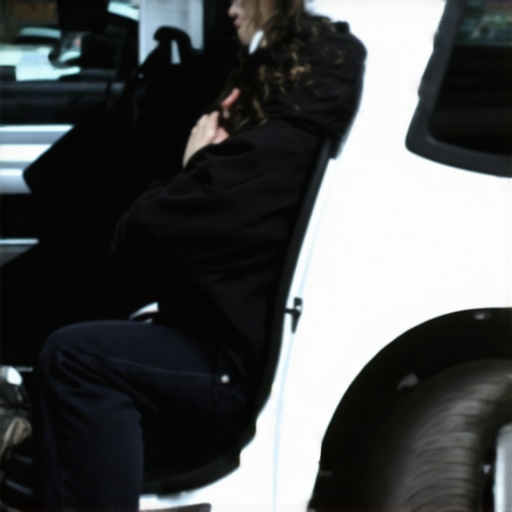
It happened at the local grocery store. I had just finished a long day, pulled into a tight parking spot, and did what I always did—I threw the door open, twisted my torso, and lunged for the pavement with one leg. Pop. That one tiny, careless rotation felt like a hot poker had been shoved into my lower back. I spent the next ten minutes leaning against my car door, pretending to check my phone while I waited for the world to stop spinning. I’ve realized since then that most of us are treating our spines like a wet rag that we can just wring out every time we go to get a coffee. My mistake was thinking my ‘strong’ core would protect me from a high-torque, seated twist. It didn’t. I spent months learning the hard way that mobility isn’t just about what you do in the gym; it’s about the micro-moments between the seats. Today, I’m going to show you how to stop that ‘lightning bolt’ pain before it starts by changing the one habit you probably don’t even think about. Have you ever felt that terrifying ‘catch’ in your back just as you’re trying to step out for your morning commute?
Stop Wrenching Your Spine Every Time You Park
For years, I was the king of the ‘twist and shout’ exit. I would plant my left foot on the ground while my hips were still firmly pointed at the steering wheel. This creates a massive amount of shear force on your intervertebral discs. You see, our discs are remarkably strong when they are stacked vertically, but they are incredibly vulnerable to twisting under load. I previously shared some tips on the best way to get into a car if you have back pain, but the exit is where the real damage usually occurs because your muscles are often ‘sleepy’ after a long drive. When you combine cold muscles with a sudden, forceful rotation, you are essentially asking for a herniation. I used to think I could just ‘power through’ it, but your spine doesn’t care about your willpower. If you want to master your mobility, you have to respect the mechanics of the pivot.
Is a Five-Second Movement Really Worth the Effort?
You might think I’m being dramatic. It’s just getting out of a car, right? But think about how many times you do this a day. Research published in the Journal of Biomechanics indicates that spinal twisting (torsion) combined with flexion is the most common mechanism for disc failure. By the time I finally sought help, my discs were so irritated that even sitting in a car for long road trips felt like a chore. The solution isn’t a fancy brace or a new car; it’s a simple, intentional swivel that treats your torso as one solid unit instead of a spiral staircase. If you’ve been struggling with that ‘stuck’ feeling, it’s time to stop reaching blindly into the world. Even simple things like the proper way to reach into the back seat of a car play into this larger picture of spinal hygiene that we are going to fix right now.
Swing Your Entire Body as One Solid Unit
The biggest mistake most of us make is treating our upper and lower bodies like two different pieces of a Lego set. When you twist your torso while your hips are glued to the seat, you’re basically wringing out your spinal discs like a wet towel. Instead, I want you to think of your torso as a solid cylinder. To get out safely, you need to swivel your entire body toward the door at the same time. I remember a particularly rainy Tuesday when I was late for a meeting. Normally, I’d lunge for my bag in the passenger seat and then vault out the door in one fluid, terrible motion. That day, I caught myself. I stopped, squared my shoulders to the steering wheel, and rotated my hips and knees together until both feet were flat on the pavement outside. It felt slow, almost robotic, but for the first time in weeks, I didn’t feel that sickening ‘pinch’ in my L5-S1 region.
This swivel technique is the foundation of mobility mastery. By keeping your nose aligned with your belly button throughout the rotation, you eliminate the shear force that leads to herniations. It’s a simple way to adjust your routine without needing extra equipment. If you feel like your hips are too tight to make this turn, you might need to realize why your spine needs movement every 30 minutes during those long hauls.
Find Your Two Anchor Points
Once your feet are on the ground, don’t just stand up. Your spine is still in a vulnerable, compressed state from the drive. You need to use external leverage to take the weight off your lumbar. I use what I call the ‘two-point anchor.’ Place one hand on the car’s door frame (the B-pillar) and the other on the sturdy part of the car door itself. Do not use the window or the steering wheel; you need something that won’t move. This turns your arms into outriggers, effectively turning a high-stress lumbar lift into a stable, full-body maneuver. This is one of those posture correction secrets that transform back pain outcomes because it prevents your spine from bearing the brunt of the gravity shift.
Push Through Your Heels Instead of Your Lower Back
Now comes the actual lift. Most people ‘pull’ themselves out using their lower back muscles, which are already fatigued. Instead, lean slightly forward from the hips—maintaining a flat back—and drive through your heels. This is the best way to transition from sitting to standing, whether you’re in a sedan or on your living room sofa. Imagine you are trying to push the earth away from you rather than pulling your chest toward the sky. When I first started doing this after my grocery store incident, I felt like an old man. But three days later, the chronic morning stiffness started to fade. It turns out, my back wasn’t ‘weak’; it was just tired of doing everyone else’s job. If you’ve been feeling a ‘catch’ when you stand, you might also want to check why your lower back clicks when you stand up from a chair to see if there’s a deeper misalignment at play.
Don’t Reach Back Immediately
Finally, once you are standing, resist the urge to immediately reach back into the car for your bag or coffee. Stand tall for three seconds. Let your discs re-hydrate and find their center. I used to be so focused on speed that I’d stand up and immediately twist back in to grab my laptop bag. That’s a ‘double whammy’ of compression and rotation. Give your spine a moment to breathe. If you must get something from the back, use the proper way to reach into the back seat of a car by walking around to the other door instead of reaching across the center console like a human pretzel.Most people think that if their back hurts during a car exit, they just need to do more crunches. In reality, why your core strength isnt stopping your back aches is often because you’re creating too much internal pressure without the necessary segmental mobility. I’ve seen athletes with six-packs throw their backs out reaching for a grocery bag because they’ve trained their spine to be a rigid board rather than a responsive spring. This is the ultimate contrarian truth: sometimes, ‘tightening’ your core is the worst thing you can do when your discs are already compressed from a long commute. You need ‘stiffness’ only at the right moment, not a perpetual state of contraction that mimics a suit of armor. If you rely on the truth about posture correctors and braces to do the work for you, you’re missing the neurological component of movement that prevents the ‘pop.’
Is Your Post-Drive Stretch Actually Damaging Your Discs?
The biggest ‘oops’ factor I see involves people getting out of the car and immediately trying to touch their toes or perform a deep side-stretch to ‘loosen up.’ When you’ve been sitting, your discs undergo a process called ‘creep,’ where they lose some height and the fluid shifts. According to Dr. Stuart McGill, a world-renowned expert in spine biomechanics, the spine is significantly more vulnerable to injury immediately after prolonged flexion. Pushing into a deep stretch right after a drive is like trying to pull a cold, brittle rubber band—it’s more likely to fray or trigger a spasm than it is to adapt. Instead of aggressive pulling, you should focus on how to release your hip flexors without stretching them. Often, that ‘tightness’ you feel is actually a protective neurological guard. If you force a stretch, your nervous system interprets it as a threat and tightens the muscles even further. This is why the one move that fixes a tight psoas muscle is often about subtle positioning and breathing rather than aggressive pulling. If you want to truly master your mobility, you have to stop treating your body like a machine and start treating it like a delicate ecosystem. Even when we think we are swiveling correctly, many of us perform ‘micro-twists’ by craning our necks back into the car while our hips are already moving. This creates a ‘spiral’ tension that travels all the way down to your lumbar. This is why unlocking better back health requires total body awareness from head to toe. Have you ever fallen into this trap of ‘stretching the pain away’ only to feel twice as stiff an hour later? Let me know in the comments.
The swivel is your first line of defense, but to truly win the war on back pain, you need a system that works even when you’re tired. I’ve found that my rearview mirror is actually my best therapist. I set it while sitting perfectly tall; the second I start to slouch, I can’t see the traffic behind me. It’s a genius, low-tech way to how to adjust your rearview mirror to improve your posture. Beyond that, I swear by a simple lumbar roll. Not the expensive, fancy ones—just a firm foam cylinder that keeps my lower back from flattening against the seat. This constant feedback loop is one of those posture correction secrets that transform back pain outcomes because it removes the guesswork from your day. I also recommend looking into the Human Factors and Ergonomics Society (HFES) guidelines, which suggest that a seat’s lumbar support should ideally offer 15mm to 25mm of adjustable prominence. When I started being this specific with my gear, the ‘random’ flare-ups stopped happening.
How Can You Keep Your Spine Resilient for the Next Decade?
The secret isn’t a one-off adjustment; it’s the compounding interest of daily adjustments to alleviate back pain and improve posture. You have to treat your mobility like a bank account. Every time you swivel correctly or use your anchor points, you’re making a deposit. Every time you wrench your spine to grab a bag, you’re making a massive withdrawal. I believe we’re heading toward a future where our cars will use AI-integrated pressure sensors in the seats to vibrate when we slouch—effectively a built-in ‘posture coach.’ But until then, you are the pilot. You need to adjust your routine to include ‘check-ins.’ For me, every red light is a cue to reset my shoulders and breathe.
These small ‘micro-moment’ habits are how you master your mobility without spending hours in a clinic. If you want to take this to the next level, I challenge you to try the ‘mirror reset’ tomorrow morning: set your mirrors for your ‘tall’ self, and don’t let yourself adjust the mirror later when you’re tired. Force your body to find that height again. This is the path to enhance your mobility with expert tips for easier movement in 2025. It’s about building a body that doesn’t just survive the commute, but thrives because of the care you put into the journey.
The Hardest Lesson I Learned About Protecting My Lumbar
After years of thinking my gym sessions would fix everything, I had a realization: your spine doesn’t care how much you can deadlift if you treat it like a spiral staircase every time you park. I learned that movement hygiene is a 24/7 job. One major lightbulb moment was realizing why your core strength isnt stopping your back aches—it’s because a rigid core without smart movement mechanics is just a recipe for more pressure. I also discovered that my body was sending me ‘micro-signals’ for weeks before that big pop at the grocery store. If you listen to the small tweaks, you don’t have to face the big tears. To truly master your mobility, you have to prioritize the pivot over the push.
#IMAGE_PLACEHOLDER_E#
The Recovery Arsenal for Modern Drivers
You don’t need a trunk full of gadgets to stay healthy, but a few specific tools made a world of difference for me. First, I always keep a firm lumbar roll in the driver’s seat; it’s a simple way to alleviate back pain and improve posture without thinking. I also highly recommend looking into the work of Dr. Stuart McGill, which helps many understand the science of disc vulnerability. For those daily ‘reset’ moments, I follow a strict effective posture tips for 2025 protocol that ensures I’m not just surviving my commute, but recovering from it. These small additions provide a feedback loop that keeps your spine in a neutral, safe zone regardless of the car’s seat design.
Your Body Deserves Better Than a Wrenching Exit
Fixing your car exit isn’t just about avoiding a spasm today; it’s about how you’ll feel ten years from now. When you choose to swivel instead of twist, you are choosing longevity. It takes exactly four extra seconds to move with intention, and those seconds are the best investment you can make for your spine. Start small, be consistent, and watch how expert tips for easier movement turn into second nature. You have the power to stop the cycle of chronic stiffness and protect your adjustments, mobility, posture, and back pain outcomes for the long haul. Which part of the car exit do you find the most difficult—the swivel or the standing up? Let me know below!