
I remember the exact moment I realized my office chair was winning the war against my spine. I had just finished a three-hour marathon session of answering emails, lost in that deep work flow. When I finally decided to grab a glass of water, I leaned forward, pushed off the armrests, and—BAM. My legs felt like they’d forgotten how to be legs. I experienced that terrifying moment where your knees buckle when you stand up too fast, and I nearly hit the floor. It wasn’t just a fluke; it was a symptom of a much larger problem. For years, I believed that if I just bought a more expensive chair, my back pain would vanish. That was a costly mistake. I was treating the symptom, not the movement. Today, I want to show you that the secret to a pain-free life isn’t just about unlocking better posture while you sit, but mastering the critical few seconds when you actually move. We’re going to solve that morning stiffness and the mid-afternoon ‘creakiness’ once and for all.
Your Chair Isn’t the Enemy, Your Exit Strategy Is
I used to be a ‘launcher.’ I would throw my upper body forward and use pure momentum to get vertical. This habit is exactly why my lower back was constantly screaming at me. When you launch, you put an incredible amount of sheer force on your lumbar spine. This is particularly dangerous because your spine needs movement every 30 minutes to stay hydrated, but if that movement is violent or uncoordinated, you’re doing more harm than good. I’ve since learned that the transition is a skill, much like a squat in the gym. If you do it right, you strengthen your core; do it wrong, and you’re just wearing down your joints. Early on, I made the mistake of thinking that as long as I stood up frequently, the technique didn’t matter. I was wrong, and my hip flexors paid the price for it.
Is it really worth overthinking how you stand up?
You might be skeptical. You’ve been standing up since you were a toddler, so why change now? The truth is that our modern lifestyle has made us lazy in our mechanics. A study cited by Harvard Medical School highlights that the sit-to-stand motion is one of the most biomechanically demanding tasks we perform, requiring significant coordination and muscle power. If you’re feeling a pinch or a dull ache every time you rise, your body is telling you that the ‘standard’ way isn’t working anymore. Have you ever felt like you had to ‘unfold’ yourself slowly after sitting for a while? If so, you’re exactly who I wrote this for. Even if you’ve already mastered the correct way to use a standing desk, the transition itself remains the most common point of failure for back health. Let’s get into the first physical adjustment you need to make before your feet even touch the floor.
Move Your Feet Before You Move Your Body
The biggest mistake people make happens before they even leave the chair. If your feet are tucked too far back under the seat or sprawled out three feet in front of you, you’ve already lost the mechanical advantage. To enhance your mobility, you need to create a stable base of support. Think of your legs like the foundation of a crane; if the base is off-center, the whole structure wobbles under a load. I learned this the hard way during a cross-country flight last year. I tried to stand up from a cramped middle seat with my feet trapped by a carry-on bag. The result? A sharp, stabbing pain in my L5-S1 disc that lasted for three days. Now, I always ensure my heels are directly under or slightly behind my knees before I even think about moving my torso.
The 90-Degree Power Setup
Start by scooting your hips to the very edge of the chair. This simple shift is vital because it stops the ‘slump’ and forces your pelvis into a neutral position. When you sit deep in a soft chair, your pelvis tilts backward, which is exactly why your glutes go to sleep after one hour of sitting. By moving to the edge, you wake up those powerful muscles. Place your feet hip-width apart and feel the floor. You aren’t just placing them there; you are rooting them. This setup ensures that when you finally push, the energy travels through your legs and hips rather than your fragile lower back.
The Nose-Over-Toes Rule for Instant Relief
Once your feet are set, it’s time for the ‘hinge.’ Most people try to go straight up, which puts massive pressure on the knees and lower spine. Instead, you want to bring your center of gravity forward. The rule is simple: bring your nose over your toes. This forward lean naturally loads the hip joints, which are designed to carry weight, rather than the small joints of the spine. Imagine there is a string pulling the crown of your head forward and up at a 45-degree angle. 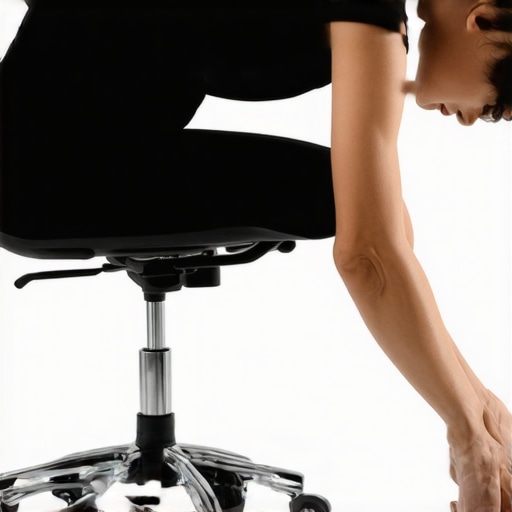
Drive Through the Heels Not the Back
As you lean forward and feel your weight shift into your feet, don’t pull yourself up with your lower back muscles. Instead, think about pushing the floor away from you. This is where strengthening your deep core without sit-ups pays off; your core should stay tight like a shield, protecting your spine while your legs do the heavy lifting. I used to ‘shrug’ my shoulders to get momentum, but that just led to neck tension. Now, I keep my shoulders down and back, imagining I’m crushing a walnut between my shoulder blades. As you rise, breathe into your lower back to release tension, exhaling on the way up. This internal pressure helps stabilize the lumbar spine from the inside out, making the transition feel light and effortless rather than a struggle against gravity. If you feel a ‘tweak’ during the rise, you’ve likely lost that core tension or shifted your weight onto your toes too early. Keep the pressure in your heels to keep the glutes engaged until you are fully vertical.
While the ‘nose-over-toes’ rule is a game-changer, we need to address the sophisticated traps that even fitness enthusiasts fall into. Most people assume that if a muscle feels ‘tight’ during a movement, the solution is to stretch it until it yields. This is where we often go wrong. In my years of refining my own movement, I’ve found that what we perceive as tightness is frequently actually neural tension or a protective mechanism by the brain. For instance, why stretching your hamstrings might be making your back pain worse is a concept many find hard to swallow. If your pelvis is already tilted, those hamstrings are already overstretched like a taut rubber band. Adding more ‘stretch’ only increases the strain on your sciatic nerve, leading to more discomfort, not less.
The Core Strength Lie That Is Hurting Your Progress
We’ve been told for decades that a ‘strong core’ is the ultimate shield for the spine. However, I’ve seen plenty of people with visible six-packs who suffer from chronic disc issues. The mistake is confusing superficial muscle strength with functional stability. If you are constantly ‘sucking it in’ to look thinner or engage your abs, you are actually disrupting your natural respiratory mechanics. You should stop sucking in your stomach to look thinner because it prevents your diaphragm from dropping, which is the very foundation of spinal support. Real stability comes from 360-degree expansion, not pulling everything toward your spine. This is a common nuance where why your core strength isn’t stopping your back aches becomes clear: you’re using the wrong muscles for the right job.
Why does my back still ache if my core is strong?
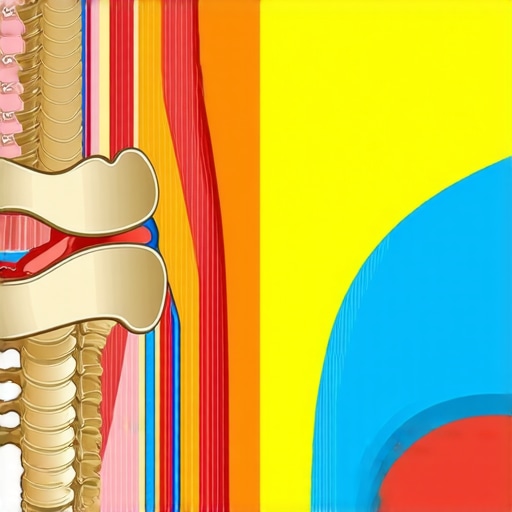
This is the question that keeps people in the cycle of pain. A study published in the Journal of Biomechanics by Dr. Stuart McGill, a leading expert in spine mechanics, suggests that ‘stiffness’—the ability of muscles to co-contract and lock the spine in place during movement—is far more important than raw strength. When you stand up or lift an object, your muscles shouldn’t just be strong; they should be timed perfectly. This timing is what I call mastering your mobility. If your psoas is hyper-reactive, it might be pulling on your lumbar vertebrae every time you take a step. Ironically, why stretching your psoas might actually be making your back hurt more is often due to the fact that the muscle is weak and needs activation, not more length. This is why posture correction secrets that transform back pain outcomes usually involve strengthening the posterior chain rather than just stretching the front.
The Trap of the Morning Stretch
Another ‘oops’ factor I see constantly is the aggressive morning stretch. When you first wake up, your spinal discs are at their most hydrated and ‘plump’ from a night of rest. This makes them more sensitive to extreme ranges of motion. Jumping straight into deep toe touches or spinal twists is a recipe for a bulge. Instead, you need a morning movement routine that lubricates your joints without over-stressing the ligaments. Think of it as warming up an engine before revving it. By focusing on gentle, controlled rotations and mobility mastery through small wins, you avoid the inflammatory ‘tweak’ that ruins your day. Have you ever fallen into this trap of over-stretching a ‘tight’ muscle only to feel worse? Let me know in the comments.
Beyond the mechanics of the ‘nose-over-toes’ transition, I’ve found that your environmental setup is either an ally or a silent saboteur. I spent years perfecting my movement patterns only to undo them by staring down at a laptop for eight hours. This is why I eventually became obsessed with the physical tools of the trade. If you’re serious about making these changes stick, you need to look at your workspace. I strictly follow the 2-inch rule for your laptop stand to save your neck from strain. By elevating the top edge of my screen just two inches above my direct eye line, I force my cervical spine into a neutral position, which immediately stops that ‘burning’ sensation between the shoulder blades.
Ditch the Stack of Books for a Real Laptop Stand
I know, I know—you think a stack of books is ‘good enough.’ I thought so too. But a dedicated stand allows for a separate keyboard and mouse, which is non-negotiable. When your hands are at the same level as your screen, you’re destined for a hunch. By separating them, you allow your chest to open up, which is one of those posture correction secrets that transform back pain outcomes. I’ve noticed that when my environment supports me, I don’t have to ‘think’ about my posture; it just happens naturally. I also stopped letting my legs dangle or tucking them back. Once I understood how to use a footrest to save your lower back at work, my SI joint pain disappeared. The footrest provides a solid base that prevents the pelvis from sliding into a posterior tilt.
#IMAGE_PLACE_HOLDER_D#
How can I keep my spine healthy for the next decade?
Maintenance isn’t about doing a 60-minute workout once a week; it’s about the daily adjustments to alleviate back pain and improve posture. You have to treat your body like a high-performance vehicle. According to the Cornell University Ergonomics Web (CUErgo), the most effective way to prevent musculoskeletal disorders is through ‘micro-breaks’ combined with a neutral posture. This means every 20 minutes, I perform a quick 10-second check. I ask myself: Are my feet flat? Is my chin tucked? These small check-ins are the key to mastering your mobility over the long haul. Without this consistency, even the best equipment is just expensive furniture.
The Future of Posture is Smarter Than a Better Chair
Looking ahead, I’m genuinely excited about where unlocking better back health with effective posture tips for 2025 is going. We’re moving away from bulky braces and toward smart textiles and AI. I’ve already started experimenting with software that uses my webcam to track my head position, alerting me with a subtle screen blur when I start to ‘text neck’ my way into a slump. This kind of real-time biofeedback is the future of preventative care. My advice? Don’t wait for the tech to catch up. Pick one thing—whether it’s the footrest or the screen height—and change it today. Your spine will thank you ten years from now. If you’re ready to really commit, try the ‘2-inch rule’ for your screen height this afternoon and notice how much easier it is to breathe.
The Hard Lessons My L5-S1 Disc Taught Me
Reflecting on my journey, the biggest revelation wasn’t a magic exercise but the realization that ‘no pain, no gain’ is a dangerous philosophy for the spine. For years, I ignored the minor twinges because I thought I was ‘tough enough’ to handle it. I eventually learned that pain isn’t a challenge to overcome; it’s a data point from your nervous system. Now, I prioritize enhancing your mobility through small, consistent wins rather than grueling recovery sessions. One lightbulb moment was realizing that adjusting your routine for daily spinal alignments is more effective than any once-a-week massage. I also stopped treating my body like a machine that just needs more oil and started treating it like an ecosystem that needs the right environment to thrive.
My Daily Toolkit for Spinal Longevity
If you’re looking to make these changes permanent, I highly recommend a few low-cost tools that changed the game for me. First, a simple tennis ball is my go-to; knowing how to use a tennis ball to release tension in your feet can actually loosen your lower back. Second, for those mid-day knots, I swear by the proper way to use a foam roller on your upper back to reset after hours at the laptop. Lastly, if I only have one minute, I perform the bird dog move to fire up my deep core and stabilize my lumbar. Don’t forget that even how you use a footrest can take the load off your SI joints instantly. #IMAGE_PLACEHOLDER_E#
Your Spine Deserves a Lifetime of Ease
It’s easy to feel overwhelmed by all the ‘rules’ of movement, but remember that progress is rarely linear. Every time you consciously move your nose over your toes or sit on the edge of your seat, you are voting for a future without chronic discomfort. Your body is incredibly resilient and wants to heal; you just have to give it the right cues. As we look toward unlocking better back health with effective posture tips for 2025, let’s commit to listening more and forcing less. You have the tools now—it’s just about the next time you stand up. Which of these chair habits do you find the hardest to break? Let me know below!