
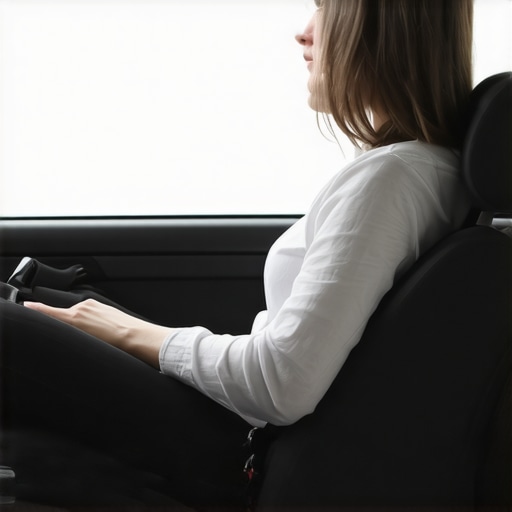
I remember the family road trip to the coast three years ago vividly, but not for the ocean views. By hour four, my lower back felt like it was being compressed by a heavy-duty hydraulic press. I eventually had to roll out of the driver’s seat like a fallen log at a gas station just to get my legs to work again. It was embarrassing, painful, and completely preventable. Most of us treat our car seats like a soft lounge chair, but for a multi-hour haul, your vehicle needs to be treated like a precision cockpit. Today, I’m going to show you exactly how to adjust your environment so you can arrive at your destination ready to explore, rather than hunting for the nearest heating pad. We will cover everything from seat depth to why you need to stop that pelvic tilt that makes sitting for hours painful.
Is it actually possible to drive for hours without pain?
I know what you’re thinking because I used to say it too: ‘Sitting is sitting, and eventually, it’s going to hurt.’ I was convinced that my body just wasn’t built for travel. The turning point for me was realizing a massive mistake I made for years—I used to drive with a thick wallet in my back pocket. It seems small, but it tilted my entire pelvis and put my spine in a slow-motion wreck for eight hours straight. According to research cited by the Mayo Clinic, sitting for extended periods increases the load on your spinal discs by up to 40% compared to standing. However, when you implement the right mechanical supports, you can mitigate that pressure significantly.
Your Car Seat Is Probably Fighting Your Spine
Most car manufacturers design seats to look sleek in a showroom, not necessarily to keep your L5-S1 vertebrae happy. If you feel like your neck crunches every time you look over your shoulder, your setup is likely the culprit. I spent years sitting too far back, reaching for the pedals and putting my hamstrings under constant tension, which pulled my lower back into a flat, vulnerable curve. Have you ever had to pull over and walk circles around your car because your legs were starting to feel like lead? If so, tell me about it—I’d love to know if it’s always the same spot that flares up for you. To fix this, we have to start with the foundation. One of the best tricks I ever learned was adjusting the rearview mirror only when I am sitting in perfect, upright posture. The moment I start to slouch, the mirror becomes useless, forcing me to sit back up. Before we even turn the key, we need to address the mechanical errors that happen the second you shut the door.
Stop Sitting Like a Passenger and Start Driving Like an Athlete
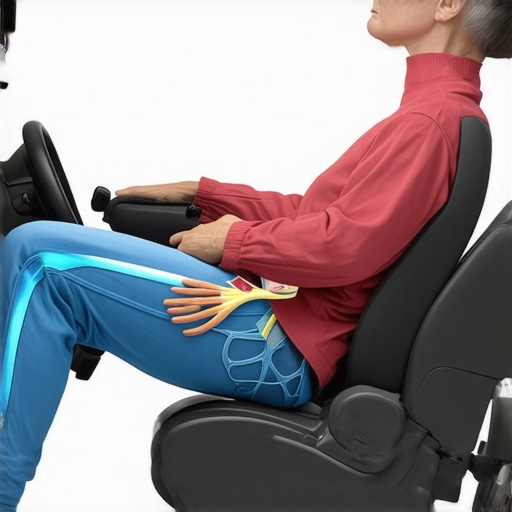
To fix the “heavy leg” syndrome, you first need to adjust your distance from the pedals. If your legs are fully extended, every bump in the road sends a shockwave directly into your hip sockets and lower back. Think of your legs as the suspension system of the car; you need a slight bend in the knee—about 20 to 30 degrees—to allow your muscles to absorb the vibration instead of your joints. I learned this the hard way during a rainy trek through the Appalachians. I was so worried about seeing over the dash that I pushed my seat forward until my knees were practically hitting the steering column. Within an hour, my hips were locked tight, and my gait was totally off when I finally stopped. Now I ensure there is a two-finger gap between the back of my knee and the edge of the seat to keep circulation flowing and prevent nerve compression.
Level the Foundation of Your Pelvis
If the bottom of your seat is tilted too far back, it forces your lower spine into a “C” shape, which is basically an invitation for a herniated disc. You want your hips to be slightly higher than your knees. This tilt encourages a natural arch in your low back, much like using the chair hack to keep your pelvis neutral while working at a desk. When I finally started using a small wedge cushion to level out my bucket seats, that nagging “deep” ache in my glutes vanished. This is especially important if you have noticed why your tailbone aches after long car rides and how to fix it; usually, it is because you are sitting directly on your coccyx rather than your sit-bones. By leveling the seat, you distribute your weight across the large muscles of your thighs and glutes rather than your sensitive spinal base.
Support the Curve Without Overdoing It
Most people crank the lumbar support to the maximum, thinking “more is better.” It is not. If the support is too aggressive, it pushes your torso forward and away from the seat, creating a new gap for tension to hide in. The goal is to fill the space, not create a mountain. If your car does not have built-in support, a rolled-up gym towel works better than most expensive pillows. I once used a literal sweatshirt bundled into a ball during a road trip to Vegas, and while it looked messy, I arrived without the usual mid-back burning. If you are still struggling with stiffness, you might need to integrate mobility mastery simple exercises to relieve chronic back pain before you even get in the car to ensure your joints are prepared for the static load.
Align Your Ears Over Your Shoulders
Finally, look at your headrest. Most of us have it set too low, acting like a neck-snapper if we get rear-ended. It should be level with the top of your head, not tucked into the curve of your neck. Keeping your head back against the rest prevents “text neck” while driving. You should check the right way to adjust your headrest to prevent whiplash symptoms to ensure you are not actually pushing your chin down, which strains the upper cervical spine. When your head is balanced, your neck muscles do not have to work overtime to hold up your ten-pound skull against G-forces and braking.
One of the biggest lies we’ve been told about posture is that it is a static ‘destination.’ We think if we just find the perfect angle, we can freeze there for five hours and be fine. In reality, your spine is a living pump. It requires movement to hydrate the discs and keep the nervous system happy. This is where most ‘ergonomic experts’ lose the plot; they focus so much on the chair that they forget the person inside it. I see people all the time trying to force a ‘perfectly straight’ posture, which leads to something I call the Stiffness Trap. If you are constantly bracing your muscles to sit like a statue, you are actually increasing the shear stress on your vertebrae. This is likely the hidden reason your middle back burns after driving—your muscles are so fatigued from holding a rigid, unnatural pose that they eventually start to ‘scream’ in the form of a deep, localized ache.
Stop Bracing Your Core Like You Are Going into Battle
Another common ‘oops’ factor is the tendency to brace the core incorrectly. Many of us have been conditioned to pull our navel toward our spine to ‘protect the back’ or simply to look better. However, why you should stop sucking in your stomach to look thinner becomes very clear when you realize this habit effectively shuts down your diaphragm. When your diaphragm cannot move, your secondary respiratory muscles in your neck and shoulders take over. This creates a chain reaction of tension that travels from your throat down to your lower back. Instead of sucking it in, you need to learn the secret to strengthening your deep core without sit ups, which involves creating a 360-degree cylinder of pressure that supports the spine without paralyzing your breathing. I’ve fallen into this trap myself, thinking I was ‘supporting’ my back when I was really just starving it of oxygen. Have you ever fallen into this trap of trying to sit perfectly still only to end up stiffer than when you started? Let me know in the comments.
Are micro-vibrations the real reason you feel exhausted after driving?
You might have the most expensive seat in the world, but your car is still a vibrating machine. Research published in the *Journal of Biomechanics* suggests that whole-body vibration (WBV) at specific vehicle frequencies can actually accelerate disc degeneration and muscle fatigue because your muscles are making thousands of tiny, subconscious contractions every minute to stabilize your joints. This is why you feel like you’ve run a marathon after sitting still for three hours. 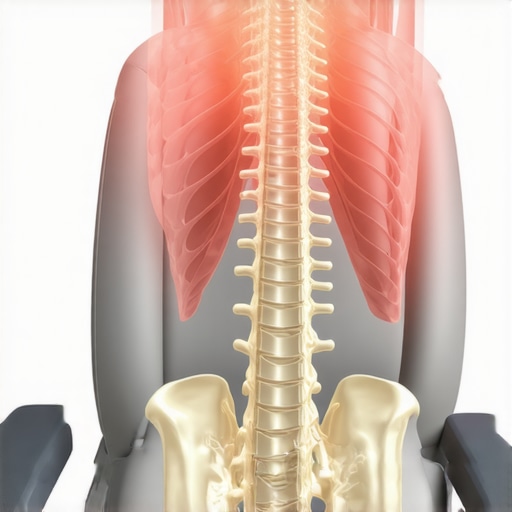 If you find yourself locking up, you might think you need to stretch more, but why stretching your psoas might actually be making your back hurt more is a nuance often missed. If your psoas is already overstretched from a poorly angled seat, adding more tension via traditional stretches just makes the hip flexors crankier. The goal should be subtle, frequent shifts in position—what we call dynamic sitting. To truly stay mobile, you need to incorporate daily adjustments to alleviate back pain and improve posture that prepare your body for the unique stresses of the road before you even pull out of the driveway.
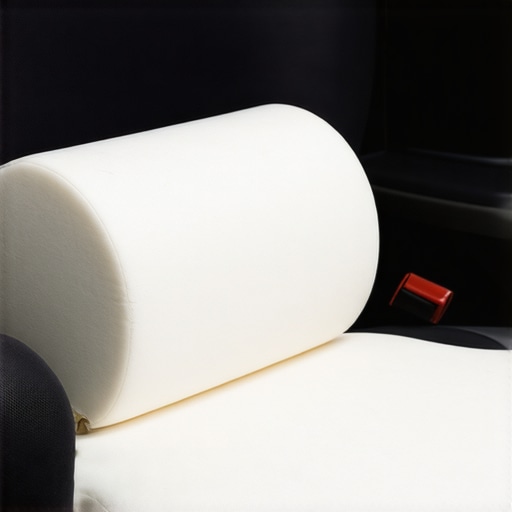
Continuing from the struggle of the ‘stiffness trap,’ I had to find a way to make these changes stick long-term. It wasn’t enough to just ‘sit better’ for ten minutes; I needed a system that survived the reality of traffic and fatigue. I started carrying a specific high-density foam lumbar roll everywhere. Most car seats have a structural gap at the base of the spine, and filling that void is non-negotiable for my comfort now. I also use a firm, two-inch wedge cushion because it keeps my hips slightly above my knees, which is the cornerstone of mobility mastery simple exercises to relieve chronic back pain. If I forget my gear, I feel the difference within thirty miles. I’ve found that even the best stretching routine for frequent travelers won’t save you if your equipment is actively working against your anatomy for hours on end.
How do I maintain my spinal health on long road trips year-round?
Consistency is the only way forward, and I treat my driving posture like a training session rather than a passive state. Every time I hit a rest stop or a gas station, I perform a ‘two-minute reset.’ This isn’t just about walking to the bathroom; it’s about neural recalibration. I use specific daily adjustments to alleviate back pain and improve posture that focus on opening the chest and resetting the pelvic floor. According to the ISO 9241-5 standard for ergonomic requirements, seat flexibility and the ability to change postures frequently are critical for reducing musculoskeletal load. I take this to heart by shifting my weight slightly every 20 minutes, ensuring I never let the ‘micro-vibrations’ of the road settle into my joints and create that deep, throbbing ache.
The Tech That Changes the Posture Game
Lately, I’ve started experimenting with wearable biofeedback sensors that vibrate when my shoulders roll forward or my spine loses its neutral curve. It sounds intrusive, but it’s the only thing that breaks the ‘highway trance’ that leads to slouching. This technology is actually where I see the industry heading. In the next few years, I predict we will see car seats with integrated biometric feedback that automatically adjust the lumbar support and seat depth based on your real-time muscle fatigue levels. Until then, you have to be your own sensor. You need to master the secret to strengthening your deep core without sit ups so that your internal ‘brace’ is active but fluid enough to allow for breathing. When you have that deep stability, you’ll find that how chiropractic adjustments can clear brain fog after a long week becomes less about fixing a crisis and more about fine-tuning an already high-performing machine. I challenge you to try one thing on your next commute: adjust your rearview mirror while sitting perfectly tall, and promise yourself you won’t touch it again. If the road behind you disappears from view, you’ve officially slouched. It’s a simple, zero-cost way to force your body into better habits and keep your spine safe for the long haul.
The Counter-Intuitive Lessons I Learned from 10,000 Miles on the Road
After years of trial and error, I’ve realized that the ‘perfect’ posture is a myth; it is the transition between postures that saves your spine. One of my biggest lightbulb moments was realizing how much my footwear affected my lower back. If I wear stiff boots, my ankles can’t pivot, which forces my hips to work harder and eventually causes my lumbar spine to seize up. I also learned that the ‘seat heater’ isn’t just a luxury; it’s a therapeutic tool to keep blood flowing to the discs in cold weather. Another hard-earned lesson? Never wait for the pain to start before you adjust. If you feel even a tiny ‘flicker’ of discomfort, that is your nervous system’s early warning light. Stop, reset, and use the best stretching routine for frequent travelers before the tension becomes structural. #IMAGE_PLACEHOLDER_E#
The Specific Tools That Actually Support a Human Frame
I’ve tested dozens of gadgets, but only a few stay in my car permanently. First is a high-density lumbar roll—specifically the McKenzie variant—because it provides a firm mechanical stop for the low back that built-in car seats usually lack. I also highly recommend keeping a simple tool in your glove box: a tennis ball. It’s perfect for a quick self-massage on your hamstrings or glutes during a rest stop; you can learn how to use a tennis ball to release tension in your feet and back to prevent that deep, seated ache from setting in. For those who want to dive deeper into the mechanics of movement, the book ‘Becoming a Supple Leopard’ by Kelly Starrett changed how I understand master your mobility top strategies for moving without pain. It helps you see your body as a system of levers rather than just a collection of parts.
Your Move Toward a Pain-Free Commute
Transitioning from a ‘sufferer’ to a ‘proactive driver’ takes time, but the payoff is your freedom to explore. You don’t have to arrive at your destination feeling like you’ve aged ten years. By taking control of your environment and learning the posture correction secrets that transform back pain outcomes, you are giving your body the support it deserves. Start with the mirror trick today and see how often you catch yourself slouching. Every small adjustment is a vote for a healthier, more mobile version of you. Which part of your body usually starts screaming first during a long drive—your neck or your lower back? Let me know below.