
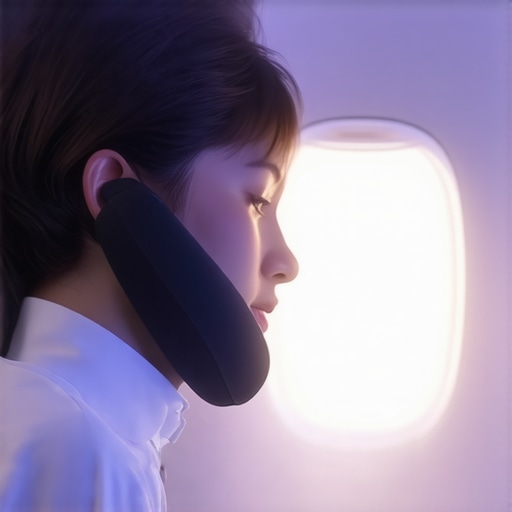
I remember a flight from JFK to LAX about three years ago. It was a six-hour trek, and I thought I was being incredibly clever by bringing one of those massive, plush U-shaped travel pillows. I settled in, leaned my head back, and drifted off. I woke up three hours later with my chin pinned firmly to my chest and a shooting pain that felt like a hot needle being driven into my C7 vertebrae. I spent the next four days in California unable to look over my left shoulder. It was a classic case of post-flight paralysis, and it was entirely my own fault. I realized then that I was making the same amateur mistake thousands of travelers make: I was trying to support my head instead of supporting the natural curve of my spine. I stepped off that plane feeling like my head was a bowling ball being held up by a single, fraying toothpick. You know that feeling, right? That dull, throbbing ache at the base of your skull that makes you wonder if your vacation is over before it even started. Today, I am going to show you exactly how to hack those cramped economy seats so you do not spend your first day at your destination hunting for a chiropractor.
Stop Fighting the Headrest and Start Winning
[IMAGE_PLACEHOLDER]The real culprit behind your travel-related agony isn’t just the lack of legroom; it is the way modern airplane seats are curved. They are designed for safety and mass-production, but for a human spine, they are essentially a torture device that forces your chin toward your chest. This creates a massive amount of forward head posture. According to a study published in Surgical Technology International, for every inch your head tilts forward, it adds an extra 10 pounds of pressure on your neck muscles. By the time you have been hunched over your Kindle for three hours, your neck is supporting the weight of a medium-sized dog. Back in my early days of traveling for work, I used to jam a thick pillow behind my neck, thinking I was doing myself a favor. In reality, my pillow was actually pushing my head forward even further, straining the very ligaments I was trying to protect. If you have ever felt like you needed a morning movement routine just to survive the walk from the terminal to the taxi, you are definitely not alone.
Does an Expensive Pillow Actually Solve Anything?
I get it. You see those $60 memory foam monstrosities in the airport gift shop and think, “Is this actually going to help, or am I just buying a very expensive marshmallow?” The truth is, most people use them entirely wrong. We focus so much on the softness that we forget about the structural alignment. I have found that a simple towel trick or a very specific lumbar adjustment does more for your neck than the fanciest pillow on the market. If you have ever wondered why your neck cracks every time you turn your head after landing, it is a sign your joints have been compressed for too long. Today, I am going to share the exact setup I use to walk off a 10-hour flight feeling like I just woke up in my own bed. We are going to talk about pelvic tilts, the scarf hack, and why your tray table is actually your neck’s worst enemy. Have you ever spent an entire flight trying to find a comfortable position only to give up and accept the inevitable cramp? Let me know, because I have been there, and I promise there is a better way to fly. If you want to dive deeper into why your seat position matters so much, check out how to unlock better back health with these posture tips. Let’s get into the specifics of how to reclaim your comfort in seat 22B.
Turn Your Seat into a Spine-Friendly Zone
To stop the cycle of post-flight stiffness, you have to stop treating your seat like a lounge chair and start treating it like a cockpit. The goal is to maintain your spine’s natural curves rather than letting the seat collapse them. Think of your spine like a suspension bridge; when the anchor points are weak, the whole structure sags. On a twelve-hour flight to Tokyo last year, I forgot my usual lumbar roll. By hour four, my lower back was screaming. I ended up rolling my heavy winter hoodie into a tight cylinder and wedging it right at the base of my spine. The relief was almost instant because it forced my pelvis back into a neutral position. You can achieve this same effect by mastering the simple pelvic tilt that makes sitting for hours painless. It is the single most important adjustment you can make before the plane even leaves the tarmac.
Fix Your Foundation with a Simple Pelvic Tilt
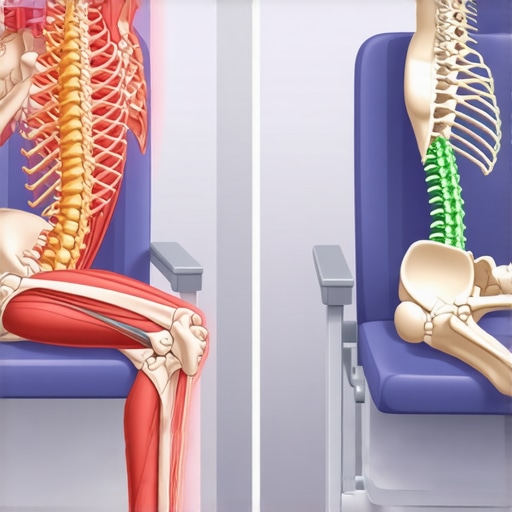
Imagine your pelvis is a bucket of water. Most airline seats are scooped out in a way that tilts your ‘bucket’ backward, spilling water out the back and flattening your lower curve. This puts immense pressure on your discs. To fix this, sit as far back in the seat as possible. Use a rolled-up sweater or a small travel pillow to fill the gap between the seat and your lower back. This acts as the chair hack to keep your pelvis neutral, preventing that ‘slump’ that leads to sciatica and hip pain. When your pelvis is level, your upper back and neck don’t have to work nearly as hard to keep you upright. 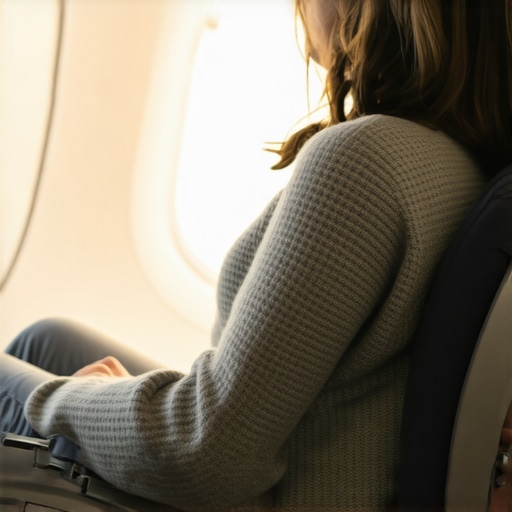
Use a Scarf to Stop Your Head from Falling Forward
Those U-shaped pillows are often too thick in the back, which actively pushes your head forward into ‘tech neck’ territory. Instead of wearing it behind your neck, try turning it around so the bulk is under your chin, or better yet, use the scarf method. I use a pashmina or a thin scarf rolled into a long tube. Wrap it around your neck snugly enough to provide support but loose enough to breathe. This creates a soft ‘brace’ that keeps your head from bobbing during turbulence. It is a travel-friendly version of the simple towel trick for stiff morning necks that maintains your cervical curve. By filling the space between your neck and the headrest, you prevent your muscles from going into protective spasms.
Keep Your Screen at Eye Level to Save Your Neck
The biggest mistake travelers make is looking down at a tablet or book on the tray table for hours. This is a recipe for a C7-T1 nerve pinch. If you are using a device, you need to elevate it. I often stack a couple of personal items on the tray table to bring the screen closer to eye level. Following the 2-inch rule for your laptop stand logic, even a small lift of a few inches can reduce the effective weight of your head by twenty pounds. If you are a tablet user, learning the ergonomic way to use your tablet without tech neck will save you from that deep, burning ache between your shoulder blades. These small, daily adjustments to alleviate back pain and improve posture are what separate the comfortable travelers from the ones hobbling to the baggage claim.
Why Your “Perfect” Military Posture is Actually Hurting You
It’s easy to think that if “slumping” is the villain, then sitting as straight as a board must be the hero. This is the first big mistake I see travelers make. They force their shoulders back and puff their chest out, thinking they have solved the problem. In reality, they have just traded one type of stress for another. When you force a rigid posture, you are putting your spinal muscles into a state of constant isometric contraction. This is exactly why your mid-back feels stiff even after a massage—you are holding yourself in a vice grip. Research published in The Journal of Biomechanics indicates that static loading, even in an upright position, can lead to muscle fatigue and decreased disc nutrition. The goal isn’t to be a statue; it’s to be fluid and adaptable within the seat.
Is Rigid Core Strength the Secret to a Pain-Free Flight?
There is a massive nuance people miss regarding “core strength.” Most people think it means bracing their abs like they are about to get punched. But if you are “sucking it in” for a six-hour flight, you are actually inhibiting your diaphragm and locking your lumbar spine into a precarious position. This is why I tell people why you should stop sucking in your stomach to look thinner, especially when sitting. True stability comes from the deep intrinsic muscles, not just the “six-pack” muscles. If you want to protect your back without the tension, you need to learn the secret to strengthening your deep core without sit-ups. Have you ever tried to “hold” your posture for a long time only to end up in more pain? Let me know in the comments, because this “rigidity trap” is the most common expert-level mistake I see.
Don’t Fall for the “Stretch the Pain Away” Trap
When you feel that tugging in your lower back after landing, the first instinct is often to touch your toes. Stop right there. If your back is sore because your pelvis has been tilted for hours, your hamstrings are already over-lengthened and under tension. Stretching them further is like pulling on both ends of a frayed rope. In fact, why stretching your hamstrings might be making your back pain worse is one of the most eye-opening realizations my clients have. Instead of generic stretching, you need targeted mobility mastery and simple exercises to relieve chronic back pain that address the “stuck” joints. Moving your spine through its full range of motion is always superior to static pulling. For instance, how to test your thoracic mobility in under 60 seconds can tell you exactly where the blockage is before you waste time on useless stretches. The real key to travel comfort is addressing the psoas release that finally stops your deep lower back ache, as these hip flexors are the true architects of your spinal alignment while seated.
The Two-Dollar Tool That Saves My Spine
I never leave home without a tennis ball in my carry-on. It is not for a game; it is my secret weapon for trigger point release during long layovers or those endless minutes waiting at the gate. While everyone else is hunched over their phones, I am usually leaning against a terminal pillar, finding that specific spot between my shoulder blades that always knots up. Understanding how to use a tennis ball to release tension in your feet and back is a game-changer because it allows you to address muscle tightness in real-time, rather than waiting for a professional treatment days later. I find that just two minutes of rolling this under my foot arch during a flight helps keep my entire posterior chain from locking up, which directly prevents that heavy, compressed feeling in my lower back upon landing.
How do I maintain my spinal alignment when I am constantly on the go?
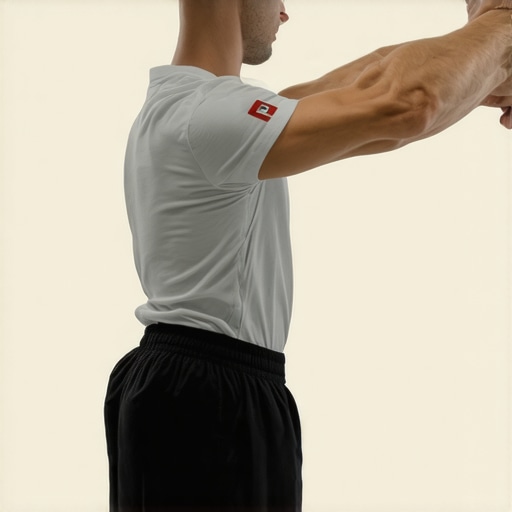
Maintenance is not about doing a massive 60-minute workout once a week; it is about the micro-adjustments you make every few hours. When you finally arrive at your hotel, your first instinct might be to collapse onto the bed. Instead, the very first thing I do is perform the 30-second wall reset for hunchback posture. It resets your brain’s map of where your body is in space after being distorted by an airplane seat. Consistency here is key to adjust your routine daily spinal alignments for lasting relief. As noted in Dr. Stuart McGill’s Back Mechanic, spine hygiene is about the cumulative effect of our movements. If you can integrate master your mobility top strategies for moving without pain into your travel transitions—like between the plane and the car—you will stop the ‘stiffness debt’ from accumulating in the first place.
Why Smarter Technology Won’t Replace Basic Movement
In the next five years, I expect we will see bio-feedback sensors integrated directly into our headphones, providing real-time haptic alerts when our head tilts too far forward. While this tech will be helpful, it won’t replace the fundamental need for joint mobility. If your joints are already stuck, a buzzing sensor will just tell you that you are in pain without giving you the tools to fix it. This is why you need to enhance your mobility with expert tips for easier movement in 2025 that focus on functional range rather than just passive stretching. We are moving toward an era of ‘active recovery’ where your travel gear—from your shoes to your backpack—will be scrutinized for its postural impact. Learning these posture correction secrets that transform back pain outcomes now gives you a massive head start on the curve. I challenge you to try the tennis ball trick on your next flight; roll it under your foot arch for two minutes and notice how much lighter your legs feel when you stand up to deplane.
My Three Personal Rules for Long-Haul Comfort
After years of trial and error, I have realized that the seat isn’t the only enemy; it is the stillness. My first rule is the ’20-minute fidget.’ I never stay in one position for more than a third of an hour. Secondly, I stopped over-relying on built-in features. In fact, why your lumbar support might be making your pain worse is usually because it is positioned for someone much taller or shorter than you. My third rule? Trust the sensation of ‘space’ in your joints rather than the softness of the cushion. Understanding how an adjustment restores more than just range of motion changed my perspective on how to prepare my body for a flight before I even board.
The Only Gear I Carry to Save My Spine
[IMAGE_PLACEHOLDER]
I have narrowed my travel kit down to three essentials: a tennis ball, a versatile pashmina, and a downloaded copy of the best stretching routine for frequent travelers. The tennis ball handles the trigger points, the scarf provides custom cervical support, and the routine keeps my blood flowing. I have also learned that why your pillow choice is ruining your morning mobility often comes down to the lack of versatility in standard airline pillows. These tools allow me to adapt to any seat, whether I am in a budget airline or a first-class pod.
Make Your Next Landing Your Best One
You do not have to accept post-flight stiffness as an inevitable part of the journey. By implementing these daily adjustments to alleviate back pain and improve posture, you can step off the plane ready to enjoy your destination. It is about taking control of your environment rather than letting the hard plastic of the seat dictate your spinal health. Start with one small change on your next flight and see how your body responds. As you enhance your mobility with expert tips for easier movement in 2025, you will find that travel becomes a joy rather than a chore. What is the one thing you always pack to keep yourself comfortable in the air? Let me know in the comments below!