

I was reaching for a simple coffee mug in the top cabinet—a move I have made ten thousand times—when my world stopped. A white-hot spike of pain pierced right under my shoulder blade. I froze. I could not even finish my inhale without a wince. It was not just a tight muscle; it felt like a mechanical failure, as if someone had driven a hot needle into my back and left it there. For weeks, I walked around like a robot, terrified to turn my head or reach for the remote. I made the classic rookie mistake of thinking I just needed to stretch it out harder. Spoiler alert: I was wrong, and I actually made the inflammation worse before I got better. If you have ever felt that localized, stuck sensation that makes every breath feel like a chore, you know exactly the frustration I am talking about. Today, I am going to show you how to shut that signal down and get your mobility back without a bottle of ibuprofen.
That Sudden Stab Is Not Just Muscle Fatigue
Most of us assume we just pulled something while sleeping or lifting a grocery bag. I spent years thinking my rhomboids were the primary enemy. But often, that sharp, localized misery is actually a rib that is not moving quite right or a nerve that is being crowded by a rounded upper back. We live in a world that pulls us forward constantly, and our mid-backs are paying the price for our digital habits. When I finally learned how to fix a stuck feeling in your mid-back, the relief was not just physical—it was emotional. You do not realize how much mental energy a constant knot takes up until it is finally gone. If your ribs feel tender near your spine, it is a sign that your thoracic cage is struggling to expand.
Is This Pain Actually Different From a Normal Back Ache?
You might be skeptical and think it is just another knot that will eventually fade. I used to say the same thing. But this specific pain under the blade is a different beast than a simple sore muscle from the gym. According to research published by the National Library of Medicine, thoracic spine dysfunction can actually mimic more serious internal issues because of the complex way our nerves are wired through the rib cage. It is a serious disruptor of your daily life. Have you ever been stuck in a long meeting or driving your car and felt that sudden, sharp pinch return the moment you tried to look over your shoulder? Today, I am going to walk you through the exact routine I used to regain my range of motion. We are going beyond the basic sit up straight advice and diving into the mechanics of what actually releases that tension. Sometimes the shoulder blade squeeze that fixes mid-back knots instantly is exactly what you need, but first, we have to understand why your body is throwing these red flags.To get that rib back into its proper rhythm, you have to stop treating your back like a flat board and start treating it like a three-dimensional cage. The first thing I do when I feel that familiar pinch is the accordion breath. I remember sitting on my living room floor, sweating from the pain, trying to force a foam roller into my spine. It felt like I was trying to hammer a screw. It was only when I stopped the brute force and focused on internal pressure that things shifted.
Stop Attacking the Muscle and Start Moving the Bone
If you only massage the knot, you are just yelling at a symptom. The real fix starts with mechanical decompression. When your mid-back feels fused, it is often because your ribs have stopped gliding during your inhale. Think of your rib cage as a series of stacked rings; if one ring gets snagged on a neighboring joint, every movement triggers a protective spasm.
Breathe Into the Pain to Force a Release
This sounds counterintuitive because it hurts to breathe, but shallow chest breathing is what keeps the area locked. You need to direct your air to the back of your lungs. Imagine your shoulder blades are two doors and your breath is the wind trying to push them open from the inside. I found that why your breath is the key to releasing spine tension is not just a theory; it is a manual override for your nervous system. By expanding the rib cage laterally, you create the space the vertebrae need to reset. 
The Lat Stretch That Actually Works
Most people stretch their chest, but they forget the massive muscle that anchors your arm to your mid-back. If your lats are tight, they act like internal straightjackets pulling your rib cage downward. Try grabbing a door frame, leaning back, and breathing deeply into the side of your ribs. I used the lat stretch that stops your ribs from feeling stuck during a particularly bad flare-up last summer, and I felt a literal pop of decompression that I could not get from any massage chair.
Stop the Forward Pull From Your Daily Habits
The reason that hot needle sensation returns is usually because your environment is designed to collapse you. We spend hours in a C-curve posture, which overstretches the mid-back muscles until they become weak and irritable.
Your Laptop Screen Is Your Biggest Enemy
If you are looking down even slightly, you are adding thirty pounds of pressure to those tiny mid-back joints. Adjusting why your laptop screen height is killing your upper back is the most boring but effective advice I can give. When I finally raised my monitor to eye level, the frequency of my stuck rib episodes dropped by half in a single month.
Stop Holding Your Breath to Look Thinner
We all do it—the ab tuck to look better in photos or at the gym. But when you chronically grip your stomach, you prevent your diaphragm from dropping. This forces the muscles in your neck and mid-back to do the heavy lifting for every breath. Understanding why you should stop sucking in your stomach to look thinner is vital because it restores the natural pressure balance in your torso, taking the load off those tender spots near your spine.
The Wall Angel Reset
To maintain the progress, you need a move that reinforces the opposite of your desk slump. Standing against a wall and performing slow arm slides mimics the way an adjustment opens the thoracic cavity. It is about re-training the brain to accept this new, open position. Integrating the wall angel move that reverses a day of hunching over a phone into your hourly routine acts as a preventative shield against future spasms.The biggest lie we are told about back pain is that ‘tight’ always equals ‘needs stretching.’ I spent years trying to lengthen muscles that were already screaming because they were overstretched. In the clinical world, we call this ‘eccentric loading’—your muscles are not short; they are pulled taut like a bowstring because your structure is collapsing forward. If you keep stretching a muscle that is already at its limit, your brain will actually increase the tension to prevent a tear. This is exactly why your mid-back feels weak even if you work out; you are trying to strengthen a muscle that is fundamentally exhausted from holding you up. When I finally stopped the obsessive stretching and started focusing on stability, my chronic knots started to melt away without a single massage.
Why Stretching Your ‘Tight’ Back Is Probably Backfiring
Most people feel that ‘stuck’ sensation and immediately go for a deep twist or a heavy stretch. But if the underlying issue is a lack of stability, you are just adding fuel to the fire. I see patients all the time who swear by their ‘morning stretch,’ yet they are in my office every month for the same rib flare. Sometimes, why stretching your psoas might actually be making your back hurt more is the exact lesson they need to learn. If the front of your body—specifically your hip flexors and chest—is too tight, it pulls your entire spine into a forward curve, making the back muscles work overtime to keep you upright. You do not need more length in the back; you need more space in the front to allow the spine to stand tall naturally.
The Brute Force Trap of Foam Rolling
We have been conditioned to think that ‘no pain, no gain’ applies to recovery too. I used to be the guy at the gym who would roll until I saw stars, thinking I was ‘breaking up’ scar tissue or adhesions. Modern research, including studies published in the Journal of Manipulative and Physiological Therapeutics, suggests that the thoracic spine is the primary gateway for our sympathetic nervous system—the ‘fight or flight’ hub. When you aggressively hammer your spine with a hard foam roller, you are not just massaging muscle; you are irritating the sympathetic chain that sits right in front of your rib heads. This can trigger a sympathetic ‘flare,’ causing your muscles to clamp down even harder to protect the sensitive nerves. 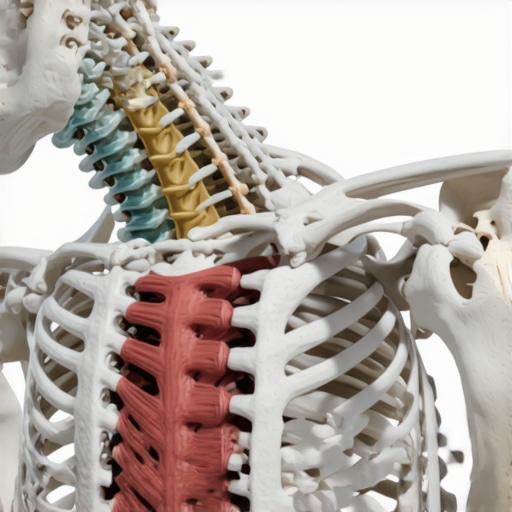
Why Does the Tension Return Even After a Good Adjustment?
This is the million-dollar question for anyone dealing with chronic ‘stuckness.’ If you get adjusted but go right back to wearing the truth about posture correctors and braces, you are essentially asking a machine to stay aligned while you continue to bend the frame. Posture is an active process, not a passive one. The adjustment provides the neurological window of opportunity—a temporary reset of the pain signal—but your daily movement patterns are what keep that window open. Real progress happens when you combine clinical relief with posture correction secrets that transform back pain outcomes. It is about teaching your brain that the new, aligned position is safe and efficient. Without that neurological safety, your body will revert to its ‘slumped’ default within hours to protect itself from what it perceives as instability. To truly master your mobility, you have to stop thinking about your back as a list of parts and start seeing it as a nervous system feedback loop. Have you ever fallen into this trap where you stretched your way into more pain? Let me know in the comments.I transitioned from using a standard rigid roller to a double-lacrosse peanut ball for one specific reason: precision. When you lay on a flat roller, the pressure is distributed across the bony bits of your spine, which can actually irritate the periosteum or the skin of the bone. By using a peanut, you create a channel for your spine to rest in while the balls target the thick paraspinal muscles directly. It is a game-changer for those who find the stuck feeling persists despite regular rolling. Learning the proper way to use a foam roller on your upper back saved me from causing more inflammation than I was curing.
How do I keep my spine mobile for the long haul?
The secret isn’t a sixty-minute yoga session once a week; it is the concept of movement snacks. Dr. Stuart McGill, a world-renowned expert in spine biomechanics and author of Back Mechanic, emphasizes that maintaining a stiffness in the core while encouraging mobility in the thoracic spine is the key to longevity. This means daily adjustments to alleviate back pain and improve posture are far more effective than sporadic deep-tissue massages. I personally set a timer for every forty-five minutes to perform a single ten-second thoracic extension over the back of my chair. This micro-reset prevents the creep phenomenon, where your ligaments literally stretch out and lose their ability to snap back into place during a long workday. 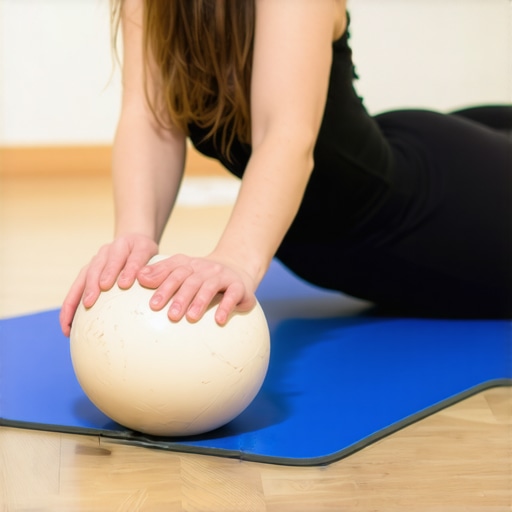
Why Soft Tools Beat Hard Plastic Every Time
We often think that more pain equals more gain, but your nervous system usually disagrees. If a tool is so hard that you have to hold your breath to endure the pressure, your brain will subconsciously guard the area, making the treatment counterproductive. I recommend using a medium-density foam or even a tennis ball to start. This softer approach allows you to enhance your mobility with expert tips for easier movement in 2025 without triggering a defensive protective spasm that resets your progress.
Real-Time Biofeedback Is the Future of Back Health
In the next few years, I predict we will move away from manual checks and toward wearable sensors that vibrate the second your thoracic spine loses its neutral curve. We are already seeing early versions of this, but the integration with AI will soon tell us exactly which muscle is failing in real-time based on our unique anatomy. Until then, you need to unlock better back health with effective posture tips for 2025 by developing your internal map of where your body is in space. Master your mobility today by trying this one advanced tip: tonight, before you go to bed, lay on the floor with a rolled-up towel horizontally across your shoulder blades for three minutes and focus only on letting your ribs drop toward the floor. It is the ultimate antidote to a day of forward living.
The Hard Lessons My Spine Had to Teach Me
After years of battling that localized ‘stuck’ sensation, I realized that the hardest part of recovery wasn’t the exercise itself—it was unlearning the urge to fight my own body. First, I had to accept that pain is often a protective guard, not just a physical knot; if you try to bully a muscle into relaxing, it will only tighten further. Second, I learned that my front was usually the culprit for my back’s misery; by opening my chest, I gave my ribs room to breathe. Finally, I discovered that consistency beats intensity every single time. Small, daily adjustments to alleviate back pain and improve posture did more for my long-term health than any high-intensity ‘fix’ ever could.
Tools That Actually Moved the Needle for Me
I have tried every gadget on the market, but only a few earned a permanent spot in my routine. I swear by the ‘peanut’ (a double lacrosse ball) because it allows for targeted pressure without bruising the spine itself. I also highly recommend the book Back Mechanic by Dr. Stuart McGill, which is essentially the Bible for anyone trying to understand spinal stability. To prevent the slump from returning at work, I implemented the 2-inch rule for your laptop stand, which immediately reduced the mechanical load on my thoracic joints. Finally, a medium-density foam roller remains my go-to for gentle rib expansion at the end of a long day. #IMAGE_PLACEHOLDER_E#
Your Path to Breathing Without That Sharp Catch
You do not have to live in a state of ‘bracing’ for the next spasm. By shifting your focus from aggressive stretching to mindful mobility and structural support, you can retrain your nervous system to let go of that chronic tension. It takes patience to achieve true mobility mastery simple exercises, but the reward is a body that feels light, fluid, and capable of a full, deep breath. Start small, stay consistent, and listen to the subtle signals your body is sending you before they turn into screams. Have you ever felt that sharp, ‘stuck’ rib sensation after a simple movement like reaching for a coffee mug? Let me know your experience in the comments below.