

I remember sitting in my car, three hours into a grueling road trip, feeling like someone had poured wet concrete into my lower back. I was doing everything “right”—or so I thought. I had the lumbar support dialed in, I was sitting tall, and I was trying to keep my core tight. But my spine felt like a coiled spring ready to snap. Every time I hit a pothole, a sharp jolt shot up my neck. I realized then that my body was stuck in a survival loop. I was breathing into my chest, my shoulders were hiking up to my ears, and my mid-section was as rigid as a board. It was a classic mistake. Today, I am going to show you how to break that loop by retraining your diaphragm, because quite frankly, if you are not breathing right, your stretches do not stand a chance.
Stop Sucking It In and Start Living
For years, I fell for the lie that a flat stomach meant a healthy back. I spent my days sucking in my gut, thinking I was protecting my spine. In reality, I was just starving my lower vertebrae of the internal pressure they needed to stay stable. When you hold your breath or breathe shallowly into your upper chest, your secondary respiratory muscles—the ones in your neck and shoulders—have to take over. This is exactly why your shoulders always hike up to your ears during a long work day. By learning to send that air down into your belly, you create a natural “airbag” for your lumbar spine. This isn’t just about relaxation; it is about physics. According to researchers at the Harvard Health Publishing, diaphragmatic breathing helps stabilize the core and lowers the physical effects of stress on the body. If you feel like your core strength isn’t stopping your back aches, this is likely the missing piece of your puzzle.
Is This Just Some Yoga Trick That Won’t Actually Work?
I get the skepticism. When I first heard about “belly breathing,” I thought it sounded a bit too “new-age” for a guy with real, mechanical back pain. I wanted a crack or a stretch, not a breathing exercise. But once I realized that why your breath is the key to releasing spine tension is rooted in how your diaphragm attaches directly to your lumbar vertebrae, my perspective shifted. If that muscle is tight and never moves through its full range, it literally pulls on your spine 22,000 times a day. Have you ever felt like your back is “locked” even when you aren’t doing anything active? That is the feeling we are going to fix today. We are moving past the superficial fixes like posture correctors and braces and getting to the engine of your mobility. Let’s look at how to actually feel that air move where it belongs.
Think of your torso like a soda can. When the can is sealed and under pressure, it can support an incredible amount of weight. But the moment you pop the tab or dent the side, it loses that structural integrity and crumples. This is exactly what happens when you breathe exclusively into your chest or ‘suck in’ your stomach to look thinner. You are effectively popping the tab on your own spinal support system. To fix this, we need to move away from ‘belly breathing’ and toward something more functional: 360-degree expansion.
Transform Your Breathing Into a Natural Back Brace
The goal isn’t just to make your belly big when you inhale. It is to expand your entire midsection—front, sides, and back—simultaneously. This creates the intra-abdominal pressure necessary to support the spine from the inside out. This is the secret to strengthening your deep core without sit-ups or planks that often do more harm than good. When you achieve this pressure, your lumbar vertebrae are no longer doing all the heavy lifting alone.
Find Your Lower Ribs First
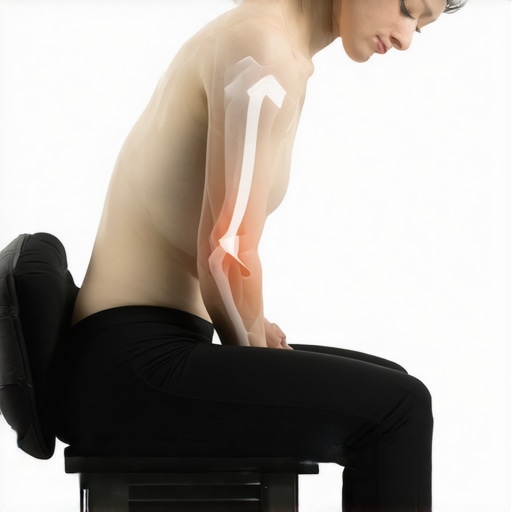
Most people have lost the sensory connection to their lower rib cage. To find it, sit on the edge of a firm chair. Place your hands on your sides, right above your hips, with your thumbs wrapping around toward your spine and your fingers pointing toward your belly button. Squeeze slightly. Your goal on the inhale is to push your hands away using only your breath. If your shoulders move up toward your ears, you are failing the drill. This is a common culprit for why your shoulders always hike up to your ears when you type; your neck is trying to do the diaphragm’s job.
Push Your Breath Into the Floor
Once you can feel the sides of your ribs moving, try to send the air even lower. I call this ‘breathing into the pelvic floor.’ I remember the first time I tried this during a particularly nasty flare-up. I was lying on my back, and every time I took a shallow chest breath, my lower back would arch and throb. I focused on sending the air so deep it felt like I was trying to push my tailbone into the floor. On the fourth breath, I heard a dull ‘thud’ in my hip area—not a painful crack, but a release. The tension that had been holding my pelvis in a tilt simply evaporated. Learning how to breathe into your lower back to release tension is often the first step toward real mobility.
Why Your Mid-Back Needs This Expansion
If you feel like you are constantly fighting a ‘hunch,’ the problem might not be your posture, but your rib mobility. When the diaphragm doesn’t move, the ribs become stiff and ‘stuck’ in a flared or depressed position. This leads to that familiar stuck feeling in your mid-back that no amount of stretching seems to reach. By forcing the ribs to expand laterally with every breath, you are performing a micro-adjustment 22,000 times a day. If your ribs feel particularly rigid, you might need to incorporate the lat stretch that stops your ribs from feeling stuck to give the diaphragm enough room to actually expand. Without that space, you are just spinning your wheels.
The biggest mistake I see people make once they master their breath is trying to stay perfectly still. They find that ‘neutral spine,’ lock it in place, and then refuse to move for eight hours because they are afraid of ‘breaking’ their form. This is the ultimate posture trap. In reality, the best posture is your next posture. If you stay in one ‘perfect’ position for too long, you are still cutting off blood flow and creating ischemic pain. This is often why your mid-back feels weak even if you work out; your muscles are fatigued from isometric holding, not from actual weakness. People often think that unlocking better posture means looking like a soldier on parade. But in my years of helping people find lasting relief through daily spinal alignments, I’ve found that those who obsess over ‘holding’ a position are the ones who end up in my office with the most stubborn tension. According to a landmark study in the British Journal of Sports Medicine, there is no evidence that one specific ‘upright’ posture protects you from back pain more than others. The secret isn’t the position; it’s the transition. 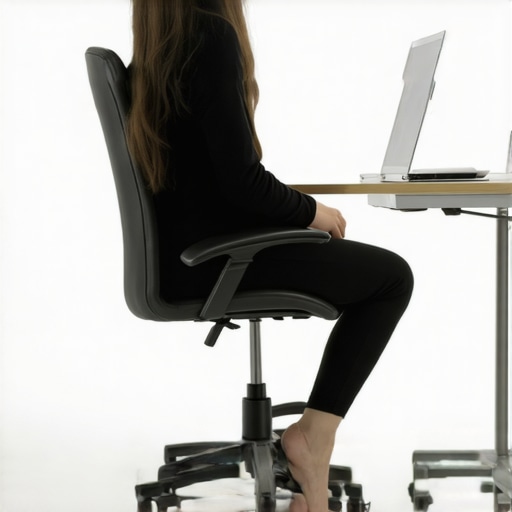
Why does ‘fixing’ my alignment actually cause more discomfort at first?
When you start implementing posture correction secrets, your body might rebel. This is the ‘oops’ factor: over-correcting. If you force your shoulders back too aggressively, you might find that your neck crunches when you look over your shoulder. You’ve traded one tension for another. This is also why you feel wobbly after your first adjustment. Your nervous system is recalibrating to a new center of gravity. Many people mistake rigidity for stability. They squeeze their glutes and abs so hard they actually compress their own discs. This ‘bracing’ mistake is common when people try to apply daily adjustments to alleviate back pain and improve posture without understanding tension distribution. If your lower back is locked, your body will look for movement elsewhere, often in the neck or the SI joint. This leads to that sharp pain under your shoulder blade that feels like a hot needle. The trap is thinking that mobility mastery is about flexibility. It’s not. It’s about control. If you have a stiff big toe causing chronic lower back pain, no amount of ‘sitting tall’ will fix the way your pelvis tilts when you walk. You have to address the mechanical chain. We often ignore these tiny nuances, like how your pillow choice ruins your morning mobility, while focusing on the big, flashy stretches that don’t actually change our daily movement patterns. Stop trying to be a statue. Focus on enhancing your mobility with expert tips that prioritize micro-movements. Use the 30-second wall slide not as a workout, but as a reset button. Have you ever fallen into this trap of trying to ‘hold’ a perfect posture only to find it made you stiffer? Let me know in the comments.
Build a Toolkit That Actually Travels With You
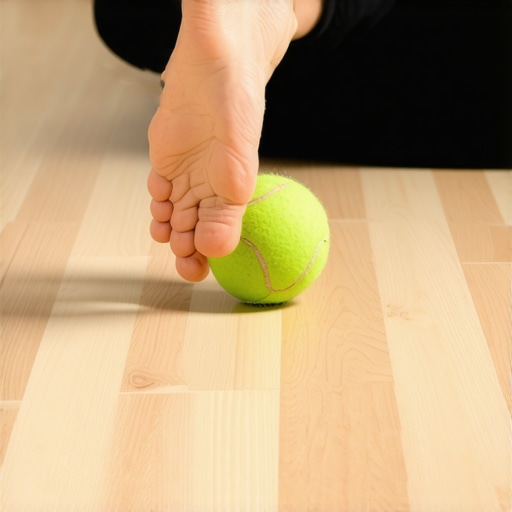
I stopped relying on luck the moment I realized my back pain was a management issue, not a curse. If you want to keep the progress you have made with your breathing and posture, you need a physical toolkit. For me, that started with a simple tennis ball. It is portable, cheap, and more effective than most hundred-dollar gadgets. I learned how to use a tennis ball to release tension in your feet and back while waiting for flights at the airport. By rolling out the plantar fascia on the bottom of my feet, I was actually loosening the entire posterior chain of my body, which kept my lower back from tightening up during long sits.
How do I keep these results from fading after the first week?
Maintenance is about what Dr. Stuart McGill, a world-renowned expert from the University of Waterloo Spine Biomechanics Laboratory, calls “spinal hygiene.” His research suggests that repeated spinal flexion—the kind you do when you slouch for hours—can lead to disc delamination over time. To combat this, you have to master your mobility with top strategies for moving without pain every single day. It is not about a grueling 60-minute workout; it is about the little things, like knowing the correct way to use a standing desk without hurting your feet. If you are standing but locking your knees and shifting your weight to one side, you are just trading a back ache for hip pain. I also found that the simple change to your keyboard height can be the difference between a free neck and a chronic headache.
Smart Fabrics and the Future of Back Health
Looking ahead, I predict we are moving toward a world where technology does the “remembering” for us. We are already seeing the rise of smart fabrics and wearable sensors that provide haptic feedback when your diaphragm stops moving or your spine enters a high-risk position. Until then, you have to be your own sensor. You need to enhance your mobility with expert tips for 2025 that focus on long-term sustainability. My non-negotiable is the best morning routine for a stiff lower back, which usually involves three minutes of cat-cow and some gentle nerve flossing. This lubricates the joints before I even have my first cup of coffee. If you are ready to take this to the next level, I want you to try the bird dog move that every back pain sufferer needs tonight before bed. It is the gold standard for stabilizing the spine without adding unnecessary load. Consistency in these micro-adjustments is what turns a ‘good day’ into a pain-free life.
The Hardest Lesson I Learned About Spine Stability
For a long time, I thought that getting out of pain was about the ‘big fix’—the one perfect adjustment or the one miracle stretch. But the truth is, the most profound changes happened when I stopped trying to force my body into submission and started working with its natural mechanics. I realized that my breath wasn’t just air; it was a pressurized support system. If you ignore this, your posture correction secrets will never fully take root because your foundation is built on tension rather than pressure.
Another ‘lightbulb moment’ was understanding that pain doesn’t always equal damage. Sometimes, it’s just a signal from a nervous system that has forgotten how to feel safe. By practicing daily adjustments to alleviate back pain and improve posture, you are essentially telling your brain that it is okay to let go of that protective guarding. It is a slow process of building trust with your own anatomy, but it is the only way to find lasting relief through daily spinal alignments.
My Non-Negotiable Toolkit for Daily Movement
If you are serious about this journey, you need more than just knowledge; you need a few reliable companions. I always recommend keeping a firm tennis ball nearby. Knowing how to use a tennis ball to release tension in your feet and back is a game-changer for those long office days. It is the most cost-effective massage therapist you will ever find because it targets the fascia that breathing alone cannot reach.
Beyond physical tools, I trust the ‘Gold Standard’ exercises like the bird dog. I have found that the bird dog move that every back pain sufferer needs provides the perfect blend of stability and neurological feedback. I also suggest checking out the latest research-backed strategies on effective posture tips for 2025 to stay ahead of the curve as our daily habits continue to evolve. These resources have been my compass when I felt lost in a sea of conflicting advice.
Your Body Is Ready to Stop Fighting Itself
You do not have to live in a state of constant ‘holding.’ The fatigue you feel in your mid-back and the tightness in your neck are often just symptoms of a system trying too hard to protect you. When you lean into enhancing your mobility with expert tips, you are not just stretching; you are reclaiming your freedom to move without fear. Start small, breathe deep, and remember that every micro-adjustment counts toward your long-term relief.
You have the tools now to master your mobility and rewrite the story of your back health. Be patient with yourself as you navigate these changes. Have you ever felt that ‘locked’ sensation in your spine even when you weren’t doing anything active? Let me know in the comments below, and let’s troubleshoot it together!