

I remember walking out of my first major chiropractic session feeling like a brand-new human. I felt lighter, I stood taller, and for the first time in months, that nagging pinch in my mid-back was gone. Then, I went home and made a massive mistake. I flopped onto my old, saggy mattress in my usual stomach-sleeping sprawl, thinking I was giving my body a rest. I woke up eight hours later feeling like I’d been folded into a suitcase. It was a wake-up call, literally. I realized that what happens to your spine during a professional adjustment is only half the battle; the other half is how you treat it during the eight hours you’re unconscious. Today, I’m going to show you exactly how to set up your bed so you don’t waste your money or your progress.
Why Your Bed is the Real Test for Your New Alignment
When you leave the clinic, your ligaments and muscles are essentially in a state of flux. They are used to holding your bones in a dysfunctional way, and they want to pull them back there. This is why you feel wobbly after your first adjustment sometimes. If you spend the night twisted like a pretzel, you’re basically giving those stubborn muscles permission to undo all the hard work your chiropractor just did. My biggest mistake early on was thinking that my body would just ‘stay’ aligned regardless of my posture. I had to learn the hard way that gravity never sleeps, even when I do. The goal is neutral alignment—keeping your ears, shoulders, and hips in a relatively straight line.
Will One Night of Bad Sleep Actually Ruin Your Progress?
It’s a question I get asked all the time, and the honest answer is: it won’t ruin it forever, but it will definitely set you back. According to experts at the Mayo Clinic, sleeping on your stomach is the absolute worst choice because it forces your neck to stay at a sharp angle for hours, which places immense strain on your cervical spine. I used to be a die-hard stomach sleeper until I realized it was the primary reason I couldn’t shake my morning headaches. If you’re struggling with this too, you really need to stop sleeping on your stomach to fix your morning neck stiffness. Have you ever felt like you were ‘fighting’ your pillow all night just to find a comfortable spot? Tell me about it in the comments, because that struggle is usually the first sign that your setup is working against your spine. We need to look at the best pillow setup for side sleepers and back sleepers to ensure that when you wake up, you feel as good as you did when you walked out of the office.
Stop Twisting Your Spine Before You Even Close Your Eyes
Think of your spine immediately after an adjustment like a freshly glued vase. It’s back in its proper shape, but the bond is still curing. One sudden, jarring movement can create a hairline fracture in that stability. The most dangerous moment isn’t actually while you’re asleep; it’s the 30 seconds it takes to get into bed. Most of us sit on the edge and then flop sideways, which shears the vertebrae. Instead, you need to use the ‘log roll.’ You sit on the bed, lower your upper body with your arms while simultaneously swinging your legs up, keeping your torso and hips moving as one solid unit. I learned this the hard way after a session when I reached across the bed to pull up a heavy comforter and felt a sharp ‘zip’ in my lumbar. It was essentially the same mistake as not knowing the proper way to get out of a car to protect your discs—you cannot afford to rotate your spine while it’s under a load.
The Secret to Pain-Free Back Sleeping
If you can train yourself to stay on your back, you are giving your chiropractor the greatest gift possible. However, the flat-on-your-back position can actually arch your lower spine if your hip flexors are tight. This is how to sleep on your back without waking up stiff: place a medium-sized pillow under your knees. This slight bend in the legs flattens the lumbar spine against the mattress, taking the ‘tug’ off your lower back muscles. I spent years fighting my own anatomy until I realized that my legs were like levers pulling on my pelvis all night. Once I added that knee pillow, the morning ‘crunch’ I usually felt in my tailbone vanished within three days. 
Keep Your Pelvis Level While You Sleep on Your Side
If you absolutely cannot sleep on your back, side sleeping is a fine runner-up, but only if you manage your ‘internal rotation.’ When you lay on your side, your top leg naturally wants to slide forward and hit the mattress. This pulls your top hip down and rotates your lower spine into a slow-motion twist that lasts for hours. This misalignment is often why your knees hurt when you have a pelvic tilt or why your hip feels ‘jammed’ in the morning. You must place a firm pillow between your knees, extending from the knee down to the ankle. This keeps your hips stacked like a stack of pancakes rather than a twisted spiral staircase.
Fill the Gap Under Your Neck
Your pillow’s only job is to fill the space between your ear and the mattress—nothing more, nothing less. If your pillow is too high, it’s like spending eight hours in ‘text neck’ posture. If it’s too flat, your head hangs down, straining the delicate ligaments on the side of your neck. For those dealing with more severe issues, finding the best sleeping position for people with neck herniations often involves a cervical roll. You can even try the simple towel trick for stiff morning necks by rolling up a small hand towel and sliding it into the base of your pillowcase to support the natural curve of your neck. Once you are settled, focus on how to breathe using your belly to lower spinal tension, which helps the muscles around your ribs and spine finally let go of the day’s stress.Wait, before you go and double down on your morning yoga, let’s talk about the biggest lie in the fitness and wellness world: that stiffness is always a flexibility problem. I see this constantly in my practice and personal journey. People come in complaining of tight legs, so they stretch for hours, yet why your hamstrings feel tight even though you stretch every day is often because your pelvis is tilted and your brain is tightening those muscles to keep you from falling over. It’s a protective mechanism, not a lack of length. If you keep stretching a muscle that’s trying to save your spine, you’re essentially fighting your own central nervous system. In my experience, most people don’t need more flexibility; they need more stability in the right places.
The Dangerous Trap of the Self-Adjustment
The most common ‘oops’ factor I see is the ‘self-crack.’ We’ve all been there—that heavy, full feeling in your neck or mid-back that only a quick ‘pop’ seems to fix. But the truth about why cracking your own neck feels good but harms you is that you aren’t actually hitting the stuck segment. You’re usually popping the hypermobile segments above or below the problem area. It’s like a drug; you get a temporary endorphin hit, but you’re actually making your spine more unstable in the long run. I used to be a chronic neck-cracker until I realized I was just wearing out my own ligaments. Have you ever fallen into this trap of constant self-adjusting just to get a few minutes of relief? Let me know in the comments, because it’s a cycle that’s hard to break once it starts. 
Can you actually be too flexible for your own spine’s safety?
Absolutely. In the clinical world, we call this clinical instability. If your joints move too much and your muscles aren’t strong enough to control that range, you’re an injury waiting to happen. This is why you need to master your mobility by focusing on controlled movement rather than just ‘floppy’ stretching. Many think ‘core strength’ is the magic bullet, but why your core strength isn’t stopping your back aches might be due to a lack of motor control rather than raw power. According to a study published in *The Journal of Orthopaedic & Sports Physical Therapy*, it’s the precise timing of the deep stabilizing muscles—not the size of the ‘six-pack’—that actually prevents injury. This is where posture correction secrets that transform back pain outcomes really come into play. It’s about retraining the brain to fire the right muscles at the right millisecond. If you are serious about lasting relief, you have to adjust your routine to include stability drills, not just passive stretches. Real progress comes when you stop chasing the ‘crack’ and start chasing the control.Once you stop the self-cracking habit, you might feel a strange void, but that is actually the sound of your ligaments finally getting a chance to tighten up and stabilize. I found that the bridge between professional care and a pain-free life isn’t just more exercise; it is about building an environment that protects your adjustment. This is the moment you transition from being a passive patient to the architect of your own spine.
Don’t Let Your Progress Slip Away Tomorrow
I spent hundreds of dollars on fancy ergonomic chairs only to realize they were still letting me slouch. The missing piece was actually a simple, firm lumbar support. However, you have to be careful because the truth about lumbar support rolls and lower back spasms is that if you place them too high, they can actually trigger more pain. I personally use a small, dense foam roll placed exactly at the level of my belt line. This acts as a physical reminder to keep the natural curve of my lower back. Dr. Stuart McGill, a world-renowned spine researcher at the University of Waterloo, has pioneered the concept of ‘spine hygiene,’ proving that the way you move during mundane tasks—like picking up a pencil or sitting at a desk—is far more predictive of long-term health than how much you can lift at the gym. 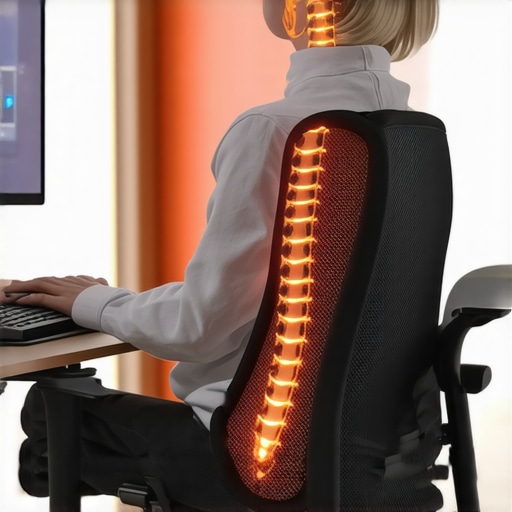
The Only Two Gadgets Worth Your Money
Besides a good lumbar roll, I recommend a simple vibrating timer or a browser extension that pings you every half hour. You cannot trust your brain to remember posture when you are deep in a flow state. This is why your spine needs movement every 30 minutes; it prevents the ‘creep’ or deformation of your spinal discs that happens during prolonged loading. I also swear by a laptop stand that brings the screen to eye level. If you are looking down, you are essentially hanging a 10-pound weight off your neck ligaments all day. If you want to truly unlock better back health with effective posture tips for 2025, you have to treat your desk like a cockpit where every angle is calibrated for your specific limb length.
How do I maintain my spinal alignment without visiting the clinic every week?
The secret is consistency over intensity. You don’t need a 60-minute yoga flow; you need 2 minutes of spinal lubrication every single morning. I’ve found that applying posture correction secrets that transform back pain outcomes involves ‘reset’ moves throughout the day. Looking forward, I predict we are entering the era of biofeedback wearables—tiny sensors that will stick to your skin and give you a gentle haptic buzz the moment your shoulders start to round. We are moving away from guessing and toward real-time data for our discs. Your next step is to stop overcomplicating things. Tonight, before you head to bed, I want you to spend just three minutes doing the bird-dog move that every back pain sufferer needs. It is the gold standard for ‘waking up’ the deep stabilizers that keep your chiropractor’s work in place.
What I Learned When My Back Stopped Moving
After months of trial and error, I realized that a successful recovery isn’t about one big change, but a series of tiny, intentional choices. First, you have to accept that your muscles have a deep memory. They will try to pull you back into your old, crooked habits for weeks. It’s not a failure; it’s just your nervous system being stubborn and protective. Second, I found that the quietest moments—like how I sit while scrolling on my phone or brushing my teeth—mattered more than my 30-minute gym sessions. I had to learn the proper way to lean over the sink just to give my lumbar a break.
One of the biggest lightbulb moments was finally recognizing the difference between muscle soreness and a misaligned vertebra. Once I stopped panicking every time I felt a little “zing” after an adjustment, I could actually focus on the real work of stabilization. I also had to learn to stop seeking that instant “pop” and start seeking control. If you can adjust your routine to prioritize how you move rather than how you crack, you are 90% of the way to a permanent fix.
The Toolbox That Keeps Me Out of the Clinic
I don’t believe in buying every gadget on the market, but three things changed my life and protected my chiropractic investment. A firm lumbar roll is non-negotiable for anyone who spends more than an hour a day in a chair. However, you have to be careful because the truth about lumbar support rolls and lower back spasms is that placement is everything—too high and you trigger a flare-up. I also swear by a simple laptop stand to keep my eyes level and prevent “tech neck.” Lastly, the Bird-Dog exercise is my daily anchor. It is truly the bird-dog move that every back pain sufferer needs to build the deep core stability that keeps your vertebrae where they belong.
Your Path to a Spine That Actually Works
You don’t have to live in a state of constant “guarding” or fear of a sudden spasm. By being mindful of your sleep positions and your daily “spine hygiene,” you can unlock better back health and finally stop the cycle of recurring pain. Remember, your body wants to be aligned; it just needs you to stop accidentally sabotaging it with poor habits. Take it one day at a time, and don’t be afraid to listen to the subtle signals your back is sending you before they turn into screams.
Have you ever felt like you were making great progress only to wake up stiff after a long night of sleep? I’d love to hear which sleeping position has been the hardest for you to change in the comments below!