
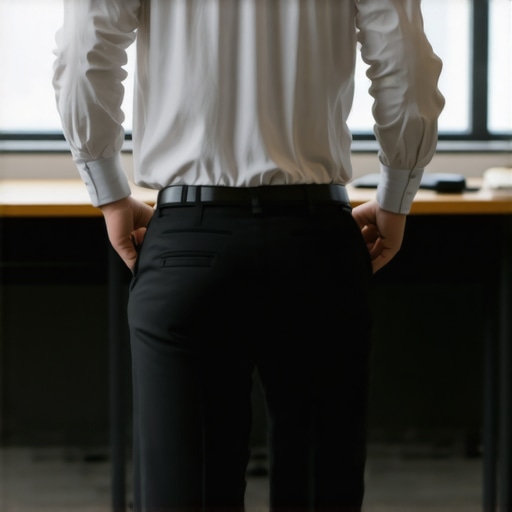
I remember the exact moment my back finally staged a full-blown revolt. It wasn’t during a heavy deadlift or a mountain hike; it was while I was reaching for a lukewarm cup of coffee after a four-hour “deep work” session. My spine felt like it had fused into a single, brittle rod of rebar, and a sharp, white-hot spark shot down my leg. I had spent a small fortune on what I thought was an ergonomic throne, convinced that “perfect posture” meant staying perfectly still for as long as possible. I was dead wrong. I had fallen for the myth that if I just sat the right way, I didn’t need to move. Today, I want to show you why that stillness is actually the enemy and how a simple 30-minute movement habit can change your life.
Your Spine is a Living Pump Not a Concrete Pillar
The reality I learned the hard way—and what many of us ignore—is that your intervertebral discs don’t have their own direct blood supply. They rely on a process called imbibition, which is essentially a vacuum effect created by movement. When you move, you pump nutrients in and waste out. When you sit still, those discs effectively start to starve and dehydrate. I used to think I was being productive by staying glued to my screen, but I was actually suffocating my own vertebrae. If you are feeling that familiar ache, you might realize why your expensive desk chair might be giving you false sciatica despite its high price tag. My biggest mistake early on was believing that a 5 PM gym session could undo eight hours of physical stagnation. It’s like trying to brush your teeth once a month for five hours straight to make up for skipping the daily routine; the math just doesn’t work for your biology. [image_placeholder_1]
Is thirty minutes really the magic number for back health?
You might be skeptical, thinking that getting up that often will ruin your focus or that it’s just another wellness fad. However, research published in the International Journal of Behavioral Nutrition and Physical Activity suggests that frequent, short bouts of activity are significantly more effective for metabolic health and musculoskeletal comfort than one long period of exercise. The 30-minute mark is where the “creep” phenomenon starts to set in, where your ligaments and tendons begin to overstretch and lose their supportive tension. By simply standing up or performing a 30-second wall reset, you effectively reboot your system before that damage locks in. We aren’t just talking about comfort; we are talking about long-term posture correction secrets that prevent permanent structural changes. Have you ever stood up after a long meeting and felt like you’d aged twenty years in sixty minutes? If so, your spine is screaming for a rhythm change. Today, we are going to dive into how to implement these micro-adjustments without losing your workflow or looking like the office eccentric.
Break the 30-Minute Stasis Cycle
The first rule of spinal survival is simple: your body treats stillness like a slow-motion injury. To fix this, you need to implement a ‘hard stop’ every half-hour. I used to set a silent vibrating alarm on my watch because I knew that if I waited until I felt pain, it was already too late. During these breaks, you aren’t looking for a full workout; you are looking for a neurological reset. Think of your nervous system like a computer that’s been running too many background apps; a quick movement ‘reboots’ the signal between your brain and your glutes. When you adjust your routine to include these micro-breaks, you prevent the ligaments from ‘creeping’ into a permanently overstretched state. I remember a particularly grueling Tuesday when I was finalizing a project and ignored my timer for three hours. By the time I stood up, my right hip was so locked I actually stumbled. That was the last time I prioritized a spreadsheet over my sacroiliac joint. Since then, I’ve found that even a ten-second stand-and-squeeze of the shoulder blades can keep the ‘pump’ active.
Reset Your Pelvis Before the Slump Wins
Most of us sit on our tailbones rather than our sit-bones, which creates a massive amount of shear stress on the lower discs. To fix this, you need a physical cue that forces your spine back into its natural curve. You can use the chair hack to keep your pelvis neutral by placing a small, rolled-up hand towel at the very base of your spine, just above the beltline. This isn’t just about comfort; it’s about leverage. If your pelvis is tilted backward like a bucket spilling water out the back, your entire upper body has to hunch forward to maintain balance. This is exactly why your shoulders always roll forward while you type. By propping the pelvis, you create a stable foundation that allows your head to sit over your ribcage without your neck muscles having to pull double duty. 
Stop Pulling on Your Hip Flexors
A common mistake I see—and one I made for years—is trying to aggressively stretch out the front of the hips when they feel tight. When you sit all day, your psoas muscle stays in a shortened position, but it also becomes weak and ‘angry.’ If you just yank on it with a deep lunge, your nervous system often reacts by tightening it further to protect the joint. Instead of a traditional stretch, you should try how to release your hip flexors without stretching them using active mobilization. This involves gently engaging the glute on the same side to force the psoas to relax through a process called reciprocal inhibition. If you have three minutes between meetings, the 3-minute desk stretch that targets your psoas is far more effective than an hour of yoga once a week. You want to coax the muscle into length, not demand it. When I started focusing on these gentle ‘releases’ rather than aggressive stretches, the chronic tugging sensation in my lower back disappeared within ten days. It’s all about working with your biology instead of fighting against it.Let’s dig deeper into a nuance that most people—even the fitness junkies—get completely wrong: the core strength paradox. You’ve likely been told that a ‘strong core’ is the ultimate shield against back pain. But if that were true, why do so many weightlifters and athletes still end up in my office with herniated discs? The reality is that raw strength is useless without proper coordination. I spent years doing heavy planks and crunches, yet my back pain persisted because I was only training my ‘show’ muscles. I didn’t realize that why your core strength isn’t stopping your back aches is often due to a lack of engagement in the deep stabilizers like the multifidus and transversus abdominis. These tiny muscles are responsible for micro-adjustments, and if they aren’t firing, your big muscle groups will overcompensate until they seize up.
Stop Sucking in Your Stomach to Look Thinner
One of the most damaging ‘traps’ I see people fall into is the habit of constantly ‘bracing’ or sucking in their stomach to maintain a flat appearance. While you might think you’re helping your posture, you’re actually creating a pressure-cooker environment in your abdominal cavity. Research in the Journal of Electromyography and Kinesiology has shown that chronic abdominal bracing can actually alter your natural breathing mechanics and increase shear stress on the lumbar spine. This is exactly why you should stop sucking in your stomach to look thinner if you want to avoid long-term structural issues. By constantly ‘holding’ your breath and your belly, you lose the ability to use the deep core connection that stops your spine from shear stress, leading to that brittle, ‘locked’ feeling I mentioned earlier. 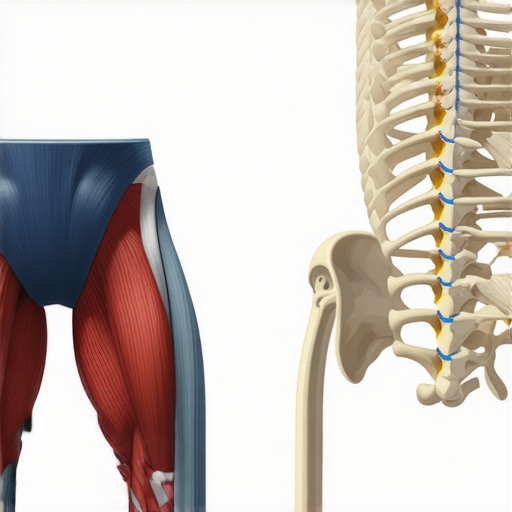
Why does your back lock up after a workout that was supposed to help?
This is a question I get from advanced movers all the time. The ‘oops’ factor here is often ‘pseudo-stability.’ You’ve built so much tension in your outer muscles that your spine has forgotten how to be mobile. True health isn’t about being as stiff as a board; it’s about ‘dynamic stability’—the ability to be stiff when you lift a heavy box but loose and fluid when you’re walking. If you find yourself stiff after the gym, you might be falling for the the 90-90 hip stretch mistake that is hurting your lumbar spine by forcing range of motion from your lower back rather than your hips. I’ve seen people use the truth about posture correctors and braces as a crutch, only to find their muscles atrophy because they stopped doing the real work of posture correction secrets that actually stick. Have you ever fallen into this trap of thinking ‘tighter is better’? Let me know in the comments—I’d love to hear how you’ve adjusted your routine. We need to stop chasing ‘perfect’ and start chasing ‘functional.’Once you move past the initial pain, the real work begins. I’ve realized that I am the chief mechanic of my own body, and you have to be yours too. Maintenance isn’t a chore; it’s a lifestyle choice that separates the people who stay mobile from those who end up back in the ‘broken’ cycle. I personally invested in a high-quality laptop stand because I learned about the 2-inch rule for your laptop stand to save your neck from strain. If you are looking down at your screen, you are essentially hanging a bowling ball from your neck ligaments all day. To counteract this, I also made the simple change to your keyboard that stops shoulder pain by switching to a split layout that allows my chest to stay open. This isn’t just gear-hoarding; it’s about removing the environmental triggers that force you into a slump. Using the monitor height hack for preventing c7-t1 nerve pressure was the final piece of the puzzle that stopped my chronic morning headaches for good. 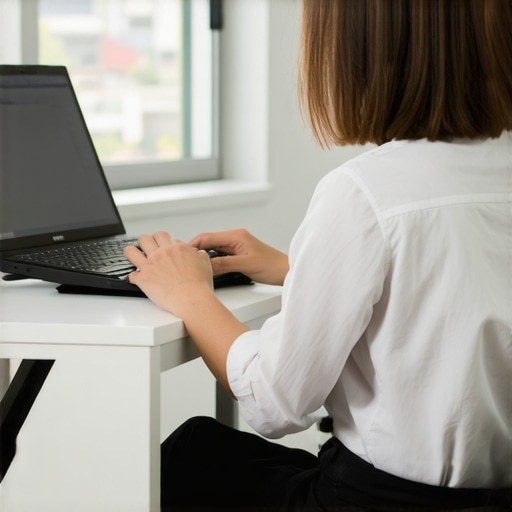
Invest in gear before your spine pays the price
I often tell my clients that you can either pay for a better workstation now or pay for physical therapy later. I’ve found that using a simple footrest can be a game-changer; check out how to use a footrest to save your lower back at work to see how it offloads the lumbar spine. Dr. Kelly Starrett, author of Becoming a Supple Leopard, argues that we should all spend at least ten to fifteen minutes a day on ‘mobilization’—active maintenance of our tissues. This matches my own routine of daily adjustments to alleviate back pain and improve posture that keep my joints lubricated. If you treat your body like a high-performance machine, you can’t be surprised when it breaks down after you skip the oil changes.
How do I maintain these spinal gains long-term?
The secret is consistency over intensity. You don’t need a grueling hour-long session; you need a system. I schedule expert tips for easier movement in 2025 into my calendar just like I do with client meetings. Part of my long-term strategy involves regular visits to a professional, which is why you feel taller and lighter after a professional adjustment—it resets the neurological ‘baseline’ of your muscle tension. These visits, combined with posture correction secrets that I practice at my desk, ensure that I’m not just managing pain, but thriving.
Smart biomechanics are the future of posture
I predict that by the end of this decade, we won’t just be sitting in chairs; we will be wearing bio-feedback sensors that vibrate the moment our deep stabilizers stop firing. We are moving toward a world where technology actively assists our biology. Until then, you have to be your own sensor. I want you to try one thing tonight: before you close your laptop, perform the 3-second wall slide for instant shoulder relief. It is the single most effective way to ‘undo’ a day of typing and reset your scapular position. Start small, stay consistent, and watch how your body rewards you for the attention.
Everything I Got Wrong Before My Back Finally Healed
I spent years thinking a $1,200 chair would save me, but I eventually realized that gravity is a constant force regardless of the price tag on your furniture. One of my hardest lessons was understanding that the truth about why cracking your own neck feels good but harms you is often a neurological trap of temporary relief that masks underlying instability. Real progress only happened when I pivoted to the secret to strengthening your deep core without sit-ups, focusing on intra-abdominal pressure rather than just surface-level abdominal vanity. My biggest lightbulb moment? Realizing that pain isn’t an enemy to be silenced, but a request for movement that I had been ignoring for far too long.
A Skeptic’s Toolkit for Staying Mobile
If you are looking for a sustainable way to stay fluid, my personal arsenal is surprisingly low-tech. I swear by the morning movement routine that lubricates your joints because it sets a high-functioning baseline before the workday even begins. For targeted relief, learning how to use a tennis ball to release tension in your feet and back has been a game-changer for breaking up fascial adhesions without a trip to the clinic. I also recommend checking out expert tips for easier movement in 2025 to ensure your workstation habits aren’t falling behind modern biomechanical standards. These tools work because they empower you to be the primary architect of your own physical health.
Your New Chapter Starts With One Stand-Up
You don’t have to live in a state of brittle readiness or accept chronic stiffness as a standard part of aging. By integrating posture correction secrets that transform back pain outcomes into your 30-minute rhythm, you are reclaiming the fluid, capable body you were born with. Start small, trust the process of daily consistency, and remember that your spine is designed to thrive through motion, not to stagnate in stillness. If you ever feel stuck or need a personalized roadmap, feel free to contact us for guidance. Have you ever found a specific desk habit or movement that actually made your back feel better? Let me know in the comments below!