
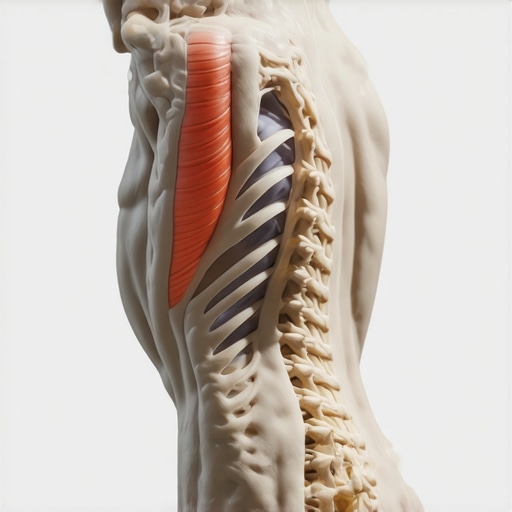
I was lying on my living room floor, staring at the ceiling, wondering why my lower back felt like it was being squeezed by a vice. I had done the planks. I had done the glute bridges. I even spent weeks researching why your core strength isnt stopping your back aches. But the relief never lasted more than twenty minutes. It wasn’t until a physical therapist friend watched me take a deep breath that the lightbulb finally flickered on. My chest puffed out, my shoulders hiked toward my ears, and my lower back arched like a bridge. I wasn’t breathing; I was fighting my own anatomy. Today, we are going to stop chasing the ghost of back pain and look at the engine room of your torso.
The Breathing Muscle That Controls Your Lumbar Spine
We often think of the diaphragm as just a “breathing thing,” but it is actually a massive, dome-shaped muscle that anchors directly onto your upper lumbar vertebrae. When it gets tight—usually from stress, poor posture, or chronic “chest breathing”—it stays in a partially contracted state. Because it is physically attached to your spine, a dysfunctional diaphragm literally pulls on your lower back 24,000 times a day. In my early days of trying to fix my mobility, I made the classic mistake of thinking more “stiffness” in my abs would protect me. I was wrong. I was essentially bracing a structural mess. If you have ever felt like your mid-back feels weak even if you work out, you might be suffering from this same mechanical tug-of-war. It is not just about strength; it is about how the pressure inside your abdomen is distributed.
Can a simple muscle in my ribs actually cause this much agony?
It sounds a bit far-fetched at first, doesn’t it? You want a massage or a heavy-duty adjustment, not a breathing lesson. But the science is hard to ignore. According to research published in the Journal of Bodywork and Movement Therapies, individuals with chronic low back pain often demonstrate significantly decreased diaphragmatic excursion and higher positions of the diaphragm compared to healthy individuals. When that muscle does not move through its full range, your spine loses its internal support system. Think about it: have you ever noticed that your back pain flares up during high-stress weeks at work? That is not just mental stress; it is your diaphragm locking up because you are taking shallow, panicked breaths. Learning how to breathe into your lower back to release tension was the single biggest turning point in my personal recovery. Have you ever felt like you are doing all the right stretches, but your back still feels like it is “stuck” in a permanent arch? If you have been wondering why your breath is the key to releasing spine tension, you are already halfway to the solution. We need to stop treating the back as a separate entity and start seeing it as the byproduct of how we move air.
How to Decompress Your Spine from the Inside Out
To fix the mechanical tug-of-war in your torso, you need to think of your abdomen like a pressurized soda can. If the can is dented or the pressure is uneven, the structure collapses under the slightest weight. Your diaphragm is the top of that can. When you take a shallow chest breath, you are effectively pulling the top of the can downward and forward, which forces your lower back to arch and take the brunt of the load. This is often why how to stretch your psoas to stop your back from arching becomes a necessary part of the conversation; a tight diaphragm and a tight psoas are practically roommates. They share a common attachment point on your spine, and when one is stuck, the other usually follows suit, leading to that chronic ache that won’t quit.
The 360-Degree Expansion Strategy
Most people are told to ‘belly breathe,’ but that is actually incomplete advice. If you only push your stomach out, you are neglecting the sides and the back of your rib cage. Imagine a balloon expanding inside your ribs. You want that balloon to push outward against your belt, but also backward into the floor and sideways into your arms. This creates a ‘360-degree’ ring of pressure that stabilizes the lumbar spine without you having to rigidly ‘brace’ your abs like you are preparing for a punch. I used to think ‘core stability’ meant being as stiff as a board, but real stability is fluid. It is about maintaining internal pressure while moving. If you have ever wondered how to breathe using your belly to lower spinal tension, the secret is ensuring that the air reaches the very bottom of your lungs, right where the diaphragm meets the spine.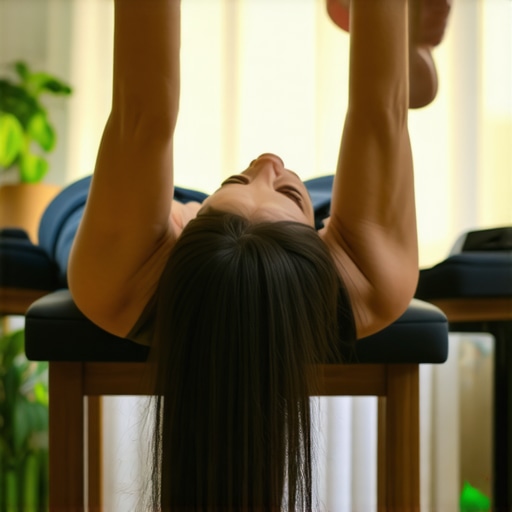
My Messy First Attempt with the 90/90 Drill
I remember the first time I tried to fix this. I lay on the floor with my feet up on a chair—a classic 90/90 position. My physical therapist told me to breathe into my mid-back. I huffed and puffed for ten minutes and felt absolutely nothing but more frustration. My ribs were flared up like a cobra’s hood. I realized that until I could ‘drop’ my rib cage down toward my pelvis using a long, slow exhale, I was never going to get the air to go where it needed to. It was only when I blew out all my air—like I was blowing out a hundred candles—that my ribs finally tucked, and for the first time in years, my lower back felt completely flat and supported by the floor. If you are struggling with a similar sensation of being ‘locked,’ learning how to fix a stuck feeling in your mid-back is often the prerequisite to getting your breathing right.
Resetting Your Rib Cage for Better Airflow
The execution is simple but requires focus. Lie on your back with your knees bent and feet flat. Place one hand on your chest and one on your lower ribs. As you inhale through your nose, try to keep the chest hand still while the rib hand moves out and up. The ‘pro move’ here is the exhale. You must exhale for twice as long as you inhale. This long exhale forces the diaphragm to return to its domed, relaxed position, which takes the tension off your lumbar vertebrae. Once you master this on the floor, you can transition to more active movements like the bird dog move that every back pain sufferer needs, using your breath to maintain that internal pressure while your limbs are moving. This is how you stop being a victim of your own anatomy and start using your internal pressure to protect your discs.I spent years thinking I just needed to be “more flexible.” I would spend twenty minutes every morning trying to touch my toes, only to have my back flare up by noon. This is the great mobility myth: that more range of motion is always better. In reality, your brain often creates tightness as a protective “brake” when it senses instability elsewhere. If you keep trying to enhance flexibility without addressing why your body is bracing in the first place, you are basically trying to drive a car with the emergency brake on. You aren’t tight; you are unstable. Expert biomechanists like Dr. Stuart McGill have long argued that for many back pain sufferers, adding more spinal flexibility actually increases the risk of injury because it compromises the stiffness required to protect the discs. Have you ever fallen into this trap where stretching makes you feel worse the next day? Let me know in the comments.
Stop Stretching Your Hamstrings If Your Back Still Hurts
We have been conditioned to believe that tight hamstrings pull on the pelvis and cause back pain. While that can be true, the inverse is often more common: your hamstrings feel tight because they are working overtime to stabilize a pelvis that is tilting too far forward. If you keep aggressively stretching them, you are removing the only thing keeping your spine from shifting into an even more painful position. This is why why your hamstrings feel tight even though you stretch every day—your brain is refusing to let them relax because it doesn’t trust your core to do its job.
Is your stiff big toe secretly sabotaging your lumbar health?
It sounds ridiculous, but your spine starts at your feet. This is the nuance most “posture experts” miss. When you walk, your big toe needs about 65 degrees of extension to allow your foot to push off the ground correctly. If that joint is locked up, your body can’t extend its hip properly. To compensate and keep your stride moving, your lower back arches to find that extra range of motion. You can do all the master your mobility drills in the world, but if you don’t address how a stiff big toe is causing your chronic lower back pain, your back will continue to take the hit with every single step you take.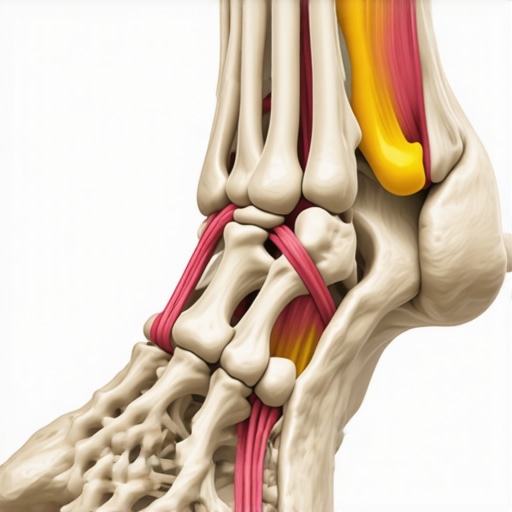
The Dangerous Lie of Passive Back Braces
Another common mistake is relying on those “posture corrector” harnesses you see all over social media. These are the ultimate “Oops” factor in spinal health. By holding your shoulders back for you, these braces tell your muscles they don’t need to work. Over time, your rhomboids and traps atrophy, making your natural posture even worse once the brace comes off. It is much better to focus on unlocking better back health through active movements than to rely on a crutch. Similarly, avoid the temptation of aggressive foam rolling on areas that shouldn’t be rolled. For instance, the truth about foam rolling your IT band is that you are often just compressing nerves and bursa, which does nothing to actually lengthen the tissue. Real progress comes from understanding the kinetic chain, not just attacking the spot that hurts. If you’ve been using posture correctors and braces without seeing results, it is time to pivot toward movement-based stability.
The Gear That Actually Lives in My Gym Bag
Once you stop chasing the “quick fix” and start looking at spinal hygiene as a daily tax you pay for living in a gravity-rich environment, your tool kit changes. I stopped buying every vibrating foam roller on the market and went back to basics. The one tool I never travel without is a simple, high-density lacrosse ball. Why? Because you can’t get into the nooks and crannies of your hip capsule or the space between your shoulder blades with a massive foam roller. I use it for a targeted release of the quadratus lumborum (QL)—that deep muscle that often gets blamed for “throwing your back out.” If you’ve been searching for mobility mastery simple exercises to relieve chronic back pain, adding a targeted soft tissue release before your breathing drills is a game-changer.
How Do I Keep My Back From Locking Up Every Time I Travel?
Maintenance isn’t about doing a two-hour yoga flow every morning; it’s about the micro-wins. For me, that means never sitting for more than 40 minutes without a “reset.” This is where most people fail. They do their exercises at 7 AM and then sit in a car for three hours, wondering why daily adjustments to alleviate back pain and improve posture don’t seem to stick. I personally use a small lumbar roll, but not for “support.” I use it as a tactile cue. The moment I stop feeling that roll against my spine, I know I’ve slumped. It’s a biofeedback loop. According to Dr. Stuart McGill, a leading expert in spine biomechanics, the “cumulative load” of poor posture is what eventually leads to disc herniation, not just a single heavy lift. By using small environmental cues, you reduce that load throughout the day without having to think about it constantly.
#IMAGE_PLACE_HOLDER_D#
The Future of Spine Health Involves Way Less Guesswork
I predict that in the next five years, we are going to see a massive shift toward wearable biofeedback that tracks diaphragm movement and pelvic tilt in real-time. We are already seeing apps that use your phone’s camera to analyze your squat mechanics with startling accuracy. Soon, your smartwatch will likely buzz when it detects your psoas is shortening from too much sitting, or when your breathing pattern shifts from your belly to your chest. This will take the “feeling” out of the equation and give us hard data that correlates with our daily pain levels. Until then, you have to be your own scientist. If you want to unlock better back health, you need to start tracking your personal triggers. Does your back hurt more after a stressful meeting? That’s your diaphragm reacting to cortisol. Does it hurt more after a long drive? That’s your hip flexors. Learning adjust your routine daily spinal alignments for lasting relief is about connecting these dots before the pain becomes a crisis.
Try This 60-Second Challenge Today
If you really want to see how much control you have over your own spine, try this: the next time you feel that “tightness” in your lower back, don’t stretch your hamstrings. Instead, get into a deep squat (hold onto a doorframe for balance if you need to) and take five of those 360-degree breaths we discussed earlier. Focus on expanding your lower ribs against your thighs. You’ll likely find that your “tight” back releases instantly because you’ve changed the internal pressure of your torso. For those who want to dive deeper into the nuances of posture correction secrets that transform back pain outcomes, remember that the goal is always active stability over passive stretching. Stop being a passenger in your own body and start driving the mechanics yourself.
Why My Obsession with Stiffness Nearly Ruined My Back
Looking back at my journey, the biggest hurdle wasn’t a lack of effort; it was a lack of direction. I spent months thinking that if I just squeezed my glutes harder or kept my spine more rigid, the pain would disappear. Instead, I was creating a cage of tension. The moment I realized that posture correction secrets that transform back pain outcomes aren’t about being a statue, everything changed. I learned that my body didn’t need more ‘bracing’—it needed better communication between my breath and my brain. Another hard truth was admitting that my focus on ‘flexibility’ was actually counterproductive. I was stretching into pain, thinking that was the only way out. When I finally embraced enhance flexibility through controlled movements rather than passive yanking, my nervous system finally stopped hitting the panic button. It is a humbling shift to go from ‘I need to fix this’ to ‘I need to listen to this.’
The Few Tools That Actually Make a Difference
I have tried the expensive ergonomic chairs and the vibrating massage guns, but my most trusted resources are surprisingly low-tech. First, I always recommend the works of Dr. Stuart McGill, particularly ‘Back Mechanic.’ It is the gold standard for understanding how to build a spine that lasts. Secondly, for targeted relief, a simple lacrosse ball is my best friend for reaching the deep QL muscles that a foam roller just grazes. If you are looking for mobility mastery simple exercises to relieve chronic back pain, start with the basics—your tools should supplement your movement, not replace it. Lastly, I rely heavily on visual and tactile cues. Whether it is a lumbar roll for biofeedback or setting a timer to ensure unlocking better posture simple adjustments to relieve back pain happen every hour, these small habits are what actually move the needle over the long term.
Moving Forward Toward a Pain-Free Life
Healing isn’t a straight line, and there will be days when your back feels like it is back in that vice. But now, you have the internal tools—the 360-degree breath, the rib cage reset, and the understanding of your kinetic chain—to navigate those moments without fear. You are no longer guessing. You are actively working to unlock better back health by addressing the engine room, not just the symptoms. The road to recovery is paved with small, consistent wins. You don’t need a perfect spine; you just need a functional one that lets you live your life. Have you ever noticed your back pain flares up specifically after you have been ‘concentrating’ too hard and holding your breath? Let me know in the comments below!