
It happened on a rainy Tuesday morning. My golden retriever, Barnaby, decided he was absolutely not getting into the SUV for his vet appointment. I was running late, frustrated, and I did exactly what I always tell my neighbors not to do. I reached over, rounded my back like a frightened cat, and heaved all sixty pounds of him upward. I felt a sickening ‘zip’ and then a dull ‘thud’ deep in my lumbar spine. I spent the next three days walking like a rusted folding chair. It was a visceral, painful realization that my affection for my dog was actually out-pacing my body’s structural integrity. If you have ever felt that sharp, hot warning shot in your spine after a simple cuddle session or a trip to the groomer, you know exactly the kind of fear I’m talking about. Today, I am going to show you how to keep those snuggles and essential pet care tasks completely pain-free by mastering the way you move your own frame.
Why Your Lumbar Spine Hates How You Currently Lift
I used to think my back was invincible until that Tuesday morning. The biggest mistake I made early on—and one I see everywhere—was treating my spine like a crane rather than a stabilizer. I would bend at the waist, keep my legs straight, and just hope for the best. This ‘hinge and heave’ approach is a direct ticket to a disc injury because it places massive shear stress on your lower vertebrae. It is a very similar mechanical failure to how many parents carry toddlers, where the weight is held too far from the body’s midline. When you hold a pet even a few inches away from your chest, the force on your lower back is multiplied by ten. According to the American Chiropractic Association, back pain is the single leading cause of disability worldwide, and so much of that damage happens during ‘routine’ home activities just like this. To avoid becoming a statistic, you have to adjust your routine and prioritize your mechanics before the damage becomes a chronic issue. This isn’t just about ‘lifting with your legs’—it’s about understanding the deep core connection that protects your spine from that shearing force.
Is my pet actually too heavy for my back to handle?
The weight of your pet is rarely the actual culprit; it is almost always the leverage you are providing. Even a ten-pound cat can wreck your morning if you reach for them while twisting. I learned the hard way that I needed to get my nose over my toes, drop my center of gravity, and pull the weight into my ‘power zone.’ This is why I now advocate that deep squats are better for your back than the shallow, lazy bends we all default to when we are in a hurry. Learning to master your mobility means you can keep being the active, hands-on pet parent you want to be without fearing the ‘pop.’ Have you ever had one of those ‘oh no’ moments in your lower back while trying to wrestle a pet into a crate or a bathtub? Drop a comment and tell me about it, because I guarantee you aren’t the only one struggling with a stubborn pet and a sensitive spine.
Stop Treating Your Spine Like a Fishing Pole
If you lean over your pet with straight legs, your lower back becomes the thin tip of a fishing rod under a heavy catch. Eventually, it snaps. To stop the ‘snap,’ you must change the physics of the lift. I remember the first time I tried to bathe Barnaby after my injury. Normally, I would just dangle over the tub, but this time, I forced myself into a ‘tripod’ stance. I put one knee on a padded mat and kept the other foot planted firmly. By lowering my center of gravity, the weight moved from my fragile lumbar discs to my powerful glutes and quads. This is exactly why deep squats are better for your back than those halfway ‘courtesy bends’ we do when we are rushed. You have to commit to the depth if you want to save your spine and maintain your longevity as a pet parent.
Get Your Nose Over Your Toes
The most important rule of thumb is keeping your nose over your toes before you even touch your pet. This forces your weight back into your heels and ensures you are not overextending your reach. When you reach far out to grab a squirming cat from under a sofa, you are creating massive leverage against your vertebrae.  Instead, crawl closer or use a toy to lure them into your ‘power zone’—the area between your mid-thigh and mid-chest. Learning how to pick up a heavy box without feeling it in your spine the next day uses this exact same logic: the closer the object is to your belly button, the lighter it actually feels to your nervous system.
Brace Your Middle Like a Barrel
You cannot rely on your skeleton alone to do the work. You need a pressurized ‘air jacket’ around your spine. Most people hold their breath or suck their stomachs in when they lift, but that actually destabilizes your core. I had to learn how to breathe into your lower back to release tension and create internal pressure. Think of your torso like a soda can. If it is empty and open, you can crush it with one hand. If it is full and sealed, it can support immense weight without buckling.
Find Your Internal Shield
Before you heave a heavy pet, take a deep breath into your belly—not your chest—and tighten your core as if someone is about to poke you in the ribs. This is the secret to strengthening your deep core without sit-ups. It creates a rigid cylinder that protects your discs from shearing forces. I once had to lift Barnaby into the SUV after he had spent thirty minutes rolling in a mud puddle. I was annoyed and tempted to just grab him, but I stopped, braced my core, and felt my spine stay perfectly still as my legs did the heavy lifting.
Pivot with Your Feet Instead of Your Waist
One of the fastest ways to herniate a disc is to lift and twist simultaneously. Imagine your spine is a wet towel; if you pull it while wringing it, the fibers tear much faster. When you are moving a pet into a crate or repositioning them on the bed, your feet must lead the way. Never ‘corkscrew’ your torso. If you need to turn, move your whole body as one unit. This same principle applies to the proper way to reach into the back seat of a car. If you treat your body like a solid block from your shoulders to your hips, you eliminate the rotational stress that causes those sharp, lightning bolt pains. Consistently applying these mobility mastery simple exercises to relieve chronic back pain will turn these movements into second nature.
Core Strength Is Not Just for Show—It Is for Survival
I spent years thinking that if I just did enough planks, my back would be bulletproof for any wrestling match Barnaby could throw at me. But here is the contrarian truth: traditional core training often prioritizes ‘sucking in’ or ‘hollowing,’ which actually decreases the structural stability of your lumbar segment. You are not a vacuum; you are a hydraulic system. This is why your core strength isn’t stopping your back aches despite your hard work. When you pull your belly button toward your spine, you are thinning out your support system. Research published in the Journal of Biomechanics suggests that intra-abdominal pressure is the primary protector of the spine during unexpected loads—like a large dog suddenly lunging at a squirrel while you are holding them. To stay safe, you must stop the habit of sucking in your stomach to look thinner and instead learn to brace outward to create a protective shield.
The Trap of Stretching Through the Pain
After my ‘rainy Tuesday’ incident, I fell into the most common ‘Oops’ factor in mobility: the obsession with stretching. When your back feels tight, your first instinct is to reach for your toes. However, that ‘tightness’ is often your nervous system putting the brakes on your body to prevent further injury. By forcing a stretch, you are essentially pulling on a frayed cable. This is why stretching your hamstrings might be making your back pain worse; you are likely irritating the sciatic nerve rather than lengthening a muscle.  Instead of aggressive pulling, focus on daily adjustments to alleviate back pain and improve posture that calm the nervous system rather than provoking it.
Why is your psoas fighting your lumbar spine?
Everyone in the fitness world tells you to stretch your hip flexors because ‘sitting is the new smoking.’ But why stretching your psoas might actually be making your back hurt more is an advanced nuance most people miss. If your psoas is weak or inhibited, your body keeps it in a state of constant tension to act as a secondary stabilizer for your spine. If you stretch away that tension without building stability elsewhere, your lumbar vertebrae are left completely unguarded. This leads to the 90-90 hip stretch mistake that is hurting your lumbar spine for so many well-meaning pet owners. To truly fix the issue, you must master your mobility by understanding how these deep muscles interact with your nervous system. Have you ever fallen into this trap where a ‘good’ stretch made everything feel worse the next day? Let me know in the comments, because identifying these hidden mistakes is the first step toward real recovery.
Stop Wrestling and Start Using a Loading Ramp
After my Tuesday morning disaster, I realized that my ego was the biggest threat to my L5-S1 disc. I bought a WeatherTech folding pet ramp for the SUV, and it changed my life. Instead of deadlifting sixty pounds of stubborn golden retriever, I now just guide him with a treat. If you must lift, consider a specialized harness like the Ruffwear Front Range, which gives you multiple handles to keep the dog close to your center of mass. This prevents that dangerous ‘long-lever’ reach that ruins your alignment. I also learned to be skeptical of quick fixes; I quickly discovered the truth about posture correctors and braces and why they often make your muscles lazier rather than stronger. Real support comes from your own movement patterns, not a piece of elastic. 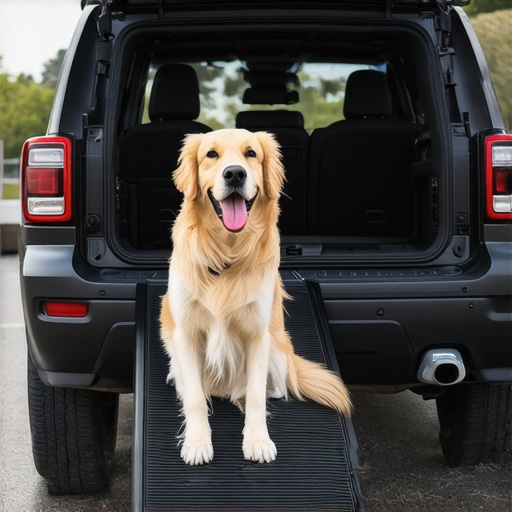
How can I keep my back resilient for the long haul?
Maintenance is about the small, daily wins rather than a once-a-month massage. I now treat my recovery like a professional athlete would. I make sure to adjust your routine to include five minutes of decompression after every long walk. This often involves knowing the proper way to use a foam roller on your upper back to reverse the hunching caused by holding a leash. If I do feel a twinge, I don’t panic anymore because I finally understand how to use heat and ice correctly for back spasms to calm the nervous system quickly.
The Specific Science of Spinal Longevity
Dr. Stuart McGill, a world-renowned expert in spine biomechanics at the University of Waterloo, emphasizes that spinal stability is not about ‘flexibility’ but about ‘stiffness’ in the right places. His research into the ‘Big 3’ exercises has become the cornerstone of my personal routine. By building endurance in the obliques and the quadratus lumborum, you create a natural corset that handles Barnaby’s sudden lunges with ease. These mobility mastery simple exercises to relieve chronic back pain are what allow me to stay active even as I get older.
Postural AI is the Next Frontier for Pet Parents
I predict that within the next five years, we will see smart-wear integrated into our pet gear. Imagine a leash that vibrates when it detects a shear force on your spine that exceeds your safe threshold, or an AI app that analyzes your lifting form in real-time through your phone’s camera. We are moving away from reactive care and toward proactive, data-driven spinal health. For now, your best tool is your own awareness. I challenge you to try this right now: next time you pick up a pet toy from the floor, use a ‘golfer’s lift’—tip forward on one leg while the other kicks back as a counterbalance. It keeps your spine neutral and your pain levels at zero. Give it a shot and feel the difference in your lumbar pressure immediately.
What No One Tells You About the Psychology of Lifting
The most profound realization I had during my recovery was that my brain was actually working against me. I was so focused on my dog’s comfort that I completely ignored my own mechanics. First, I learned that ‘bracing’ isn’t just about strength; it’s about the deep core connection that stops your spine from shear stress during those sudden lunges. Second, I realized that my breath was the bridge between panic and poise. Learning how to breathe into your lower back to release tension changed how I handled Barnaby’s vet visits entirely. Finally, I accepted that asking for help—whether from a ramp or a partner—is not a sign of weakness, but a commitment to staying mobile for years to come.
The Survival Kit for Every Aging Pet Parent
If you are serious about protecting your lumbar health, you need more than just good intentions. I personally rely on a few specific items to keep my spine in check. I use a high-quality foam roller every evening, but only if I follow the proper way to use a foam roller on your upper back to avoid making things worse. For those days when I do overdo it, I have stopped guessing and now know exactly how to use heat and ice correctly for back spasms. I also highly recommend the work of Dr. Stuart McGill, which provides the scientific foundation for everything we have discussed today.
Protect Your Spine and Your Bond
At the end of the day, the goal isn’t just to lift a pet—it’s to maintain the quality of life that allows you to enjoy them. By focusing on your mobility, posture, back pain, and adjustments, you are ensuring that a rainy Tuesday morning never turns into a week on the sofa again. You have the tools now to master your mobility and move with confidence. Your pet doesn’t want a human who is in pain; they want a playmate who is ready for the next adventure. Have you ever tried to lift your pet and felt that immediate ‘twinge’ in your lower back? Let me know in the comments below!