

I was reaching for a bottle of balsamic on the top shelf of my pantry when it happened—a sharp, electric pinch right at the base of my skull that made me nearly drop the glass. It wasn’t just a mild twinge. It was a full-blown physical protest from my own body. For years, I had ignored the occasional stiffness, assuming that why your neck cracks every time you turn your head was just a sign of getting older or a fun party trick. But that moment in the kitchen was my wake-up call. I realized my neck wasn’t just tight; it had lost the basic ability to look upward without feeling like a jammed hinge. If you have ever felt that ‘stop-right-there’ catch while trying to check a smoke detector or watch a plane fly over, I know exactly how frustrating and scary that sensation is. Today, I want to share exactly why your neck is acting like a rusted gate and the simple ways I found to get that smooth, pain-free range of motion back.
That Sharp Catch When You Look at the Ceiling
The truth is, most of us spend our lives in a ‘forward’ world. We look down at phones, lean into laptop screens, and hunch over steering wheels for hours on end. When we finally ask our necks to look up at the stars, we are asking joints to perform a movement they haven’t practiced in days. My biggest mistake early on was trying to ‘power through’ the pain. I thought if I just forced my head back, it would eventually loosen up. Spoiler alert: the truth about why cracking your own neck feels good but harms you taught me that I was actually irritating my facet joints even further. These tiny joints in your spine are designed to glide, but when we live in a slumped posture, they end up compressed and angry.
Is this just a permanent part of aging?
It is incredibly tempting to throw up your hands and assume that a creaky neck is just your new reality once you hit a certain birthday. However, age is rarely the only culprit. In many cases, the truth about why we get shorter as we age has more to do with years of poor spinal habits than the calendar itself. According to experts at the Cleveland Clinic, facet joint syndrome—the technical name for that pinching feeling—is often caused by the wear and tear of repetitive poor positioning rather than just reaching a certain age. The good news is that you can often decompress these areas without drastic measures or a magic wand.
Why your neck joints feel like they are jamming
When you look up, the vertebrae in your neck are supposed to slide backward and tilt smoothly. If you spend your day with your head protruding forward, those upper vertebrae are already shifted out of their ideal tracks. When you try to look up from that forward position, the bones literally ‘clack’ into each other instead of gliding. It is like trying to shut a dresser drawer that is completely off its rails. I found that even small environmental shifts, like the monitor height hack for preventing c7-t1 nerve pressure, made a massive difference in how my neck felt by the end of the work day. Have you ever felt that sudden, sharp zap while simply trying to look at something above eye level? Tell me in the comments if it’s a sharp pinch or more of a dull ache, because that distinction changes how we approach the fix. We also need to look at how you sleep, because why your pillow is actually pushing your head forward might be setting you up for failure before you even get out of bed. We are going to dive into the specific mechanics of this ‘jamming’ and the routine I used to finally look at the sky again without a single wince.To stop that bone-on-bone clashing, we first have to create some literal breathing room between your vertebrae. I call it ‘resetting the tracks.’ When I first started, I made the mistake of thinking I could just stretch my way out of it. One night, I tried hanging my head off the edge of my mattress, thinking gravity would do the work. Instead, I woke up with a neck so stiff I could not even turn to see my alarm clock. That was my lesson in controlled decompression.
Create Space Before You Move
The most effective way to un-jam those joints is by using a gentle traction method. You are not trying to pull your head off; you are just trying to decompress the discs. This is where the simple towel trick for stiff morning necks becomes a lifesaver. By rolling up a hand towel and placing it right under the curve of your neck while lying flat, you give those facet joints a chance to open up. I did this for ten minutes every evening for a week, and that sharp ‘electric’ pinch when looking up started to dull down into a manageable stretch.
Retrain Your Head to Sit Back Properly
Once you have created space, you have to teach your neck how to stay there. Most of us have what I call ‘vulture neck’—our heads are permanently two inches in front of our shoulders. To fix this, you need to master the chin tuck. Imagine there is a string pulling the crown of your head toward the ceiling while you pull your chin straight back, making a double chin. This is not just an exercise; it is a recalibration. When I started combining this with the 30-second wall slide for instant shoulder relief, I felt my upper back finally start to support my head again. It stops the ‘shear stress’ that happens when your neck bones slide too far forward.
The 2-Inch Fix for Your Desk
You can do all the stretches in the world, but if you go back to staring down at a laptop, the pinch will return. I found that following the 2-inch rule for your laptop stand to save your neck from strain was the final piece of the puzzle. By bringing the top third of my screen to eye level, I forced my neck into a neutral position. It felt weird at first—almost like I was leaning too far back—but that is only because my body had forgotten what ‘upright’ actually felt like. If you are struggling with persistent stiffness, mobility mastery simple exercises to relieve chronic back pain can help bridge the gap between temporary relief and a permanent fix.
Stop the Habitual Self-Cracking
I also had to break the habit of twisting my own neck to get that ‘pop.’ I used to think the sound meant I was fixing the jam, but why self-cracking your neck makes the stiffness come back faster explained why I was actually making my joints hypermobile and unstable. Instead of fixing the stuck joint, I was just over-stretching the ones above and below it. Switching to the morning movement routine that lubricates your joints provided the same relief without the long-term damage.
One of the biggest ‘aha’ moments for me was realizing that most of the advice we hear about posture is actually a bit backward. Everyone tells you to ‘strengthen your core’ if your back or neck hurts. I spent six months doing planks every morning until I could hold one for three minutes, and while my abs looked great, my neck still felt like it was encased in concrete. This is where why your core strength isn’t stopping your back aches becomes a critical distinction. Most people focus on ‘global’ muscles—the ones you see in the mirror—but those aren’t the muscles responsible for fine-tuning your spinal alignment. Let’s dig deeper into the nuance of why ‘trying harder’ to stand up straight often backfires.
The Core Strength Trap You Need to Avoid
In my experience, the more you try to force yourself into a rigid, upright position, the more you actually fatigue the very muscles meant to support you. True stability isn’t about being stiff; it is about reflexive timing. The deep core connection that stops your spine from shear stress refers to the multifidus and transverse abdominis—tiny muscles that should fire milliseconds before you reach for that bottle of balsamic. If they are ‘asleep,’ your bigger neck muscles try to do their job, leading to that sharp pinching sensation. A study published in the Journal of Physical Therapy Science found that postural control and neck stability are deeply intertwined with mandibular (jaw) position—meaning you can’t fix one without looking at the other. Have you ever fallen into the trap of doing more ‘core work’ only to feel more stiff? Let me know in the comments.
Does your jaw have a secret deal with your neck pain?
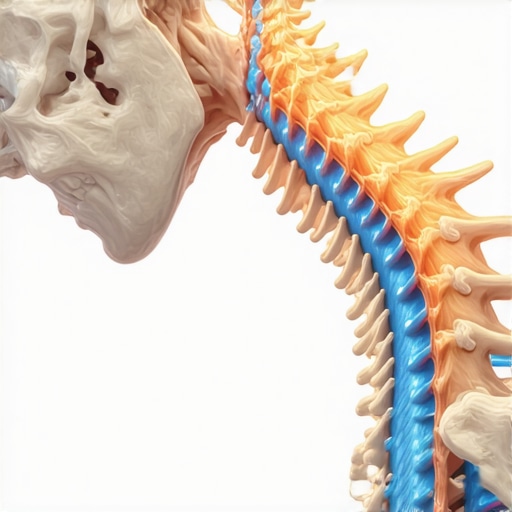
This is a nuance many people miss: your jaw and your upper neck are basically best friends who share the same nerve pathways. If you are a ‘clencher’—whether from stress or habit—your brain receives constant signals that the upper cervical spine needs to be guarded. I found that how a tight jaw leads to chronic upper neck pain was the hidden culprit behind my inability to look up smoothly. When you clench, you lock the very joints that need to slide for you to see the ceiling. It is a sophisticated feedback loop that no amount of basic stretching will fix unless you address the tension at the source.
One common stretch that actually makes things worse
Here is the ‘oops’ factor I see most often: people feeling a ‘tug’ in their lower back or neck and immediately trying to stretch their hamstrings or upper traps to ‘loosen up.’ However, if your pelvis is tilted, why stretching your hamstrings might be making your back pain worse is a reality you need to face. You might be over-stretching a nerve that is already under tension, which causes your body to tighten up even more as a protective reflex. It is also why you might feel lightheaded or ‘off’ during these movements; how to tell if your dizziness is actually coming from your neck is often linked to this exact type of over-irritation of the upper cervical nerves. Instead of aggressive stretching, we need to focus on re-aligning the routine. By making daily spinal alignments for lasting relief a priority rather than a ‘when it hurts’ emergency, you stop the cycle of jamming and guarding before it starts.
Tools that actually made my neck feel human again
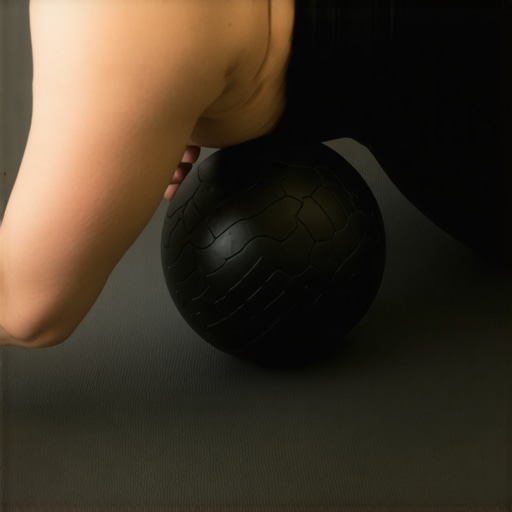
After years of trial and error, I realized that my hands alone weren’t enough to manage the deep tension. I had to build a small ‘mobility toolkit.’ One of the most effective items in my bag is a simple lacrosse ball. While many people use it for their glutes, I use it to target the suboccipital muscles right at the base of the skull. By gently leaning my weight into the ball while lying down, I can release the ‘guarding’ reflex that causes that electric pinch. I also learned that the proper way to use a foam roller on your upper back isn’t just rolling up and down like a piece of dough; it is about finding a stiff segment and breathing into it. If you are more of a DIY person, how to use a tennis ball to release tension in your feet and back is a fantastic entry point that costs less than a latte but provides immense relief for the entire kinetic chain.
Beyond physical tools, I rely on a simple ‘spinal hygiene’ routine. Dr. Shirley Sahrmann, a renowned physical therapist and professor, often emphasizes that movement is not just about exercise but about how we move every minute of the day. This philosophy changed my life. I stopped thinking about ‘fixing’ my neck in a 30-minute gym session and started focusing on expert tips for easier movement in 2025. This meant changing how I reached for things and how I stood. For example, learning the proper way to reach into the back seat of a car saved me from several micro-injuries that used to set me back weeks.
How do I keep my neck from locking up over time?
Consistency is the boring truth nobody wants to hear, but it doesn’t have to be hard. I follow a ‘one-in, one-out’ rule. If I spend an hour in a slumped position (like during a flight), I immediately counter it with top strategies for moving without pain. Long-term maintenance is also about the environment. I transitioned to a setup where my eye line is naturally elevated. I stopped fighting my body and started working with it. If you’re constantly on the go, the best stretching routine for frequent travelers is non-negotiable for keeping those joints lubricated and open.
The future of movement and spinal health
I predict that in the next few years, we are going to see a massive shift away from ‘static’ posture (the ‘sit up straight like a soldier’ advice) and toward ‘dynamic’ variability. The goal isn’t to find one perfect position, but to move through many good ones. As we spend more time in digital environments, tools like the 5-minute fix for constant gamer neck will become as common as brushing our teeth. We are moving toward a world where mobility mastery simple exercises to relieve chronic back pain are integrated into our software and workstations automatically. I challenge you to try just one thing today: set a timer for every 30 minutes and perform the 10-second posture check to do every time you check your phone. It sounds small, but it is the literal foundation of a neck that glides instead of grinds.
Why Trying Harder to Stand Straight Backfired
I spent months thinking I just needed to be stronger, but I eventually realized that tension is often a protective wall my brain built to guard my spine. One of my biggest lightbulb moments was learning that why you should stop sucking in your stomach to look thinner is a vital lesson; forcing a flat belly actually inhibits the diaphragmatic breath that naturally relaxes the neck. Another shift was realizing that true posture isn’t a static pose you hold until you are exhausted; it is the ability to move through various positions without friction. I also discovered that why your upper back burns after using a mouse for 2 hours was a signal that my large global muscles were overcompensating because my deep stabilizers had gone on vacation.
My Personal Toolkit for a Supple Spine
If you are starting this journey, I recommend a few non-negotiables that I use every single week to keep my joints open and responsive. First, keep a tennis ball in your desk drawer or gym bag; how to use a tennis ball to release tension in your feet and back is a literal game-changer for breaking up those stubborn knots at the base of your skull. Second, I trust Dr. Stuart McGill’s work on spinal mechanics for understanding how to move without shear stress. Finally, I have made daily adjustments to alleviate back pain and improve posture a non-negotiable part of my morning, viewing it as essential hygiene rather than a corrective chore.
#IMAGE_PLACEHOLDER_E#
Take the First Step Toward a Gliding Neck
Don’t let a stiff neck steal your world or make you fear the simple act of looking up at the sky. Whether it is admiring a sunset, watching a plane, or simply reaching for that bottle of balsamic on the top shelf, you deserve to move without that sharp electric shock stopping you in your tracks. By integrating effective posture tips for 2025 into your lifestyle, you are not just fixing a symptom; you are reclaiming your freedom to move with grace and ease. Have you ever felt that sudden, sharp catch in your neck during a totally ordinary moment? Let me know your experience in the comments below.