
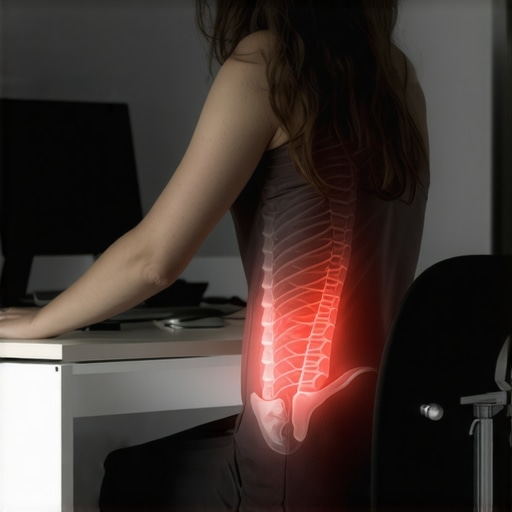
I remember sitting at my desk three years ago, trying to finish a report, when a lightning bolt of pain shot up from my tailbone. I shifted. I leaned forward. I even tried sitting on my hands like a toddler in a waiting room. Nothing helped. It felt like I had a deep, throbbing bruise right at the base of my spine, yet I hadn’t fallen or bumped into a single thing. I was convinced I had some rare bone disease, but the truth was much more mundane—and much more fixable. If you have ever felt that ‘bruised’ sensation after a long day of Zoom calls, you are definitely not alone. Have you found yourself constantly squirming in your seat just to find a second of relief?
The Day I Realized My Desk Was a Torture Device
I made a classic mistake early on: I threw money at the problem without understanding the mechanics. I bought a top-tier ergonomic chair and a donut pillow that made me look like I was recovering from surgery, but the ache persisted because your tailbone hurts after sitting for reasons that hardware alone can’t fix. I was ‘perching’ on the edge of my seat, which forced my coccyx to bear weight it was never designed to hold. We often assume the tailbone is just a useless vestigial tail, but it’s actually an attachment point for various muscles and ligaments. According to research from the Cleveland Clinic, coccydynia is often caused by repetitive strain or poor sitting mechanics that lead to localized inflammation. Today, I’m going to show you how to stop that inflammation before it starts. We are going to dive into why your glutes go to sleep and leave your spine unprotected, and I’ll share the exact shift in my routine that finally let me sit through a movie without needing an ice pack afterward.
Could a simple pillow really fix this much pain?
Many people are skeptical that such a sharp, localized pain can be solved with movement rather than surgery. I certainly was. I thought I needed a doctor to ‘pop’ something back into place. But once I started unlocking better posture through small, intentional changes, the ‘bruise’ simply vanished. The secret isn’t just in the cushion; it’s in how you distribute your weight across your sit-bones. We also need to look at the best exercises for people who sit all day to keep those supporting muscles active. You don’t have to quit your desk job or buy a $2,000 standing desk to find relief, but you do have to stop ignoring the signals your body is sending you.
Stop Using Your Tailbone as a Kickstand
Imagine your pelvis is a tripod. Two legs are your sit-bones—the bony bumps you feel in your glutes—and the third leg is your tailbone. When we slouch or perch on the edge of a chair, we tilt that tripod backward, forcing the tailbone to act as a kickstand for our entire upper body weight. It was never built for that kind of load. To fix this, you need to locate your sit-bones. Try this right now: sit on a hard chair and slide your hands under your butt. Rock side to side until you feel those two hard bones pressing into your palms. Those are your primary weight-bearers. By shifting your weight slightly forward onto these bones, you naturally lift the coccyx off the seat. This simple pivot is often the reason your tailbone hurts after sitting for only 10 minutes; you have just been using the wrong leg of the tripod.
Create a Bridge for Your Spine
If your chair is too soft, your sit-bones sink in and the seat material pushes up against your tailbone anyway, regardless of how straight you sit. I learned this the hard way on a six-hour flight to Seattle last year. By the second hour, my spine was screaming. In desperation, I rolled my thick winter scarf into a U-shape and sat on it so the gap was directly under my tailbone. It looked messy and my seatmate definitely stared, but for the first time in years, the pressure vanished. You can replicate this with a dedicated coccyx cushion or even a rolled-up towel. The goal is to create a physical bridge where your weight is supported by your thighs and sit-bones, leaving the tailbone in a zero-pressure zone. This is a foundational part of unlocking better posture that actually lasts. 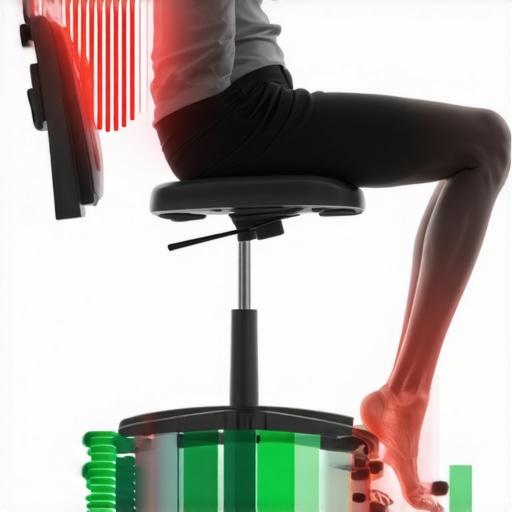
Wake Up Your Sleeping Glutes
When you sit for hours, your brain effectively loses the connection to your glute muscles, a phenomenon often called gluteal amnesia. This is a massive problem because your glutes are designed to act as the primary shock absorbers for your lower spine. When they turn off, all that pressure transfers directly to your pelvic floor and tailbone. This is exactly why your glutes go to sleep after one hour of sitting and leave you vulnerable to sharp, bruising pain. To counter this, I have integrated the 3-minute desk stretch that targets your psoas into my midday routine. By stretching the front of your hips, you allow the back of your hips—your glutes—to actually engage when you sit back down.
The 30-Minute Reset Rule
Your body is a movement machine, not a statue. Even the perfect ergonomic setup will eventually cause pain if you stay frozen in place. I now set a silent vibrate alarm on my watch for every 30 minutes. When it goes off, I don’t just stand up; I perform the seated hip stretch that saves you from afternoon slump pain. This keeps the blood flowing and prevents the ligaments around the coccyx from tightening into a knot. Understanding why your spine needs movement every 30 minutes is about more than just comfort; it is about preventing the cumulative micro-trauma that leads to chronic inflammation. If you want to enhance your mobility, you have to treat these breaks as non-negotiable appointments with your health. Incorporating the best exercises for people who sit all day into these micro-breaks will do more for your tailbone than any expensive gadget ever could.While the 30-minute rule is a life-saver, many people fall into the trap of corrective overkill. We have been conditioned to believe that if sitting is bad, then standing like a soldier must be good. This is a common myth that actually stalls your progress. In reality, forcing a perfect upright position can lead to a state called postural rigidity, where your muscles are so tense they stop acting as shock absorbers. This is one of the most important posture correction secrets that transform back pain outcomes: your body craves adaptability, not a fixed, frozen alignment. A study in the Journal of Biomechanics suggests that static, rigid postures increase muscle fatigue significantly faster than relaxed upright positions. If you are constantly bracing, you are effectively crushing your own tailbone from the top down.
The Core Strength Trap That Squashes Your Spine
Another advanced mistake I see involves the obsession with bracing. You have probably been told to keep your core tight while sitting or lifting. But if you have been doing this and still feel that sharp ache, you need to understand why your core strength isn’t stopping your back aches. Constant bracing creates high intra-abdominal pressure. Experts in spine biomechanics note that excessive abdominal bracing without proper relaxation phases can actually increase the compressive load on your lumbar discs and tailbone. You aren’t supporting your spine; you are essentially clamping it in a vise. 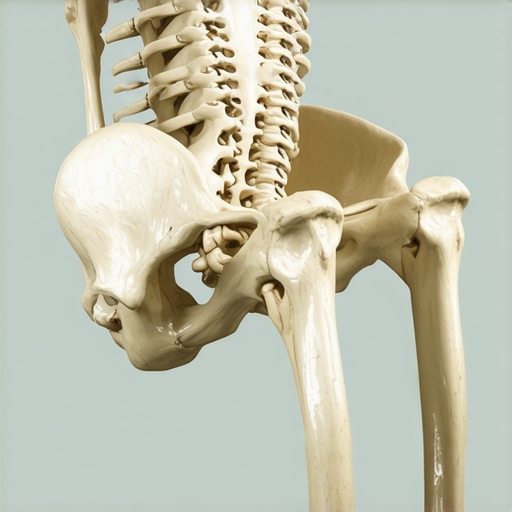
Could your feet be the source of your tailbone pain?
It sounds like a stretch—literally—but the human body functions as a single kinetic chain. If you have a lack of mobility at the very bottom of that chain, it forces the top to overcompensate. For instance, I have found that how a stiff big toe is causing your chronic lower back pain is a nuance most people completely ignore. When your big toe cannot extend properly during your walk, your gait changes, your pelvis tilts unevenly, and suddenly your tailbone is taking the brunt of every step you take. This is why looking at top mobility strategies for active living is about more than just your back; it is about the whole system.
Don’t Trust Every Posture Gadget
In our quest for a quick fix, it is tempting to buy those shoulder-pulling harnesses seen on social media. However, the truth about posture correctors and braces is that they often do the work for your muscles, causing them to atrophy further. They treat the symptom—the slouch—but ignore the root cause: the lack of functional mobility. Instead of a brace, focus on active internal adjustments. Here is the Oops factor: many people try to stretch their way out of pain when they actually need to strengthen the opposing muscle group. For example, why stretching your psoas might actually be making your back hurt more often comes down to the fact that the muscle is already weak and over-lengthened, not tight. Pulling on it more just destabilizes your pelvis. Have you ever fallen into this trap of trying to brute force your posture with braces or constant stretching? Let me know in the comments.Instead of complex harnesses, I have found that the best tools are the ones that passively encourage you to sit correctly without forcing your muscles into a rigid cage. For instance, the height of your computer is non-negotiable. I follow the 2-inch rule for your laptop stand to save your neck from strain, which ensures my gaze is perpendicular to the screen. When your eyes drop, your head follows, and that shift can add up to 60 pounds of force on your cervical spine. It is a cascading failure that ends right at your tailbone because your body tries to counterbalance the forward lean by tilting the pelvis. To keep your home setup efficient without breaking the bank, you can learn how to set up your home office on a budget for your back using items you already own, like a stable box or a stack of hardback books.
The Foundation Starts at Your Feet
Your feet are the primary anchors of your sitting posture. If they dangle or reach too far forward, your pelvis tilts backward, and your tailbone takes the hit. I personally use a simple angled footrest because it locks my legs into a stable position and prevents me from sliding forward in my chair. Knowing how to use a footrest to save your lower back at work is often the missing piece for chronic sitters. It allows for a more relaxed hip angle, which is essential when you are trying to master your mobility while remaining productive at your desk. 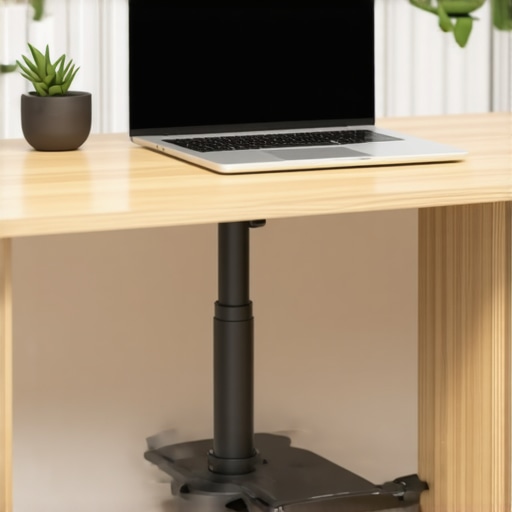
How do I maintain a healthy spine over the long haul?
Consistency beats intensity every single time. You do not need a 90-minute gym session to find relief; you need daily adjustments to alleviate back pain and improve posture that take less than five minutes of your morning. I have integrated a specific protocol popularized by Dr. Stuart McGill, a world-renowned expert in spinal biomechanics at the University of Waterloo. His ‘Big Three’ exercises focus on isometric core stability—stiffening the torso to protect the spine—rather than traditional crunches that can aggravate tailbone issues. Looking ahead, I predict we will see an explosion in ‘smart furniture’ featuring haptic feedback sensors that vibrate when they detect your glutes have been inactive for more than 40 minutes. Until then, you have to be your own sensor. I challenge you to try the 2-inch rule for your screen height today—just that one change—and see if that evening ache starts to fade.
The Hardest Lesson I Learned About Tailbone Recovery
One thing nobody tells you is that your body will actually resist feeling better at first. When I started implementing daily adjustments to alleviate back pain and improve posture, my muscles felt confused. For years, I had overcompensated by tensing my shoulders to ‘lift’ weight off my tailbone, and letting go of that tension felt vulnerable. I realized that postural fatigue is real; you can’t go from slouching for a decade to sitting like a monk for eight hours overnight. I had to learn that the goal isn’t to be perfectly still, but to be perfectly adaptable. Another ‘lightbulb moment’ was realizing that my tailbone pain was often a symptom of tight hip flexors pulling my pelvis out of alignment. If you don’t address the front of your body, the back will never truly heal. Lastly, I stopped looking for a ‘cure’ and started looking for a rhythm. Consistency in small movements is far more powerful than one deep-tissue massage every six months. These are the real posture correction secrets that transform back pain outcomes over the long haul.
The Three Tools I Actually Use Every Day
You do not need a room full of gadgets to fix your spine, but these three items changed the game for me personally. First, I highly recommend reading Back Mechanic by Dr. Stuart McGill; it provides the foundation for mobility mastery and simple exercises to relieve chronic back pain without over-complicating things. Second, I swear by a U-shaped coccyx cushion for any chair that isn’t my primary desk chair—especially for dining chairs and car seats. It ensures that ‘zero-pressure zone’ we talked about earlier. Third, a simple, cheap laptop stand is essential. Elevating your screen ensures you unlock better back health by preventing the ‘text neck’ that eventually forces your pelvis to tilt and crush your tailbone. These tools aren’t crutches; they are environmental cues that help your body stay in its natural alignment.
#IMAGE_PLACE_HOLDER_E#
Take Your First Step Toward Lasting Relief
If you are reading this while shifting uncomfortably in your chair, let this be the moment you decide to stop ‘muscling through’ the pain. You deserve to work, drive, and relax without a throbbing ache at the base of your spine. It starts with a single pivot onto your sit-bones and a commitment to daily adjustments to alleviate back pain and improve posture. You have the mechanics, you have the stretches, and you have the toolkit. Don’t wait for the pain to become unbearable before you make a change. Your tailbone isn’t the enemy; it’s a signaling system asking for a little more space and a lot more movement. It is time to listen. Have you ever tried a specific cushion or chair hack that actually made your tailbone pain worse? Let me know your experience in the comments below!