

I was sitting at my desk last Tuesday, twisting my torso like a human pretzel, desperately trying to hear that satisfying click between my shoulder blades. I’ve been there—doing the “hunch-and-shove” against the back of an office chair just to get five minutes of relief. It’s like a physical itch you can’t quite scratch, and it’s driving you absolutely mad. You roll your shoulders, you pull your arms across your chest, and you pray for that tiny explosion of gas in the joint that makes everything feel “right” again for a fleeting second. But then, twenty minutes later, the pressure is back. The urge returns. And you’re right back to twisting and straining like you’re trying to escape invisible handcuffs.
Stop searching for that perfect crack between your shoulder blades
If you’re anything like I was, you’ve probably convinced yourself that your ribs are out of place or that your spine is a Jenga tower about to collapse. I used to spend my lunch breaks leaning over the back of my sofa, hoping for a loud pop to “reset” my day. It felt productive. It felt necessary. But I was actually making my joints hypermobile and irritated. The reality is that the constant urge to pop isn’t usually about a joint being “out.” It’s often your brain’s way of telling you that your nervous system is bored, your muscles are fatigued, and your posture is screaming for a real change. While it feels like a victory in the moment, the truth about why cracking your own neck or back feels good is often more about a temporary endorphin rush than fixing the root cause. [image placeholder]
Is this constant self-cracking actually dangerous for your spine?
You might worry that you’re giving yourself early-onset arthritis or that you’re going to slip a disc. The good news? You probably won’t. But you are training your body to rely on a temporary fix rather than long-term stability. I made the massive mistake of thinking I could just “crack my way out” of bad posture. I ignored the fact that my desk setup was a disaster and that I didn’t know the proper way to use a foam roller on your upper back. I was essentially bruising my soft tissue while trying to force a joint to move that was already moving too much. Research published in the Journal of Manipulative and Physiological Therapeutics suggests that the “pop” we hear is just cavitation—gas bubbles forming and collapsing in the synovial fluid. It’s not bone hitting bone. However, repetitive, non-specific manipulation can lead to ligament laxity over time. If you are constantly hunting for a way to fix a stuck feeling in your mid-back, you’re likely ignoring the muscles that actually support your spine. I finally realized that my “tight” muscles were actually weak muscles. I learned why your traps are always tense no matter how much you massage them, and it changed everything. Today, we’re going to break that cycle. We are moving past the temporary pops and into the habits that actually keep that pressure from building up in the first place. Have you ever felt that “stuck” sensation so badly that you actually asked a coworker or spouse to “walk on your back”? Tell me I’m not the only one who has reached that level of desperation!
Move the ribs instead of forcing the pop
That “stuck” sensation in your mid-back usually isn’t because a bone is out of alignment; it’s often because your rib cage is essentially locked down by tight connective tissue. I remember trying to crack my mid-back by leaning over a rolling pin on the floor—it was a disaster. I ended up with a bruise and a rib that felt even tighter. It wasn’t until I started using the lat stretch that stops your ribs from feeling stuck that I realized the pressure was coming from my sides, not just my spine. If your lats are like tight rubber bands, they pull your ribs down and together, creating that unbearable pressure. Instead of twisting, reach one arm over your head and lean to the opposite side, breathing deeply into your ribs. This expands the space between the bones without the violent torque of a self-adjustment.
Fix your workspace before it breaks your back
You can’t expect a five-second stretch to undo eight hours of slouching. I spent years wondering why your shoulders always hike up to your ears when you type, only to realize my desk was three inches too high. When your keyboard is too high, your traps have to stay engaged just to keep your hands in place. This creates a chain reaction of tension all the way up to your neck. Start by implementing the simple change to your keyboard that stops shoulder pain—getting it low enough so your elbows are at a 90-degree angle. Also, check your monitor. If you are looking down even slightly, why your laptop screen height is killing your upper back becomes painfully obvious as the weight of your head doubles with every inch of forward tilt. #IMAGE_PLACE_HOLDER_B#
The one move that actually stabilizes your spine
Once you’ve released the tension and fixed your environment, you have to give your brain a reason to keep the joints stable. Most of us have “sleepy” core muscles that let the spine sag. I used to think I had a “strong” back because I could deadlift, but why your core strength isn’t stopping your back aches is often down to endurance, not max power. You need the tiny stabilizer muscles to fire to keep the vertebrae from feeling like they need to be “clicked” back into place. I swear by the bird dog move that every back pain sufferer needs. It teaches your hips and shoulders to move independently of your spine, which is the secret to moving without that brittle, stiff feeling.
Stop the 30-minute tension build-up
The most effective strategy I ever adopted was the “anti-stagnation” rule. Your body is a hydraulic system; fluid needs to move to keep everything lubricated. This is why your spine needs movement every 30 minutes. You don’t need a full workout; just a simple 10-second “reset.” Try the 10-second posture check to do every time you check your phone. If you wait until you feel the urge to crack your back, you’ve already waited too long. The goal is to move before the pressure becomes a demand. When you integrate small, frequent adjustments into your day, that overwhelming urge to twist like a pretzel simply starts to evaporate.
Stop stretching your tight muscles
Everyone tells you that if a muscle feels tight, you need to pull on it until it yields. In my experience, this is the quickest way to end up in a chronic pain loop. Most of the time, that tightness you feel in your hamstrings or your neck isn’t because the muscle is actually short; it’s because it is guarding. Your brain is intentionally tightening that muscle to protect a joint it perceives as unstable. If you force a stretch on a muscle that is trying to protect you, your nervous system will respond by tightening it even further the second you stop. Instead of traditional pulling, learn how to release your hip flexors without stretching them by using neurological resets. When you focus on stability instead of just length, the brain finally feels safe enough to let go of that protective tension. 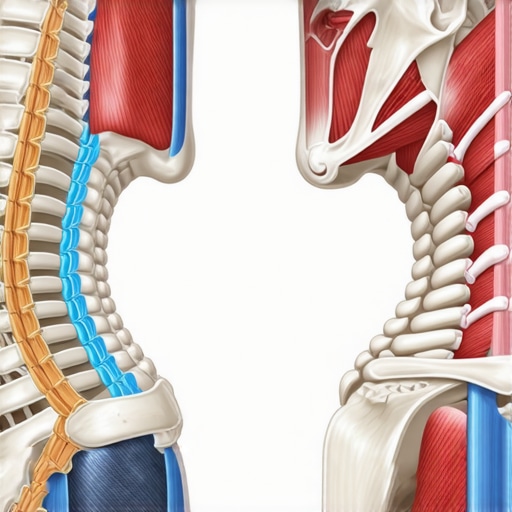
Why does your neck feel tighter after you spend twenty minutes stretching it?
This is the classic oops factor of mobility. When we sit at desks, the muscles in the back of our neck are already being overstretched into a long, weak position. Adding more stretching to a muscle that is already overextended is like pulling on an overstretched rubber band—it is going to fray and react with more spasm. Dr. Stuart McGill, a world-renowned expert in spine biomechanics, has often noted that excessive stretching is frequently the enemy of the back pain patient because it reduces the natural stiffness required to support the spine. You think you are helping, but you are actually stripping away the very tension that keeps your vertebrae aligned. To truly find relief, you must first be capable of identifying the difference between muscle soreness and a misaligned vertebra. If the problem is structural instability, stretching the surrounding support system is the last thing you should do.
Stability is the real secret to moving without pain
If you want lasting results, you have to stop chasing flexibility as the end goal and start chasing controlled range of motion. This is the core of master-your-mobility-top-strategies-for-moving-without-pain. When your joints are stable, your brain allows the surrounding muscles to relax because they no longer have to act like secondary ligaments. Utilizing enhance-your-mobility-expert-tips-for-easier-movement-in-2025 to improve your baseline comfort will do more for your long-term health than a hundred doorway stretches ever could. If you have been stuck in the stretch-crack-repeat cycle, you are likely missing the posture correction secrets that transform back pain outcomes that focus on muscle activation rather than just temporary relaxation. Have you ever fallen into this trap where stretching actually made your pain worse? Let me know in the comments below, because I have definitely been there myself.
The specific gear that actually saved my spine
For years, I thought ‘ergonomics’ was just a marketing buzzword used to sell overpriced chairs. I was wrong. The moment I learned how to set up your home office on a budget for your back, the daily pressure in my lumbar spine began to vanish. I personally use a simple sloped footrest—nothing fancy—because I realized my feet weren’t firmly planted, which caused my pelvis to tilt forward. If you are struggling with this, you need to learn how to use a footrest to save your lower back at work. I also switched to a split keyboard. This forces my shoulders into external rotation, preventing that ‘caved-in’ chest feeling. Dr. Alan Hedge, Professor Emeritus at Cornell University’s Department of Design and Environmental Analysis, is a pioneer in this field; he advocates for the ’20-8-2′ rule—20 minutes of sitting, 8 minutes of standing, and 2 minutes of moving. This specific cadence is the only thing that keeps my joints from seizing up. It is far more effective than just buying a standing desk and using it wrong. You must master the correct way to use a standing desk without hurting your feet if you want to see real results. 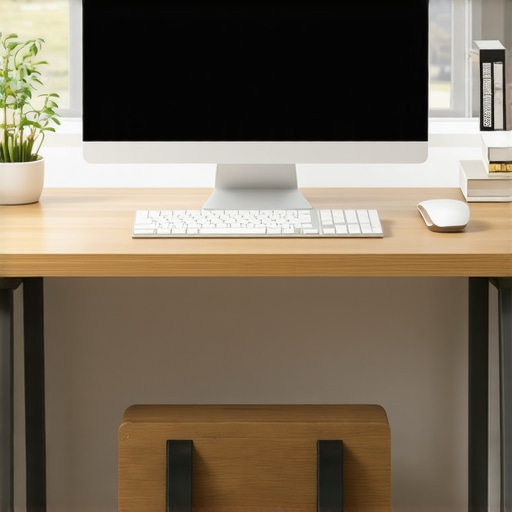
How do I maintain my spine’s health over the long term?
Maintenance isn’t about doing a grueling hour-long workout every Sunday; it’s about the micro-choices you make every single hour. I’ve found that daily adjustments to alleviate back pain and improve posture are the glue that holds everything together. I treat my spine like a high-performance engine that needs constant lubrication. If I’m driving for more than an hour, I don’t just push through the pain. I stop and reset. If I’m at my desk, I use adjust-your-routine-daily-spinal-alignments-for-lasting-relief strategies to ensure I’m not defaulting into a slouch. The key is to make movement so habitual that you don’t even have to think about it.
AI sensors will soon fix your slouching automatically
We are entering an era where wearable haptic feedback is going to change the game. I predict that within the next three years, we won’t just be ‘trying’ to remember our posture; our shirts or necklaces will provide gentle, vibration-based reminders the second our neck angles past a certain degree. This tech is already emerging in niche biohacking circles. Until then, we have to be our own sensors.
Try this glute squeeze for instant standing relief
Here is an advanced tip I use every single day while I’m standing in line or washing dishes. It sounds simple, but it is incredibly effective for stabilizing your lower back. I call it the glute squeeze hack for pain-free standing at the sink. By engaging your glutes, you provide a stable base for your lumbar spine, which prevents it from overarching and causing that familiar, dull ache. Try doing this right now: stand up, squeeze your glutes at about 50% intensity, and feel how your pelvis tucks and your core naturally engages. This is how you scale your mobility—one small, intentional movement at a time.
The Moment I Stopped Blaming My Bones
After years of trying to force my spine into submission, I had a major breakthrough: the ‘need’ to crack is a signal, not a mandate. I used to think my vertebrae were like gears that just needed a little shove to keep turning. The hardest lesson I learned is that the more I forced the pop, the more I told my brain that my joints were unstable. I finally realized that why your breath is the key to releasing spine tension was a much more powerful tool than any violent twist. My biggest ‘lightbulb moment’ was discovering that stability feels better than temporary flexibility. When I stopped chasing the noise and started building strength in my deep stabilizers, the urge to contort myself simply faded away. I learned that my body wasn’t ‘stuck’; it was just protecting itself from my own poor movement habits.
What I Keep on My Desk to Stay Pain-Free
If you want to break the cycle, you need a environment that supports your goals. I don’t go a day without these three things. First, a split keyboard is non-negotiable for me now; it stops the rounded-shoulder collapse before it starts. Second, I highly recommend the book Back Mechanic by Dr. Stuart McGill—it is essentially the owner’s manual for the human spine. Third, I rely on mobility mastery simple exercises to relieve chronic back pain every afternoon to keep my joints lubricated. I also swear by the morning movement routine that lubricates your joints to wake up my nervous system without the need for coffee or cracking. These tools aren’t just gadgets; they are the infrastructure that allows my back to stay quiet while I work.
Trust the Process of a Stronger Spine
It can be scary to stop the self-adjusting habit, especially when the pressure builds up, but I promise you that a more stable body is a more comfortable one. You are not a fragile Jenga tower; you are a resilient, adaptable machine that responds to the inputs you give it. By focusing on unlock better back health effective posture tips for 2025, you are investing in a future where you don’t even think about your back during the day. Your mobility is a lifelong journey, and every small adjustment you make today—from how you sit to how you breathe—compounds into a lifetime of easier movement. You have the tools, the knowledge, and the capability to move past the ‘click’ and into a life of real, lasting relief. Have you ever noticed that the more you crack your back, the sooner you feel the need to do it again? Let me know your experience in the comments below!