

I’ll never forget the Tuesday morning I tried to get out of bed and the floor decided to tilt forty-five degrees to the left. I grabbed the nightstand, heart hammering, convinced I was having a stroke or some mysterious inner ear disaster. I spent weeks seeing specialists, getting my ears poked and prodded, only to be told everything was “fine.” It wasn’t until I noticed a sharp pinch while looking at my phone that I realized my neck was the culprit.
That Spinning Room Feeling Might Be Your Spine
When we think about dizziness, we usually blame our ears or maybe dehydration. But I learned the hard way that a stiff neck can scramble the signals your brain receives about where your head is in space. It’s called cervicogenic dizziness, and it’s more common than you’d think, especially if your neck cracks every time you turn your head. My biggest mistake early on was trying to “self-crack” my way out of the fog, which I later found out actually does more harm than good. The goal today is to help you distinguish between “ear-dizziness” and “neck-dizziness” so you can stop spinning and start healing. Have you ever felt like the room was swaying just because you turned your head too fast? I’d love to know I wasn’t the only one clutching the walls!
Is This Cervicogenic Label Just Another Medical Fad?
I get it. It sounds like a “catch-all” diagnosis when doctors can’t find anything else. But research shows that the upper three vertebrae in your neck are packed with sensors called proprioceptors. If those joints get stuck or inflamed, your brain gets “noisy” data. According to the Cleveland Clinic, cervicogenic dizziness is a sensation of disequilibrium rather than true room-spinning vertigo, and it often stems from cervical spine dysfunction. One thing I noticed during my “dizzy phase” was that my symptoms changed based on my posture. If I was hunched over a laptop, the world felt floaty. This is often linked to why laptop screen height can wreck your upper back and neck. If you stop sleeping on your stomach, you might find that the morning “woosiness” starts to fade. I even found a weird connection where a tight jaw was making my neck pain worse, which in turn kept me feeling off-balance.
Stop the Spin by Fixing Your Internal Sensors
Think of your neck like the calibration setting on a high-end camera. If the lens—the upper cervical joints—is slightly off-kilter, the image or your sense of balance comes out blurry. To clear the static, you have to address the mechanical noise coming from those upper vertebrae. Instead of reaching for a quick fix, you need a systematic approach to recalibrate how your brain perceives your head’s position.
Get Your Eyes Level with the Horizon
The quickest way to trigger that floaty, disconnected feeling is to spend eight hours a day looking down at a screen. When you peer down, the suboccipital muscles at the base of your skull clench like a fist. This is why adjusting your monitor height to stop peering down is a non-negotiable first step. I spent years thinking a fancy ergonomic chair was enough, but until I propped my monitor up on a stack of old textbooks to keep my chin neutral, the dizziness wouldn’t budge. If you are a remote worker, remember that laptop screen height is killing your upper back and feeding that vertigo loop every single hour you are online.
Reset Your Alignment with the Wall Slide Drill
I remember a particularly bad Tuesday afternoon where the office lights seemed to vibrate and I couldn’t focus on my work. I felt like I was on a boat in a storm while sitting perfectly still. I backed up against a flat wall, tucked my chin slightly, and performed the 30-second wall slide. It was uncomfortable at first—my shoulders felt rusty and tight—but after just three repetitions, that heavy, weighted feeling in my head started to dissipate. This move works because it forces the lazy muscles in your mid-back to engage, which instantly offloads the tiny neck muscles that are panicking and causing your dizziness. 
Release the Tension in Your Jaw and Neck
You would be surprised how often a spinning head is actually caused by a clenched jaw. When your jaw is tight, it pulls on the fascia and muscles directly adjacent to your inner ear structures. I started integrating simple exercises to relieve chronic pain into my morning routine to break this cycle. Instead of trying to force a loud pop, which actually does more harm than good, focus on slow, rhythmic rotations. Using the simple towel trick for stiff morning necks provides a gentle fulcrum for your spine to move around without triggering a flare-up.
Retrain Your Brain to Trust Your Body Again
Once you have loosened the physical restrictions, you must convince your nervous system that it is safe to move through a full range of motion. This means getting away from the desk more frequently. Research suggests your spine needs movement every 30 minutes to keep those proprioceptive signals clear and crisp. If you stay static, the internal map your brain uses to navigate the world gets fuzzy and outdated. I found that even a two-minute walk where I focused on the feeling of my heels hitting the pavement helped ground my senses and stop the world from tilting.I used to think that “sitting up straight” was the holy grail of recovery. I spent hundreds on ergonomic gadgets, but my dizziness persisted. Here is the contrarian truth: a rigid spine is a fragile spine. Real posture correction secrets that transform back pain outcomes focus on movement variability, not static positions. When you force yourself into a “soldier” stance, you’re often just trading one set of muscle compensations for another. This is why your core strength isn’t stopping your back aches—you’re likely bracing too hard and cutting off the fluid communication between your joints and your brain. Have you ever fallen into this trap of trying to “force” your body into the right position? Let me know in the comments.
Why does your neck feel tighter after you spend an hour stretching it?
It seems logical: if it’s tight, stretch it. But here’s the “oops” factor most people miss. If your dizziness is caused by instability in the upper cervical spine, stretching those already loose ligaments is like pulling on a frayed rope. A study published in the Journal of Manual & Manipulative Therapy highlights that for many patients with cervicogenic dizziness, the muscles feel “tight” because they are working overtime to protect a joint that the brain perceives as unstable. By stretching them aggressively, you’re removing your body’s only defense mechanism. Instead of mindless pulling, you likely need to learn how to strengthen your neck without going to the gym to provide the structural support your nervous system is craving. 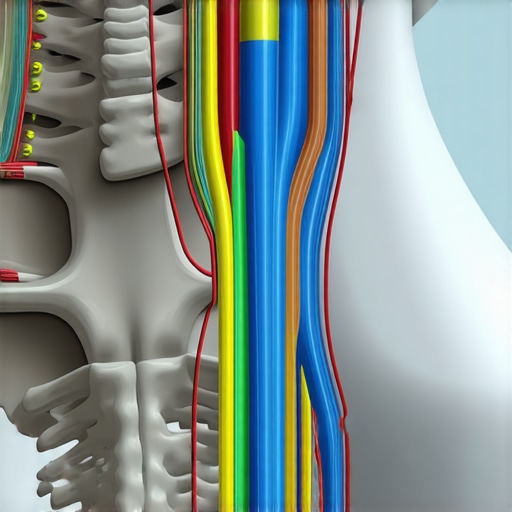
The Hidden Link Between Your Feet and Your Vertigo
It sounds crazy, but your balance starts at the ground. If your gait is off, your neck has to work ten times harder to keep your eyes level with the horizon. This is particularly true if wearing flip flops is changing your gait and sending jarring vibrations up through your pelvis to your skull. I discovered that my “floaty” head feelings were actually worse when I wore flat, unsupportive shoes because my neck was constantly micro-adjusting for the lack of stability in my ankles. If you’ve been focusing solely on your neck but still feel like you’re walking on a trampoline, it might be time to adjust your routine to include full-body proprioceptive training. Mastering your mobility top strategies means looking at the chain from the floor up, rather than just treating the spot where the pain is shouting the loudest.
How do I maintain my spinal balance over time?
Once you finally get the room to stop spinning, the real work begins: keeping it that way. I used to think of recovery as a finish line I’d cross and never look back at, but I quickly learned that [mobility mastery](https://chiromasteryz.com/mobility-mastery-simple-exercises-to-relieve-chronic-back-pain) is more like keeping a garden. If you stop weeding, the stiffness creeps back in. My daily routine now centers on [daily adjustments to alleviate back pain](https://chiromasteryz.com/daily-adjustments-to-alleviate-back-pain-and-improve-posture) because those small, 1% gains are what actually keep the vertigo at bay. Dr. Stuart McGill, a renowned expert in spine biomechanics, emphasizes the concept of ‘spine hygiene’—the idea that the way you brush your teeth, tie your shoes, and sit at your desk throughout the day determines your long-term success more than any single surgery or pill ever could.
The specific gear that saved my neck
I’m not a fan of buying every gadget on the market, but three tools completely changed the game for me. First, a high-quality foam roller. I learned that [the proper way to use a foam roller on your upper back](https://chiromasteryz.com/the-proper-way-to-use-a-foam-roller-on-your-upper-back) isn’t about rolling fast like a rolling pin; it’s about slow, focused pressure to release the tissue that pulls on your cervical spine. Second, I finally invested in a dedicated footrest. It sounds minor, but knowing [how to use a footrest to save your lower back](https://chiromasteryz.com/how-to-use-a-footrest-to-save-your-lower-back-at-work) helps ground your pelvis, which in turn stops your neck from jutting forward to compensate. Lastly, I stopped using my laptop on flat tables. Moving to a stand that forces my eyes to stay level with the horizon was the single most effective hardware change I made. 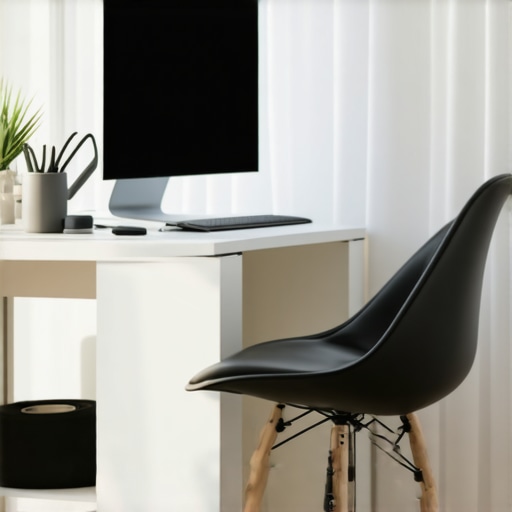
Predicting the next decade of posture tech
Looking ahead, I suspect we are going to see a massive shift toward bio-feedback wearable tech. We already have watches that track steps, but the future lies in sensors that gently buzz when your suboccipital muscles begin to tighten or when your head drifts too far forward. This real-time data will allow us to [adjust your routine](https://chiromasteryz.com/adjust-your-routine-daily-spinal-alignments-for-lasting-relief) before the dizziness even has a chance to trigger. We are moving away from ‘fixing’ problems and toward ‘anticipating’ them with [expert tips for easier movement](https://chiromasteryz.com/enhance-your-mobility-expert-tips-for-easier-movement-in-2025). If you want to get ahead of the curve, I highly recommend you start with one advanced habit: diaphragmatic breathing. Learning [how to breathe using your belly to lower spinal tension](https://chiromasteryz.com/how-to-breathe-using-your-belly-to-lower-spinal-tension) is the ultimate secret to down-regulating your nervous system and telling those ‘panic’ sensors in your neck to relax. Try it for five minutes tonight before bed and see how much clearer your head feels in the morning.
The Hardest Truths About Navigating a Spinning World
Reflecting on my journey through the fog of cervicogenic dizziness, I realized that my biggest hurdle wasn’t the physical pain—it was the fear. I had to learn that my body wasn’t failing me; it was just communicating in a language I hadn’t learned to speak yet. One of the most vital lightbulb moments was understanding that unlocking better posture through simple adjustments isn’t about being rigid; it’s about creating space for your nervous system to breathe. I also learned that progress isn’t a straight line. Some days the ‘woosiness’ would return, not because I was back at square one, but because I had ignored the ‘whispers’ of stiffness for too long. Lastly, I stopped looking for a magic pill and started focusing on expert tips for easier movement that prioritized consistency over intensity.
My Personal Survival Kit for Spinal Clarity
I didn’t get better by accident; I got better by curating a toolkit that supported my spine’s natural mechanics. First, I swear by the ‘Horizon Rule’—keeping your gaze level with the world to keep your proprioceptors happy. To make this possible, I invested in a high-quality monitor arm so I could adjust my monitor height to stop peering down. Second, I replaced my ‘no-pain-no-gain’ gym routine with top strategies for moving without pain, focusing on joint lubrication rather than just muscle building. Finally, I kept a copy of Dr. Stuart McGill’s research nearby to remind me that core strength isn’t just about six-pack abs; it’s about spinal stability. These tools transformed my environment from a trigger-trap into a sanctuary for my neck.
#IMAGE_PLACEHOLDER_E#
Reclaiming Your Steady Ground
The path out of dizziness is often paved with small, seemingly insignificant choices. Whether it’s the way you sit at your desk or how you breathe into your belly, these moments accumulate. By integrating posture correction secrets that transform back pain outcomes, you are doing more than just fixing a ‘bad neck’—you are retraining your brain to trust your body again. Don’t let a temporary spin define your long-term mobility. Start small, stay consistent, and watch as the world slowly stops tilting and starts feeling like home again. You have the power to stop the cervicogenic dizziness loop and regain your balance once and for all.
Which of these ‘dizzy triggers’ resonated most with your own experience? Let me know below.