

I remember it vividly: a rainy Tuesday evening, three episodes deep into a documentary, and the moment I tried to stand up, I felt eighty years old. My lower back let out a sharp, indignant protest, and I had to lean on the armrest just to reach a vertical position. It’s a specialized kind of betrayal when the very place you go to relax becomes the source of your physical misery. For years, I believed that ‘comfortable’ meant ‘soft,’ but I was wrong. My gorgeous, deep-seated sectional was actually a spine-twisting trap. Today, I am going to show you how to reclaim your living room without ending up with a permanent ‘C-curve’ in your spine. We are going to fix your setup so you can binge-watch your favorite shows and still walk normally the next morning.
The Day I Realized My Sectional Was My Back’s Worst Enemy
I made the classic mistake of thinking that more pillows equaled more support. I would bury myself in a mountain of down-filled cushions, essentially folding my spine into a pretzel. I didn’t realize that by letting my pelvis tilt backward, I was putting immense pressure on my lumbar discs. According to research from the Mayo Clinic, sitting actually places more strain on your spinal discs than standing or walking, especially when you lose that natural inward curve of the low back. That explains why my lower back clicks when I stand up from a chair or the sofa. I spent months wondering why my ‘rest’ left me more exhausted than my workout. I even fell for the trap of using those massive ‘husband pillows’ that just pushed my chin to my chest, which I eventually realized was actually pushing my head forward and causing tension headaches. Have you ever stood up after a movie and felt like your spine needed a few minutes to remember how to be straight?
Can you really relax without ruining your spine?
Many people worry that ‘good posture’ means sitting like a rigid soldier on their couch, which is the opposite of relaxing. The skepticism is fair. If it isn’t cozy, you won’t do it. But the truth is that the single best way to sit on a couch without slumping is actually more comfortable in the long run because it prevents that dull, throbbing ache. It’s not about being stiff; it’s about strategic support. I had to learn the truth about lumbar support rolls and lower back spasms before I finally found relief. [IMAGE_PLACEHOLDER] We need to stop fighting against the furniture and start making it work for us.
Stop Letting Your Sofa Sink You Into Chronic Pain
The real problem is depth. Most modern couches are built for aesthetics, not anatomy. When your knees are higher than your hips, or when your feet can’t touch the floor, your lower back loses the fight for stability. I used to just ‘flop’ down, but that’s how you end up with the hidden danger of soft couches for disc health. Now, I use a specific sequence of adjustments to keep my joints happy and my mobility fluid.
Fix the Sinking Pelvis Problem
The first step to saving your spine is addressing what I call the ‘marshmallow effect.’ When you sink into a soft cushion, your pelvis naturally tilts backward, which flattens the crucial inward curve of your lower back. I call this the ‘banana spine’ because your body literally bends into a curve that wasn’t meant to hold weight. To fix it, you need a firm base. I remember a particularly long Friday night movie marathon where I felt that familiar throb starting; I finally grabbed a thin, firm yoga block and placed a folded wool blanket over it to sit on. By creating a slightly elevated, firmer surface, I stopped my pelvis from sinking into the abyss of the foam. This immediate height adjustment stopped the mechanical pulling on my lumbar ligaments instantly.
Why Your Knees Should Stay Below Your Hips
If your sofa is deep, your knees likely sit higher than your hip joints. This is a posture disaster because it forces your lower back to round out just to keep you upright. This is the primary reason why your glutes go to sleep after one hour of sitting. You can fix this by scooting forward and using a firm lumbar roll or even a rolled-up bath towel tucked into the small of your back. It might feel strange at first—like you are being pushed out of the chair—but that sensation is actually your spine returning to its natural, neutral alignment. 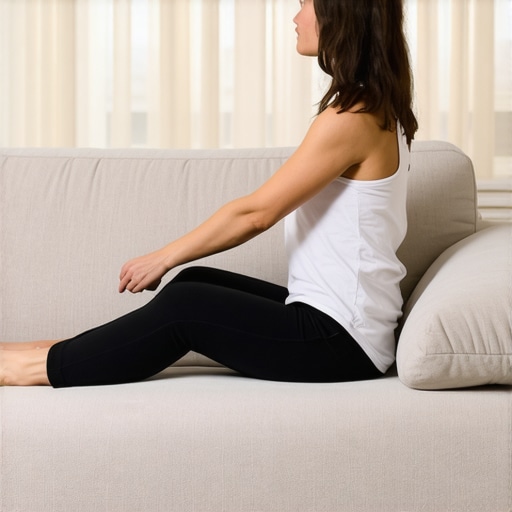
Use Your Feet to Stabilize Your Lumbar
Your feet are your anchors, even in the living room. Most of us either sprawl our legs out or cross them tightly, but if your feet aren’t flat, your lower back loses its primary stabilization point. If your couch is so high that your feet dangle, or if you prefer to kick back, you must how to use a footrest to save your lower back by finding a sturdy ottoman that keeps your ankles in line with your knees. I once used a stack of coffee table books as a makeshift footrest during a weekend binge-watch, and the difference in my tailbone pressure was night and day. This simple change helps you avoid the hidden danger of soft couches for disc health.
Keep Your Muscles Awake During the Show
Static sitting is the enemy of mobility. You should never be a statue on your sofa. I’ve started implementing the glute squeeze hack every time a new scene starts or a commercial breaks. By engaging your glutes and core for five seconds and then releasing, you keep blood flowing to the tissues that usually get compressed. You can also integrate simple adjustments to relieve back pain like small pelvic tilts or shoulder blade squeezes. If you’ve been at a desk all day, your body is already primed for stiffness, so taking a moment to learn the proper way to use a foam roller on your upper back before you hit the couch can prevent that ‘stuck’ feeling later.
The Critical Five-Minute Post-Couch Reset
Before you transition from the sofa to your bed, you need to ‘de-couch’ your spine. Gravity and soft cushions have spent the last two hours compressing your discs. I find that performing the bird dog move that every back pain sufferer needs for just two minutes after standing up helps reset my core stability. It’s like recalibrating a compass. If you skip this reset, you’ll likely wake up stiff and reach for the best morning routine for a stiff lower back just to get through your first cup of coffee.
Why Abs of Steel Won’t Save Your Lower Back
We have been told for decades that a strong core is the ultimate shield against back pain. I spent years religiously doing sit-ups and planks, thinking I was building a bulletproof spine. But here is the contrarian truth: traditional abdominal training can actually be the very thing keeping you in pain. When you focus solely on surface-level ‘six-pack’ muscles, you often neglect the deep stabilizers. In fact, research from spine biomechanics expert Dr. Stuart McGill suggests that repeated spinal flexion—like what you do in a crunch—can place excessive stress on the posterior discs, potentially leading to herniation. This is exactly why your lower back aches after doing crunches. True spinal health isn’t about how many sit-ups you can do; it is about how well your core can resist unwanted movement while you move your limbs. If you have been training hard and still feel like glass, it is time to realize why your core strength isnt stopping your back aches.
Does Your Big Toe Actually Control Your Lower Back?
This is where we get into the advanced nuances that most people miss. Your body is a kinetic chain, not a collection of isolated parts. I once worked with a runner who had chronic lumbar stiffness that no amount of stretching could fix. We eventually discovered the culprit wasn’t his back at all—it was his feet. It sounds wild, but how a stiff big toe is causing your chronic lower back pain is a real phenomenon. If your big toe cannot extend properly when you walk, your body compensates by over-extending the lower back. 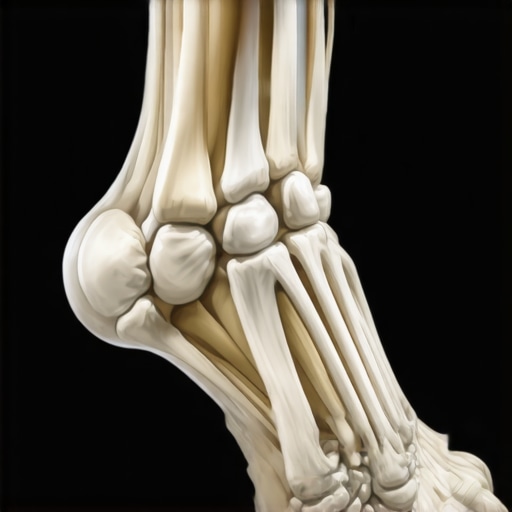 This ‘bottom-up’ dysfunction is why simply treating the site of the pain rarely leads to long-term relief. Similarly, the ‘top-down’ influence is just as powerful; for example, how a tight jaw leads to chronic upper neck pain can create a ripple effect of tension all the way down to your sacrum. We need to stop looking at the spine in a vacuum and start looking at the entire system.
The Trap of Perfect Posture That Keeps You Stiff
One of the biggest ‘oops’ factors I see is the obsession with ‘perfect’ posture. Many people try so hard to sit perfectly upright that they end up in a state of constant muscle co-contraction. This creates a different kind of misery—mechanical fatigue. You aren’t meant to be a statue. The secret is not finding one perfect position, but rather mastering posture correction secrets that transform back pain outcomes by focusing on micro-movements throughout the day. If you stay in even a ‘perfect’ position for too long, your tissues will starve for oxygenated blood. Have you ever fallen into the trap of trying to sit too straight only to end up more sore than when you started? Let me know in the comments. By learning simple adjustments to relieve back pain, you can move away from the ‘soldier’ posture and toward a fluid, resilient body that can handle a movie on the couch or a long day at the desk without breaking down.I’ve spent thousands on fancy ergonomic chairs, but the real winners are surprisingly low-tech. My daily driver is a simple McKenzie-style lumbar roll. I don’t just use it because a therapist told me to; I use it because it creates a mechanical ‘stop’ that prevents my lumbar spine from collapsing during long sessions. When I’m traveling or can’t carry my roll, I fall back on the simple towel trick for stiff morning necks or backs. It’s about having a toolkit that works anywhere. I also swear by a high-density foam roller. Learning the proper way to use a foam roller on your upper back was a game-changer for my rib mobility. According to the ‘Joint-by-Joint Approach’ popularized by performance coach Mike Boyle, the thoracic spine—your mid-back—is designed for mobility, while the lumbar spine needs stability. When your mid-back gets stuck from couch-slumping, your lower back has to move more to compensate, which is a recipe for disaster.
How do I maintain a pain-free spine for the long haul?
Consistency trumps intensity every single time. You can’t ‘fix’ your back with one massive workout; you fix it by deciding to adjust your routine with daily spinal alignments for lasting relief. I make it a point to perform mobility mastery simple exercises to relieve chronic back pain while my coffee brews. It takes four minutes. If you make it part of your ‘waiting’ time, you never forget. This habit ensures you enhance flexibility with top mobility strategies for active living without needing a dedicated gym hour. 
The Truth About Standing Desks and Fatigue
Many of my readers tell me they switched to standing thinking it would solve their sofa-induced aches, but then they end up with heel pain or a sore sacrum. Understanding the correct way to use a standing desk without hurting your feet is vital. I personally use an anti-fatigue mat and rotate my weight every fifteen minutes. If you just stand still, you’re just replacing one static stress with another. You have to keep the system moving to prevent the connective tissues from becoming glued in place.
Why Your Next Posture Coach Might Be a Sensor
Looking forward, I predict we are moving away from passive furniture and toward active biofeedback. We are already seeing wearable sensors that buzz when you slump, but the next generation will likely integrate with our desks and couches to subtly shift the support as we fatigue. This will make expert tips for easier movement in 2025 more automated. Until then, you are your own best sensor. Start using daily adjustments to alleviate back pain and improve posture to build that internal awareness. My challenge to you: tonight, while watching TV, set a timer for 20 minutes. Every time it goes off, stand up and perform one bird dog move. It’s the single most effective way to wake up your nervous system and protect your discs from the ‘couch sink’ effect.
The Hardest Lesson I Learned About My Own Recovery
I used to think I could out-exercise a bad couch habit. I would spend an hour at the gym working on my core, then spend four hours slumped in my sectional, effectively undoing every bit of progress. The lightbulb moment was realizing that my rest was actually a form of mechanical stress. I also learned that good posture often feels wrong at first because your muscles are addicted to the slump. If it feels awkward, you are probably actually doing it right.
- Consistency beats intensity: A five-minute daily reset is worth more than a monthly massage.
- Listen to the click: If your back clicks when you stand, it is a signal, not a quirk.
- Support is active: True support comes from your muscles, not just foam cushions.
Tools That Earned a Permanent Spot in My Living Room
I stopped buying expensive ergonomic gadgets and went back to the basics that actually work. I keep a firm McKenzie-style lumbar roll on my favorite chair at all times. It is the simplest way to unlock better back health with effective posture tips for 2025. I also keep a high-density foam roller under the coffee table for quick rib releases between episodes. If you are looking for more advanced techniques, I highly recommend exploring these posture correction secrets that transform back pain outcomes.
[IMAGE_PLACEHOLDER]
Stop Waiting for the Pain to Go Away and Start Moving
Reclaiming your body does not require a lifestyle overhaul. It requires a shift in how you inhabit your home. By deciding to adjust your routine with daily spinal alignments for lasting relief, you are giving your nervous system the breathing room it needs to heal. You do not need a new spine; you just need to stop punishing the one you have. With these master your mobility top strategies for moving without pain, you can finally enjoy your favorite shows without the physical tax the next morning. Have you ever noticed your lower back feel tighter on the weekends than during the work week? Let me know in the comments below!