

I was pulling out of my driveway, just a normal Tuesday, when I turned my head to check for traffic. Crack. Not the good kind. It felt like a rusted hinge snapping under pressure. I froze, hands gripping the steering wheel, wondering if I’d just permanently fused my vertebrae. It wasn’t just a one-off thing; for months, I’d been dealing with that annoying feeling that my head was just too heavy for my shoulders. I thought the answer was more gym time, more heavy shrugs, and more “toughing it out.” I was wrong. In fact, my early attempts at “fixing” it actually made the tension worse because I was overcomplicating things by trying to lift heavy right away. I finally realized that the secret to a resilient neck isn’t found in a weight rack, but in the small, consistent movements you can do while your coffee is brewing. Today, I’m going to show you how to build that stability from your living room so you can finally stop worrying about every little twist and turn.
You Don’t Need a Heavy Rack to Stop That Constant Ache
Most people think that strengthening your neck requires those weird head-harnesses you see in old boxing movies. Trust me, I tried the “hard way” first. I spent weeks doing high-rep trap exercises at the gym, only to realize I was ignoring the deep stabilizers that actually hold my head up. If you’ve ever wondered why your neck crunches when you look over your shoulder while driving, you know exactly the frustration I’m talking about. It’s a sign that your mobility and strength are out of sync. I made the mistake of thinking power was the same as stability. It’s not. My neck didn’t need to be huge; it needed to be functional. The reality is that our modern lives are a constant battle against “tech neck.” We spend hours looking down, and our poor cervical spines are paying the price. I found that simple, low-impact habits, like the 5-minute fix for constant gamer neck, did more for my daily comfort than any gym session ever did. We are going to focus on building a foundation that supports your posture without requiring a monthly membership or expensive equipment.
Wait, is training your neck at home even safe?
This is the big one. People are terrified—rightly so—of messing with their necks. I was too. I used to think that if I didn’t have a professional trainer watching me, I’d end up in a brace or worse. But the truth is, the most effective exercises for stability are incredibly subtle. You aren’t throwing weights around; you’re using controlled resistance. According to Harvard Health Publishing, simple isometric exercises—where you provide resistance with your own hand or a soft object—are often the safest and most effective way to begin strengthening these delicate muscles. It’s about gentle engagement, not brute force. [image placeholder] Before we dive into the specific moves, I have to ask: have you ever felt that terrifying “lock” when you just try to look behind you? It’s a wake-up call, isn’t it? If you’re tired of that stiff, “stuck” feeling, we are going to fix that together. We’ll start with the basics, like the simple towel trick for stiff morning necks, and build up to a routine that makes you feel like you’ve actually got some support under that skull of yours. It’s time to stop guestimating and start moving with confidence again, even if you’re just sitting at your desk or adjusting your headrest for your morning commute. Ready to feel lighter? Let’s get to work.
Start With the Drawer Slide Trick
To fix a neck that feels like it’s made of lead, you have to address the “forward lean” first. Think of your head like a bowling ball sitting on a broomstick; if it leans forward just an inch, the weight feels ten times heavier to the muscles in the back. The most effective move I’ve found is the chin tuck. Imagine your head is a kitchen drawer and you are simply sliding it straight back until it’s closed. You aren’t looking down; you’re retracting. I remember sitting at my desk, feeling that familiar burn, and doing this for thirty seconds every hour. It felt weird at first—like I was creating a double chin—but it immediately relieved that pressure at the base of my skull. If you’re working on a laptop, you absolutely need to combine this with the 2-inch rule for your laptop stand to save your neck from strain to keep the “drawer” from sliding back out constantly throughout the day.
Why Brute Force Fails Every Single Time
Early on in my journey, I thought I could out-lift the pain. I grabbed a 25-pound plate and tried to do weighted neck extensions because I saw a pro athlete doing them on social media. Big mistake. I woke up the next morning with a migraine that felt like my head was in a vice. The deep stabilizers—the tiny muscles responsible for keeping your spine aligned—don’t respond well to heavy, explosive movements. They respond to endurance and precision. When I stopped trying to be a “tough guy” and started focusing on mastering your mobility and moving without pain, the chronic stiffness actually started to fade. It turns out, your neck prefers a whisper over a shout. 
Use Your Own Hands as the Resistance
Since we aren’t using iron racks, we use our own anatomy. This is where isometric holds come in. Place your palm against your forehead and gently push your head into your hand while your hand pushes back. Neither should move. You’re just “waking up” the muscles. Hold for five seconds, then repeat on the sides and the back. This builds what I call the internal brace. It’s the same principle behind the deep core connection that stops your spine from shear stress, just applied to the cervical spine instead of the lower back. When you do this correctly, you feel a sense of supportive tightness that actually stabilizes the joints rather than stressing them.
The Danger of the Quick Fix Pop
When your neck feels tight, the temptation is to grab your chin and “crack” it for that sweet, temporary relief. I was a serial self-cracker for years. I thought I was doing myself a favor, but the relief only lasted ten minutes before the tension roared back even worse. I eventually learned why self-cracking your neck makes the stiffness come back faster: you’re usually just moving the joints that are already too loose, while the “stuck” ones stay stuck. Instead of chasing the pop, focus on the wall slide. It’s an incredible way to reset. You can find the specific breakdown in the 30-second wall slide for instant shoulder relief guide. By flattening your back and arms against a wall, you force your upper back to do its job, taking the load off those overworked neck muscles instantly.
The biggest mistake I see—and I was guilty of this for years—is assuming that every ‘tight’ muscle needs to be stretched into submission. We’ve been conditioned to think that if something hurts, we need to pull on it. But here is the nuance that most beginners miss: tightness is often a protective ‘brake’ applied by your nervous system. If a joint is unstable, your brain will lock down the surrounding muscles to keep you from injuring yourself. When you force a stretch on a muscle that is trying to protect you, you aren’t fixing the problem; you’re actually overriding your body’s safety mechanism. This is exactly why stretching your psoas might actually be making your back hurt more. You might feel a fleeting sense of relief, but the underlying instability remains, leading to a vicious cycle of chronic tension.
Stop Stretching Every Muscle That Feels Tight
Let’s talk about the ‘hamstring trap.’ Almost everyone with a desk job complains about tight hamstrings. They spend twenty minutes a day touching their toes, yet the tightness never goes away. Why? Because often, your hamstrings aren’t actually short; they are being pulled taut because your pelvis is tilted forward. It’s like a rubber band that is already stretched to its limit—pulling it further only risks a tear. This explains why stretching your hamstrings might be making your back pain worse. Instead of lengthening the muscle, you should be looking at how to release your hip flexors without stretching them to allow your pelvis to return to a neutral position. 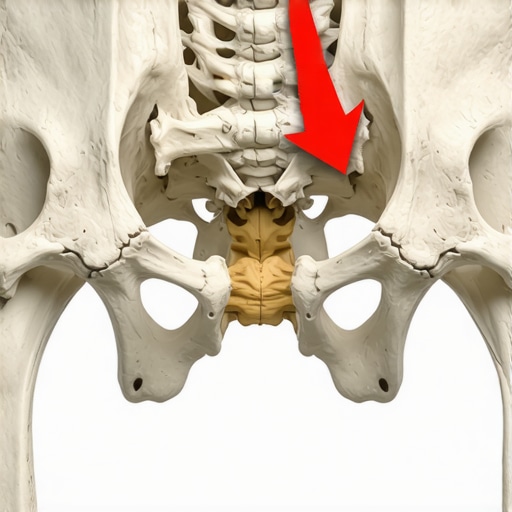
Why does your core strength fail to protect your spine during basic movements?
This is the question that separates the amateurs from the experts. You can have ‘six-pack’ abs and still suffer from debilitating back spasms. This happens because most people confuse ‘beach muscles’ with ‘spinal stabilizers.’ Dr. Stuart McGill, a world-renowned expert in spine biomechanics, has shown through years of research that traditional sit-ups can actually put hundreds of pounds of unnecessary pressure on your discs. True stability comes from ‘bracing’—the ability to create a 360-degree shield of tension around your spine—rather than just sucking in your stomach. I finally saw progress when I stopped doing crunches and started focusing on the secret to strengthening your deep core without sit-ups. It’s about building a foundation that doesn’t crumble the moment you bend over to pick up a pencil.
The Dangerous Trap of Posture Braces
If you’re tempted to buy one of those ‘posture corrector’ harnesses you see in social media ads, please reconsider. These devices are the ultimate ‘Oops’ factor. They do the work for your muscles, which sounds great in theory, but it actually causes your stabilizers to atrophy. Your body operates on a ‘use it or lose it’ principle. By leaning on a brace, you are telling your muscles they can go on vacation, making you even more prone to injury once the brace comes off. It’s a temporary mask, not a cure. The real fix involves neurological re-education—teaching your brain how to hold your body correctly through consistent, small habits. This is also the truth about posture correctors and braces that the marketing companies don’t want you to know.
As you transition from these ‘quick fixes’ to a more functional approach, you might notice your body reacting in strange ways. It’s common to feel a bit uncoordinated or even why you feel wobbly after your first adjustment as your nervous system recalibrates to a new, healthier alignment. Have you ever fallen into the trap of over-stretching a painful area? Let me know in the comments below; I’d love to hear your story and help you find a better way forward.
Once you get past that initial stage of ‘everything hurts and I’m falling apart,’ the real challenge begins: staying consistent. I used to think that a single session of stretches would buy me a week of comfort. It doesn’t work that way. Spinal health is less like a one-time repair and more like brushing your teeth—it’s the daily, boring stuff that actually saves you from the surgeon’s knife. I’ve refined my daily toolkit down to a few non-negotiables that keep me from sliding back into that old, hunched-over version of myself. It’s about creating an environment where good posture is the easiest path, rather than a constant uphill battle.
Turn Your Car into a Biofeedback Machine
One of the most effective ‘tools’ I use costs exactly zero dollars. I call it the mirror reset. The next time you are sitting up tall and feeling good, how to adjust your rearview mirror to improve your posture becomes your secret weapon. I set my mirror just a tiny bit higher than usual while I’m sitting with a neutral spine. The moment I start to slouch or my head drifts forward, I lose my view of the traffic behind me. It is a constant, gentle reminder to grow tall through the crown of my head. This simple trick does more for my long-term awareness than any expensive ergonomic gadget ever could. When you combine this with the right way to adjust your headrest to prevent whiplash symptoms, your commute transforms from a source of strain into a session of neurological retraining.
How do I maintain my mobility without it taking over my life?
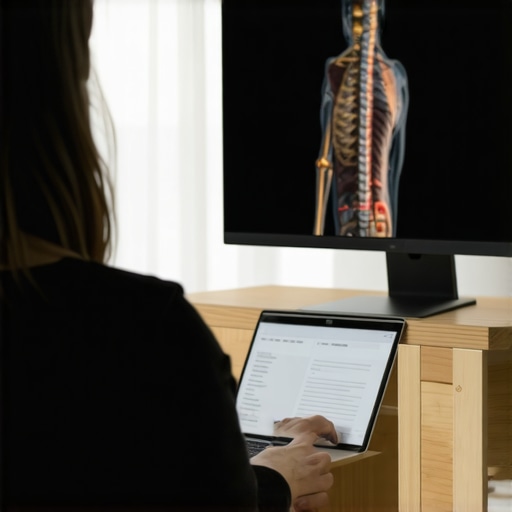
The secret is ‘movement snacks.’ I don’t set aside an hour for ‘posture time’ anymore. Instead, I bake it into my existing habits. While my coffee is brewing, I perform the morning movement routine that lubricates your joints. It takes three minutes, but it sends a signal to my nervous system that it’s safe to move. I also keep a very close eye on my workstation. I’ve implemented the monitor height hack for preventing c7-t1 nerve pressure because that specific junction at the base of the neck is where most of our ‘tech-neck’ headaches originate. If that monitor is even an inch too low, your upper back will eventually pay the price, no matter how many stretches you do later in the evening.
Use Gravity as Your Personal Trainer
If I’ve spent more than two hours at a desk, I perform one specific move: the wall angel. It is the ultimate diagnostic tool. If you find you can’t keep your wrists and elbows against the wall while sliding them up, you have some work to do. I use the wall angel move that reverses a day of hunching over a phone to ‘reset’ my shoulders and open up my chest. Kelly Starrett, DPT and author of ‘Becoming a Supple Leopard,’ often points out that we have to ‘standardize our bracing.’ This means that whether you are picking up a pen or a heavy box, the way you stabilize your trunk should be identical. It’s about building a predictable, resilient ‘operating system’ for your body. This is why adjusting your routine for daily spinal alignments is so critical; you are essentially debugging your movement patterns every single day.
Looking forward, I predict we are going to see a massive shift toward wearable biofeedback. We are already seeing shirts with integrated sensors that vibrate when your shoulders roll forward. While I prefer the ‘manual’ awareness of the mirror trick, these tech advancements will make effective posture tips for 2025 even more accessible for the average person. But don’t wait for a chip to tell you how to sit. Start today by trying that rearview mirror trick on your drive home—it is the single most effective way to turn a passive habit into an active correction.
The Hard Truths About Spinal Resilience That Most People Skip
Over the years, I’ve realized that recovering your mobility isn’t a straight line toward success. Some days you’ll feel like a gazelle, and others you’ll feel like a rusty gate. The most important lesson I learned is that the truth about why cracking your own neck feels good but harms you is the hardest habit to break; it offers a momentary high that masks a deeper instability. You have to be patient enough to let the deep stabilizers do their job without constantly ‘resetting’ them with a manual pop. Pain isn’t always a signal that something is wrong—sometimes it’s just your nervous system adjusting to a new, better way of moving.
The Simple Gear That Actually Makes a Difference
You don’t need a gym full of machines to keep your spine healthy, but a few specific tools make the journey much easier. I always recommend ‘Becoming a Supple Leopard’ by Kelly Starrett for anyone looking to master your mobility and move without pain. It’s the ultimate manual for human maintenance. Beyond that, I swear by a simple firm tennis ball for releasing tension at the base of the skull and a dedicated laptop stand. Implementing these posture correction secrets that transform back pain outcomes is about creating an environment where your body can’t help but succeed. [image placeholder]
Start Small and Reclaim Your Mobility Today
Building a resilient neck is about the boring, everyday choices rather than one heroic effort. It is the accumulation of daily adjustments to alleviate back pain and improve posture that eventually adds up to a life without constant stiffness. You aren’t just doing exercises; you are rewriting the code of how you move through the world. Don’t wait for the next ‘crack’ to remind you to sit up straight. Start with that rearview mirror trick today and feel the difference of an active, supported spine. Have you ever felt that terrifying ‘stuck’ sensation in your neck during a long drive? Let me know in the comments below.